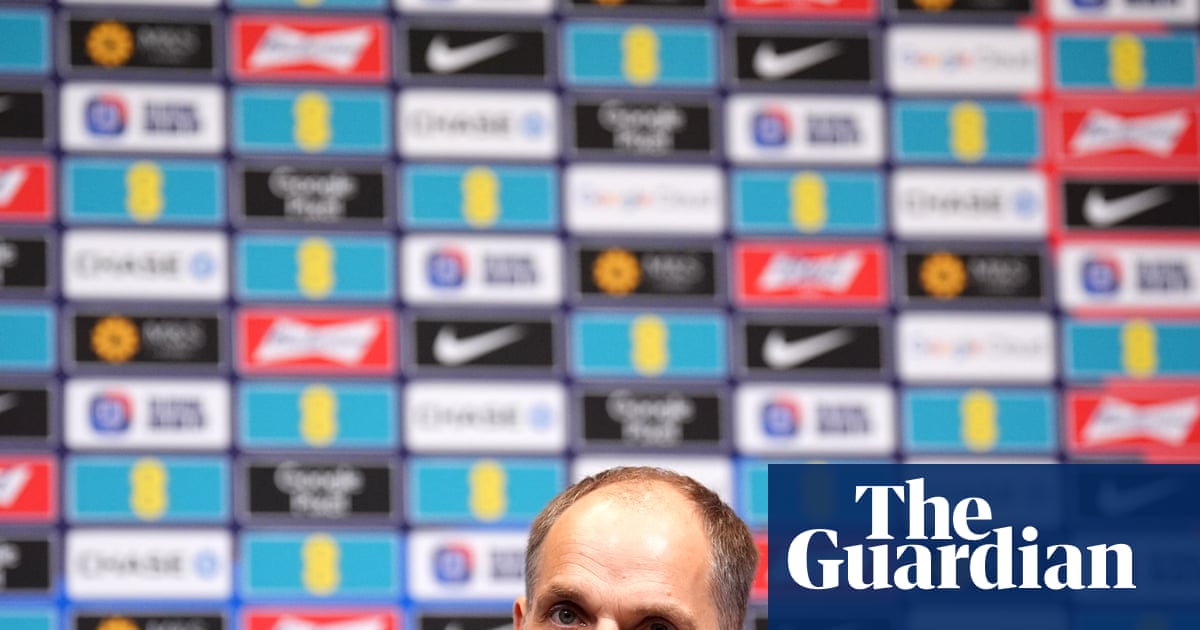
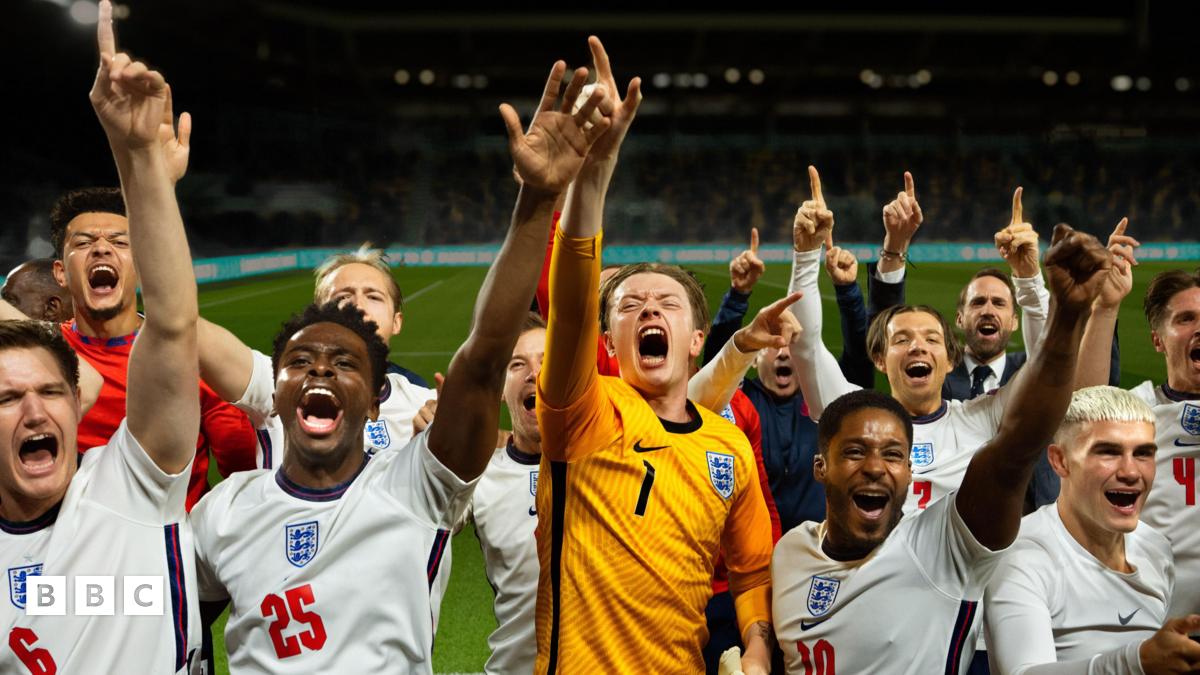
Fifty-seven goal involvements. That is the combined club production of Phil Foden and Cole Palmer during the 2025/26 season. Add Harry Maguire's ten-year defensive tenure, and you have the foundation of England's modern international identity. Yet, Thomas Tuchel has cut all three from the 2026 World Cup squad.
Under Gareth Southgate, reputation was a shield. Southgate valued tournament experience over raw club form, starting Maguire in 84.6% of England's knockout matches across four tournaments. He was the ultimate safety net.
Tuchel has shredded that safety net. As Mirror Football reported, the new manager is entirely uninterested in popularity contests. He is building a machine, not a gallery of stars.
This is a cold, mathematical trade of individual brilliance for structural control. It is a massive gamble, but the underlying data reveals the strict tactical logic guiding Tuchel's scissors.
The Speed Deficit: Why Harry Maguire Had to Go
Under Southgate, England's defensive line was designed to protect Maguire. During Euro 2024, England's average defensive line height sat at a conservative 41.2 meters from their own goal line. This deep block minimized the green grass behind the defense, neutralizing Maguire's lack of recovery speed.
It worked in a low-block, tournament-style defense. But it also pinned England back, forcing them to defend deep in their own half for long stretches.
Tuchel plays a different game. His defensive setups at Chelsea and Bayern Munich demanded an aggressive, high-pressing block, with defensive lines averaging 48.5 meters. In this setup, center-backs must defend in vast, open spaces against elite transition threats.
In the 2025/26 Premier League, Maguire clocked a top speed of just 31.4 km/h, ranking him in the bottom 15% of active center-backs. Leaving him isolated in a high line against the likes of Vinícius Júnior or Kylian Mbappé would be tactical suicide.
The Aerial Penalty
Yet, dropping Maguire creates a major statistical vulnerability. Maguire won 74.2% of his aerial duels during Euro 2024, placing him among the tournament's elite defenders. His projected replacements, Marc Guéhi and Levi Colwill, won just 58.3% and 61.5% of their aerial duels in the Premier League this season.
Against physical sides like France or Uruguay, England's box defense will be significantly weaker on set pieces. Tuchel is betting that his high press can stop crosses at the source, but in tournament football, one lost header can end a campaign. It is a calculated risk, but a risk nonetheless.
The Turnover Tax: Why Cole Palmer Was Cut
On paper, dropping Cole Palmer is insane. The Chelsea forward registered 19 goals and 13 assists in all competitions during the 2025/26 season. He is a genius creator capable of winning a match with a single pass.
But Tuchel's tactical DNA is rooted in possession security and rest defense. In Tuchel's system, losing the ball in the transition zone is the ultimate sin.
Palmer is a high-risk, high-reward playmaker. In the Premier League this season, Palmer averaged 4.2 turnovers per 90 minutes, consisting of dispossessions and miscontrols. His passing accuracy in the final third was a modest 72.8%.
In contrast, Bukayo Saka maintained an 81.4% passing accuracy in the final third while delivering similar progressive numbers. Palmer's tendency to attempt low-probability, ambitious passes clashes directly with Tuchel's need for control.
The Transition Trap
Tuchel's legendary Champions League-winning Chelsea side in 2021 conceded only four goals in 13 matches. That defensive miracle was built on strict positional discipline and minimizing central turnovers. When a team loses the ball in the central third, their defensive structure is at its most vulnerable.
Palmer's creative freedom requires a level of positional chaos that Tuchel simply will not tolerate in a short tournament format. By cutting Palmer, Tuchel is prioritizing structural safety over individual magic.
The Half-Space Dilemma: Phil Foden's Positional Friction
Phil Foden's England career has always been a statistical puzzle. For Manchester City under Pep Guardiola, Foden was a devastating force, averaging 0.78 goal involvements per 90 in the 2025/26 season. For England under Southgate, that number plummeted to just 0.29 per 90 across 41 appearances.
Foden looked lost, a superstar winger playing like a passenger. This drop-off is not about talent; it is about system design.
At City, Guardiola utilizes strict positional rotations to create half-spaces for Foden to exploit. City's deep midfielders draw the opposition press, allowing Foden to receive the ball on the half-turn between the lines. Southgate's England lacked this mechanical build-up play, forcing Foden to drop deep to find the ball or stay isolated on the wing.
Tuchel's wingers must perform specific duties. They must either hold absolute width to stretch the opposition defense, or act as intense pressing triggers in a defensive block.
Foden is a central playmaker forced onto the flank. He naturally drifts inside, clogging the central spaces occupied by Jude Bellingham.
In Tuchel's system, a winger who drifts inside without defensive discipline destroys the team's shape. Tuchel prefers direct, high-speed runners like Anthony Gordon, who averaged 5.3 defensive actions per 90 compared to Foden's 2.1.
Foden does not fit the machine.
The Statistical Calculus of Tuchel's Gamble
By shedding these three players, Tuchel has completely reshaped England's statistical profile. The team will be faster, more disciplined, and far more secure in possession. But they will also be less creative and far more vulnerable in the air.
Tuchel's willingness to roll the dice by cutting elite talent is a massive statement of intent. This squad is built for the high-intensity, physical realities of modern international football.
If England can dominate possession and choke opponents in their own half, Tuchel will look like a tactical genius. If they struggle to break down a low block without Foden's vision or concede a cheap set-piece goal without Maguire's height, the knives will come out immediately. This is not Southgate's safety-first England.
It is a cold, calculated experiment in tactical purity. The margin for error is razor-thin.
Read Next
- Can Michael Carrick's tactical machine survive its ultimate European test?
- Trent's England exile is pushing him straight to Real Madrid
- The World Cup Round of 32 is going to be an absolute bloodbath
- Arsenal finally end the 22-year drought but the real drama is only starting
- 🏴 England World Cup 2026 — Three Lions Hub