The Death of the Summer Stroll
International football is no longer a game of aesthetics. It is an exercise in resource management. When the 2026 World Cup kicks off on June 11, the eventual winner will need to navigate an unprecedented eight-match gauntlet. That is 720 minutes of football, excluding stoppage time, played across a continent where summer temperatures routinely break the 35°C mark.
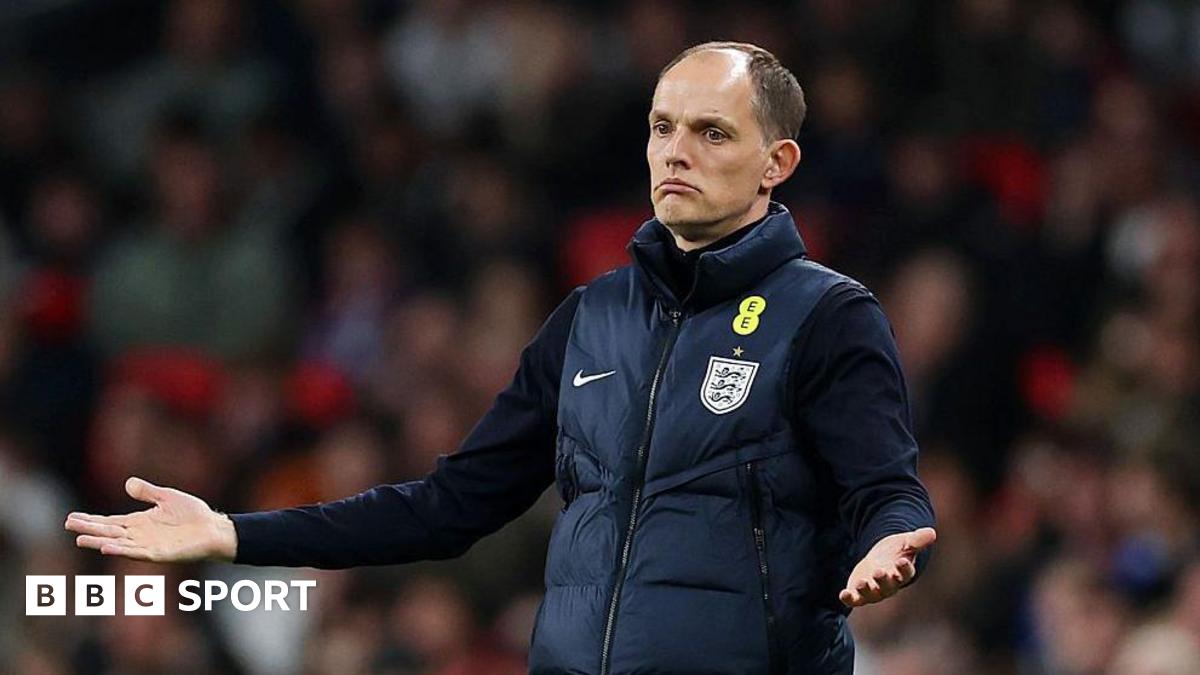
This is the brutal reality shaping England's preparation. According to the Daily Mail, Thomas Tuchel is actively plotting to abandon flowing football in favour of a direct, set-piece heavy approach. The Mirror corroborated this tactical pivot, noting the manager views dead-ball situations as a weapon against the searing North American heat.
Fans who expected the former Bayern Munich and Chelsea boss to institute a fluid, possession-dominant system are going to be severely disappointed. But from a purely analytical standpoint, Tuchel is absolutely correct. Trying to dominate the ball in this specific tournament is a mathematical risk that simply does not pay out.
The 48-Team Attrition Rate
We need to look at what an expanded World Cup actually means for player load. The jump from 32 to 48 teams has fundamentally altered the physical requirements of the tournament. The BBC has already highlighted the massive environmental cost of this sprawling event, but the physiological cost to the players is equally severe.
In Qatar, Argentina won the trophy playing seven games. In 2026, the finalists will play eight. That extra 90 minutes might not sound catastrophic, but it arrives at the end of a gruelling European club season. To mitigate this, teams have to find periods within games to rest. You cannot press for 90 minutes. You cannot play intricate, third-man combination sequences through a low block when the humidity is sitting at 80 percent.
This is where the direct approach comes in. By bypassing the midfield, you reduce the number of transition sprints your central players have to make. If you play long and fight for the second ball, your defensive line can step up at walking pace rather than sprinting back to cover a counter-attack triggered by a misplaced pass in the centre circle. It is a cynical adaptation to a broken schedule.
The Set-Piece Multiplier
Tuchel's focus on set pieces is not a new English phenomenon, but it is one that demands statistical respect. We only have to look back at the 2018 World Cup to see the blueprint. In Russia, England scored nine of their 12 goals from dead-ball situations. That is a staggering 75 percent. Across the entire 2018 tournament, 73 of the 169 goals scored came from set pieces — representing 43 percent of all goals.
When open-play expected goals (xG) dry up in the knockout stages, corners and wide free-kicks become the great equalizer. They are static, controllable events in a game state defined by chaos and fatigue. During England's open training session this week, Phil Foden was seen fizzing passes into Marcus Rashford along the turf. The execution is clearly being drilled. You don't need to string 30 passes together if you can consistently deliver a ball onto a centre-back's head from 40 yards out.
But there is a glaring negative to this reliance. If your entire attacking output is tethered to dead balls, you become incredibly predictable. Opponents will simply drop deeper and refuse to commit fouls in the final third. We saw this exact failing under Gareth Southgate against Italy in the Euro 2020 final and against France in Qatar. Tuchel has to ensure this direct system has a functioning secondary mechanism, otherwise England will hit a tactical wall when they face a defensively disciplined block in the knockout rounds.
The Raynor Paradox and Midfield Bypasses
There is a rich irony in the FA hiring a German tactician to implement a pragmatic, direct style of play. Historically, the flow of tactical innovation went the other way. Nobody in England appreciated George Raynor, the ambitious young coach who eventually led Sweden to Olympic gold and a World Cup final. The English establishment ignored him. Now, decades later, the FA has entirely outsourced its tactical brain trust to a man who made his name at Mainz and Dortmund.
Tuchel is not dogmatic. His willingness to abandon the slick passing sequences that defined his Chelsea Champions League win shows a manager reading the room. He recognises that the national team does not have the luxury of treating the World Cup like a club competition. You do not get 38 games to smooth out variance. You get an eight-match sprint where a single defensive error in the 88th minute sends you home.
The open training session provided a huge clue. With Jude Bellingham and Cole Palmer operating in free roles, Tuchel is looking to overload the half-spaces and win knockdowns. If you launch a long ball over a high pressing team, you instantly bypass six opposing players. You need technically elite players picking up the loose balls and driving at a retreating defensive line. Bellingham thrives in chaos. Palmer has made a career out of finding pockets of space when defensive structures break down.
This bypass strategy completely neuters the modern obsession with high pressing. If the opposition forwards spend 20 minutes sprinting to press a goalkeeper, only to watch the ball sail 50 yards over their heads every single time, their physical output drops. They stop pressing. The game slows down. This is exactly how Tuchel intends to dictate the tempo.
The Danger of Youth in a Physical War
Given the extreme demands of this tournament, squad selection is a matter of athletic profiling. This brings us to the debate surrounding Arsenal's 17-year-old midfielder Max Dowman. Theo Walcott has publicly urged the teenager to reject an England call-up if it arrives this summer.
Walcott knows exactly what he is talking about. He was taken to the 2006 World Cup by Sven-Göran Eriksson as a 17-year-old, failed to play a single minute, and spent the next five years dealing with the resultant pressure. Throwing a teenager into a tournament defined by physical attrition and direct, combative football is a huge gamble.
You only have to look at the other side of the Atlantic to see how precarious youth development can be. As The Guardian noted today, USMNT playmaker Gio Reyna has played precisely 26 minutes of football in 2026 for Borussia Mönchengladbach. Potential means absolutely nothing if your body cannot handle the rigours of the senior game. Taking a player like Dowman to North America just for the experience uses up a valuable squad slot that Tuchel will desperately need for a robust rotation option.
Contrast the clamour for teenagers with the reality of international management. Romania are currently preparing for a playoff against Turkey, led by Mircea Lucescu. The head coach is 80 years old and has been preparing his team from a hospital bed.
"I can’t leave like a coward," Lucescu stated, characterising his managerial marathon as a duty to Romanian football.
International football demands a grim, hardened resilience. It is not an environment for developing academy prospects.
The Final Scramble
While Tuchel fine-tunes his anti-football masterplan, the rest of Europe is fighting for the scraps. There are currently 22 teams vying for just six remaining European spots via the playoffs. Northern Ireland, the Republic of Ireland, and Wales — now operating without Gareth Bale — are all still in the mix. The desperation to reach this tournament is obvious, even as the logistical reality of the event looks incredibly messy.
The governing body is already facing legal challenges off the pitch. A complaint has been filed to the European Commission regarding excessive ticket prices. On top of that, FIFA has been forced into 18 months of discussions simply to break their own rules for a stadium in the United States, all with the tournament less than three months away. It paints a picture of an organisation obsessed with scale at the expense of seamless sporting execution.
Thomas Tuchel is not trying to save football. He is trying to win a deeply flawed tournament. If that means packing the midfield with athletes, bypassing them with 60-yard diagonals, and relying on Jude Bellingham to win second balls, then that is what he will do. The days of chasing possession statistics are over. In North America, the only number that will matter is survival.