The Goalkeeper's Burden in an Attacking System
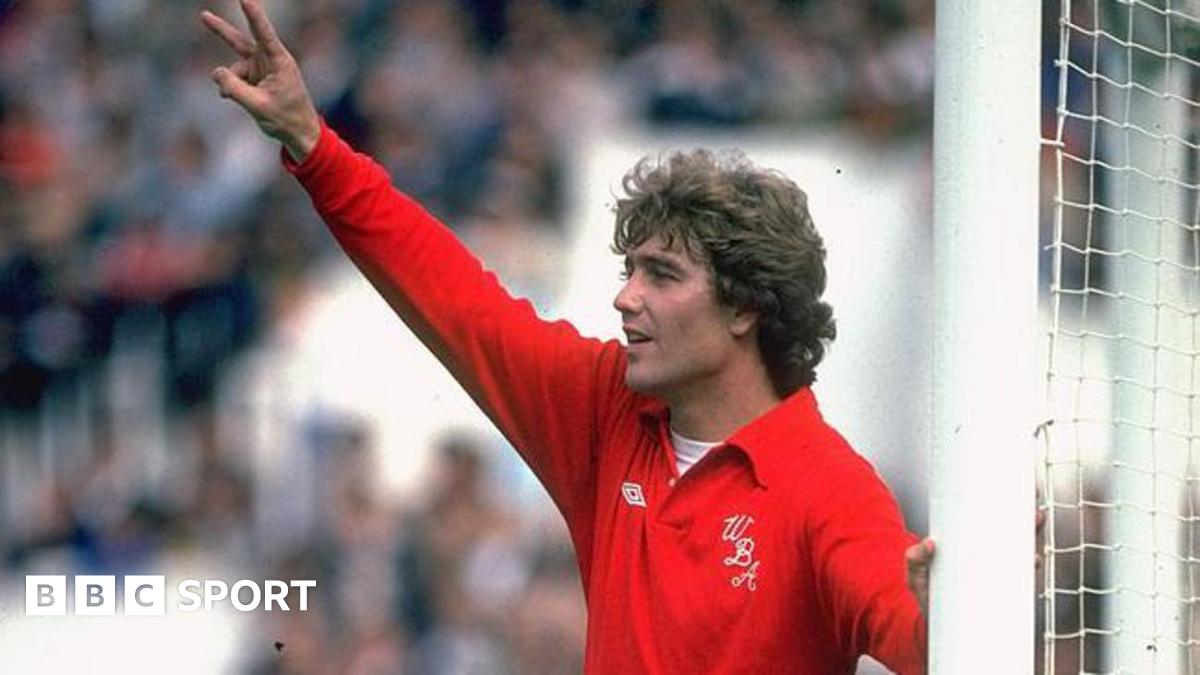
The passing of former West Bromwich Albion goalkeeper Tony Godden at the age of 70, reported by the BBC, closes a chapter on a specific era of English football. To understand Godden's contribution, one must first understand the tactical identity of the team he anchored. The West Brom side of the late 1970s under Ron Atkinson was one of the most exhilarating attacking units in the country, celebrated for its flair and dynamism.
This context is essential. A goalkeeper in a defensively-minded team has a straightforward, if difficult, job: expect pressure and repel it. A goalkeeper in an attack-first system like Atkinson's West Brom has a different, more psychologically demanding task. The flow of play is often at the other end of the pitch, making concentration paramount. Long periods of inactivity can be broken by a sudden, high-stakes counter-attack, requiring a keeper to be mentally sharp even when physically static.
The Unquantifiable Metric of Trust
Godden's role was to be the silent guarantor for the artists ahead of him. The freedom afforded to players like Laurie Cunningham and Cyrille Regis was not born in a vacuum; it was underwritten by the stability Godden provided. His consistent presence, making over 200 appearances for the club, created a platform of reliability. The team could afford to gamble going forward because they had a known quantity behind them. This is a contribution that rarely shows up on a stat sheet.
While records from the era lack the granular detail of modern analytics, the top-four finishes achieved by West Brom in that period speak to a defensive solidity that complemented their attacking prowess. A team does not challenge at the top of the First Division without a formidable defensive spine, and Godden was its final, most crucial vertebra.
The Weight of a Transfer Fee
His subsequent move to Chelsea in 1983, then in the Second Division, placed a different kind of pressure on him. He was a key part of the team that earned promotion in the 1983-84 season, a success that carries its own numerical weight. Winning a league title, at any level, requires a level of consistency where the goalkeeper's contribution is measured in moments that don't happen—the attacks snuffed out, the crosses claimed, the defensive line organized.
The critical observation, however, is that his later career in the top flight with Chelsea never quite recaptured the heights of his time at the Hawthorns. In a less-structured team, the demands on a goalkeeper can become overwhelming, and individual form can be submerged by wider team frailties. It's a reminder that a goalkeeper's performance is intrinsically tied to the tactical system in front of him.
A Legacy Beyond Numbers
Ultimately, Tony Godden is remembered as a 'popular' figure, a term that can be reductive. His career demonstrates that a player's worth, particularly a goalkeeper's, is often found in the inverse of statistics. It's about the goals that *weren't* conceded because of proper positioning, the attacks that *didn't* develop because of a timely intervention. He was the steady hand that allowed for the fireworks, and in an era of celebrated entertainers, his quiet competence was perhaps the most valuable asset of all.