Tier 2: The Media Strategy Behind the Hype
The transfer market rarely operates in silence. When BBC Sport publishes a feature explicitly crowning a teenager as "football's next global superstar" just days before a Champions League final, you can be sure the wheels are turning behind the scenes.
This serves as Tier 2 level confirmation of what scouts across Europe have been whispering for months. Vicky Lopez has officially arrived on the global stage.
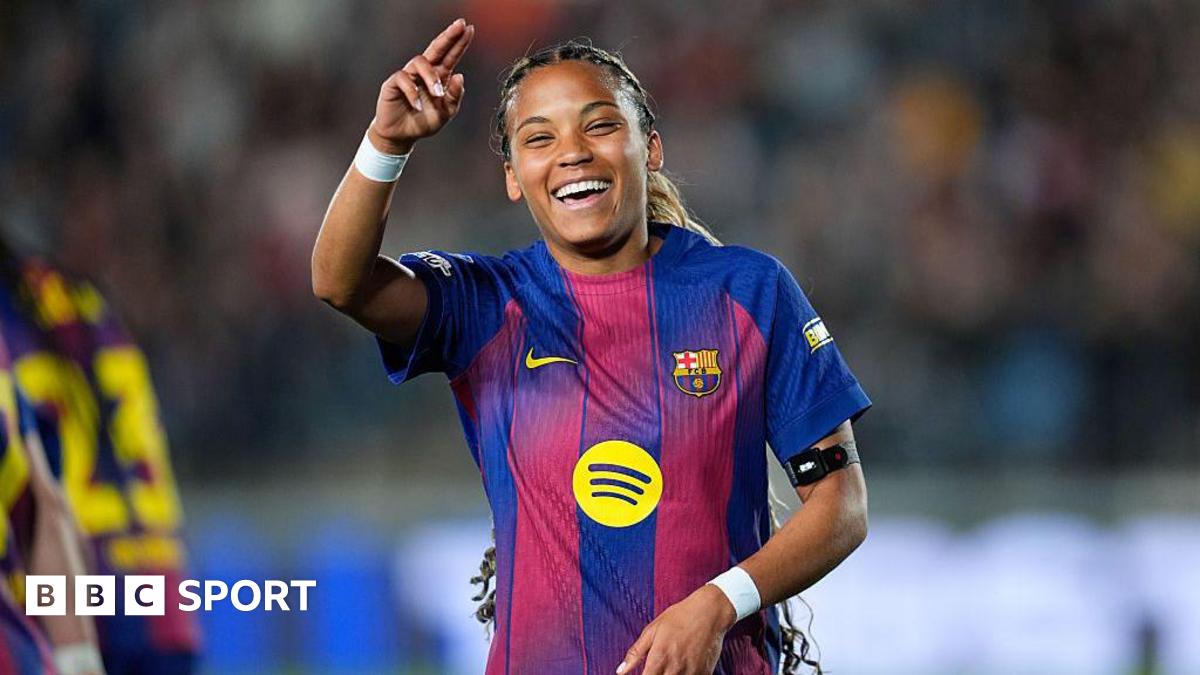
With Barcelona preparing to face Lyon this Saturday, the spotlight on the young Spaniard has never been brighter. The article traces her journey from the beaches of Benidorm to the apex of European football, but it also acts as a starting gun for the upcoming transfer window. The 2026 summer market in the women's game is flush with cash, and Lopez represents the ultimate asset. The question is no longer whether she has the talent to play for the best clubs in the world. The question is whether Barcelona can hold onto her.
The Benidorm Roots and Technical DNA
The BBC piece specifically traces her origins to the beaches of Benidorm, a detail that perfectly explains her technical profile. Players who develop in tight, informal environments naturally acquire a different relationship with the ball. The sand demands perfect balance and punishes heavy touches. You see this constantly in how Lopez handles the ball in the final third.
She operates with a futsal-like cadence, using the sole of her boot to roll away from pressure before snapping a pass through tight defensive lines. Unlike traditional academy products who are drilled into rigid positional play from age eight, Lopez carries an element of street-court unpredictability. Defenders cannot anticipate her next move because she rarely relies on standard passing angles. She creates her own geometry.
The Spanish development system is famous for producing metronomic passers—players who prioritize ball retention above all else. Lopez breaks that mold. She is a risk-taker. When she receives the ball in the middle third, her first look is always forward. This aggressive mindset is what separates a good squad player from a potential Ballon d'Or candidate. But it also means she surrenders possession more frequently than a typical Barcelona midfielder. For a coach obsessed with control, that risk profile requires careful management.
The Tactical Clash: Freedom vs Structure
Let us look closely at her shot-creating actions. When Barcelona pins a team inside their own penalty area, Lopez is lethal. She drops her shoulder, initiates rapid give-and-go sequences, and forces defenders into making poor decisions. Her assist numbers per 90 minutes played are exceptional for a teenager.
But here is the critical flaw that scouts are whispering about. When possession is lost, the modern elite midfielder must immediately counter-press or drop into a rigid defensive shape. Lopez struggles with this transition. She often reacts a second too late, jogging back rather than sprinting to close passing lanes.
In Liga F, where Barcelona faces minimal attacking threat from the lower half of the table, this hesitation is easily hidden. Against a team like Chelsea or Lyon, ball-watching results in conceding a goal. If she wants to command a record fee, she has to prove she can suffer off the ball.
The Midfield Logjam at Camp Nou
The reality of her situation at Barcelona is a mathematical nightmare. The Catalan club operates with the most dominant midfield trio in the sport. You have Aitana Bonmatí occupying the right half-space. You have Alexia Putellas demanding minutes. You have Patri Guijarro anchoring the base, and Keira Walsh dictating the tempo.
Where does a teenager fit into this puzzle? The coaching staff has integrated her slowly, offering substitute appearances when matches are already won. But Lopez is outgrowing the role of a luxury substitute. Development stalls when young players are restricted to 15-minute cameos against exhausted defenders.
The physical demands of a modern 40-game season complicate the picture. Barcelona competes on multiple fronts, and while rotation is necessary, the coaching staff heavily favors experience in knockout football. When the margins are razor-thin, managers default to players who have already won titles. Lopez is caught in the classic prospect trap: she needs elite minutes to prove she is elite, but the club cannot afford to risk elite matches on a developing prospect.
Evaluating the Suitors: Chelsea and Arsenal
If the Spanish giants refuse to guarantee her starting minutes next season, the English clubs will undoubtedly pounce.
Chelsea is monitoring the situation closely. Following the departure of Emma Hayes two years ago, the current regime is always looking to make a statement signing. Chelsea’s midfield has often relied on pure physical dominance and direct transitions to feed Lauren James. Adding Lopez would give them a totally different dimension—a player capable of breaking down the low blocks that frequently frustrate them in domestic cup competitions.
Arsenal presents an equally compelling project. Jonas Eidevall loves technically gifted players who can operate in the pockets between midfield and defense. Imagine Lopez feeding through balls to Alessia Russo or combining with Beth Mead on the right flank. However, Arsenal’s medical department might be wary. Bringing a diminutive, technically-focused teenager into the physical meat-grinder of the WSL carries inherent injury risks.
Beyond Europe, the NWSL casts a massive shadow. Clubs like Gotham FC are backed by ownership groups willing to aggressively outbid European sides. While a move to the United States seems premature for a Spanish teenager, the sheer financial power of American clubs means they are always in the conversation, driving up the baseline price for European bidders.
The Lyon Factor and the Saturday Final
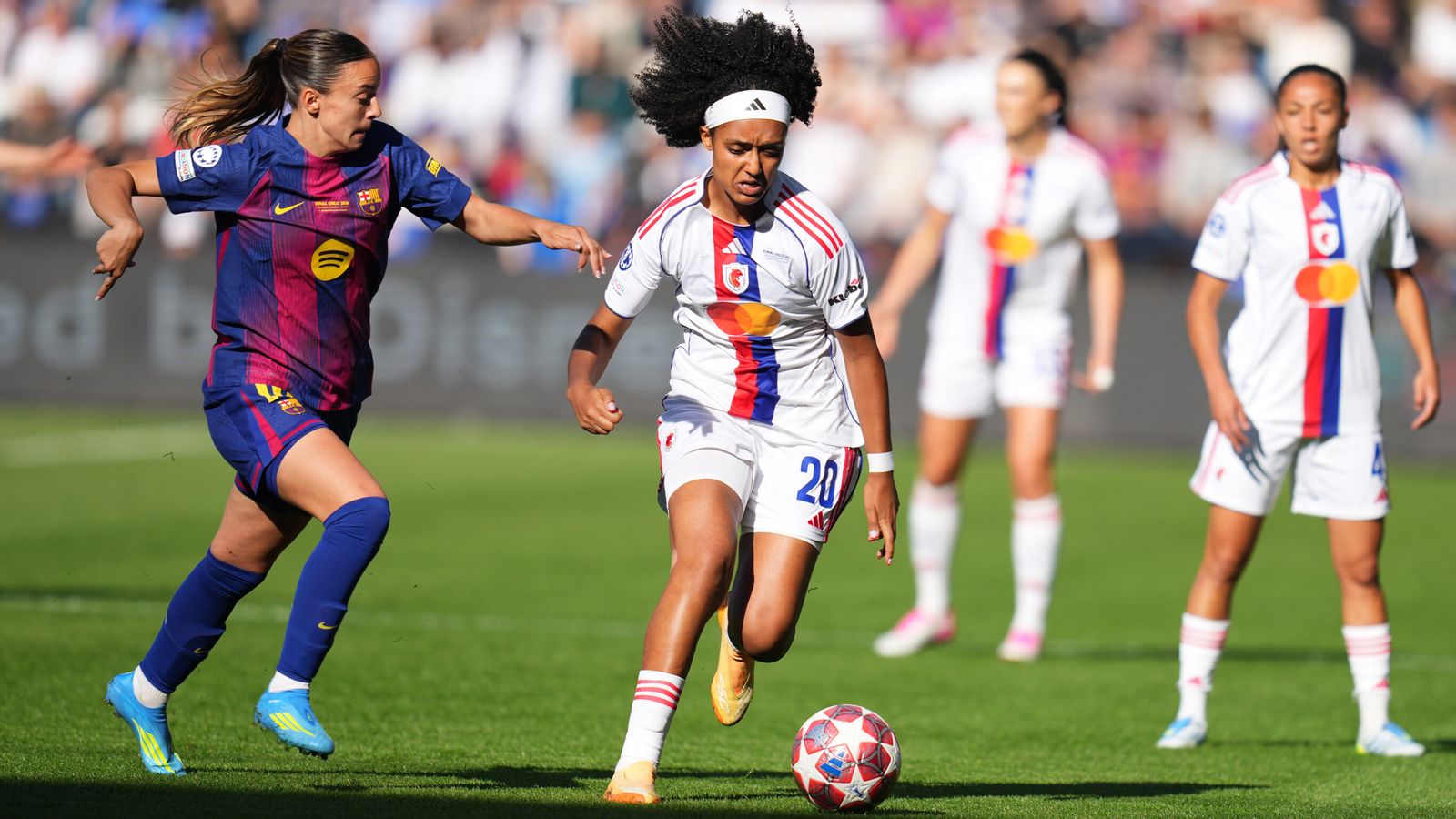
Do not rule out Lyon. The French powerhouse faces Barcelona in the Champions League final this Saturday, setting the stage for the ultimate scouting mission. Lyon's recruitment strategy has shifted in recent years, focusing on hoarding the best young talent in Europe to counter the financial rise of the WSL.
The rivalry between Barcelona and Lyon has defined the last half-decade of women's football. Lyon represented the old guard, the physically dominant dynasty that previously swatted Barcelona aside. Barcelona eventually flipped the script through technical superiority. Saturday’s final is another chapter in this brutal power struggle.
Snatching Lopez from Barcelona would be a devastating psychological blow to their primary European rival. If Lopez comes off the bench on Saturday and makes an impact against a Lyon midfield featuring Lindsey Horan and Daniëlle van de Donk, the French club might decide to open the checkbook before she even leaves the stadium.
Financials: Breaking the Bank
The BBC report offers no financial figures, but looking at recent market trends, we can build a reliable estimate. Women’s football transfers are inflating at an unprecedented rate. We are far removed from the days when a €100,000 bid was considered massive. The recent moves of Mayra Ramirez to Chelsea and Racheal Kundananji to Bay FC shattered the ceiling.
Given her age, potential, and current contract situation, any successful bid for Lopez would likely need to approach the €500,000 mark. Barcelona does not need the money, which means a buyer must pay a premium just to get them to the negotiating table. On the player's side, wage estimates suggest a package around €250,000 annually would be required to lure her away from Spain, likely tied to a four-year contract.
In Spain, mandatory release clauses add another layer of complexity to any potential transfer. If her current clause is set unrealistically high—as is standard practice for Barcelona’s academy graduates—the buying club has to negotiate directly with the board. This rarely ends in a bargain. Any suitor must be prepared for a drawn-out public saga, something English clubs have historically tried to avoid.
Probability and Expected Timeline
Probability of a summer exit: Low to Medium.
Despite the external noise, Barcelona remains the pinnacle of women’s club football. They are the team every player wants to join, not leave. The most likely outcome is that Lopez and her representatives are using the media profile and external interest as a bargaining chip.
Expect a prolonged standoff over the summer, culminating in a lucrative contract extension with Barcelona that includes a massive buyout clause. But if the Catalan club hesitates, or if they fail to outline a clear pathway to the starting eleven, the WSL heavyweights are waiting with open wallets. The clock is ticking toward late August, and the entire European market is watching.
Read Next
- Arsenal's 22-year drought is dead and Declan Rice is the undisputed king
- Arsenal's title exacts a massive physical toll on Declan Rice
- The medical miracles and reckless gambles behind Arsenal's title win
- Jurrien Timber injury status clouds Arsenal Champions League final prep
- ⚽ La Liga 2025-26 — Title Race Hub