The Budapest Showdown: Production Systems vs. Venture Vaporware
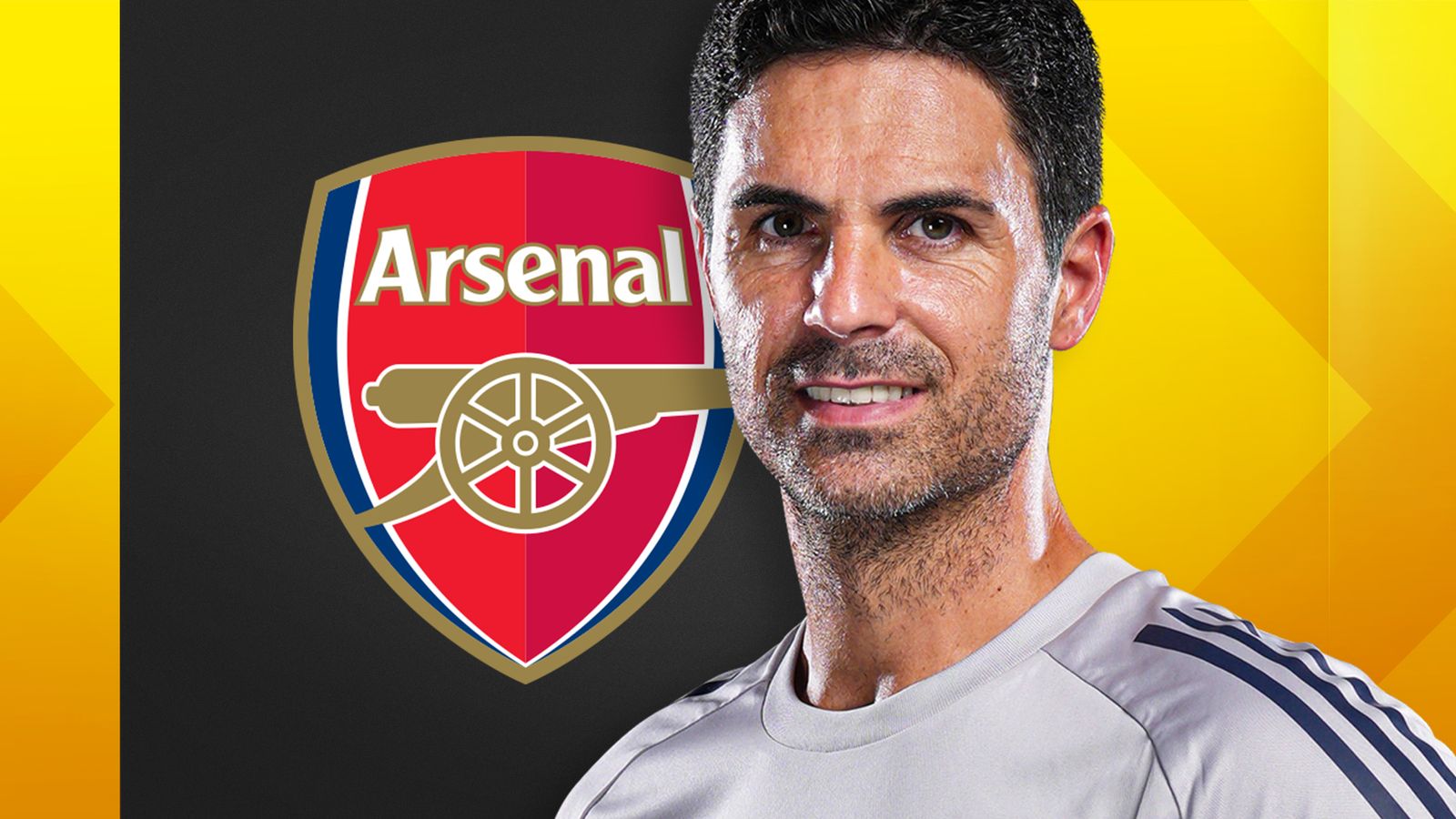
You have to admire the sheer audacity of the Paris Saint-Germain PR machine. Here we are in May 2026, and their marketing department has somehow convinced the footballing public that their latest billion-euro rebuild is a serious sports team. On May 28, they walk into the Puskás Aréna in Budapest to face Mikel Arteta’s Arsenal in a clash between a battle-tested production system and a flashy startup running on fake metrics.
Arsenal are arriving in Hungary with the swagger of a team that has already conquered their domestic demons. On May 19, they ended a grueling 22-year wait to lift the Premier League trophy, holding off a late charge from Pep Guardiola's Manchester City. That title was earned by building the most suffocating, structurally sound defensive block in modern football history.
Paris Saint-Germain, meanwhile, wrapped up their fifth consecutive Ligue 1 title on May 13 with a standard 2-0 win over Lens. Ligue 1 is not a serious testing ground; it is a local host benchmark where you can run unoptimized queries and still look like a genius. The moment you push that code to a production environment against top-tier English opposition, the entire database crashes.
This final will not be a cagey, over-analyzed tactical chess match that goes to penalties. Arsenal are going to expose the glittering house of cards that Luis Enrique has built in Paris. Here is exactly how the system architecture of London defeats the venture capital vaporware of France.
The Puskás Aréna is going to be a boiling cauldron of expectations. Arsenal supporters have traveled in their tens of thousands, desperate to see their club finally claim the ultimate prize in European football. For Paris Saint-Germain, this is yet another attempt to justify their entire existence as a football club, and that pressure will weigh heavily on their shoulders.
Tactical Breakdown: The Suffocating Press vs. The Over-Engineered Loop
Arteta has spent six years building a machine that operates with mathematical precision. Arsenal will set up in their standard out-of-possession 4-4-2, which morphs into a complex 3-2-4-1 when they build from the back. The center-back pairing of William Saliba and Gabriel Magalhães is a hardware-level firewall that refuses to allow opposition strikers to turn.
Luis Enrique, on the other hand, is a manager obsessed with possession for the sake of possession. His PSG side loves to accumulate hundreds of low-risk passes in their own half, resembling a recursive script stuck in an infinite loop. The moment Marquinhos or Willian Pacho plays a lazy lateral pass, Bukayo Saka and Eberechi Eze will lock down the passing lanes.
Let us look at the semifinal data to see how fragile this Paris team actually is. They somehow crawled past Bayern Munich 6-5 on aggregate in a chaotic tie that exposed Matvey Safonov flapping at crosses like a broken windshield wiper. If Viktor Gyökeres presses him with the same intensity he showed against Atlético Madrid, Safonov will commit a catastrophic error before halftime.
But Arsenal have a glaring weakness that Luis Enrique must target if he wants to survive. With injuries depleting their midfield, Arteta is forced to start Myles Lewis-Skelly in the double pivot alongside Declan Rice. Starting an inexperienced eighteen-year-old in a Champions League final is an insane gamble that Luis Enrique will target from the very first whistle.
The Midfield Battle: Declan Rice's Physicality vs. The French Passing Carousel
If PSG want to exploit the inexperienced Lewis-Skelly, they have to win the battle in the center of the pitch. Luis Enrique will deploy João Neves, Vitinha, and Fabián Ruiz to try and drag Declan Rice out of position. It is a neat plan on paper, but football is still played by human beings, not magnets on a whiteboard.
Rice is currently the most dominant physical presence in European midfield play, routinely registering twelve kilometers of high-intensity running per match. He will simply bully Vitinha and João Neves out of the game. When PSG try to play through the middle, they will run headfirst into a brick wall of English muscle.
This brings us to the tactical mismatches that will decide the match in Budapest. We can break down the three primary battlegrounds where Arsenal hold a decisive structural advantage:
- Saka vs Mendes: Saka possesses a unique tactical gravity that forces opponents to double-team him, which will drag Nuno Mendes out of the defensive line and leave massive corridors of space for Ben White to overlap.
- Gyökeres vs Marquinhos: The Swedish striker is a physical monster who thrives on contact, whereas Marquinhos has a long, documented history of melting under high-intensity physical pressure in big European nights.
- The Set-Piece Disparity: Arsenal are the most lethal set-piece team in the world under coach Nicolas Jover, while PSG’s zonal marking scheme against Bayern Munich looked like a group of tourists trying to assemble flat-pack furniture without instructions.
Luis Enrique’s insistence on playing out from the back will be his own undoing. When you combine Safonov’s shaky footwork with Arsenal’s high-intensity front-foot pressing, you are looking at a recipe for tactical suicide. The London side will win the ball high up the pitch and transition into goal-scoring opportunities within three passes.
The Flanks: Kvaratskhelia's Chaos vs. The White-Saliba Double Lock
The only genuine threat to Arsenal’s defensive structure is the chaotic genius of Khvicha Kvaratskhelia on PSG’s left wing. He dribbles with a jagged, unpredictable rhythm that can make even elite defenders look foolish. If Kvaratskhelia can isolate Ben White in one-on-one situations, Paris might have a chance.
But Arteta is too smart to leave his right-back on an island. Every time Kvaratskhelia cuts inside on his favored right foot, William Saliba will be there to double-team him. Ousmane Dembélé on the opposite flank is far too inconsistent to worry Riccardo Calafiori, who has spent the entire season locking down Premier League wingers.
PSG’s attack lacks a central focal point to occupy Gabriel Magalhães. Deziré Doué is a brilliant prospect, but playing him as a false nine in a match of this magnitude is a massive mistake. Without a physical striker to pin the center-backs, Paris will find their wingers completely starved of service.
Tactically, both managers have shown an ability to adapt during the knockout rounds, but their fundamental philosophies remain unchanged. Arteta will double down on his rigid defensive structures, refusing to allow his players to deviate from their assigned zones. Luis Enrique will demand absolute control of the ball, believing that possession is the ultimate defensive weapon.
Budapest Prediction: Why London Claims the Crown
We have seen this movie before with Paris Saint-Germain. They possess all the glittering talent that sovereign wealth can buy, yet they lack the collective character required to win when the pressure reaches a boiling point. We saw it against Real Madrid in 2022, we saw it against Newcastle in 2023, and we will see it again in Budapest.
Arsenal are a completely different beast. They have spent three years suffering near-misses, refining their algorithms, and building scar tissue to win ugly. This is a team at the absolute peak of its evolutionary cycle, led by a manager who has perfected his tactical blueprint.
Luis Enrique will talk about possession percentages and expected goals in his post-match press conference. But the only metric that matters will be the scoreboard at the Puskás Aréna. Arsenal will weather an early storm, exploit a hilarious defensive error from Safonov, and secure a comfortable 3-1 victory to bring the trophy back to London.
Read Next
- Arsenal are making a massive mistake by rushing Mikel Merino back
- Why Arsenal will finally conquer Europe and destroy the PSG project
- Why Arsenal will finally conquer Europe and leave PSG in the dust
- Arsenal's title run wasn't luck, it was cold-blooded execution
- ⚽ Ligue 1 2025-26 — PSG, Monaco & the Title Race Hub
- 🏆 UCL Final 2026 — Munich May 28 — Full Coverage Hub