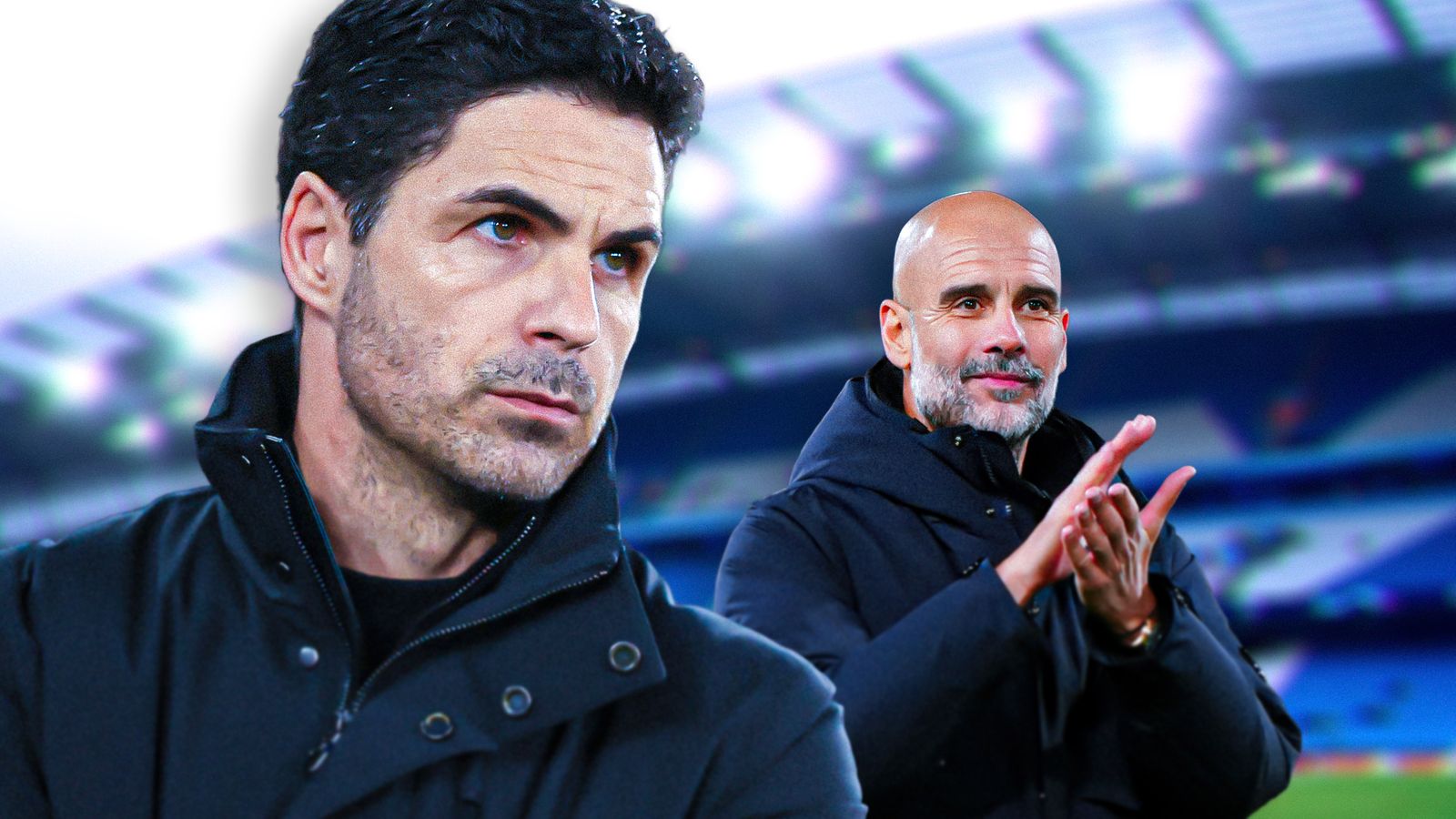
Why Mikel Arteta must unleash Kai Havertz to break City
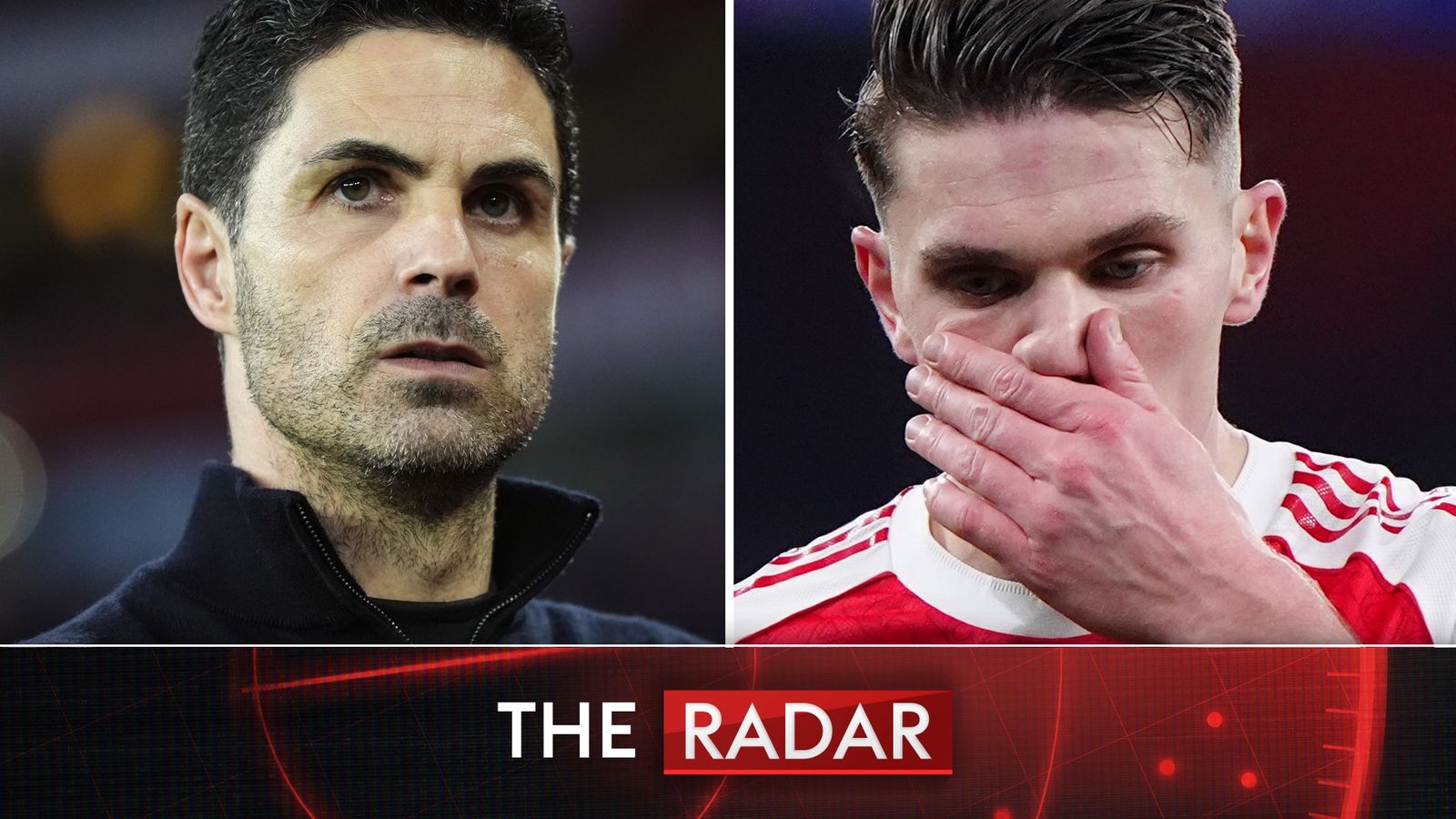
The Anatomy of an Attacking Collapse
Mikel Arteta stands on the touchline, hands frantically waving, pointing to spaces that simply do not exist. Arsenal's attack has ground to a halt. For the past three weeks, the fluid, devastating transitions that defined their early 2026 run have vanished entirely.
Against deep-lying blocks, they look bereft of ideas. Against high-pressing teams, they look panicked. The numbers back up the eye test. Their expected goals (xG) over the last four league games sits at a dismal 3.2 combined.
That is relegation-level chance creation for a team with title ambitions. The upcoming fixture against Manchester City isn't just a massive game; it is a tactical referendum on Arteta's entire offensive philosophy.
The Left-Side Black Hole
The core problem lies in the left half-space. With Granit Xhaka long gone and the role evolving, the left-sided number eight position has become a black hole for attacking momentum.
Declan Rice is a phenomenal ball-winner and driver, but his final-third passing angles are occasionally predictable. When he receives the ball on the turn, his instinct is to carry rather than slip a reverse pass. This repeatedly isolates Gabriel Martinelli on the touchline.
Martinelli is being forced to receive the ball at a standstill, with two defenders instantly doubling up on him. The attacking geometry is completely broken.
Let's look closely at the full-back situation, because it directly impacts this exact attacking flaw. For much of his tenure, Arteta relied on inverted full-backs to create a midfield overload. Oleksandr Zinchenko was the poster boy for this system.
He would step into midfield, dictating play alongside the holding midfielder. But Zinchenko's defensive frailties were brutally exposed time and time again. Consequently, Arteta has pivoted towards playing four natural center-backs across the backline.
Defensively, this shift has been an absolute masterstroke. Arsenal concede fewer high-quality chances than anyone else in Europe. But offensively, there is a massive trade-off.
Jakub Kiwior, for all his defensive solidity, does not have the passing range or the agility of Zinchenko. When the ball goes out to the left flank, the attacking momentum frequently dies. Kiwior cannot consistently overlap Martinelli, nor can he seamlessly invert and play killer passes through the lines.
This imbalance means Arsenal's attacks skew heavily to the right. Over 42% of their final-third entries come down Bukayo Saka's flank. Opposing managers know this. They overload their left side, double-teaming Saka and forcing Arsenal to switch the play.
The Tactical Paralysis
This is where the tactical rigidity of the manager becomes a massive liability. If you are going to play a defensive left-back, you have to adjust the midfield to compensate. You need a left-sided number eight who pushes high and wide to support the isolated winger.
Instead, Arteta asks his midfielders to maintain their strict central zones. The result is a total disconnect on the left wing. Then there is Kai Havertz.
The German was signed to be the ultimate tactical chameleon. Is he a left eight? A false nine? A target man? Lately, he has been all three, and consequently, none of them effectively.
When Havertz plays up front, Arsenal gain an aerial outlet but lose the intricate penalty-box combinations that Gabriel Jesus provides when fully fit. But Jesus has struggled for rhythm, leaving Arteta heavily reliant on Havertz's physical profile.
Here is where the Sky Sports analysis of their technical issues hits the mark perfectly. Arsenal's build-up has become horribly U-shaped.
The ball moves from Ben White, to William Saliba, across to Gabriel Magalhaes, and out to the left-back. If the progression is blocked, it goes all the way back. They are completely bypassing the central zones.
Martin Odegaard is dropping deeper and deeper to get touches. This removes him from the pockets of space where he actually hurts opponents. Pep Guardiola will be watching this tape with a wry smile.
The Etihad Blueprint
City's defensive structure this season has been designed specifically to funnel teams into wide, sterile areas. If Arsenal attempt their U-shaped passing network at the Etihad, City will simply press the wide receivers and force turnovers.
To break this cycle, Arteta has to change the geometry of his midfield. This brings us back to Havertz. He cannot play with his back to goal against Ruben Dias. Dias will eat him alive in physical, static duels.
Instead, Havertz needs to be deployed in a slightly withdrawn role, making late, blind-side runs into the box. Think back to his best performances for Arsenal late last season. They rarely came from him holding up the ball like a traditional target man.
They came from him arriving late, exploiting the space vacated by a pulling winger or a dropping midfielder. Arteta needs to instruct Saka to invert far more aggressively to create that specific space.
Saka hugging the touchline makes sense when Ben White is underlapping. But lately, White has been asked to tuck into midfield alongside Rice, leaving Saka isolated against double-teams. If Saka drives inside, dragging Josko Gvardiol with him, an avenue opens up.
That is the exact space Havertz thrives in. A chipped ball from Odegaard over the top into that right half-space channel is a devastating weapon. We saw glimpses of this in March.
Stubbornness over Spontaneity
Yet, for some reason, the coaching staff seemed to abandon the pattern. This is the most infuriating aspect of Arteta's current system. There is a rigidity that borders on pure stubbornness.
When Plan A fails, the instruction seems to be to execute Plan A with more intensity, rather than switching to Plan B. A highly critical observation has to be made regarding his substitutions.
Arteta is routinely waiting until the 75th minute to make changes. By that time, the game state has usually settled, and the opposition is comfortable in their defensive shape.
Throwing Leandro Trossard on with fifteen minutes left against a low block is a roll of the dice, not a tactical shift. If the midfield is totally failing to connect with the forwards by halftime, changes need to happen by the hour mark.
Because Arsenal are struggling to create clear chances, they are committing more bodies forward in sheer desperation. This leaves them horribly exposed to the counter-attack. City excel at exactly this kind of rapid transition.
Kevin De Bruyne might be getting older, but his ability to find Erling Haaland on the break remains unparalleled. If Arsenal push Rice and Odegaard too high to compensate for the lack of central penetration, City will slice them open with two passes.
Speed Kills
So, what is the fix? It starts with playing the ball quicker. The technical issue isn't a lack of ability; it is a total lack of tempo.
Touches need to be reduced. One-touch passing circuits need to return to the pitch immediately. Arsenal players are currently taking three touches when one would do.
Control the ball, look up, assess, pass. That sequence is taking far too long. Havertz is uniquely suited to one-touch lay-offs. His spatial awareness is genuinely elite, even if his finishing runs hot and cold.
If Odegaard fires a hard, flat pass into Havertz's feet, the German needs runners flashing past him instantly. Martinelli and Saka have to gamble on those second balls.
Right now, they have stopped gambling. They prefer to stay wide and wait for the ball to feet. This makes Arsenal utterly predictable. Predictability is the death of elite attacks.
When you know exactly what a team is going to do, you can drill your defense to counter it. Every analyst in the Premier League knows Arsenal want to isolate Saka on the right and feed Odegaard in the pocket.
The Burden of Expectation
There is a growing feeling among the fanbase that Arteta is becoming far too conservative. He has built a team terrified of making a mistake. The early 2000s Invincibles played with a swagger, an absolute arrogance that they could outscore anyone on the pitch.
This current crop plays with a heavy burden of expectation. Look at the body language of the players when a pass goes astray. Heads drop instantly. Frustration boils over in petty arguments.
There is a visible tension that simply wasn't there during their freewheeling run two years ago. They are playing like a team trying desperately not to lose, rather than a team trying to win. That mindset shift has to be corrected from the dugout.
Arteta needs to project confidence, not anxiety. He needs to remind his players that they are brilliant. They have the technical quality to dismantle any defense in Europe. They just need the permission to take risks in possession.
A misplaced forward pass is significantly better than a successful backward pass if the attacking intent is right. If Odegaard tries to slip a through ball and it is intercepted, the team needs to react by counter-pressing immediately, not retreating into a block.
That aggressive, front-foot mentality has been severely lacking recently. The tactical paralysis is born of mental fatigue. Players are overthinking their movements instead of reacting to the game.
When Havertz receives the ball, you can almost see the gears turning in his head. Should I hold it? Should I lay it off? Should I turn and shoot? By the time he actually decides, the defender has already closed the gap.
Instinct has been entirely replaced by strict instruction. Guardiola's City are the exact opposite in the final third. They have complex instructions, but they execute them purely on instinct.
They have drilled the offensive patterns so many times that it looks entirely natural. Arsenal are still looking at the sheet music while City have memorized the entire song.
Controlled Chaos
City will put Mateo Kovacic or Rodri directly in Odegaard's shadow. They will double up on Saka with a winger tracking back. If Arteta doesn't introduce a new variable, the game is lost before a ball is even kicked.
That variable could be deploying Havertz as a false nine who actively vacates the central space. Drag the center-backs out of their comfort zone. Force Manuel Akanji or Nathan Ake to make a difficult decision.
Do they step up and leave space in behind, or hold the line and let Havertz turn? If they step up, Martinelli has to make the diagonal run inside. It sounds simple, but the execution requires absolute precision and timing.
The title race will not wait for Arsenal to find their rhythm. With the end of April approaching rapidly, the margin for error is exactly zero. Dropping points at the Etihad usually spells the end of a title challenge.
Arteta has built a magnificent defensive unit. But defense only guarantees you won't lose. To win titles, you have to score, and right now, Arsenal look like they've forgotten how.
This Sunday requires a masterclass in offensive re-engineering. It requires bravery from the manager to drop underperforming system players.
It requires Kai Havertz to play the game of his life. Anything less, and the familiar, crushing feeling of springtime disappointment will creep back into North London.
Read Next
- Arsenal's Etihad trip is the final boss fight they can't save-scum
- Why Arsenal are choking and Villa are taking over the Premier League
- The BBC just broke football Twitter with a ridiculously hard promotion quiz
- Top 10: Moments Shaping the 2026 Season Climax
- 🇩🇪 Germany World Cup 2026 — Die Mannschaft Hub
adidas MLS League Soccer Ball
Match-ball looks with a friendly training-ball price tag.
More Coverage

Why the new BBC awards feel like a Participation Trophy
1 day, 3 hours ago
Top 10: Chelsea 2026 Power Rankings
2 days, 1 hour ago
Aston Villa's new kit is giving everyone a crisis of identity
3 days, 14 hours ago
Top 10: Tottenham's 2026 Revival Rankings
3 days, 15 hours agoCristian Romero trying to skive off to Argentina is peak Spurs comedy
5 days, 11 hours ago
SFA admits Celtic penalty error as SWPL title race goes to Sunday wire
6 days, 5 hours agoMore Analysis
Arteta's tactical headache before the Man City title decider
1 month, 1 week ago
Arsenal's title hopes hinge on Kai Havertz's questionable fitness
1 month ago
Arsenal finally have the tools to break the Etihad curse
1 month, 1 week ago