Pep's B-team just proved why City's system is untouchable

The Anatomy of a Much-Changed Machine
When the team sheets dropped on Saturday afternoon, the collective sigh from the red side of north London was almost audible. Pep Guardiola had done it again. Facing a Crystal Palace side that has historically caused Manchester City profoundly uncomfortable afternoons, he deployed a heavily rotated starting eleven. Key names were benched. The substitutes list looked substantially more expensive than the players on the pitch. And yet, 90 minutes later, the scoreboard displayed a comfortable 3-0 victory.
The term "much-changed" does an incredible disservice to what Manchester City actually executes when they rotate their squad. For 19 other teams in the Premier League, altering five or six starting positions fundamentally breaks the structural integrity of the side. Passing networks dissolve into confusion. Defensive spacing becomes erratic and reactionary. The drop-off in technical execution is stark, immediate, and readily exploitable by any competent opposition.
For City, rotation isn't a downgrade. It is a calculated, deliberate shift in tactical parameters. They do not play a worse version of their standard game; they simply solve the spatial equation using a different set of physical variables. This dismantling of Crystal Palace was a masterclass in system supremacy. It proved, definitively, that Guardiola's tactical framework is entirely modular. You unplug a world-class inverted full-back, you plug in a highly technical center-half, and the machine doesn't even stutter. The output remains identical.
It is difficult to overstate how demoralizing this is for the rest of the league. You prepare all week to face a specific iteration of Manchester City, only to have Guardiola present an entirely different puzzle at kickoff. The personnel changes, but the passing lanes, the pressing triggers, and the relentless, suffocating control remain exactly the same.
Suffocating the Low Block
Crystal Palace arrived with a pragmatic, well-documented defensive blueprint. Oliver Glasner set his team up in a compact, disciplined block, intending to clog the central channels, force the ball wide into unthreatening areas, and wait patiently for transitional moments. It is the standard operating procedure for mid-table sides facing City. It rarely works in practice, but it is often the only mathematically sound approach to avoid a heavy, humiliating defeat.
Guardiola's response was surgical and characteristically patient. Without his primary, first-choice ball-progressors orchestrating the buildup from deep areas, the tempo of City's play shifted noticeably. It was less about rapid, chaotic verticality and significantly more about methodical, relentless lateral circulation. The heavily rotated midfield refused to attempt low-percentage, line-breaking passes through Palace's deeply congested midfield block.
Instead, they utilized a deliberate strategy of horizontal stretching. By keeping the ball moving swiftly from flank to flank, City forced the Palace defensive structure to constantly shift its collective center of gravity. This is cognitive warfare thinly disguised as possession football. When a defending team is starved of the ball and forced into endless, repetitive lateral shuttling, mental fatigue inevitably precedes physical exhaustion.
The gaps eventually, predictably, appeared. A momentary lapse in concentration from a defensive midfielder. A delayed, clumsy step-up from a right-sided center-back. City exploit these micro-errors with terrifying, algorithmic efficiency. The rotated squad demonstrated an elite, ingrained understanding of the core principles of positional play. They knew precisely when to hold maximum width, when to crash the half-spaces aggressively, and when to conservatively recycle possession backward.
The Pressing Trap
To truly understand the sheer dominance of this performance, you have to look beyond the basic scoreline and examine the underlying mechanics of City's structural control. Even with a drastically altered lineup, their counter-pressing efficiency remained absurdly high. City won the ball back within five seconds of losing it on a staggering number of occasions, effectively neutering Palace's transition game before it could even begin.
This aggressive, coordinated counter-press is the true marker of a Guardiola team. The offensive structure is meticulously designed to inherently protect against the counter-attack. Because the positional spacing is so incredibly strict, City always maintain a dense, aggressive net of players immediately surrounding the ball upon turnover. Palace's desperate attempts to launch rapid transitions were smothered at the source, repeatedly.
The pressing triggers were perfectly, almost robotically, synchronized. If a Palace defender took a slightly heavy touch or received a pass awkwardly on his weaker foot, the City forward line collapsed on him immediately. It was a suffocating, deeply uncomfortable environment for the visitors. They couldn't build out cleanly from the back, and they couldn't bypass the intense press with long, hopeful clearances because City's makeshift backline decisively won the initial aerial duels and easily secured the vital second balls.
The Modular Full-Back Conundrum
One of the most fascinating tactical aspects of Guardiola's deep rotation is how he continuously manipulates the full-back positions to suit the specific profiles of his available players. Against Palace, we witnessed a masterclass in structural role adaptation. If Guardiola drops a traditional, overlapping full-back for a more conservative, defensively minded player, the tactical offensive load immediately shifts elsewhere.
The winger on that specific side radically alters their starting position. The nearest central midfielder adjusts their supporting angles to compensate. The entire micro-structure on that flank rapidly recalibrates to ensure the collective attacking output remains constant. It is a level of tactical fluidity that absolutely no other team in European football can currently replicate. The overarching system is explicitly designed to absorb individual absences without compromising the core philosophy.
This is precisely why City's B-team still visually resembles a championship-winning side. The players aren't merely technically gifted; they are tactically literate to a degree that borders on the academic. They understand the fundamental "why" behind the strict positional instructions. They know how to dynamically interpret space, manipulate defensive passing lanes, and instantly adjust their positioning relative to both their teammates and the opposition's defensive block.
The Late-Season Squeeze and Load Management
Context is absolutely critical when analyzing a result like this. As I sit here writing this on May 14, 2026, the title race is a grueling, entirely unforgiving war of physical attrition. The physiological and psychological load on these elite athletes is immense. Every maximal sprint, every sudden deceleration, every fiercely contested header compounds the deep, lingering muscle fatigue that inevitably accumulates over a draining 50-game season.
This is exactly where Guardiola's ruthless rotation policy transitions from an expensive squad luxury into a decisive, league-winning weapon. By resting key, foundational personnel against a physical Palace side, he isn't simply managing minutes on a spreadsheet. He is actively, aggressively mitigating the severe risk of soft-tissue injuries and cognitive burnout ahead of the final, decisive fixtures of the campaign. With the Champions League Final scheduled for May 28—exactly 14 days away—managing physical load is the difference between European glory and a late-season collapse.
Other title contenders simply do not possess this structural capability. Arsenal and Liverpool have been forced to repeatedly run their absolute best players into the ground, desperately praying they avoid a late-season hamstring tweak or a sudden, catastrophic loss of form. Their tactical systems are heavily, dangerously reliant on the specific, unique attributes of their starting eleven. When they are forced to rotate, the drop-off is highly visible. The intense pressing loses its bite; the buildup play becomes noticeably sluggish and predictable.
City, conversely, casually swap out half their team, alter their complex structural mechanics, and still comfortably deliver a clinical 3-0 victory. The discrepancy is deeply structural, inherently financial, and massively tactical. It repeatedly raises profound, uncomfortable questions about the competitive reality of a 38-game Premier League season against a state-backed sporting project that has rigorously optimized every conceivable variable.
The Flaw in the Algorithmic Machine
Yet, even in a dominant, statistically overwhelming 3-0 victory, there are minor cracks visible if you look closely enough at the tactical execution. City's heavy reliance on sterile, cautious lateral possession in the first half occasionally bordered on the incredibly ponderous. Against a significantly better counter-attacking side—one with vastly more clinical precision in transition than Palace managed on the day—City's heavily rotated midfield might have been severely exposed.
There were distinct moments where the total lack of vertical risk-taking allowed Palace to completely, comfortably reset their defensive block without breaking a sweat. Guardiola's notorious insistence on absolute, unyielding control sometimes actively suffocates the instinctual, aggressive attacking brilliance of his own creative players. When the rotated side rigidly prioritized ball retention over direct penetration, the game settled into a dull, repetitive lull that a more ruthless, highly aggressive opposition could have potentially exploited.
It is a relatively minor criticism in the broader context of a routine victory, but in the razor-thin margins of a modern Premier League title race, a momentary, structural lack of urgency can occasionally be entirely fatal. If City attempt this level of sterile possession in the upcoming Champions League Final, they may find a top-tier European opponent far less forgiving than Crystal Palace.
Ultimately, City got the job done with absolute minimal fuss. They successfully secured the necessary three points, carefully protected their core attacking assets, and kept the suffocating pressure firmly applied to their remaining title rivals. The machine relentlessly rolls on, much-changed in its exact personnel, yet functionally, terrifyingly identical in its end output.
And as long as Pep Guardiola is meticulously orchestrating this complex modular system, it is exceptionally difficult to see exactly how the established status quo shifts. The Premier League title race remains technically alive, but City are navigating these final hurdles with a level of tactical and physical efficiency that frankly borders on the algorithmic. The rest of the league is desperately playing a highly demanding physical sport; Manchester City are coldly executing a mathematical proof.
Adidas Trionda League Soccer Ball
Bring the magic of the 2026 World Cup to your local pitch with this match-grade
Frequently Asked Questions
Why did Manchester City's lineup against Crystal Palace cause surprise?
How does Manchester City handle squad rotation compared to other teams?
What defensive strategy did Crystal Palace use against Manchester City?
How did City's rotated midfield break down Crystal Palace's defense?
What does the Palace game prove about Pep Guardiola's tactical system?
More Coverage

Top 10: The Definitive Arsenal Moments of the 2025/26 Season
2 hours agoLincoln City just entered the weirdest experiment in League One history
3 hours ago
Newcastle are burning the furniture to keep the house warm
3 hours ago
Manchester City's business model is frankly terrifying
3 hours ago
Brentford midfield hit by late-season injury setback
3 hours ago
Arsenal’s Champions League final run is pure Arteta obsession
4 hours agoMore Analysis
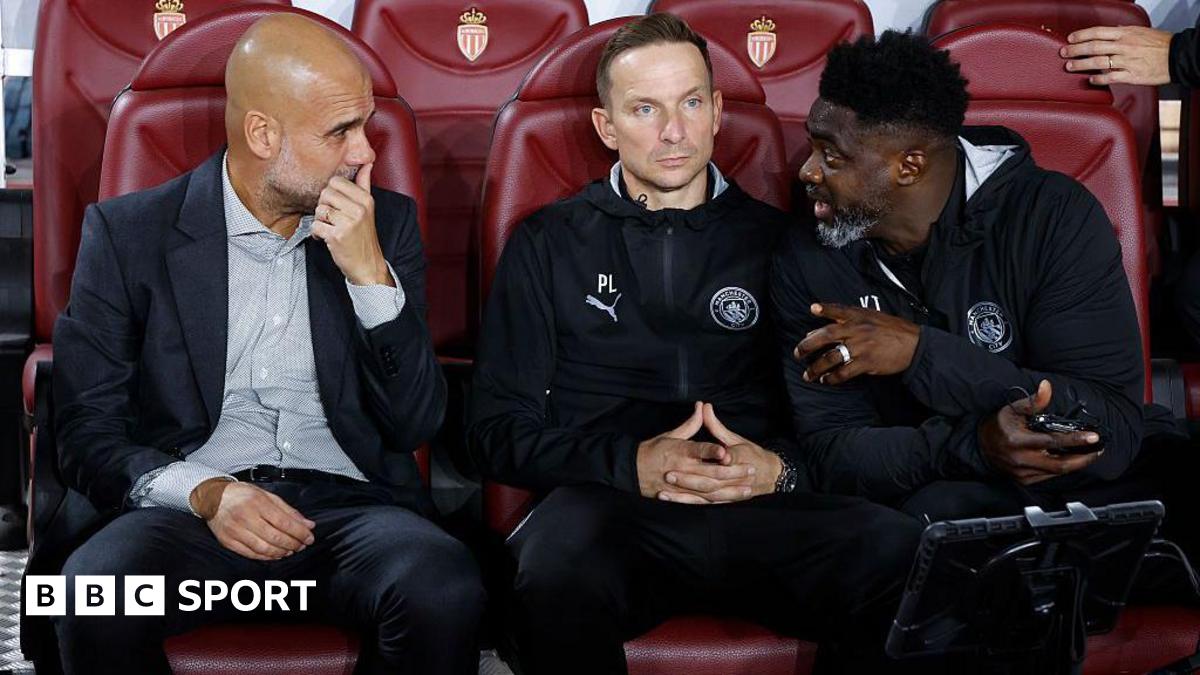
Why Pep Guardiola's tactical reboot is terrifying the Premier League
1 month ago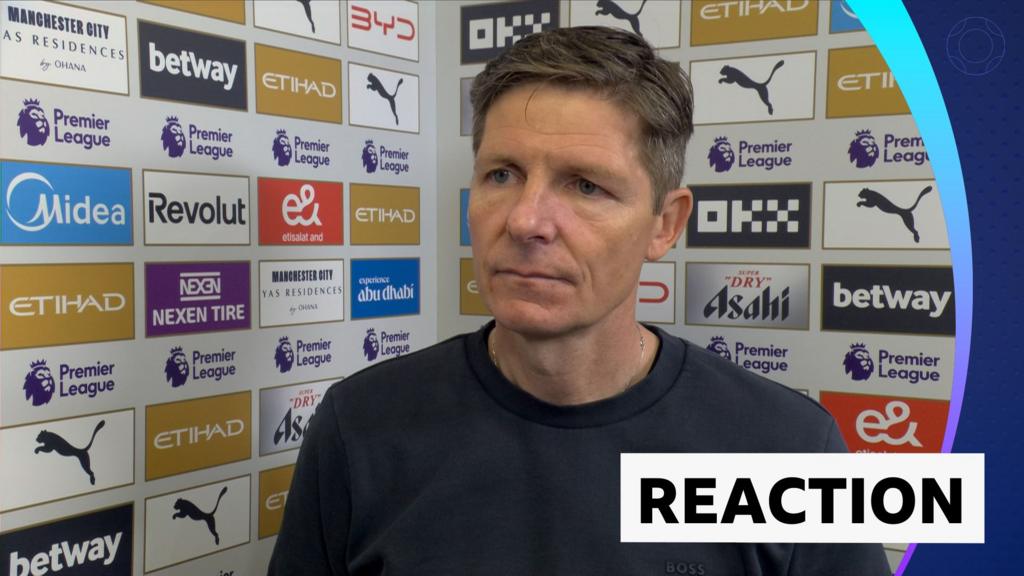
City's 3-0 demolition of Palace proves the title race is already dead
2 weeks, 1 day ago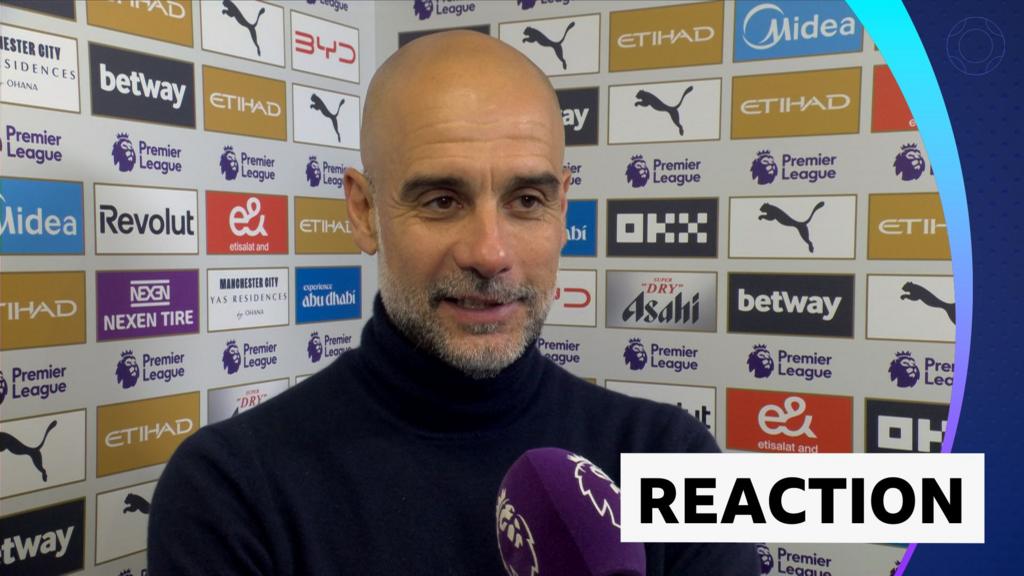
Pep's rotation roulette sets up a nerve-shredding final day
2 weeks, 1 day agoPhil Foden is the only player who can unlock this Crystal Palace block
2 weeks, 1 day ago