The Champions' Shadow
The Premier League title is secured. The medals are minted. Yet, when Mikel Arteta leads Arsenal into Selhurst Park on Sunday, he faces a tactical headache rather than a victory parade.
Five days later, the Champions League final awaits. This looming European showcase transforms a standard London derby into a high-wire balancing act. One loose challenge could ruin a season's work.
Arteta must choose between momentum and preservation. Rest too many stars, and the team's passing rhythms disintegrate before the biggest match of their lives. Play them, and he risks a catastrophic muscular tear.
Dissecting the Rotational Trap
Selhurst Park is a hostile environment for experimental football. Crystal Palace defend in a compact mid-block that squeezes the space between the lines. They wait for technical errors in the half-spaces.
When Arsenal's inverted full-backs tuck into midfield, they occupy central areas to create numerical overloads. This structure relies on automated passing angles. Any drop in execution allows Palace to spring their traps.
If Arteta rests Declan Rice, the central progression rate will suffer. Backup options rarely match his ability to play breaking vertical passes under pressure. Without that transition defense, Arsenal's high line becomes incredibly vulnerable.
Palace's front three specialize in isolating central defenders on the counter-attack. They target the spaces vacated by ascending wing-backs. A rotated midfield will struggle to cover these vast defensive areas.
The Ghost of 2017 and the Flamini Parallel
History offers a warning about complacency in this fixture. The transition from Wenger's peak to his decline was punctuated by a disastrous trip to south London. That night still echoes in the minds of older supporters.
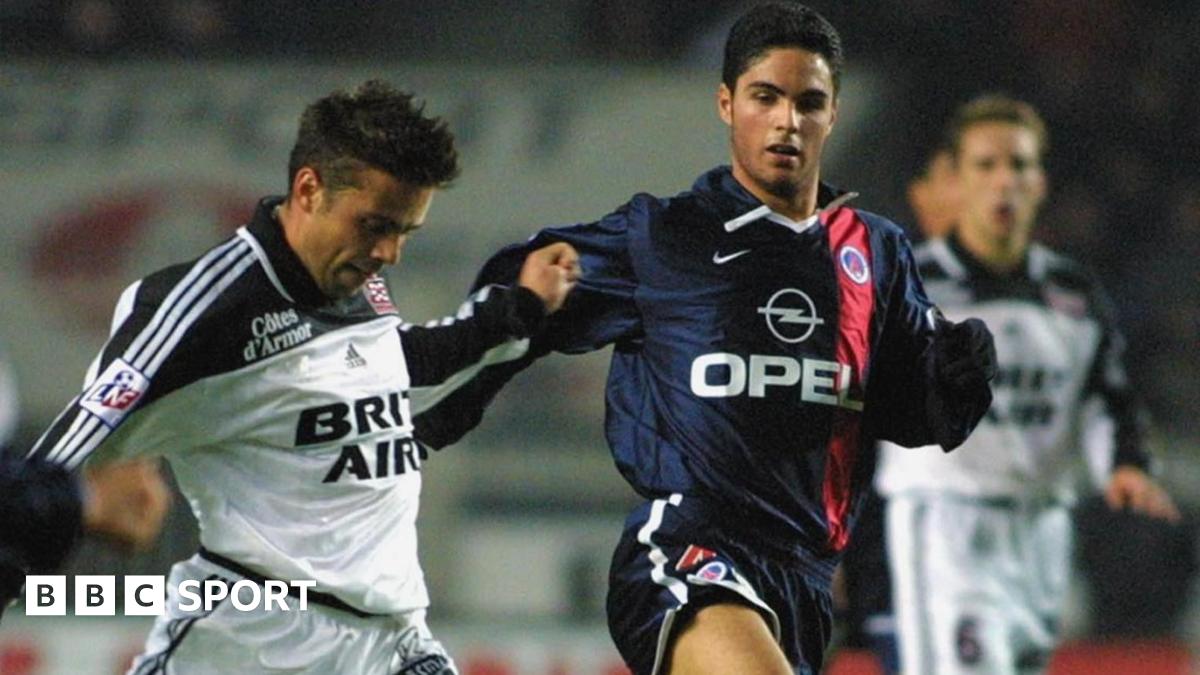
Former midfielder Mathieu Flamini lived both sides of this divide, having played for Wenger before he chose to join Palace in 2016. He watched from the opposition dugout as a rampant Palace side dismantled a fragile Arsenal 3-0 in April 2017. The tactical surrender that evening signaled the end of an era.
Reflecting on that dark period, the French midfielder admitted the pain of witnessing his former club's decline. "It is painful because I am still an Arsenal fan," Flamini said in an interview with Mirror Football. "But it is not an easy situation," he added, acknowledging the difficulty of commenting from the outside.
Wenger was under immense pressure from a protesting fan base. Flamini noted his deep respect for his former manager, who did so much for his career. Yet the tactical stagnation on the pitch was undeniable.
Today, the club's financial and sporting reality has shifted dramatically. Arteta has built a modern powerhouse, assembling a squad that cost approximately £780million to construct. This squad has now secured consecutive titles through relentless tactical discipline.
Ironically, Flamini's own post-football ventures dwarf these astronomical sporting budgets. Through his green chemistry company, GF Biochemicals, the former midfielder has amassed a net worth of £10billion. His company was the first to mass-produce levulinic acid, a petroleum alternative.
His personal fortune is now ten times the value of Arsenal's entire title-winning squad. Yet Flamini's business success is built on principles he learned on the pitch. He understands that individual brilliance is useless without structural cohesion.
"As a player, you are judged on your own results," Flamini explained in a recent discussion. "As a business leader, your role changes completely: you become a coach," he observed. Arteta must embody this leadership, managing both the immediate match and the broader campaign.
Tactical Friction and the Spacing Battle
Palace will look to exploit any signs of distraction in the Arsenal ranks. Their defensive block functions as a coordinated unit. They restrict access to the zone 14 area.
If Arsenal cannot circulate the ball quickly, their attacking play becomes predictable. The wingers will be forced to receive the ball with their backs to goal. This plays directly into Palace's hands.
Statistically, Arsenal's normal vertical pass completion rate stands at an elite 87.4% when their first-choice midfield is active. However, when key progressors are rested, this figure drops significantly. The resulting loss of control invites transition threats.
Arteta's Three Selhurst Priorities
- Maintain structural spacing in possession to prevent center-channel turnovers.
- Enforce rapid ball circulation to bypass the aggressive Palace wing-backs.
- Avoid unnecessary physical duels in the defensive third to prevent injuries.
The tactical challenge lies in the half-spaces. If the Gunners cannot find their advanced playmakers in these pockets, their possession becomes sterile. They will simply circulate the ball in a harmless U-shape.
Palace's wing-backs are coached to jump aggressively when the ball is played wide. They trap the receiver against the touchline. This pressing trigger has caused problems for several elite teams this season.
Arsenal must counter this by using rapid third-man combinations. This requires absolute focus and mental sharpness. If the players are already thinking about the Champions League final, they will fail.
The Out-of-Possession Challenge
Defensively, Arsenal's counter-press must be flawless. They must restrict Palace's ability to transition through the center. This requires immediate vertical pressure upon losing the ball.
Palace transition quickly by using a target man to hold up play. The secondary runners then burst into the channels. If Arsenal's central defenders are left isolated, they will be forced into making professional fouls.
Yellow cards and potential suspensions are another risk Arteta must manage. A reckless challenge could rule a player out of European action. The mental strain of avoiding injury while maintaining intensity is immense.
Arteta's tactical setup must account for this psychological barrier. He cannot ask his players to commit 100% to physical duels. Instead, they must control the match through superior positioning and ball retention.
A Confident Selhurst Prediction
This match has all the ingredients of a classic tactical stalemate. Palace are formidable at home, especially against opponents with distracted minds. They will play with high intensity from the opening whistle.
Arteta will likely opt for a hybrid selection strategy. He will start a strong spine but make early substitutions to protect key assets. This compromise will inevitably disrupt Arsenal's fluidity.
Expect Arsenal to control early possession without creating clear-cut openings. Palace will strike on the counter-attack early in the second half. The Gunners will rally late to salvage a point.
My tactical notebook points to a hard-fought 1-1 draw in south London. It is a result that will satisfy both sides. Palace gain a prestigious point, while Arsenal escape without injuries before their European showdown.