The technical debt of football fandom
Football has a legacy code problem. For decades, the architecture of the sport—from stadium design to the way we talk about 'real fans'—has been built on a set of unverified assumptions. We’ve treated the male-centric matchday experience as the default kernel, and everything else as a peripheral add-on. Today, as the UCL Quarter-Finals hit their second leg, that outdated system is finally facing a massive breaking change.
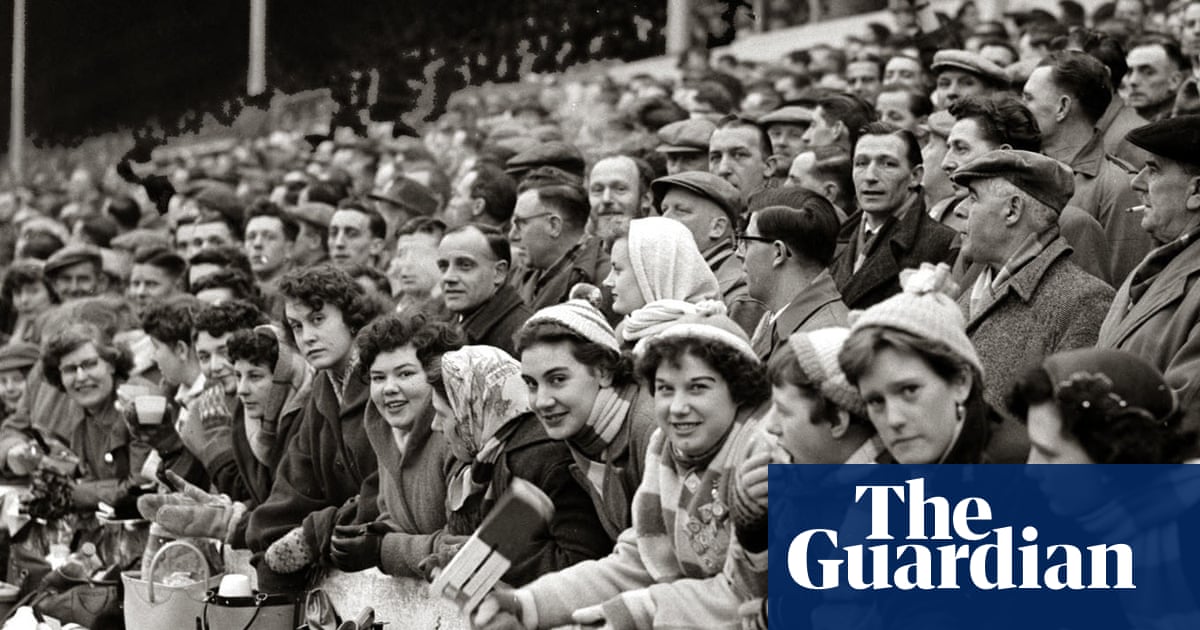
The trigger isn’t a boardroom coup or a billionaire takeover. It is a data-heavy exhibition called Moving the Goalposts, spearheaded by Prof Stacey Pope. It is currently stripping away the layers of emotional labor female fans have been forced to perform just to keep their season tickets. If you look at the raw feedback from fans like Jo, a Newcastle regular, the diagnosis is clear: the validation layer of football fandom is broken.
Jo’s quote in The Guardian today hits like a compiler error in a production environment. She points out that you can be the thickest bloke in the Gallowgate End and still believe your 'input' is more valid than a woman's. This isn't just a social grievance; it is a fundamental failure of the sport's user experience. We are currently running a system where the most dedicated users are being throttled by the most ignorant ones.
The cost of the validation tax
In technical terms, female fans are paying a high 'validation tax.' Every time they enter a stadium, they have to defend their presence, justify their knowledge, and prove they aren't 'plastic.' Imagine having to solve a CAPTCHA every time you tried to log into your own bank account—that is the daily reality for women in the stands. The Pope exhibition proves that this isn't an edge case; it is a systemic feature of the current fan culture.
We have the stats to back this up. Female viewership in the UK has grown by 18 percent in the last two years, yet the physical 'safe-standing' areas are still overwhelmingly dominated by the 'thick bloke' demographic Jo describes. In the UCL matches tonight, look at the camera pans across the home ends. You’ll see a demographic that doesn't match the actual growth metrics of the sport. We are ignoring our fastest-growing user base to appease a legacy group that is increasingly toxic to the brand.
The Newcastle case study is particularly damning. St. James' Park is one of the most atmospheric grounds in the world, but it is also a site where this 'justification tax' is most visible. When a fan like Jo says she could 'wipe the floor' with the average male fan in a tactical debate, she isn't bragging. She is highlighting a massive discrepancy between perceived expertise and actual knowledge. The 'thick bloke' is essentially a low-quality bot being given admin privileges.
The 2026 World Cup is the ultimate stress test
We are exactly 58 days away from the FIFA World Cup kickoff in Mexico City. The expanded 48-team format means we are looking at 104 matches across three countries. This isn't just a scaling challenge for logistics; it is a scaling challenge for fan culture. If we take the current 'thick bloke' gatekeeping model to a global stage with this many games, the system will crash. The 2026 World Cup will be the first tournament where the 'diverse fan' isn't just a marketing slide—it is the majority of the audience.
Clubs are starting to realize that gatekeeping is bad for business. If you alienate 50% of your potential high-LTV (Life-Time Value) customers by letting a few loudmouths dictate the 'vibe' in the stands, your growth ceiling is capped. The Stacey Pope data shows that female fans are often more tactically aware and more brand-loyal than the 'legacy' fans who only show up when the team is winning. We are essentially leaving money on the table to protect the feelings of men who still think a 4-4-2 is the pinnacle of human thought.
“You can be the thickest bloke and you still think you know more about football than a woman.”
This quote from Jo should be pinned to the door of every FA office. It’s a reminder that the loudest voices in the room are often the ones with the least to say. As we watch the UCL drama tonight, notice how the commentary still leans on tired tropes. We are still waiting for a broadcast that treats the female perspective as a primary data source rather than a 'special interest' segment.
The critical failure of academic outreach
Here is my negative observation: as much as I admire Prof Pope’s work, the Moving the Goalposts exhibition risks preaching to the converted. If the goal is to fix the 'thick bloke' problem, putting the data in a museum is like putting a bug fix in a hidden README file. The blokes Jo is talking about don't visit exhibitions at the National Football Museum. They spend their time in WhatsApp groups and toxic subreddits.
The exhibition is a brilliant technical audit of the problem, but the 'deployment' strategy is weak. Until we see this data translated into actual stadium policy—like dedicated reporting lines for 'fandom harassment' or gender-weighted season ticket allocations—it is just noise. We need to move from 'highlighting' the problem to 'patching' it. Newcastle United, for instance, should be using Jo's feedback to redesign their fan engagement protocols immediately, not just letting it sit as a quote on a gallery wall.
If we don't fix this by the time the World Cup kicks off on June 11, we are going to see a repeat of the Euro 2024 final chaos but on a global scale. The 2026 format is too large and too public to allow the 'thick bloke' era to continue unchecked. We need a 'Fandom 2.0' where the entry requirement is basic human decency, not a Y-chromosome and a loud voice.
The 2026 Fandom Prediction
I am calling it now: By the time we reach the UCL Final on May 28, the pushback from female fan groups—empowered by the Pope data—will force a major Premier League club to implement a 'Fan Integrity Score.' This won't just be about ticket points; it will be about behavior. If you are caught pulling the 'defend your fandom' stunt on a woman in the stands, your season ticket is at risk. It’s a blunt instrument, but when the UI is this broken, you need a hard reset.
The prediction is specific: Before the June 11 World Cup opener, at least three 'Big Six' clubs will issue a joint statement acknowledging the Pope exhibition's findings. They will commit to a 25 percent minimum female representation in all newly created safe-standing sections. This isn't just 'woke' PR; it is a tactical pivot to ensure the 2026 World Cup doesn't turn into a PR disaster for the sport's biggest stakeholders.
The era of the 'thick bloke' gatekeeper is ending not because they’ve learned better, but because they’ve been out-competed. Fans like Jo are the new power users. They have the stats, they have the loyalty, and as of today, they have the academic backing to prove that they are the ones actually keeping this sport alive. The goalposts haven't just moved; they've been completely redesigned for a modern, data-driven era. If you can't keep up, stay off the pitch.