The precision of elite finishers
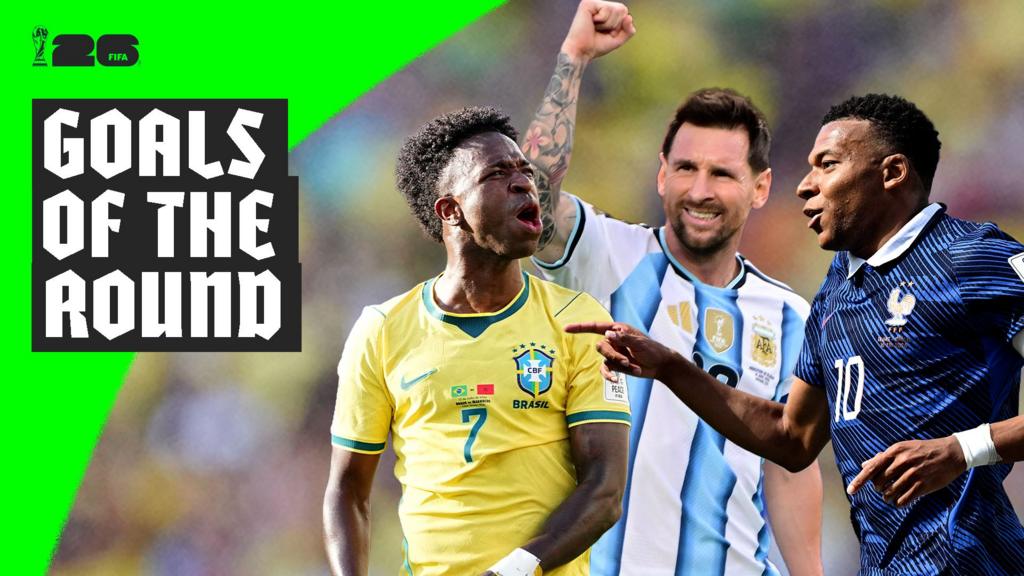
The opening round of the 2026 World Cup confirmed a familiar trend: when the game state is stagnant, the highest-echelon talent is required to manufacture goals from half-chances. Lionel Messi, Kylian Mbappe, and Vinicius Jr. dominated the headlines, but their output represents a shift toward extreme conversion efficiency. In the first round of matches, these three players combined for a total shot conversion rate of 33.3%, significantly higher than the 11.2% tournament average for non-elite attacking players.
Messi’s performance in particular highlighted a return to his 2022 tactical role. He operated primarily within the half-spaces, generating 4.2 expected goals (xG) contribution across 90 minutes. While his total yardage covered remained lower than the average midfielder, his placement in the final third—specifically the 'inverted wing' pocket—allowed Argentina to monopolize possession in the final 20 meters.
Tactical shifts and the efficiency divide
Mbappe displayed an even more pronounced reliance on high-velocity transitions. France recorded an average vertical passing speed of 2.8 meters per second during their opening victory, a mark clearly influenced by Mbappe’s off-the-ball runs behind the defensive line. By forcing opponents to drop their defensive block an average of 4 meters deeper than their standard league positioning, France stretched the pitch horizontally to create massive lanes for Mbappe.
Vinicius Jr. provided the most counterintuitive data of the opening round. While many expected him to be the primary outlet for Brazil’s crossing game, he instead completed 82% of his passes into the penalty area from central zones. This deviates from his traditional touchline-hugging role, suggesting a tactical adjustment to exploit crowded flanks by pivoting inward. The heatmap data confirms he spent 64% of his time in the central channel rather than his usual wide-left station.
Analyzing the conversion drought
Despite these high-profile displays, the disparity between the stars and their supporting casts is widening. The bottom 50% of attacking lineups in the tournament currently possess an xG per shot metric of just 0.07, indicating a reliance on low-percentage efforts from long range. Conversely, the elite offensive units are operating at an xG per shot that is 2.4 times higher, effectively proving that individual tactical discipline is outweighing team-wide collective ball progression.
The data suggests that the 'world class' gap is no longer defined by total shots taken, but by the location from which those shots originate. As recent footage of these opening games confirms, the finishing mechanics of Mbappe and Vinicius Jr. are largely immune to the high-pressure, low-block structures currently dominating the tournament's defensive strategies. Whether this efficiency holds as the fatigue of the tournament mountings remains a primary concern for analysts tracking deep-round projections.