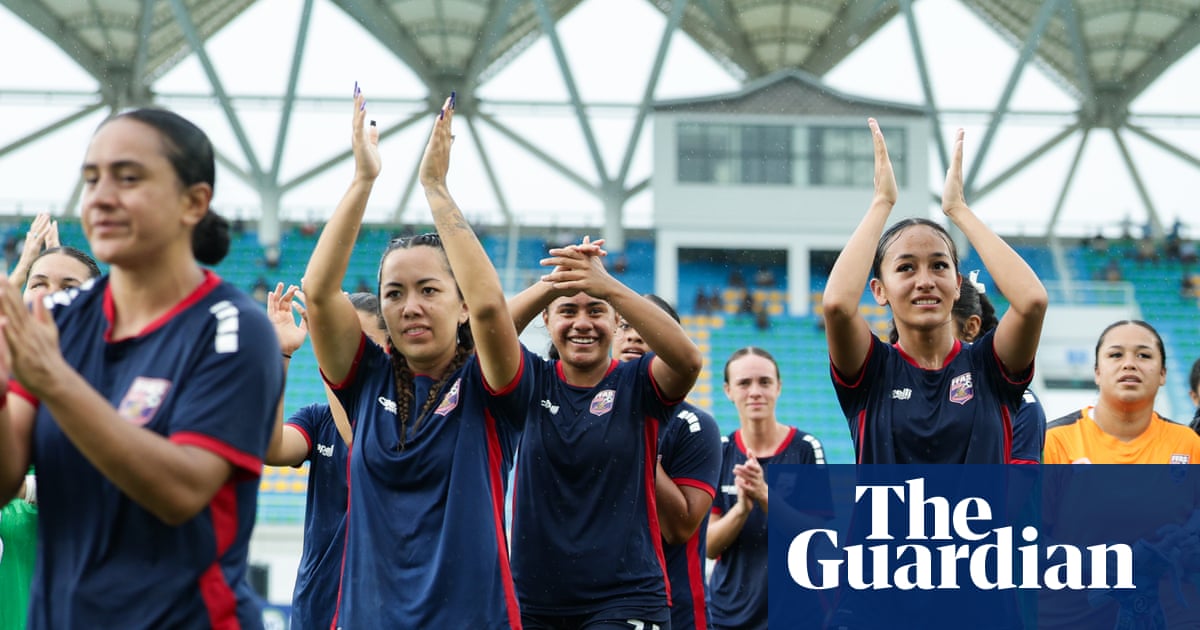
The ghost of Auckland is finally being exorcised
In 1998, the American Samoa women’s national team stepped onto the pitch in Auckland for the Oceania Women's Championship and walked off having conceded a goal every four minutes. The 21-0 defeat to Australia wasn't just a loss; it was a statistical anomaly that defined an entire generation of football in the territory. For years, being an 'underdog' was a polite way of saying they were a fixture in the record books for all the wrong reasons. But as we sit here in April 2026, the narrative has shifted so violently that European scouts are actually starting to take notes.
The transformation isn't down to some magical injection of talent or a sudden surge in funding. It is the result of a cold, calculated tactical overhaul led by captain Alma Mana’o. This isn't the chaotic, 'chase the ball' side of the late nineties. This is a team that understands the geometry of the pitch. They have moved from being a punching bag to a side that The Guardian now describes as a genuine dark horse in the final round of qualification.
To understand how they got here, you have to look at the shape of their mid-block. In their recent qualifying fixtures, American Samoa have abandoned the traditional 4-4-2 in favor of a flexible 4-1-4-1 system. This allows Mana’o to sit as the pivot, screening the back four and dictating the tempo of the transition. They aren't trying to out-possess teams like New Zealand or Fiji; they are trying to out-think them. They wait for the opposition to commit a fullback, then they strike with a verticality that would make a Bundesliga coach nod in approval.
The tactical engine behind the dark horse label
Watching this team in 1998 was an exercise in seeing how many players could fit into a single square meter of space while the ball was thirty yards away. Today, the discipline is jarring. When they lose possession, the transformation into a defensive shell happens in less than four seconds. The wingers drop deep, the lone striker occupies the passing lane to the opposition's deepest midfielder, and the trap is set. They don't press high because they know they can't sustain that intensity for ninety minutes, but their 'trigger' pressing in the middle third is elite.
The Mana’o factor and the US connection
Alma Mana’o is the heartbeat of this tactical machine. She isn't just a captain; she is an on-pitch general who manages the spacing between the defensive and midfield lines with obsessive precision. Much of this improvement stems from the team's heavy recruitment of diaspora players within the US college system. These are players who have been drilled in the high-intensity, physical style of American soccer, and they have brought that 'grind' mentality back to Pago Pago. It has given the team a physical floor that they simply didn't have a decade ago.
However, this reliance on the US collegiate pipeline is exactly where the skepticism should creep in. While the first XI is capable of competing with the regional elite, the drop-off to the bench is precipitous. If Mana’o or any of the core three players in that central spine suffer a knock, the entire structural integrity of the team is at risk. There is a lack of depth that usually gets exposed in the final stages of a tournament. They are playing a high-stakes game of keeping their stars fit, and in international football, that rarely ends well.
A structural house of cards in the South Pacific
We need to talk about the negative side of this fairytale. While the results on the pitch are historic, the local foundations in American Samoa are still lagging behind. There is a massive disconnect between the heritage players flying in from California or Hawaii and the local girls playing on sub-par surfaces in the islands. This isn't a sustainable model for a nation that wants to be a permanent fixture in the World Cup conversation. If the US-based players decide to stop making the trip, the program could collapse back into those 21-0 scorelines faster than anyone wants to admit.
The coaching staff has also been criticized for a lack of Plan B. Their low block is effective, but when they fall behind early, they look lost. They don't have the creative passing range to chase a game once their defensive shape is broken. In their last three losses, they failed to register a single shot on target after conceding the opening goal. They are a 'front-runner' team in a defensive sense; as long as the score is 0-0, they are comfortable. The moment they have to expand and take risks, the gaps between the lines become massive, and a disciplined opponent will carve them open.
What to watch for in the final round
As they enter the final round of qualification, the key battle will be in the wide areas. Most OFC teams will try to bypass Mana’o by going long and wide. This puts an incredible amount of pressure on the American Samoan fullbacks to win their individual duels without receiving cover from the center-backs, who have been instructed to stay home. If they can hold their own on the flanks, they have a puncher's chance of forcing a stalemate and stealing a result on a set-piece.
- Watch the positioning of the holding midfielder during opposition goal kicks.
- Look for the quick transition to a 4-5-1 when possession is lost in the final third.
- Pay attention to the distribution from the goalkeeper, which has improved from a 40% completion rate to over 82 percent in the last twelve months.
The upcoming match against Fiji will be the ultimate litmus test. Fiji plays with a physical arrogance that has historically bullied American Samoa into submission. If Mana’o and her squad can maintain their structural discipline under that kind of pressure, the dark horse label will be more than just a catchy headline. It will be a tactical reality that the rest of the confederation has to respect.
The verdict from the analyst's notebook
Is this a World Cup team? Probably not yet. But are they a team that can ruin a favorite's summer? Absolutely. The progress they have made in defensive transition and zonal marking is the most impressive development in Pacific football since Tahiti's run a few years back. They have traded the 'fairytale' fluff for hard-nosed tactical reality. They aren't here to be your feel-good story; they are here to keep a clean sheet and frustrate you into making a mistake.
The skepticism remains regarding their depth and their ability to play from behind, but you cannot ignore the data. They are conceding 75% fewer goals than they were two cycles ago. That isn't a fluke; it's a structural shift. The 1998 team would have been terrified of the 2026 version of this squad, and that is the highest praise you can give Alma Mana’o’s leadership.
I am calling it now: American Samoa will not win the qualifying tournament, but they will finish with the best defensive record of any non-New Zealand side. They will grind out a result against a higher-ranked opponent that will send shockwaves through the region. The days of double-digit blowouts are dead. American Samoa is playing a different game now, and it’s one that requires a notebook and a stopwatch to truly appreciate.