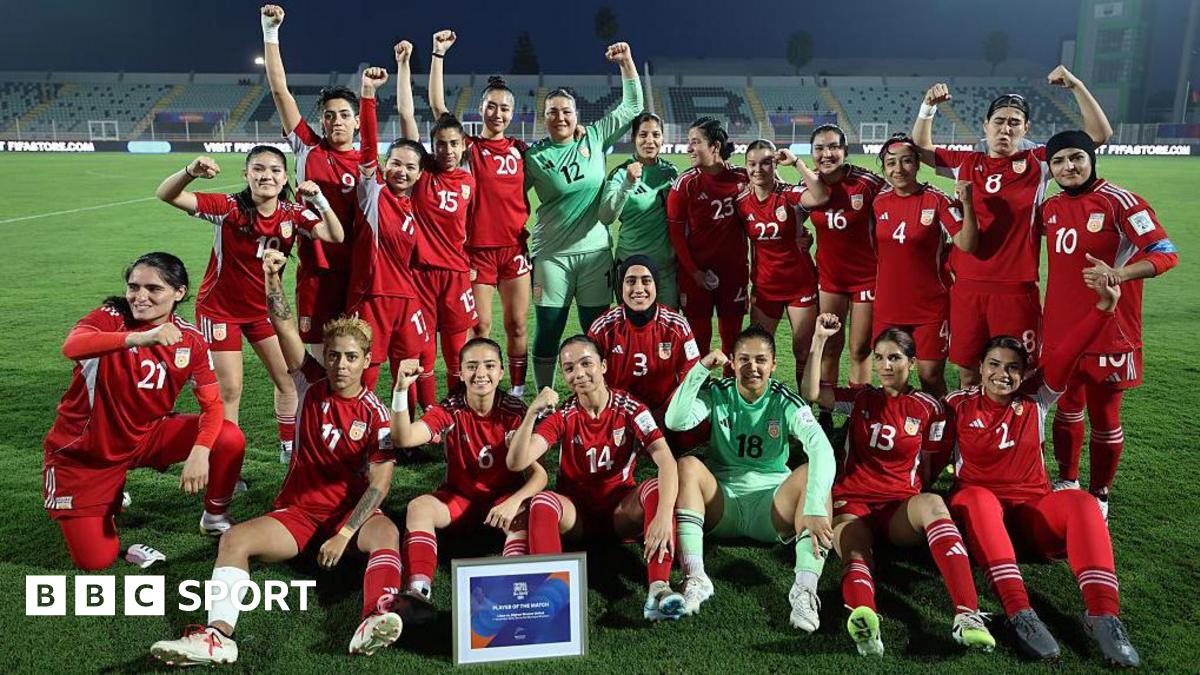
The headline is beautiful, the reality is brutal
The news broke this morning, and it is undeniably historic. As the BBC reported, FIFA has finally approved the return of the Afghanistan women's national team to international competition. Former captain Khalida Popal called them a "symbol of resilience," and she's not wrong. Getting to this point is a monumental victory against a governing body that usually prefers to bury political headaches.
But if you strip away the PR triumph and look at the actual footballing reality, the situation is incredibly precarious.
This isn't a Hollywood movie where the plucky underdogs step onto the pitch and immediately conquer their demons. We are looking at a squad that has been fractured across multiple continents since the Taliban retook Kabul in 2021. The core group has been training and playing in Australia under the Melbourne Victory banner, while others are scattered across the UK and Portugal.
You can't just stitch together a national team via Zoom calls and WhatsApp groups. The tactical cohesion required at the international level takes years to build. Right now, they have zero.
Think about the mechanics of international football. A functioning national team needs standardized fitness protocols, shared data tracking, and regular camps to drill set-pieces and defensive shapes.
The modern international game is decided in transition. If your center-backs and defensive midfielders aren't dropping into a synchronized rest-defense while you attack, you get carved open.
The Afghan team has none of this ingrained muscle memory. They rely on the goodwill of local clubs and volunteer coaches. When they finally step onto the pitch for an official fixture, they will be relying on raw adrenaline and individual instinct.
Against a well-drilled opponent, adrenaline runs out after twenty minutes. Once the fatigue sets in, the gaps between the lines will widen, and the midfield will become a massive, exploitable void.
The Melbourne Victory experiment and tactical limits
For the past few years, the exiled team has found a home in Australia, competing in the Football Victoria state leagues. It gave them a lifeline. It kept the players touching the ball, maintaining basic fitness, and competing in a structured environment.
But we have to be honest about the standard of play. State-league football is a massive drop-off from international competition. You are playing against part-time athletes, not seasoned internationals who spend every day in high-performance environments.
In the local Australian leagues, you get time on the ball. The pressing triggers are delayed. A central midfielder can take an extra touch, look up, scan the field, and pick a pass.
In an AFC qualifier, that extra touch results in a brutal turnover and a devastating counter-attack. The Afghan players have not been conditioned to handle the sheer speed and physical intensity of international play.
They haven't faced a coordinated high press since before the fall of Kabul. When you throw players who are used to state-league pacing into a match against a team that presses like a cohesive unit, panic sets in immediately.
Before 2021, the team was slowly developing a distinct tactical identity under former coaches like Kelly Lindsey. They were gritty, defensively stubborn, and relied heavily on set-pieces to generate chances. They knew how to suffer without the ball.
But that identity was forged through consistent camps and a shared understanding of their defensive triggers. That muscle memory is gone. The squad is now a mix of veterans who remember the old system and younger players who have only ever known the fragmented, exile era.
Blending those two groups into a cohesive unit within the tight windows of an international break is a tactical nightmare. You will likely see gaping holes between the midfield and defensive lines as players fail to step up in unison.
The precedent FIFA desperately wants to avoid
Then there is the structural elephant in the room. FIFA's statutes strictly mandate that a national team must be governed by its recognized domestic federation. The Afghan Football Federation (AFF) is currently controlled by the Taliban regime, which obviously does not recognize or support the women's team.
So how exactly is this going to work? Why did it take this long for FIFA to act? It wasn't just bureaucratic inertia. It was fear of setting a precedent.
FIFA's entire global structure is built on recognizing one sovereign federation per territory. They hate geopolitical interference. By officially recognizing a national team that operates entirely outside the control of the AFF, FIFA is opening a massive loophole.
Think about the implications. If the Afghan women can compete independently of their domestic federation, what stops other exiled or dissident groups from demanding the same recognition? Zurich hates this kind of ambiguity. They prefer clean lines and official letterheads.
Here is the prediction: FIFA is going to quietly bypass its own rulebook and grant the team a special designation, operating them directly through a third-party committee. But they will keep the team at arm's length.
I do not expect them to receive the full financial backing of a typical member association. They will be forced to rely on external sponsorships. The structural support required to build a competitive youth pipeline will be non-existent.
The AFF will lodge formal protests. The AFC, notorious for its administrative cowardice, will likely drag its feet on scheduling and group draws. FIFA has given the green light, but they haven't actually built the road.
The administrative friction is going to bleed into the team's preparation. Every training camp will be preceded by a legal battle over player release windows and insurance.
Why the AFC qualifiers will expose the gap
We are going to see a highly defensive, survival-first tactical setup when they finally play. They don't have the match fitness to press high or the midfield chemistry to dictate possession.
Expect a rigid 5-4-1 formation, sitting deep in a low block, trying to frustrate opponents. They will rely on quick counter-attacks, but without a cohesive midfield to transition the ball, they are going to spend long stretches of every match chasing shadows.
Let's look ahead to the upcoming regional tournaments. When the draw happens, Afghanistan will inevitably face a massive challenge. The AFC has not been standing still.
While the Afghan team has been fighting for its right to exist, nations like the Philippines, Vietnam, and Uzbekistan have poured resources into their women's programs. The physical and tactical gap is going to be glaring.
The Philippines, for example, just went to a World Cup and proved they can execute complex tactical plans against European opposition. If Afghanistan draws a team of that caliber, the scoreline is going to be harsh.
I'm predicting they will concede heavily in their first three official outings, likely dropping games by 4-0 or 5-0 scorelines. Not because they lack heart, but because international football is ruthless.
You can't simulate the speed of a competitive international match in state-league training sessions. The transition speed of top-tier Asian teams will tear right through a disjointed backline.
We saw this exact scenario play out with other developing nations in the region. Without regular friendlies against equivalent opposition, the game simply moves too fast.
But here is the catch: the results don't matter right now. What matters is the establishment of a permanent, funded foundation for the team in exile. Popal and her colleagues know this better than anyone.
They aren't preparing to win the Asian Cup. They are building a lifeboat. The immediate challenge is securing FIFA Forward funding without the AFF intercepting it.
The verdict: Heartbreak on the pitch, victory off it
So here is my concrete prediction for the next twelve months. Afghanistan will play their first official sanctioned match before the end of 2026. The build-up will be intensely emotional, heavily covered by global media, and hailed as a triumph of the human spirit.
Then the whistle will blow. They will face a mid-tier Asian side and they will struggle immensely. The lack of shared tactical patterns will be obvious within the first ten minutes.
The midfield will be overrun, the defense will collapse under sustained pressure, and the post-match discourse will pivot sharply from celebration to the grim reality of their situation.
I expect their pass completion to hover around 55% as they struggle to escape the press, and they will likely finish games with 25% possession or less.
But that first loss will be the most important defeat in the history of the program. It will force FIFA to answer the hard questions.
Will they continue to fund a team that the domestic federation disavows? Will they protect the players from political retaliation? Will they provide the resources necessary to close the tactical gap?
The Afghan women's team is back. Former captain Khalida Popal summed it up this morning:
"A symbol of resilience."
That is a fact worth celebrating. But anyone expecting a seamless return to competitive form is ignoring the tactical and administrative realities.
It's going to be ugly, it's going to be frustrating, and it's going to require more than just a press release from Zurich to fix. They are going to need every ounce of that resilience just to survive the first 90 minutes.
Read Next
- FIFA just bullied the IRS and football fans are absolutely losing it
- FIFA finally recognizes the Afghanistan women and it only took three years of cowardice
- Stop calling the chaotic PSG-Bayern semi-final an antidote to modern football
- Gianni Infantino's mouth-covering red card is a catastrophic idea