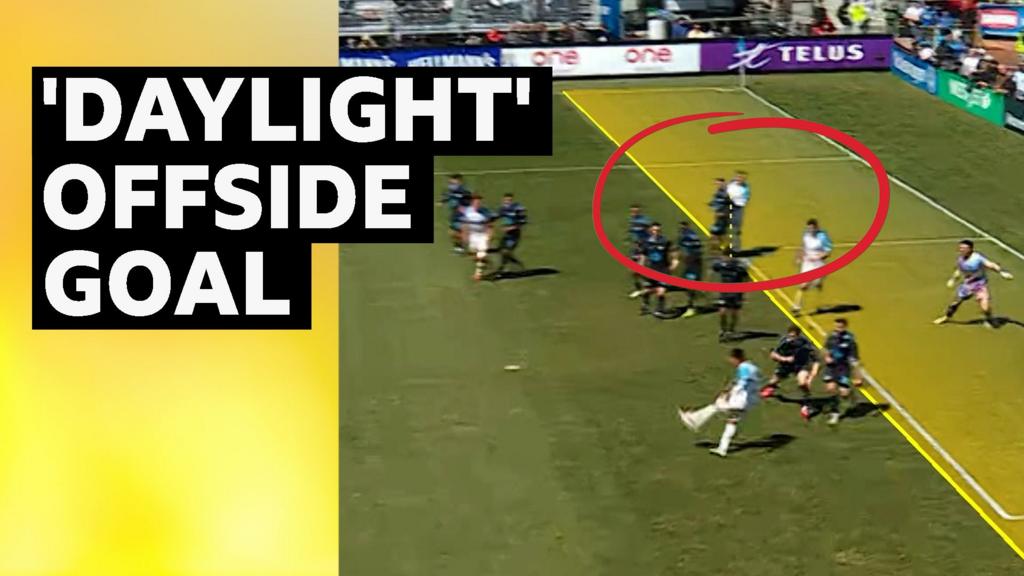
The daylight rule reaches the scorecard
Arsene Wenger’s radical overhaul of the offside rule is no longer just a boardroom concept. On Saturday, a match in Canada became the testing ground for the new 'daylight' regulation. For the first time in a competitive environment, a goal was validated despite the attacker being technically ahead of the final defender.
Under current FIFA laws, any part of the body used to score being ahead of the last defender results in an offside flag. Wenger’s proposal flips that logic. If any part of the attacker’s body remains in line with or 'connected' to the defender—or even if there is visible daylight between them so long as they aren't fully ahead—play continues.
This trial, as reported by the Mirror, represents a massive shift in how match officials interpret the attacking third. During the match, the forward was positioned past the last man, yet the goal stood because the rule now mandates a clearer division between the bodies of the two players.
Tactical ripple effects and skepticism
The immediate reaction from supporters remains polarized. Logic suggests this rule benefits high-pressing teams who thrive on aggressive defensive lines, effectively killing the low block. If a defender’s toe is all that keeps an attacker onside, the advantage shifts heavily toward the striker.
Historically, football's rule changes have faced immense resistance. VAR was touted as the solution to human error, yet it created a new genre of frustration regarding microscopic offside calls. Wenger’s daylight rule aims to remove the 'armpit offsides' that ruined the flow of games in 2020 and 2021. Yet, one must wonder if this simply replaces one set of controversies with another.
Critics argue that referees still rely on human timing, which complicates the 'daylight' determination during high-speed transitions. According to recent coverage from the BBC, the implementation is being monitored closely to see if it reduces the time spent on reviews. If the goal is to speed up the game, this might succeed at the cost of defensive structural integrity.
Strategic implications for the modern game
Managers will be forced to adapt their defensive zones if this reaches the professional ranks. We are already seeing the impact of tighter margins in the current season, where the 1st mistake often defines the result. Defending with a high line becomes significantly more dangerous when the attacker has physical space ahead of them, rather than being restricted to a flat plane.
The trial suggests a clear intent from FIFA to incentivize attacking football. While the aesthetic appeal of higher scoring games is clear, the defensive side of the sport is taking a backseat. As noted by the Daily Mail, public sentiment at these Canadian matches is largely mixed, ranging from genuine excitement to confusion about how linesmen will adjust their positioning.
The industry must now prepare for a potential global rollout. If this keeps the ball in play longer, officials will face higher physical demands to keep pace with the action. Should this become standard, we might look back on today’s match in Canada as the moment the game changed forever, or merely as a failed experiment in favor of complex technical theatre.
Read Next
- Arsene Wenger's offside experiment is finally hitting the pitch
- Liverpool’s midfield rebuild shows the dangers of a high-stakes gamble
- Adrien Rabiot has officially dragged Milan back into the title race
- Alejandro Diaz just changed football forever in a CPL match
- 🇨🇦 Canada World Cup 2026 — Les Rouges Hub