The anatomy of a legal mugging
If you have watched Mikel Arteta’s Arsenal over the last three seasons, you know the exact choreography by now. The ball deflects out for a corner. The Emirates crowd—or the suddenly terrified traveling away support—lets out a collective roar of anticipation.
Nicolas Jover, Arsenal's set-piece guru, marches to the edge of the technical area like a symphony conductor about to queue the brass section. And then, the absolute, unadulterated chaos begins.
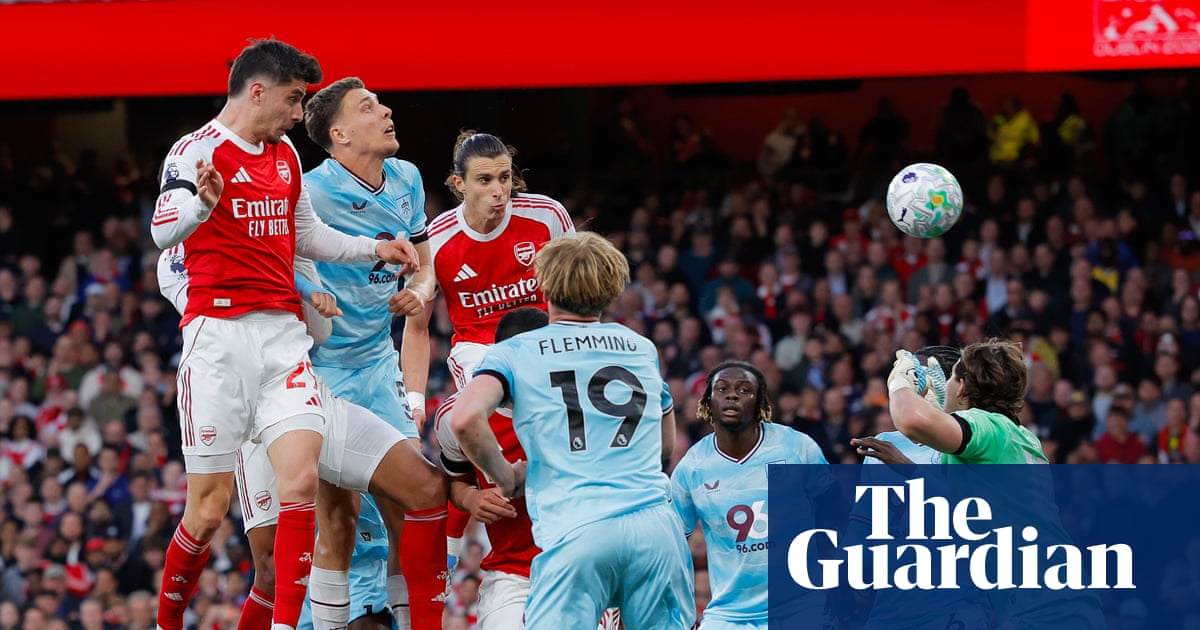
A cluster of giant men in red and white swarm the six-yard box. Ben White, wearing the grin of a man who knows exactly how incredibly annoying he is being, casually backs into the opposition goalkeeper. He might step on a toe, subtly unfasten a velcro glove, or simply exist in a space that makes the keeper's life miserable.
He is not looking at the ball. He is not planning to head the ball. His entire existence in that moment is dedicated to being a human traffic cone.
The delivery comes in—always an inswinger, always viciously whipped by Bukayo Saka or Declan Rice. Gabriel Magalhães or William Saliba attacks the cross like it owes them money. The net bulges. The referee looks nervously at his linesman. VAR takes a three-minute nap. Goal given.
Gamifying the gray area
It is brilliant. It is ruthlessly effective. And it is completely ruining the concept of a fair fight on set pieces.
The discourse around Arsenal's corner routines has reached an absolute boiling point this month, culminating in a chorus of pundits, rival managers, and frustrated fans declaring that corners don't have to be stupid. They are right.
The sheer absurdity of watching top-tier goalkeepers rendered entirely helpless by what essentially amounts to an NFL offensive line blocking scheme has stopped being a quirky tactical innovation.
It has become a glaring loophole in the laws of the game that desperately needs closing.
Let's be absolutely clear right off the bat. Arsenal are not cheating. Arteta and Jover are simply the smartest guys in the room. They looked at the rulebook, noticed that Premier League referees are utterly terrified of blowing for a foul on the goalkeeper unless there is blunt force trauma involved, and decided to exploit that hesitation to the absolute maximum.
But just because something is legal—or rather, not explicitly penalized by the current crop of officials—doesn't mean it should stay that way. The beautiful game evolves through a constant, decades-long game of cat and mouse between managers pushing the boundaries and lawmakers patching the exploits.
Historical precedent for closing the loopholes
Think about the history of the sport. When defenders started mindlessly passing back to the keeper to kill time and drain the life out of matches in the early 90s, the back-pass rule was born, saving the sport from dying of sheer boredom.
When Emiliano Martinez decided to turn penalty shootouts into his own personal stand-up comedy and psychological warfare routine at the 2022 World Cup in Qatar, IFAB stepped in and changed the rules to keep keepers on their line and quiet.
We are now at a similar inflection point with attacking corners. The law needs a change, and it needs it before the 2026/2027 season kicks off this August.
Let's break down the actual mechanics of why this situation is so fundamentally broken. The current laws of the game state that a player cannot impede the progress of an opponent. But when the ball is in the air, the penalty area turns into a Royal Rumble.
Referees are tasked with monitoring holding, pushing, shirt-pulling, and blocking among up to twenty players in a confined, high-stress space. In this massive sensory overload, the specific, subtle interactions around the goalkeeper get completely lost in the wash.
Arsenal have perfected the dark art of the legal block. Ben White doesn't throw flying elbows or rugby tackle the keeper to the turf. He establishes position. He stands his ground.
He essentially boxes out the goalkeeper like a vintage Charles Barkley grabbing a contested rebound in the paint. Because White isn't actively moving into the keeper at the exact microsecond of the cross, referees are incredibly hesitant to call it a foul.
The VAR coin toss
Goalkeepers are traditionally a protected species. If a striker breathes heavily on a keeper inside the six-yard box during open play, it is almost always an automatic free-kick.
Yet, on corners, we have collectively decided that Mad Max wasteland rules apply. The inconsistency is utterly maddening. We routinely see spectacular goals ruled out because a striker's left toenail was offside in the build-up phase, but a defender can legally back down a goalkeeper into his own net on a corner kick and the whistle stays silent.
The problem is massively exacerbated by VAR. The video assistant referee is only supposed to intervene for clear and obvious errors. Because the definition of impeding a goalkeeper on a corner is so incredibly muddy and open to interpretation, VAR almost never steps in to overturn an on-field decision regarding these blocks.
If the referee gives the goal, VAR shrugs and says there is not enough to overturn. If the referee blows for a foul, VAR says the exact same thing. It is a coin toss masquerading as high-tech officiating.
How do we actually fix this?
This brings us to the proposed solutions, because complaining on the internet without offering a fix is just whining. How do we legislate this nonsense out of the game without completely neutralizing the attacking threat of a corner kick?
Option one is the simplest on paper: strictly enforce the existing obstruction rule. Instruct referees from the top down that any deliberate blocking of the goalkeeper, even without overt pushing or holding, is an automatic foul.
If a player’s sole purpose in the six-yard box is to stand an inch in front of the keeper and not even look at the incoming ball, blow the whistle immediately. The glaring downside here is that it relies heavily on subjective interpretation. What is a legal screen on Saturday at Anfield will magically become a foul on Sunday at Stamford Bridge.
Option two is far more radical, but perhaps entirely necessary at this stage. Redefine the six-yard box entirely. Create a designated protection zone for the goalkeeper.
If an attacking player initiates deliberate contact with the keeper within this specific zone during a dead-ball situation, it is an automatic foul. Period. No gray area. No excuses. This gives the goalkeeper the freedom to actually attack the ball and forces attacking teams to win the header cleanly.
Innovation versus integrity
Some traditionalists will inevitably argue that changing the rules just because one specific team is too good at something is inherently unfair. They will say Arsenal are being unfairly punished for their tactical innovation. But that is exactly how professional sports are supposed to work.
In Formula 1, when a constructor finds a clever, borderline-legal loophole in the aerodynamic regulations that makes their car two seconds a lap faster than the grid, the FIA doesn't just shrug its shoulders and let them win the championship unopposed for the next decade. They rewrite the technical regulations. They close the loophole. They force the innovators to find a new way to win.
Nicolas Jover's tactical genius should not be immune to the same regulatory oversight. He has maximized the current, flawed rule set. He has squeezed every single drop of competitive advantage out of the ambiguity surrounding goalkeeper protection.
He deserves all the credit in the world for turning Arsenal from a team that used to look terrified of set pieces during the late Arsene Wenger years into the most lethal dead-ball team in European football. But the jig needs to be up.
The aesthetic of a corner kick has been aggressively reduced to a grappling match in the six-yard box. We are missing out on the spectacular elements of the game—the towering, leaping headers, the dramatic, acrobatic goalkeeper punches through traffic—in favor of grinding, chaotic scrums that usually end with the ball trickling over the line while three opposing players lie hopelessly tangled in the back of the net.
The looming World Cup disaster
When a major tactical trend makes the sport fundamentally less enjoyable to watch and completely impossible to officiate consistently, the lawmakers simply must act.
Look at the underlying statistics from this season alone. The sheer volume of goals scored across the league from corners where the goalkeeper was clearly impeded, but not technically fouled according to the current loose interpretations, is staggering. It is a tactic that has been copied by half the league now. Aston Villa are doing it. Everton are doing it.
We cannot go into the highly anticipated 2026 World Cup this summer in North America with this massive gray area still hanging over the sport. Imagine a World Cup semi-final decided in the 89th minute because a towering center-back parked himself entirely on the opposition goalkeeper's toes and simply refused to move, allowing a free header at the back post.
The global outrage would be absolutely deafening, and the referee would be left trying to explain a rule that makes no logical sense.
IFAB has the power to fix this right now. They don't need a multi-year trial in the Swedish second division. They don't need endless committee meetings in Switzerland. They just need to look at the tape of any Arsenal corner from the last three years, acknowledge the brilliant absurdity of it all, and say enough is enough.
Corners don't have to be stupid. They can go back to being an exciting, dynamic part of the beautiful game where the best crosser of the ball meets the best header of the ball in a fair, athletic contest. Until then, we will just have to keep watching Ben White test the absolute limits of human patience, one inswinging corner kick at a time. It is undoubtedly brilliant for Arsenal, but it is exhausting for the rest of us. It is time for a law change.