
Ashley Cole is proving that England's coaching path is fundamentally broken
The century cap ceiling
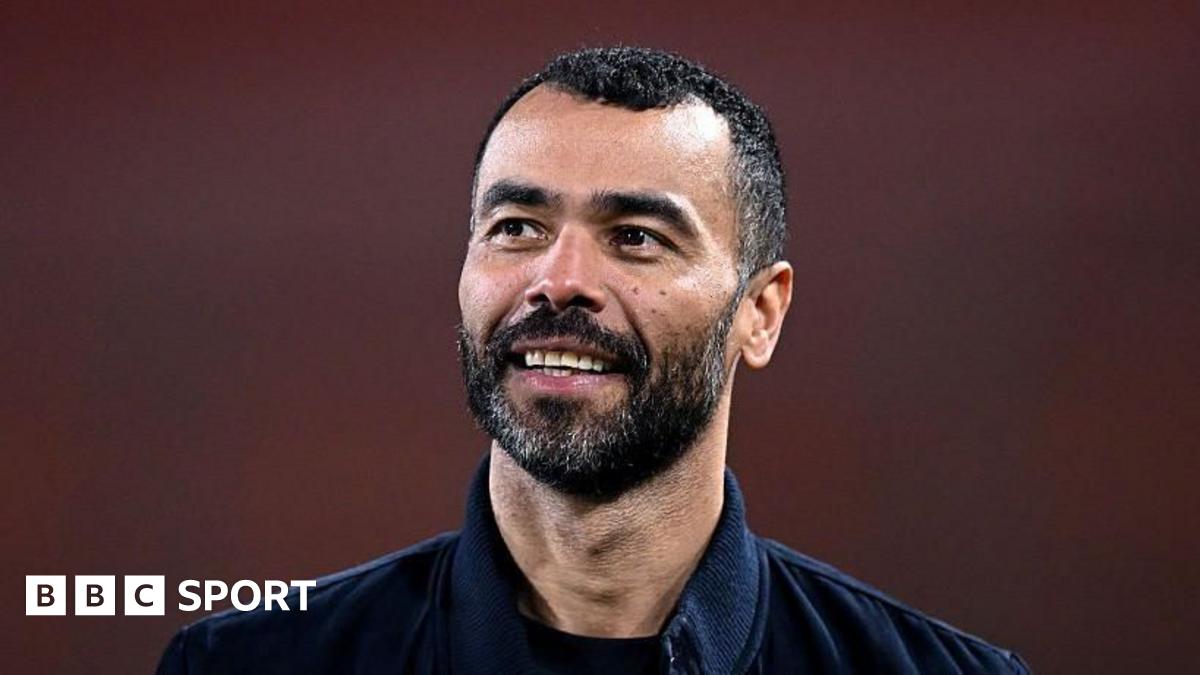
When a player earns 107 caps for England, the conventional wisdom suggests they have seen every tactical iteration the game can offer. They have sat through a thousand hours of video analysis, weathered the idiosyncratic demands of half a dozen elite managers, and stood in the technical eye of the storm. Yet, as Ashley Cole recently told the BBC, the English football pyramid responded to his coaching ambitions with a collective shrug. He used the word "discouraged," a damning indictment of a system that often prioritizes the comfortable over the competent.
Cole’s journey into the dugout was never going to be the frictionless slide enjoyed by some of his Golden Generation peers. He lacked the public-facing charisma of a Frank Lampard or the immediate regional gravity of a Steven Gerrard. What he possessed instead was a forensic understanding of the game's most difficult defensive role. When the domestic door remained stubbornly shut, Cole did what few English players of his era dared to do: he went to Italy, not just to play, but to learn how to teach.
The Italian classroom
The 2014 move to Roma was widely viewed at the time as a lucrative sunset for a declining left-back. In reality, it was the start of a tactical metamorphosis. In Serie A, the focus is not on the individual's physical output but on the unit's collective geometry. Cole transitioned from an environment where "desire" and "work rate" were the primary defensive currencies to one where the fase difensiva was a matter of mathematical precision. He began to see the pitch not as a series of 1v1 duels, but as a shifting grid of zones and triggers.
In Rome, the sessions were often grueling, repetitive, and entirely focused on structural integrity. This is where the "shadow play" comes in—managers like Rudi Garcia and later tactical influences in Italy drilled the back four until the movements became subconscious. For a player who had spent a decade relying on his recovery pace to bail out positional lapses, this was a revelation. It provided him with the vocabulary to explain the game, rather than just play it.
The failure of the English meritocracy
There is a glaring disparity between the opportunities afforded to white former internationals and their Black counterparts in the English coaching circuit. Sol Campbell’s struggles at Macclesfield and Southend are well-documented, but Cole’s path is arguably more illustrative of the systemic rot. Here is a man with a resume that includes three Premier League titles and a Champions League trophy, yet he found himself fighting for air in the lower rungs of the coaching ladder while his former teammates were handed the keys to multi-million-pound projects.
The "discouragement" Cole speaks of is a subtle, corrosive force. it manifests as a lack of mentorship, a dearth of high-level introductions, and the constant suggestion that he should "start from the very bottom" in a way that Lampard or Gerrard never had to. By the time Cole returned to England to work with Chelsea’s academy, he was already overqualified for the roles he was being offered. The English pyramid didn't see a future elite manager; it saw a retired left-back who might be good for a few 1v1 drills with the youngsters.
The Birmingham disaster and the assistant trap
To be an effective analyst, one must look at the failures as closely as the successes. Cole’s stint as an assistant to Wayne Rooney at Birmingham City was, by any objective metric, a tactical catastrophe. In a 15-match span that saw the club plummet from sixth in the Championship to 20th, the coaching staff failed to implement a coherent identity. Birmingham managed only 2 wins in 15 games during that period, a stat that continues to haunt Cole's managerial aspirations. The attempt to transform a gritty, functional side into a ball-playing outfit backfired because the staff misjudged the technical ceiling of the squad.
This failure reinforced the perception of Cole as a "career assistant"—a man capable of refining a specific defensive unit but lacking the broader strategic vision to lead a club. However, this ignores his work with the England U21s. During their 2023 European Championship triumph, England did not concede a single goal throughout the entire tournament. That defensive solidity was the direct result of Cole’s tactical input. He had taken the Italian obsession with the clean sheet and successfully translated it for a new generation of English talent.
The shadow of the 2026 World Cup
As we sit here on April 16, 2026, with the World Cup in North America just 56 days away, Cole’s role within the England setup has never been more vital. Working under Lee Carsley, he has become the bridge between the tactical flexibility of the modern European game and the traditional demands of the international stage. He is no longer just a defensive specialist; he is an architect of transitions. The way England’s full-backs now invert into midfield is a testament to the work being done on the training ground at St George's Park.
Yet, the question remains: why is he still an assistant? The fact that a man with his experience and proven tactical record hasn't been offered a meaningful head coaching role in the Premier League is a failure of the recruitment process. Clubs continue to recycle the same failed managers or take punts on unproven European imports while ignoring the world-class tactical mind sitting right in front of them in the England dugout. Cole’s career shows that even if you go to the ends of the earth to educate yourself, the domestic path remains blocked by outdated perceptions and systemic bias.
Refining the defensive arts
Tactical analysis often overlooks the micro-movements that define elite defending. Cole teaches the "staggered" stance—the ability to guide an attacker toward the touchline by shifting the weight to the back foot at a 45-degree angle. In Italy, he learned that defending is about managing space before the ball even arrives. This is the level of detail he brings to the England sessions. When you watch the current crop of English defenders, you see less lunging and more containment. This is the "Cole effect" in action.
The frustration for many who watch the game closely is that Cole has had to do twice the work for half the recognition. He didn't just attend a coaching course; he moved to a foreign country, learned a new language, and embedded himself in a different footballing culture. If that isn't the definition of a "dedicated professional," then the term has no meaning. England’s loss has been the FA’s gain, but it feels like a waste of a top-tier managerial talent that could be leading a club into Europe instead of setting up cones for a senior squad.
A legacy of resilience over reputation
Cole’s 107 caps should have been the starting gun for a managerial career. Instead, they were treated like a footnote. His resilience in the face of this "discouragement" is perhaps his most impressive trait. He could have easily transitioned into a comfortable life of punditry, collecting checks to offer vague platitudes about "passion" on a Saturday afternoon. Instead, he chose the hard yards of the training pitch, the long nights of video editing, and the scrutiny of being a Black coach in a predominantly white industry.
The critical observation here is that the English game still values the "big personality" over the "big brain." We are obsessed with the idea of the manager as a charismatic leader of men, a Churchillian figure who can inspire with a speech. Cole represents a different model: the manager as a technical director, a man who wins games through superior preparation and structural discipline. Until the Premier League and the EFL move away from their obsession with celebrity managers, men like Ashley Cole will continue to be sidelined.
As we look toward the business end of the season, with the Europa League and Conference League Quarter-Finals concluding tonight, the tactical diversity on display in Europe highlights what England is missing. Managers from Italy, Spain, and Germany are given the freedom to fail and rebuild. In England, a coach like Cole is given one bad stint at Birmingham and told his time is up. It is a shallow, reactive culture that prioritizes short-term results over long-term tactical growth.
Cole’s story isn't over. Whether he stays within the FA or eventually finds a club willing to look past his playing career and see the manager he has become, he has already proven his point. Italy made him a manager because England was too blinkered to see his potential. For a country that prides itself on its footballing heritage, that is a realization that should sting far more than any tournament exit.
Amazon Fire TV Stick 4K with Alexa Voice Remote
The ultimate way to stream every match in crystal clear 4K.
More Coverage
Lincoln City just entered the weirdest experiment in League One history
an hour ago
Why AC Milan courting Mauricio Pochettino is a massive gamble
an hour ago
Arsenal’s title win has changed the math for London football
3 hours ago
Emily Cassap represents a shift in Northern Ireland's tactics
7 hours ago
Why United must prioritize Ederson to reclaim their midfield
7 hours ago
World Sevens enters the furnace as tactics shift for day two
10 hours agoMore Analysis
Ashley Cole thinks England failed him and the internet is losing its mind
1 month, 1 week ago
Ashley Cole is quietly building a tactical machine at Cesena
1 month ago
Ashley Cole is walking into a Serie B nightmare at Cesena
1 month ago
Italian football is obsessed with its own ghosts
1 month, 3 weeks ago
England’s youth setup is suffering from a terminal identity crisis
1 month, 3 weeks ago