The death of pure Brexit football Down Under
If you've watched the Australian national team over the last decade, you know exactly what you were signing up for. It was the footballing equivalent of a root canal.
You tuned in, you saw eleven guys named Jackson or Craig run themselves into the absolute dirt for 90 minutes, and you respected the hustle. It was pure, unadulterated grit.
Graham Arnold built a squad that would happily kick you into the stands, defend with ten men behind the ball, and pray for a set-piece. And honestly? It worked. The 2022 run to the knockout stages was legendary.
But it wasn't pretty. It was survival mode. It was hoof-ball. It was Mitch Duke pressing until his lungs inverted.
Well, forget all of that. Throw the tape away. Because heading into the 2026 World Cup, something entirely weird has happened.
Australia actually has guys who can put you on a poster.
The kids who broke the matrix
Let's talk about the absolute chaos merchants who are suddenly injecting life into this team. We are exactly 22 days out from the biggest sporting event on the planet, and the Socceroos are bringing a completely different vibe.
At the center of this absolute fever dream are two kids with African heritage who survived a notoriously rigid Australian development system that usually turns wingers into track stars.
Nestory Irankunda and Mo Touré.
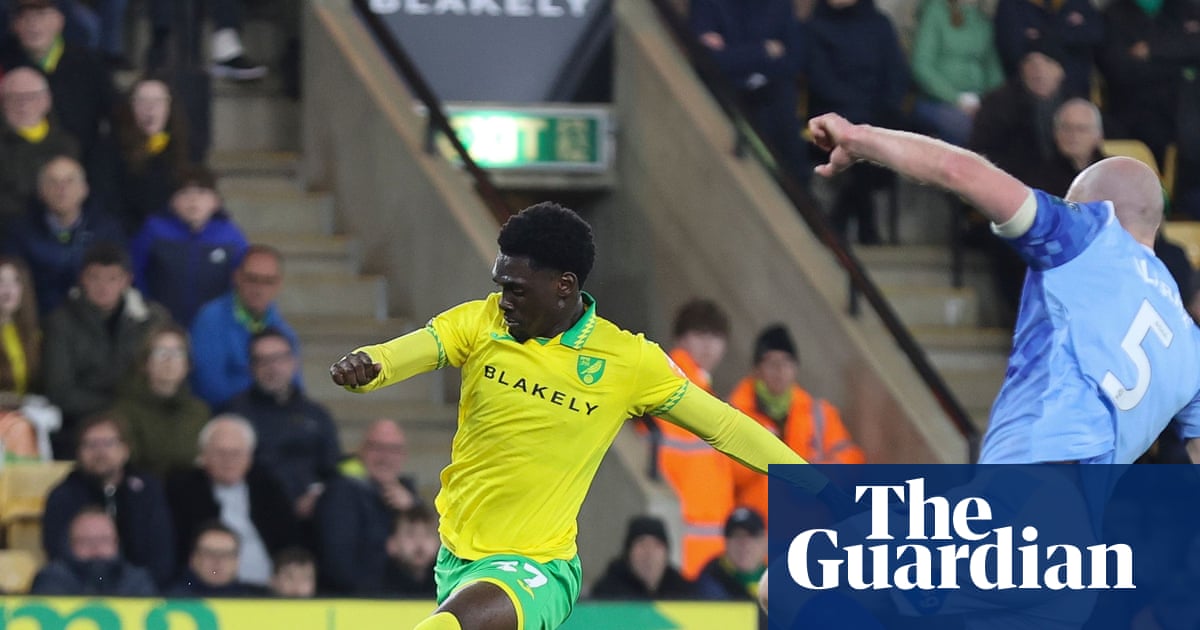
If you haven't been paying attention to the A-League—and let's be honest, you probably haven't because it's a completely unhinged timezone—you've missed out on Irankunda treating professional defenders like training cones at Hindmarsh Stadium.
The kid was born in a refugee camp in Tanzania. Now he belongs to Bayern Munich.
He hits the ball with the kind of violence that makes you think it owes him money. He doesn't just score goals; he attempts to take the goalkeeper's hands off with every strike.
Adelaide United deserves a massive shoutout here. While the rest of the A-League was busy recycling the same British managers who think 1990s Wimbledon was the peak of the sport, Adelaide actually leaned into the chaos. They let these kids play.
Irankunda's highlight reel looks like someone put FIFA on amateur mode. He has scored free kicks from distances that shouldn't make physical sense. When he signed for Bayern, half the country assumed it was a typo.
We don't send kids straight from the A-League to the biggest club in Germany. We just don't. We send them to the Scottish Championship to learn how to tackle in the sleet, or to a mid-table Belgian side to get frozen out for a year.
But Irankunda is different. He is purely electric.
Then you have Touré. Born in Guinea after his family fled Liberia, he arrived in Australia and basically forced his way onto the radar through sheer, undeniable physical dominance.
The guy is built like a middle linebacker who decided to play on the wing. He made his professional debut at 15 years old.
At fifteen, most kids are struggling with high school algebra. Touré was bullying grown men who had mortgages.
His path was ridiculous. The Guinean-born forward bounced around, dealt with injuries, had to prove himself over and over. You don't just walk into a professional setup in this country without getting battered by veterans in training. He survived all of it.
He doesn't just beat you with pace; he physically dismantles you. He drops a shoulder, absorbs contact from a center-back, and just keeps running.
These aren't system players. These aren't the robotic clones that usually roll off the Australian production line.
These are absolute box-office entertainers.
How the diaspora saved the Socceroos
Let's have a completely honest conversation about Australian football culture for a second.
For the longest time, the system was fundamentally broken. If you were a tricky winger with flair who liked to take players on, some youth coach in the suburbs would scream at you for not tracking the opposition full-back.
They wanted endurance athletes. They wanted guys who could run a marathon on a Tuesday and play a match on Wednesday.
The African diaspora in Australia completely flipped that script. They brought street football energy to a country obsessed with structured mechanics.
Touré and Irankunda are the absolute prime examples of this culture clash, and the culture clash won.
You can't coach what Irankunda has. You can't teach a kid to drop his shoulder and send a defender back to the stone age. You just have to let it happen.
And for a country that has historically struggled to produce genuine attacking superstars since the Mark Viduka and Harry Kewell days, this is a massive lifeline.
You look at the history. Awer Mabil scoring the penalty that sent them to Qatar. Thomas Deng stepping up. Garang Kuol becoming the youngest player since Pelé to play in the knockout stages of a World Cup.
That wasn't an accident. The foundation was laid by those guys. They proved that investing in kids from refugee backgrounds wasn't just a nice PR story; it was an absolute necessity for survival on the pitch.
Australia is an isolated island at the bottom of the world. They don't get the luxury of elite European academies down the street. They have to rely on their domestic melting pot.
And for years, that pot was just boiling over with ignored talent. Kids who couldn't afford the exorbitant registration fees to play club soccer.
These guys bypassed the rich-kid academy route. They played in parks. They played in cages. They learned to survive before they learned tactical periodization.
These guys have raw pace. They have zero fear. They don't care if they're playing a pub team or the reigning world champions.
The ticking clock and the manager's dilemma
But here is where we need to throw some cold water on the hype train. Because having Ferraris in the garage doesn't mean your dad is going to let you drive them on the highway.
Graham Arnold is a manager who absolutely loves a rigid 4-4-2.
He loves discipline. He loves structure. He probably has nightmares about players attempting backheels in their own half.
Look, Arnie deserves his flowers for 2022. I'll admit that. Taking that squad past Denmark was a tactical masterclass in dark arts.
But this is a different era. You can't park the bus forever. Eventually, you have to score.
The biggest question heading into June 11 is whether Arnie will actually take the handbrake off. Because history tells us he probably won't.
We've seen this movie before. A young, exciting talent breaks into the squad, everyone loses their minds, and then they get benched for a 32-year-old journeyman because they didn't cover a run in the 82nd minute.
If Australia lines up in their opening group game and Irankunda is sitting on the bench watching some rigid, paint-by-numbers football, there will be an absolute meltdown in pubs from Sydney to Perth.
You do not bring dynamite to a gunfight and then refuse to light the fuse.
Touré and Irankunda are rough around the edges. They will lose the ball. They will occasionally try something incredibly stupid.
But in a tournament where you are massive underdogs, you need the stupid. You need the chaotic.
We are looking down the barrel of an expanded 48-team World Cup. The margins for error are weird, the groups are chaotic, and the heat in North America is going to cook teams alive.
You're playing in massive NFL stadiums with artificial turf and unbearable humidity.
It's going to be a tournament decided by squad depth and late-game impact subs.
Imagine it's the 75th minute in Houston or Miami. The humidity is sitting at 90 percent. Opposing full-backs are cramping up. They've spent all afternoon chasing shadows.
And you look at the sideline, and there is an 18-year-old Irankunda stretching his legs. It's a terrifying prospect.
Australia has spent the last 20 years being the team that nobody wanted to play because they would kick your shins and ruin your day.
Now, they might actually be the team you don't want to play because they can embarrass you on the counter.
That is a wild shift in identity.
It's an identity that owes everything to families who crossed oceans and continents just to find safety. They arrived with nothing, and now they are handing Australia the keys to a genuinely exciting future.
The only thing standing in their way is an old-school mentality that needs to die.
Play the kids. Unleash the chaos. If we're going down in the group stages, at least let us go down swinging instead of passing sideways.
Read Next
- Why Tuchel's tactical rigidity will doom England at the World Cup
- Steve Clarke's pragmatism is setting Scotland up for a major World Cup flop
- Steve Clarke is walking a tightrope before the World Cup
- Scotland names World Cup squad as Brazil bets on Neymar
- 🏆 World Cup 2026 — Full Coverage Hub
- 🇦🇺 Australia World Cup 2026 — Socceroos Hub