The break nobody wanted, but everyone suddenly needs
There is nothing quite like the collective groan of club football fans when a late-March international break rolls around. We are right at the business end of the season. The Champions League quarter-finals are literally next week. Domestic title races are separated by a handful of points. And yet, we are forced to pause all of that momentum to watch patched-together national teams play friendlies that usually have the intensity of a light training session.
But this time feels distinctly different. We are sitting here on March 27, 2026. The World Cup kickoff in North America is exactly 76 days away. This isn't just another pointless string of UEFA Nations League qualifiers or meaningless exhibition matches. This is the final dress rehearsal.
Managers are making their final cuts. Players are desperately trying to avoid injuries while simultaneously proving they deserve a seat on the plane. The tension is real, even if the matches themselves sometimes feel like a disjointed mess.
And if you want a perfect snapshot of where international football is right now, you only have to look at the two radically different matches dominating the headlines this week. On one hand, you have the absolute bare-knuckle grind of Australia squeezing past Cameroon. On the other, you have the pure Hollywood spectacle of Brazil facing France in the United States.
Australia's masterclass in lowering expectations
Let's start in Sydney. The Socceroos kicked off their designated farewell tour at Accor Stadium against Cameroon. The atmosphere was supposed to be a celebratory send-off before the squad eventually heads over to North America. What the fans actually got was a predictably stubborn, slightly labored 1-0 victory that perfectly encapsulates the current Australian setup.
It almost started with a bang. Right in the very first minute, Jacob Italiano whipped a vicious cross into the box. The Cameroon defense scrambled and were incredibly fortunate to clear their lines. For a fleeting second, you thought we might get a high-octane performance. You thought Australia might actually take the handbrake off.
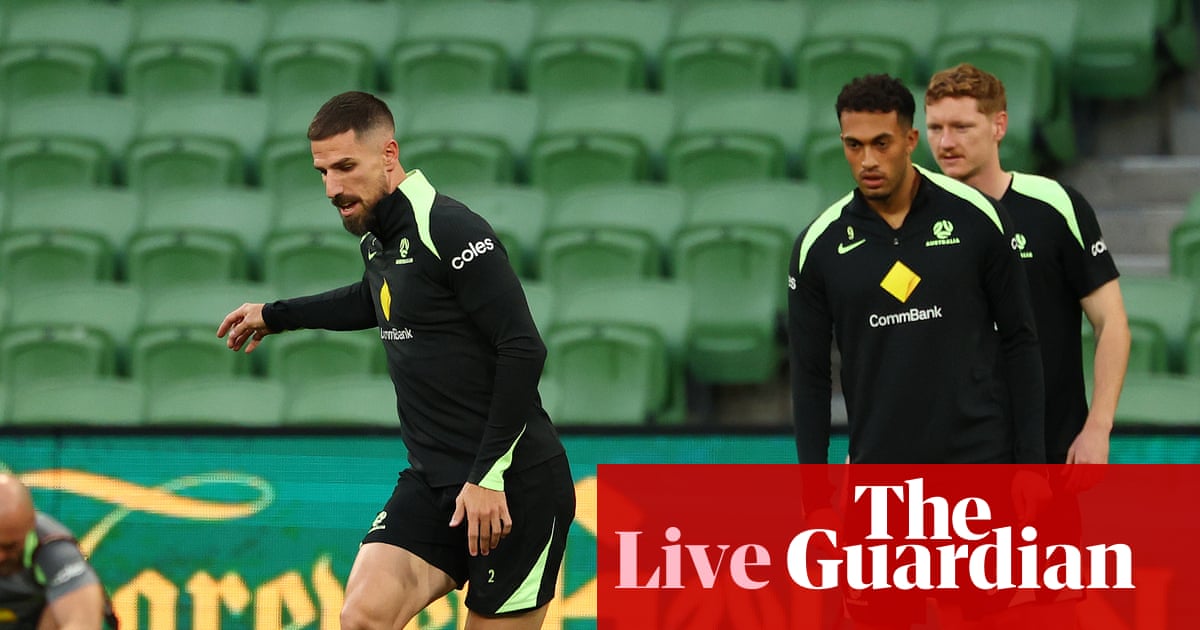
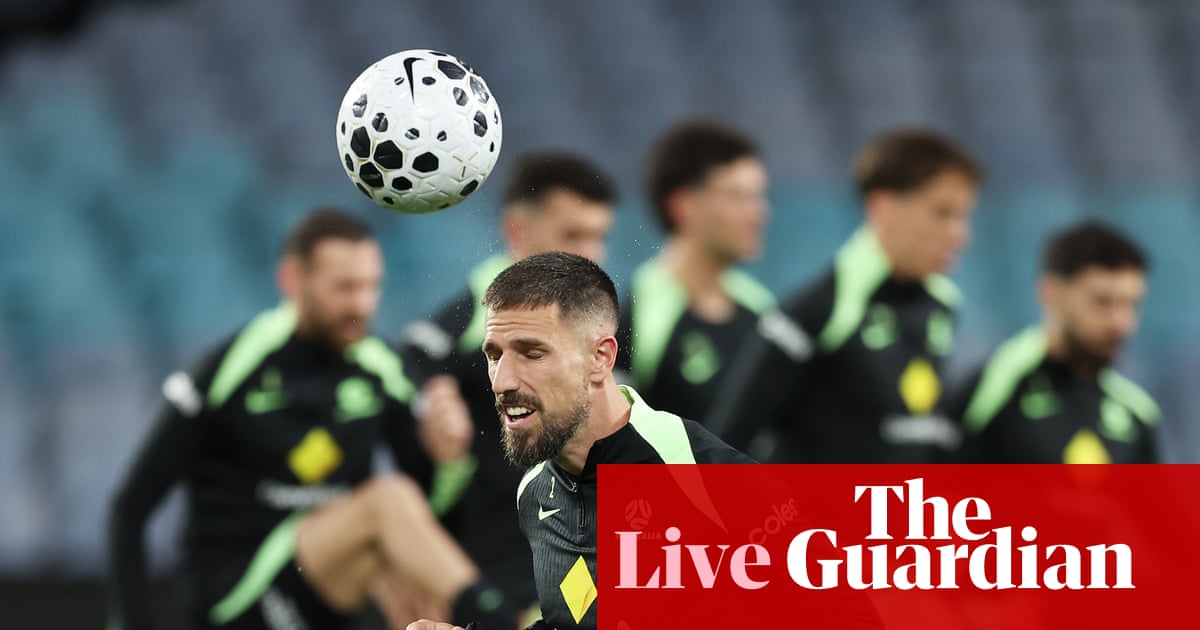
Instead, they settled right back into their comfort zone. They controlled the tempo, minimized risks, and ground out a result. As The Guardian's live coverage pointed out, they got the win to kick off the tour, but it was hardly the sort of performance that sends a warning shot to the rest of the world.
Look at that starting lineup. Maty Ryan wearing the armband in goal. Jason Geria and Alessandro Circati plugging gaps at the back. A midfield featuring Aiden O’Neill, Connor Metcalfe, and Riley McGree. It is a group of hardworking, disciplined professionals. They will run through a brick wall for the shirt.
But here is the harsh reality we have to talk about. The complete lack of attacking flair is a massive problem. Scraping by with a clean sheet at home in a friendly is fine. It gets you a polite round of applause from the Sydney crowd. But when you are staring down the barrel of a 48-team World Cup, where the margins for error are razor-thin, relying entirely on defensive solidity and set-pieces is a dangerous game.
If you cannot comfortably break down an opponent in a low-stakes friendly, how exactly are you planning to score against top-tier European or South American opposition when it actually matters? The Socceroos look completely organized and entirely blunt. It is the exact same criticism that has haunted them for years, and it seems nobody has found a solution yet.
The midfield mechanics are broken
Let's take a closer look at that midfield trio of O’Neill, Metcalfe, and McGree. On paper, it is a perfectly functional engine room. O’Neill does the dirty work, breaking up play and recycling possession. Metcalfe provides the legs, pressing relentlessly and dragging opponents out of position. McGree is supposed to be the creative spark, the guy who connects the midfield to the isolated forwards.
Against Cameroon, that trio looked functional but entirely uninspired. There were moments of neat passing, but it all happened in the middle third of the pitch. Whenever the ball progressed into the final third, the ideas simply dried up. It was a lot of sideways passing, waiting for an overlap from Lucas Herrington or Jordan Bos that either arrived too late or was completely telegraphed.
You have to feel a little bit of sympathy for the forwards in this system. They are feeding on absolute scraps. When your best attacking sequence of the entire first half comes from a hopeful cross in the opening sixty seconds, it tells you everything you need to know about your offensive patterns.
And let's not ignore the defensive frailties that still pop up when you least expect them. Yes, they kept a clean sheet. Yes, Maty Ryan organized his backline well. But there were two or three moments in transition where Cameroon simply bypassed the midfield press with a single direct pass. Against a team with world-class finishers, those minor lapses turn into immediate deficits. You cannot afford to switch off for even three seconds when you are playing tournament football.
Brazil and France bring the circus to America
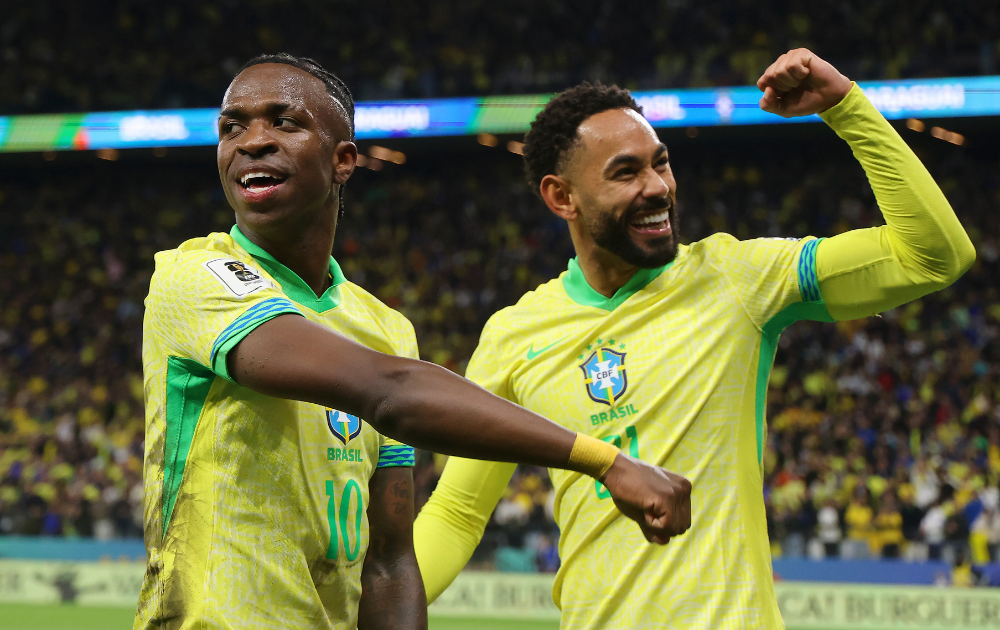
While Australia was busy wrestling a narrow victory in Sydney, a completely different tier of football was preparing to kick off across the globe. Brazil taking on France. The Seleção against Didier Deschamps's ruthlessly efficient machine. It is a heavyweight clash masquerading as a friendly.
The fact that this match is being played in the United States is no accident. The Americans are hosting the World Cup in less than three months. Bringing two of the absolute favorites to American soil is a brilliant piece of marketing. It is a teaser trailer for the main event in June.
These are the squads everyone else is terrified of. France brings a frankly unfair level of depth to every position. Deschamps could field three entirely different starting elevens and all of them would be tipped to reach the semi-finals. Brazil brings the flair, the expectation, and the overwhelming pressure of a nation that considers anything less than a trophy to be an absolute failure.
But the real comedy of this monumental clash isn't happening on the pitch. It is happening online. Fans are desperately scouring the internet, trying to figure out how to stream Brazil vs France for free. We live in an era where broadcasting rights are sliced into a dozen different streaming services.
You can have two of the greatest footballing nations on earth playing a prime-time friendly, and half the audience is locked out because they refuse to pay for yet another monthly subscription. It is the modern football experience perfectly distilled. Millions of people want to watch the beautiful game, and they are spending half the first half clicking through pop-up ads on a questionable stream hosted in Eastern Europe.
The commercialization of the international break
It is impossible to ignore the sheer commercial gravity of staging this match in the United States. This isn't just a friendly; it is a massive corporate activation event. Both federations know exactly what they are doing. They are tapping into the most lucrative sports market on the planet right before the World Cup kicks off.
You can guarantee the stadiums will be packed with fans wearing half-and-half scarves, paying exorbitant prices for a beer, and hoping to see a stepover from a Brazilian winger. It is the monetization of international football, packaged neatly for prime-time television. And while the purists might roll their eyes at the artificial nature of it all, it is incredibly effective for filling federation bank accounts.
But it also highlights the massive, expanding gap in global football. France and Brazil can command massive appearance fees to play a friendly halfway across the world. They stay in five-star resorts and train in state-of-the-art NFL facilities. Meanwhile, smaller nations are scrambling just to organize competitive fixtures to get their squads match-fit.
The countdown clock is deafening
This international window is a brutal mirror for every nation involved. You cannot hide your flaws anymore. The tactical experiments of 2024 and 2025 are over. The squads are mostly locked in.
For teams like Australia, the next two months are about damage limitation and tactical drilling. They know exactly who they are. They are going to show up to the World Cup, defend with their lives, try to snatch a goal from a corner, and hope the math works out in their favor to advance past the group stage. It isn't pretty, but it is their only realistic path.
For teams like France and Brazil, the pressure is entirely different. They aren't just expected to win; they are expected to dominate. A sloppy performance in a friendly right now immediately sparks a national crisis back home. If Deschamps gets his tactics wrong in a meaningless exhibition, the French press will spend the next week demanding his resignation. That is the burden of possessing world-class talent.
We are almost out of time. The domestic leagues are about to consume our attention for the final chaotic sprint to the finish line. We will obsess over the Champions League and domestic cups. But lurking right there in the background, staring us down, is the summer of 2026. These friendlies were the final warning bell.
Ready or not, the biggest tournament in the history of the sport is arriving. And based on what we saw this week, half the teams are completely unprepared, while the other half are ready to burn the whole thing down.
Read Next
- FIFA wants us to treat these glorified friendlies like the Champions League
- Tuchel shut the door on Greenwood, but his squad has a fatal flaw
- Scotland's grim reality check against a swaggering Japan
- Kosovo is exactly what the expanded World Cup needed
- 🏆 World Cup 2026 — Full Coverage Hub
- 🇦🇺 Australia World Cup 2026 — Socceroos Hub