The May Inevitability
Oliver Glasner is not a manager who hands out cheap praise. The Crystal Palace boss built his reputation in Germany and England on strict structural discipline. His teams are designed to make elite opposition look disjointed, frustrated, and vulnerable on the break.
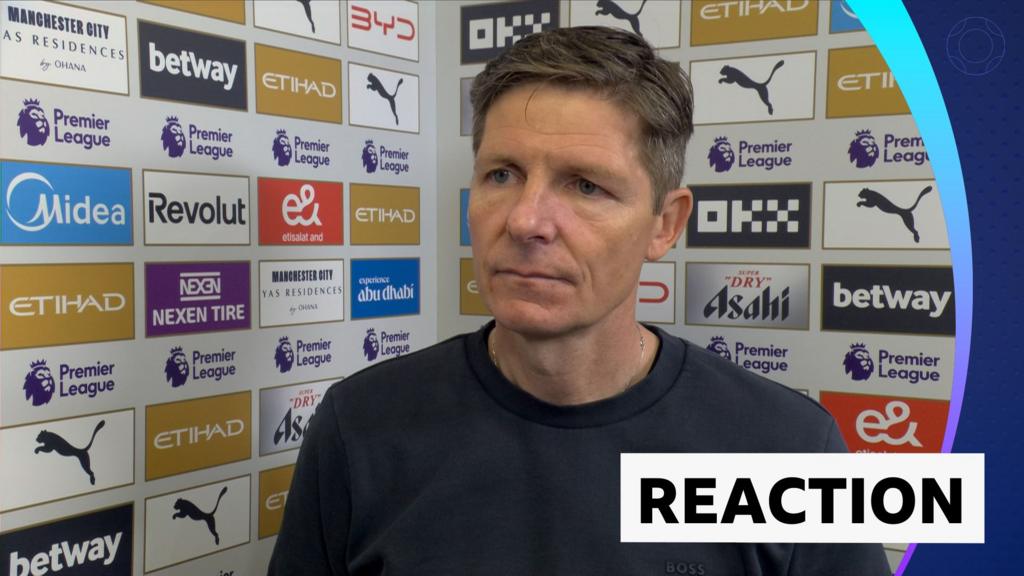
So when Glasner sat in the Etihad Stadium press room and admitted Manchester City were "too good" for his side after a 3-0 defeat, it carried weight. It wasn't standard managerial deflection. It was the exhausted resignation of a tactician who just watched his meticulously crafted gameplan get fed into a woodchipper.
We are in mid-May. The calendar has flipped to the point where Pep Guardiola's side mutate from a brilliant football team into a suffocating algorithm. They stop playing matches and start executing scripts.
The Palace victory was the quintessential late-season City performance. No panic. No end-to-end chaos. Just relentless, grinding control that slowly squeezed the life out of a very capable London side.
Man City were too good for us.
Glasner's blunt assessment, courtesy of the BBC, is exactly what Arsenal and Liverpool fans feared they would hear this week. The title race is entering its final fortnight, and the reigning champions look utterly unbothered by the pressure.
The Underlying Math of Suffocation
You can see the shift in City's approach when you look at the field tilt metrics over the last six weeks. From August to March, City averaged a field tilt of around 65 percent. High, but normal for them. Since the start of April, that number has spiked to nearly 78 percent.
They aren't just keeping the ball. They are keeping the ball exclusively in the opponent's defensive third. Against Palace, City's center-backs spent more time in the attacking half than Palace's central midfielders.
This is Guardiola's ultimate defensive strategy. You cannot concede if the opponent literally never has the ball in your half of the pitch. We saw Manuel Akanji stepping seamlessly into the holding role alongside Rodri to facilitate this.
It creates a 3-2-5 possession shape that essentially places five technically gifted midfielders in a tight ring around the penalty area. If Palace cleared the initial cross, Akanji or Rodri were already standing on the edge of the box, chesting the ball down and recycling possession before a counter-attack could even materialize. It is relentless, exhausting geometry.
Palace tried to spring Jean-Philippe Mateta and Eberechi Eze on the counter. Every single time, they were immediately swallowed by three sky-blue shirts within seconds of receiving the pass.
The expected goals (xG) data tells the same story. City allowed Palace just 0.14 xG over 90 minutes. That isn't just good defending. That is complete structural dominance.
Where the Machine Sputters
But let's not pretend this team is entirely flawless. If you want to find a crack in the armor, you have to look out wide.
For all of City's central control, their wide dynamics can still look surprisingly disjointed. Jeremy Doku remains an incredibly frustrating player to watch against a set low block. He has blistering pace and unmatched one-on-one ability, but his final ball is wildly inconsistent.
Against Palace, Doku beat his man cleanly four times in the first half. Three of those sequences ended with a cross hit directly into the first defender. The fourth went aimlessly out for a goal kick.
When you compare Doku's decision-making to the robotic efficiency of Bernardo Silva on the opposite flank, the contrast is jarring. Silva values possession above all else. Doku embraces variance. In May, variance is the last thing Guardiola wants.
If there is a reason City might stumble in their final fixtures or the upcoming Champions League final on May 28, it will be because of this wide inefficiency. A better team than Palace might have survived the suffocating possession if City kept wasting their wide overloads.
The Bench Benchmark
Consider what happened in the 65th minute of the Palace match. City were already comfortably ahead. Glasner made two attacking substitutions, desperately trying to inject some verticality into a game that felt like a training exercise.
Guardiola responded by bringing on fresh international talent worth over £100m. It is a flex of squad depth that breaks the spirit of opposition managers.
When you look at the data for second-half substitute impact across the top five European leagues, City's bench consistently ranks in the 99th percentile for expected threat (xT) generated per 90 minutes. They don't bring on players to kill the game. They bring on players to kill the opponent.
Palace's tired legs were suddenly forced to deal with an entirely new set of attacking patterns. The physical toll of chasing shadows for an hour was compounded by the psychological blow of seeing world-class attackers jogging onto the pitch. This is why City score so heavily in the final twenty minutes of matches during the spring.
It creates an impossible dilemma for teams like Palace. Do you press high early and risk getting torn apart in the first half? Or do you sit deep, conserve energy, and pray you can survive the inevitable late-game onslaught?
Glasner chose the latter. It didn't matter. The result was exactly the same.
The Historical Precedent
Yet, relying on City to drop points due to occasional wide inefficiency is a fool's errand. We have seen this exact movie too many times before. The script never changes.
In the 2018-19 season, they won their last 14 games. In 2021-22, they went unbeaten from November to February to build an insurmountable lead, then closed out the final months with ruthless efficiency. Last season, they chased down Arsenal by simply refusing to lose a game for three months straight.
With the 2026 World Cup kickoff looming on June 11, you might expect some international stars to start protecting their hamstrings. Guardiola doesn't allow it. The intensity against Palace was dialled up to maximum from the first whistle, leaving Glasner's defenders with zero time to scan the field.
The benchmark for a title-winning run-in has been permanently altered by this club. It used to be that winning four of your last six games was enough to secure the trophy. Now, if you draw a single match in April or May, you are essentially handing the title to Manchester.
Palace came into this game in decent form. They had the tactical blueprint to cause problems. They left with zero points, zero goals, and a manager admitting they were completely outclassed.
The Verdict: A Flawless Finish
Prediction time. I am not hedging this.
Manchester City will win every single remaining Premier League fixture this season. They will not draw. They will certainly not lose.
The 3-0 result against Palace wasn't just three points. It was a statement of intent. The physical conditioning of the squad looks peaked, the tactical system is fully calibrated, and the rotation policy is keeping key players fresh.
Arsenal and Liverpool have been spectacular this year. They have pushed the champions to the absolute limit. But playing against City in May is a different sport entirely.
The data models and predictive algorithms floating around Twitter right now still give Arsenal a puncher's chance. They cite fixture difficulty and away form. Those models are failing to account for the unquantifiable psychological weight of playing a flawless machine.
The pressure breaks chasing teams before City even take the pitch. Glasner realized it on Thursday night. The rest of the league knows it too.
The title race is effectively over, not because the mathematical gap is too large, but because the team leading the pack has stopped making mistakes entirely. City will lift the trophy again. The only real question left is whether anyone will manage to register a shot on target against them before the season ends.