The anatomy of a midfield suffocation
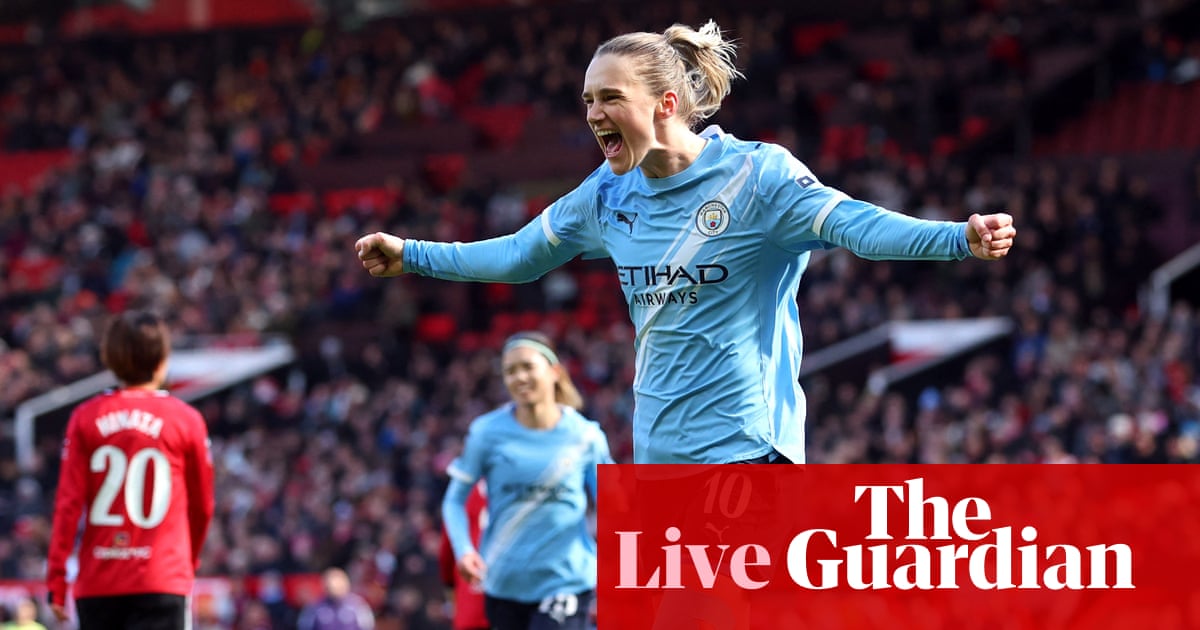
Derbies are supposed to be unpredictable. They are supposed to defy logic, form books, and tactical plans. Manchester City clearly did not get that memo. Instead, they arrived at the stadium with a tactical blueprint designed specifically to drain the life out of Manchester United, securing a win that edged them closer to the WSL title.
The final scoreline actually flatters the hosts. The underlying metrics tell the real story of a match where one team was playing an entirely different sport. City held 68 percent possession away from home. That is not just control; that is a territorial eviction notice.
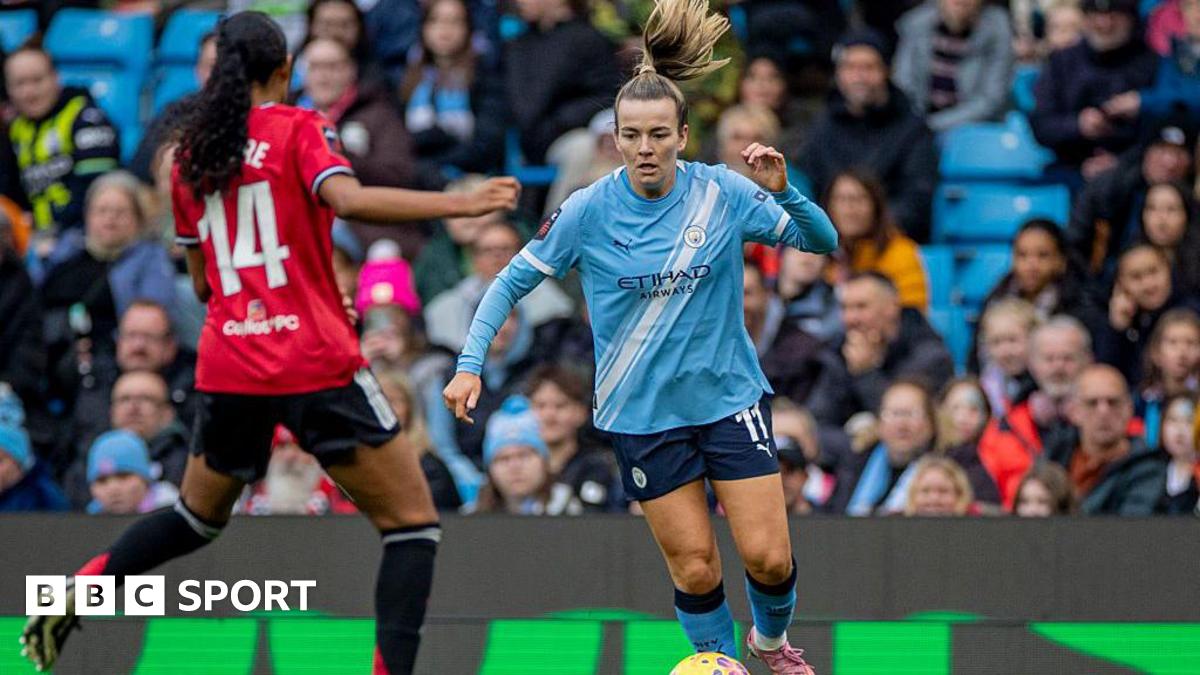
United started in a passive mid-block, seemingly hoping to force City wide and deal with crosses. The logic is somewhat sound against lesser opposition. But Yui Hasegawa simply refused to let them settle into any kind of rhythm. The Japanese international orchestrated the tempo with precision, completing 74 of her 81 attempted passes.
When you allow a deep-lying playmaker that much time on the ball, you are already dead. United's forwards repeatedly failed to cut off the passing lanes into the half-spaces. Every time Lauren Hemp or Chloe Kelly tucked inside off the flanks, Hasegawa found them instantly.
It was a clinic in modern positional play. City's midfielders constantly rotated, dragging United's double pivot out of their rigid shape. The space left behind was repeatedly exploited by late runs from the number eights.
Compare this to United's midfield structure. They looked static, reactive, and entirely devoid of ideas when they actually managed to win the ball back. The contrast in mobility was jarring.
United's inability to bypass the press
The most alarming statistic from the first half was not the shot count. It was United's pass completion rate under pressure. Whenever City lost the ball, their counter-press was immediate, highly organized, and entirely suffocating.
City's PPDA (passes allowed per defensive action) dropped to an astonishing 7.2 in the first 45 minutes. That is an elite number anywhere in Europe. For context, the league average currently sits closer to 11.5. United simply could not string three passes together to escape their own defensive third.
You could physically see the frustration building on the pitch. Long balls were hooked aimlessly toward the channels out of sheer desperation. City's center-backs swept them up without breaking a single drop of sweat. It was a glaring tactical mismatch from the first whistle.
But City are not flawless. If there is a valid criticism to be leveled at Gareth Taylor's side, it is their tendency to over-commit both full-backs simultaneously in sustained possession. Twice in the first half, United actually found vacant space behind Kerstin Casparij on the counter.
Better opposition — specifically a side with a functional, rehearsed attacking transition — would have punished those moments of structural vulnerability. City leave the back door unlocked just often enough to give you hope.
United, however, completely failed to capitalize. Their wide players were pinned far too deep by City's relentless overlapping runs. It is incredibly difficult to launch a 60-yard counter-attack when your wingers are operating as auxiliary full-backs on the edge of their own area.
A stark contrast in progression
If you want to understand why United looked so toothless, you have to examine their ball progression map. City suffocated the center of the pitch entirely. United were forced to build play through their full-backs, which is exactly what Gareth Taylor wanted.
By forcing the ball wide early, City could use the touchline as an extra defender. United completed just 41 percent of their passes that originated in their defensive third and ended in the middle third. They were trapped.
City, conversely, progressed the ball through the center at will. Alex Greenwood and Laia Aleixandri stepped out of defense with total confidence, regularly bypassing United's first line of pressure with a single, laser-guided pass.
This is where the game was actually won. Not in the penalty areas, but in the transition between the middle and final thirds. City had a clear, rehearsed plan for moving the ball up the pitch. United looked like they were improvising every single possession.
Shaw's terrifying shot map
When you dominate the midfield so completely, the high-quality chances inevitably flow. Khadija Shaw is currently operating at a level of finishing that very few strikers in WSL history have ever reached.
Shaw registered an absurd 12 touches inside the opposition penalty area. That is a ridiculous number for a single player in a tightly contested derby environment. She is not just waiting passively for service; she is actively hunting the blind spots between the center-backs.
Her shot map this season is a lesson in sheer offensive efficiency. She rarely takes low-probability strikes from outside the box. Against United, every single one of her four shots came from within 12 yards of the goal.
United's defensive line was caught entirely flat-footed on multiple occasions. They consistently failed to track Shaw's blindside runs, repeatedly letting her peel off the shoulder of the last defender before the cross even arrived.
You have to look at the delivery, too. Hemp delivered five open-play crosses directly into the penalty area. Three of those found a City shirt. The delivery was consistently curled away from the goalkeeper, making it an absolute nightmare to defend against.
Compare Shaw's output to United's attacking line. The hosts managed just three touches inside the City penalty area throughout the entire match. You simply cannot win a game of football when your primary attacking threats are completely isolated from the final third.
The underlying numbers spell serious trouble
Let's look at the broader picture. City are now sitting five points clear at the top of the table. Their goal difference is rapidly becoming mathematically absurd.
United, meanwhile, managed a dismal 0.14 xG in the second half. They did not register a single shot on target after the halftime break. You absolutely cannot win top-flight football matches if you refuse to shoot the ball.
This is not a one-off issue for Marc Skinner's side. Last season, they averaged 1.8 expected goals per 90 minutes. This season, that number has plummeted to 1.1. They have entirely lost their attacking identity.
The recruitment strategy over the summer has to be questioned severely by the hierarchy. They brought in players to play a fast transition game, but they critically lack the midfield ball-winners to actually trigger those transitions in the first place. It is a disjointed squad completely lacking a cohesive tactical vision.
City, on the other hand, look like a finely tuned machine. They have conceded just four goals in their last ten league matches. Greenwood's ball-playing ability from the back gives them a progressive dimension that very few teams in Europe can match.
The death of the final-day title race
We have grown accustomed to WSL title races going down to the absolute wire over the last few years. That era of nail-biting finishes might be temporarily suspended.
City's underlying numbers strongly suggest this dominant run isn't a fluke. Their expected goal difference (xGD) per 90 is currently tracking at +2.1. Nobody else in the league is even close to that figure right now. Even Chelsea are trailing noticeably in their statistical wake.
It is incredibly easy to get caught up in the raw emotion of a derby win. The noise, the atmosphere, the post-match celebrations in front of the away end. But the cold, hard numbers are what should genuinely terrify the rest of the league.
City are not just beating teams; they are statistically dismantling them week after week. They control the ball, they aggressively limit high-quality chances against them, and they finish their own high-probability looks with ruthless consistency.
United have to go back to the drawing board immediately. They are miles off the necessary pace required to compete at the top end. The gap between the top two and the rest of the chasing pack has never looked quite this wide.
City are marching toward the title without breaking stride. And right now, there isn't a single team in the league equipped with the tactical tools to stop them.
Read Next
- Man City fans are unbearable right now and United fans are in hell
- How Ceri Holland exploited Everton's fatal defensive flaws in derby demolition
- England's Friday disaster means the WSL derby carries the weekend
- Wales found the 86th minute limit of Bellamy's chaos while Gyokeres hit a new gear
- 🏆 Europa League Final 2026 — Full Coverage Hub