The minivans and the miracle
A minivan with darkened windows pulls up at a nondescript gym in central Chernihiv.
The doors slide open. A stream of youths spills out into the daylight, rushing inside to begin their training session.
This is not how modern football teams prepare for a cup final. There are no state-of-the-art recovery chambers here. No meticulously manicured training pitches bathed in spring sunshine.
There are no media scrums or relaxed press conferences. There is only survival, adaptation, and an impossible dream.
FC Chernihiv are exactly 90 minutes away from qualifying for the UEFA Europa League. Let that concept breathe for a second.
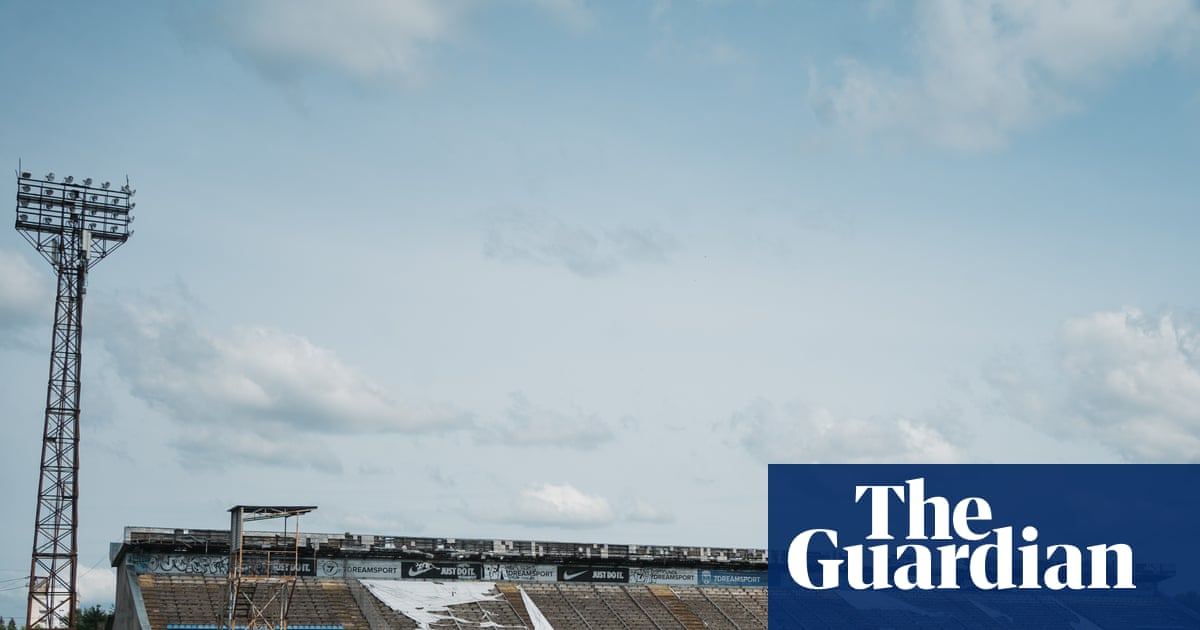
We are talking about a football club currently battling relegation from the Ukrainian second tier. They play in a city under persistent, active attack by Russian forces.
Every single aspect of their daily existence is defined by conflict, logistical chaos, and fear. The simple act of gathering the squad for a training session is a tactical operation in itself.
Yet, against all mathematical odds and sporting logic, they have navigated their way to the Ukrainian Cup final.
Football loves a classic underdog story. We romanticize domestic cup competitions. We love watching part-time plumbers and electricians take on millionaires.
But this situation is entirely different. This is a group of players who literally train between air raid sirens.
The Guardian recently called them a beacon of hope for the region. That isn’t empty journalistic poetry designed to sell papers.
It is a literal, stark description of what a deep cup run means to a city enduring a brutal siege. For a few hours a week, the people of Chernihiv get to think about something other than the war. They get to think about football.
The ugly truth about their football
We need to be brutally honest about something right now. FC Chernihiv are not a good football team.
You do not find yourself fighting a desperate relegation battle in the second division if you are playing flowing, dominant, possession-based football. The reality of Chernihiv’s domestic season has been incredibly grim.
They are slow in transition. Their midfield routinely gets bypassed by opposition runners. They rely heavily on panicked clearances and long balls launched into empty channels.
Their tactical setup essentially asks their isolated striker to somehow hold up the play against two burly center-backs. It rarely works.
Their defensive shape in the league has been genuinely shocking at times. They are particularly vulnerable on defensive set-pieces, often losing their markers on back-post runs and failing to clear the first ball.
In the second tier, they get punished relentlessly for these lapses. Against top-flight opposition in this cup run, they have somehow survived through a wild mixture of sheer grit, heroic goalkeeping, and staggering luck.
Look closely at their semi-final performance. They surrendered possession entirely from the opening whistle. They retreated into a rigid, desperate 5-4-1 formation and camped deeply inside their own penalty area.
The opponent generated enough high-quality chances to win three separate matches. Chernihiv barely crossed the halfway line for long stretches of the game.
But they found one counter-attack. One breakdown in the opposition's defensive shape. They scored against the run of play, parked the bus even deeper, and held on for dear life as the clock ticked down.
That isn't a sustainable tactical blueprint. It is a tightrope walk over a gaping chasm.
And in a cup final, against a vastly superior opponent with elite attacking talent, the margin for error shrinks to absolute zero.
Where the final will be won and lost
The tactical dynamic for this final is entirely locked in. The top-flight favorites will monopolize the ball.
Chernihiv will concede the flanks, pack the middle of the pitch with bodies, and challenge their opponents to break them down.
The primary danger for Chernihiv lies in the half-spaces. Their wing-backs have a terrible habit of dropping too deep and getting pinned against their own center-backs.
This creates a massive void of space just outside the penalty area. A smart, technical winger will drift inside, pick up the ball in that exact pocket, and dictate the tempo of the attack.
If the opposition switches the ball quickly from left to right, Chernihiv’s midfield block simply cannot shuffle across fast enough to cover the gaps.
We saw this exact weakness exposed last month in league play. A simple, sweeping switch of play forces the wing-back to step out late, opening a channel for an overlapping runner to exploit.
If a second-tier team can exploit that specific flaw, a top-flight team will carve it open effortlessly.
Chernihiv does not press high. They don't have the legs or the coordination for it. Instead, they use a mid-block trigger.
The moment the ball is passed to the opposition full-back, their wide midfielders sprint to close down the angle. It is a basic, old-school mechanism.
But it requires immense discipline. If one player is half a second late, the press is broken, and the backline is completely exposed.
This happened repeatedly in their league fixtures. A tired midfielder fails to jump on the trigger, the full-back easily bypasses the line, and suddenly it's a 3-on-2 overload in the final third.
Chernihiv’s only real hope is to drag the game down into the mud. They need to turn it into a physical, disjointed, ugly mess.
Lots of tactical fouls. Lots of stoppages. They must break the rhythm of the game at every opportunity.
If the ball is constantly in play, rolling smoothly on the grass, Chernihiv will be run into the ground by superior athletes.
They need to reach the 60th minute with a clean sheet. If they do that, doubt begins to creep into the minds of the heavy favorites.
The opposition will start taking rushed shots from distance. The pressure of being the top-flight team that lost to the second-tier relegation candidates starts to weigh incredibly heavy on their shoulders.
The Europa League fantasy
The stakes attached to this match are almost comical when you step back and look at the bigger picture. A single victory sends FC Chernihiv straight into the Europa League group stages.
Imagine the sheer logistical headache of that reality. UEFA has extremely strict stadium requirements, security protocols, and broadcast standards for all European fixtures.
Chernihiv is actively fighting a war. Their city is under heavy attack. The idea of hosting a prestigious European night under the lights is a physical impossibility right now.
They would likely have to play their home matches in a neutral country. Perhaps Poland or Slovakia, hundreds of miles away from their actual supporters.
But the financial windfall of European qualification would fundamentally alter the trajectory of the football club forever. The prize money alone would secure their existence for the next decade.
It would pay for training facilities, youth development programs, and basic operational costs. It is a golden ticket wrapped up in 90 minutes of high-stakes football.
Consider the sheer mental toll of this run. Professional footballers usually complain about congested fixture lists or long flights.
These players are navigating military checkpoints. They are checking news alerts to see if their neighborhoods have been hit overnight.
To compartmentalize that level of trauma and focus on tracking a runner from a corner kick requires a level of psychological endurance that most elite athletes will never comprehend.
Yet, talking about the Europa League feels entirely presumptuous. The players stepping out of that darkened minivan aren't thinking about Thursday night trips to face mid-table Spanish sides in the autumn.
They are thinking about surviving the next phase of play. They are thinking about clearing the first corner kick of the match.
They are thinking about their families, their battered city, and the stark reality of the war waiting for them when the referee blows the final whistle.
The final verdict
Upsets happen all the time. Football is inherently chaotic. A deflected shot, a controversial red card, a sudden slip on the wet turf.
The entire sport is built on the enduring premise that the better team on paper does not always win on the grass.
But there is a hard limit to the magic of the cup. The gap in technical quality, fitness, and tactical awareness between a top-flight side and a relegation-threatened second-tier side is absolutely vast.
It is one thing to survive a quarter-final or a semi-final relying heavily on adrenaline, passion, and sheer luck. It is an entirely different challenge to do it under the blinding, intense spotlight of a national cup final.
Chernihiv’s legs will inevitably get heavy. The constant defensive shuffling, the mental exhaustion of tracking overlapping runners for 90 minutes without ever controlling the tempo of the ball. It drains you completely.
I expect them to fight valiantly from the start. I expect them to hold out initially. They will throw their bodies recklessly in front of shots.
Their goalkeeper will likely make a couple of absurd, highlight-reel saves to keep them in it early on. But eventually, the defensive dam will break.
The tactical flaws out wide will be ruthlessly exploited. A late run into the penalty box will go untracked by an exhausted midfielder.
Logic, fitness, and sheer attacking quality will assert themselves in the second half.
I am predicting a comfortable, if hard-fought, victory for the top-flight favorites. I see this final finishing in a 3-0 defeat for the underdogs. The fairytale run will end right here.
But losing a football match changes absolutely nothing about what this group of players has achieved this season. They have provided a bright, flickering light for a violently besieged city.
They have proven that even in the darkest, most terrifying circumstances, sport can still manufacture moments of pure, unadulterated defiance.
They almost certainly will not lift the cup today, but they have already won something far more significant than a piece of silver.