
Harry Maguire is right about the United furnace but wrong about his own ceiling
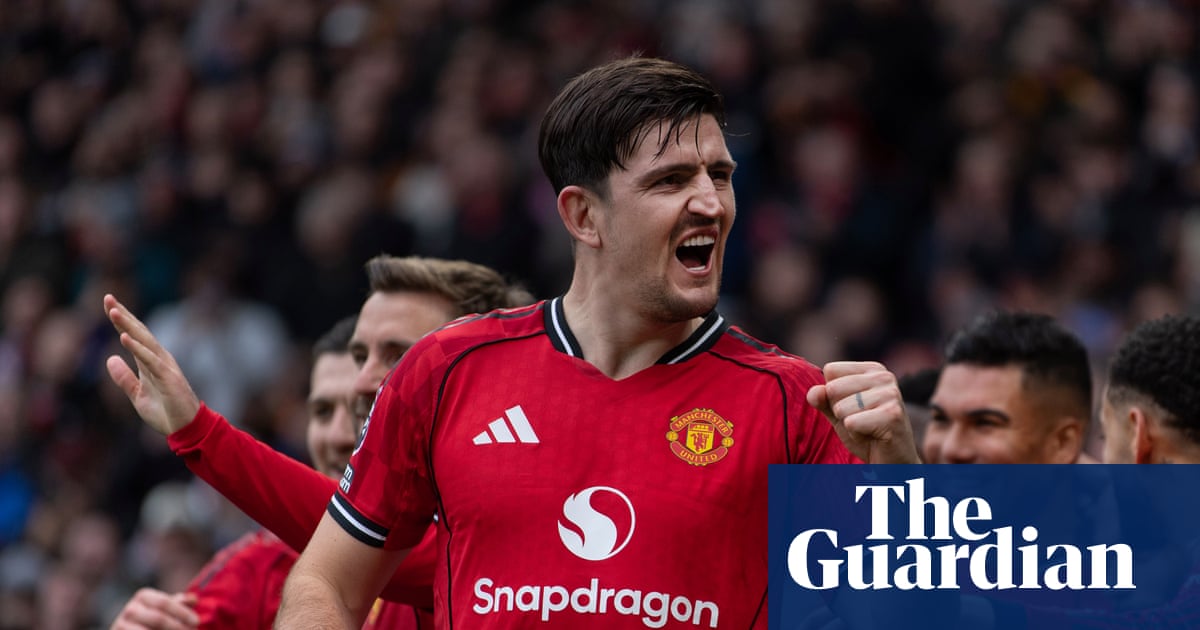
The psychological tax of the Stretford End
Harry Maguire has never been a man to shy away from a microphone when his back is against the wall. His recent comments to The Guardian regarding the 'broken' state of his former teammates are not just an exercise in self-preservation. They are a bleak diagnostic report on the most demanding environment in world football. Maguire has survived three managerial cycles and a near-constant barrage of vitriol that would have sent lesser characters into early retirement. That he remains a fixture in the squad as we approach the business end of the 2025/26 season is a miracle of mental fortitutde.
The spotlight at Old Trafford does not merely illuminate talent; it acts as a magnifying glass that eventually sets the subject on fire. We have seen a parade of high-profile acquisitions arrive with glowing CVs only to look like they’ve forgotten the basic mechanics of a five-yard pass within six months. Maguire’s observation that the club is 'too big' for some is a blunt way of describing the collapse of structural confidence. When the tactical framework fails, the individual is left exposed. For many, that exposure leads to a permanent shattering of the sporting ego.
United’s recruitment strategy over the last five years has prioritized the 'what' over the 'how.' They buy the best players in specific metrics without asking how those metrics survive a chaotic transition-heavy system. Maguire himself was bought for £80 million on the premise that he would be the foundational block of a dominant defensive unit. Instead, he has spent much of his tenure acting as a human shield for a midfield that often resembles a sieve. His survival is a product of thick skin, but his survival does not equate to success in the modern tactical era.
The tactical lag in Maguire’s self-assessment
Maguire’s claim that he is 'one of the best defenders in both boxes' is technically accurate and tactically irrelevant. In the current 2026 meta, where the elite teams squeeze the pitch into a 30-yard band, being a dominant box defender is like being the world’s best blacksmith in the age of the industrial revolution. It is a niche skill that becomes increasingly secondary to recovery speed and lateral mobility. Maguire wins his headers because he is physically imposing and reads the flight of the ball better than most. He loses his matches when he is forced to turn and chase a 19-year-old winger into 40 yards of green grass.
The data from this season tells a conflicting story. Maguire maintains an aerial duel success rate of 85%, a figure that puts him in the top percentile of European defenders. However, Manchester United have conceded 14 goals directly from fast breaks where the defensive line was caught too high. The disconnect is obvious. Maguire wants to defend the box because that is where he is king. The modern game requires him to defend the halfway line, where he is a civilian. This refusal to acknowledge his own mobility deficit is the primary reason why the United backline remains so brittle.
There is a stubbornness in Maguire’s play that is both his greatest strength and his fatal flaw. He refuses to be 'broken' by the pressure, which is admirable. Yet, he also refuses to adapt his positioning to mitigate his lack of pace. He plays with the arrogance of a man who believes his physical presence alone should be enough to stop an attack. In the 1-0 defeat to Newcastle last month, his positioning for the winning goal was a masterclass in 'box-first' thinking that ignored the reality of the runner behind him. He watched the cross while the game happened in his blind spot.
Winning the air but losing the grass
To understand why players break at United, you have to look at the gap between expectation and reality. When a player like Jadon Sancho or Antony fails to ignite, it is often attributed to 'mentality.' Maguire is suggesting that the mental load of the shirt is the primary culprit. He isn’t wrong. The sheer volume of noise surrounding every missed tackle or misplaced cross at Old Trafford is unlike anything at Anfield or the Etihad. It creates a feedback loop of anxiety. A player makes one mistake, hears the collective groan of 75,000 people, and immediately retreats into a safe, lateral passing game that kills the team's momentum.
Maguire has bypassed this by simply ignoring the noise, but that has led to a different kind of problem. He has become a tactical island. While the rest of the league has moved toward proactive, front-footed defending, Maguire remains a reactive stopper. He waits for the fire to reach the house before he starts looking for the hose. This 'survivalist' mode of defending keeps his individual stats looking respectable—blocks, clearances, and headers are always high—but it does nothing to prevent the fires from starting in the first place.
The current coaching staff has clearly struggled to integrate his specific profile into a high-pressing system. You cannot play a 50-yard line with a defender who moves like a container ship. This creates a paradox: to accommodate Maguire’s 'both boxes' dominance, the entire team must drop ten yards deeper. This cedes the midfield, puts more pressure on the double pivot, and ultimately leads to the very 'broken' performances Maguire is lamenting. He is the survivor of a system that he is inadvertently helping to destabilize.
The recruitment rot and the missing middle
The 'broken' teammates Maguire refers to are victims of a club that lacks a coherent sporting identity. When you drop a creative, confidence-based player into a squad that lacks a clear offensive pattern, they will eventually wither. It isn’t just that the spotlight is too big; it’s that there is no shade. In a functional team like Arsenal or City, a player can have an off-day because the system carries them. At United, the system is so porous that every individual error is catastrophic. This is the 'United Tax' that Maguire has paid in full.
We must be critical of the leadership within the dressing room as well. If players are arriving and finding the environment too big, what is being done to scale it down for them? Maguire has worn the captain’s armband for a significant portion of his stay. If he sees his colleagues cracking under the weight of the shirt, it reflects a failure of the internal culture to provide a safety net. Resilience is often framed as an individual trait, but in elite sport, it is a collective resource. United’s locker room appears to be a collection of individuals trying to survive rather than a unit trying to conquer.
Maguire’s 45 starts this season across all competitions suggest that he is the only reliable option left in a department ravaged by injury and poor form. This is an indictment of the club’s planning. Relying on a 33-year-old defender whose best days were arguably during a different tactical epoch is not a strategy for growth. It is a strategy for treading water. Maguire is treading water better than anyone else, but the ship is still sinking. His durability is impressive, but durability without evolution is just a slow decline.
I see a lot of players come in and it’s too big for them. The harder times I have experienced at Manchester United would have broken many players.
This quote is the ultimate distillation of the Maguire era. It is a mixture of genuine insight and a slightly warped sense of his own importance. He is a survivor, yes. He is mentally tougher than 90% of the players who have walked through those doors since 2013. But his survival has come at the cost of the team's tactical progression. He is the immovable object that keeps United from becoming truly fluid. As tonight’s Europa League quarter-final looms, the question isn't whether Maguire will be 'broken' by the occasion. We know he won't be. The question is whether he will be outrun by it.
The reality of Manchester United in 2026 is that they are a club caught between two worlds. They want the prestige of their past but cannot find the tactical discipline of the present. Maguire is the perfect avatar for this identity crisis. He is a 'proper' defender in a world that no longer values 'proper' defending as much as it values positional intelligence and athletic recovery. He will likely finish his career at Old Trafford as a man who gave everything and was fundamentally misunderstood. But as he looks around at his 'broken' teammates, he should perhaps ask if the weight of the spotlight was the only thing that crushed them, or if the tactical vacuum on the pitch played an equal part.
The Mixer: The Story of Premier League Tactics, from Cantona to Guardiola by Michael Cox
The ultimate tactical breakdown of how the Premier League changed forever.
Frequently Asked Questions
Why did Harry Maguire describe his former Manchester United teammates as broken?
What does Harry Maguire mean by saying Manchester United is too big for some?
How effective is Harry Maguire in aerial duels during the 2025/26 season?
Why is Manchester United conceding goals from fast breaks with Maguire starting?
What is the main criticism of Manchester United's recruitment strategy?
More Coverage

Why England must fear Panama's disciplined low block
39 minutes ago
Anthony Gordon to Barcelona marks a high-stakes gamble
an hour ago
Arsenal vs PSG: Why tactical rigidity will determine the European champion
an hour ago
Arsenal's 104 million gamble on Julian Alvarez is pure chaos
an hour ago
Top 10: The Definitive Arsenal Moments of the 2025/26 Season
3 hours agoLincoln City just entered the weirdest experiment in League One history
3 hours agoMore Analysis

Manchester United are still trapped in the same tactical purgatory
2 months, 1 week ago
Harry Maguire's new contract ignores the tactical reality against Chelsea
2 months ago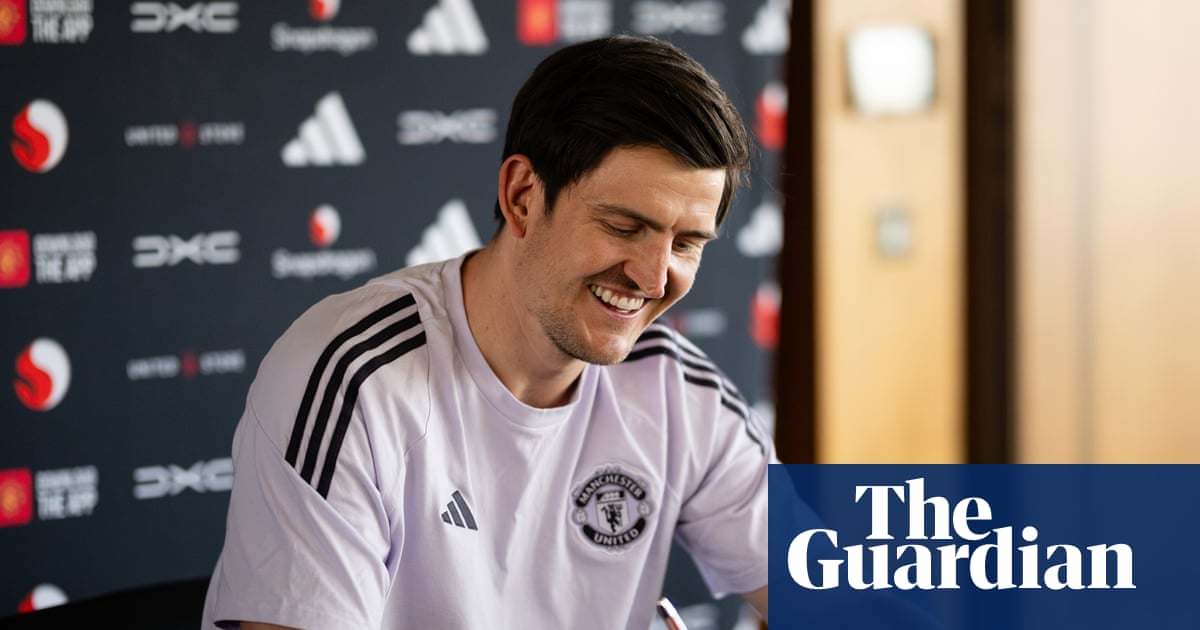
Harry Maguire's extension highlights United's ongoing identity crisis
1 month, 3 weeks agoHarry Maguire staying at Old Trafford is a massive self-own by United
1 month, 4 weeks agoHarry Maguire’s new Manchester United contract is the ultimate test of your sanity
1 month, 3 weeks ago