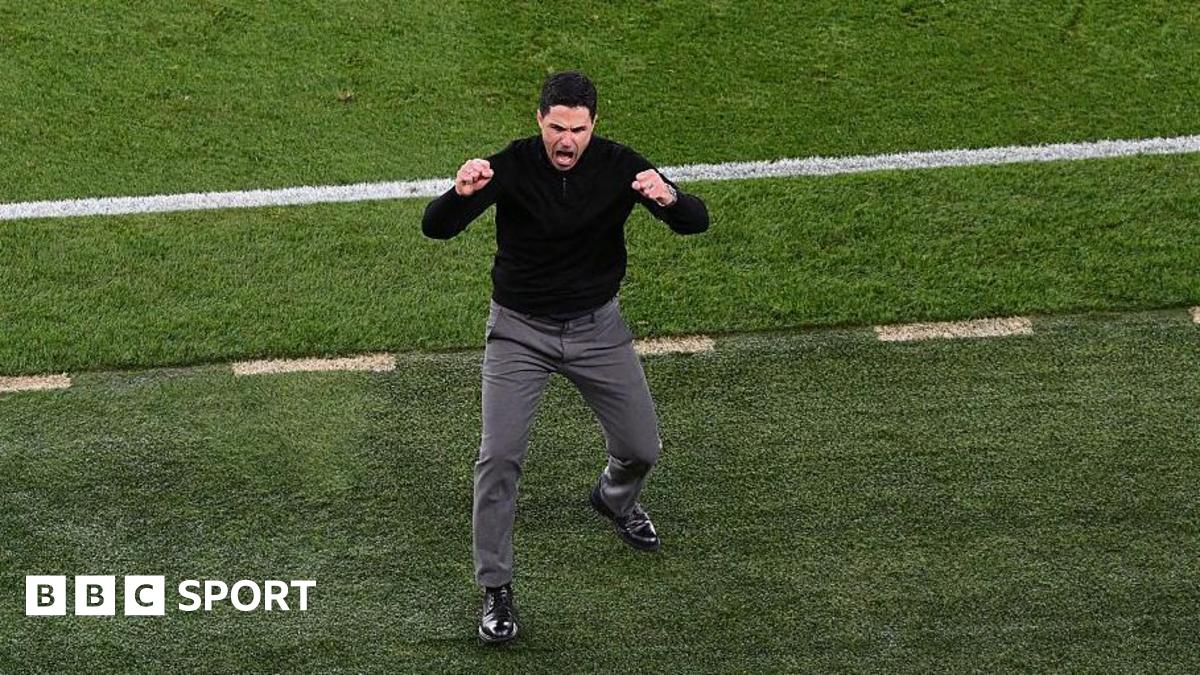
The Control Freak Relinquishes Control
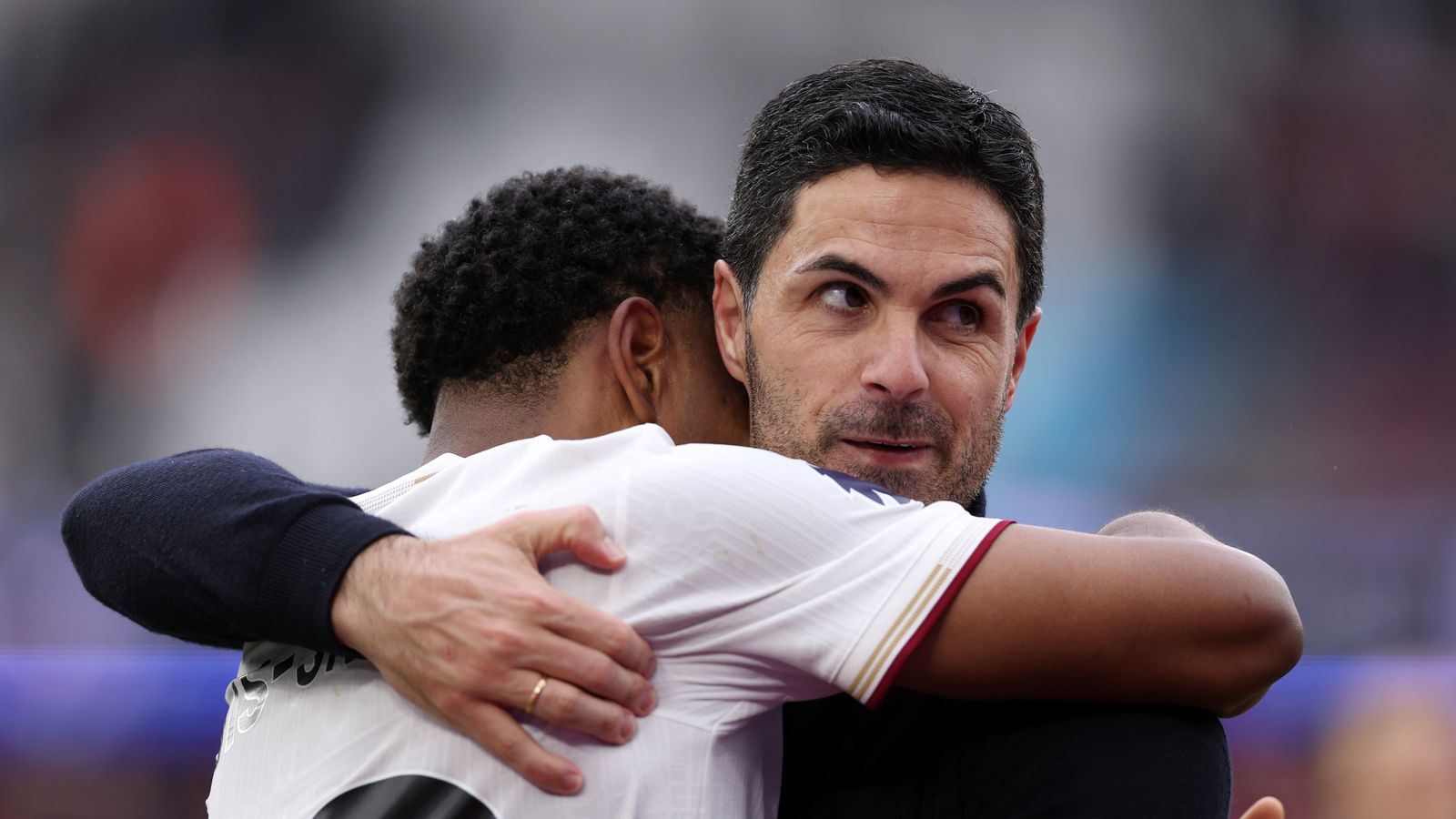
Mikel Arteta operates on the absolute margins of obsession. Every single movement his Arsenal players make is choreographed with painstaking precision. If Gabriel Martinelli receives the ball on the left touchline, Declan Rice knows exactly which half-space to occupy. The pressing triggers are rehearsed at London Colney until they bypass conscious thought and become pure muscle memory.
Arteta does not leave things to chance. He is a manager who demands total control over every blade of grass.
So there is a profound, almost comical irony in how the defining moment of his managerial career actually unfolded. He wasn't barking instructions from a technical area. He wasn't frantically adjusting a low block on a tactical tablet in the dugout.
He was in his garden, managing a barbecue.
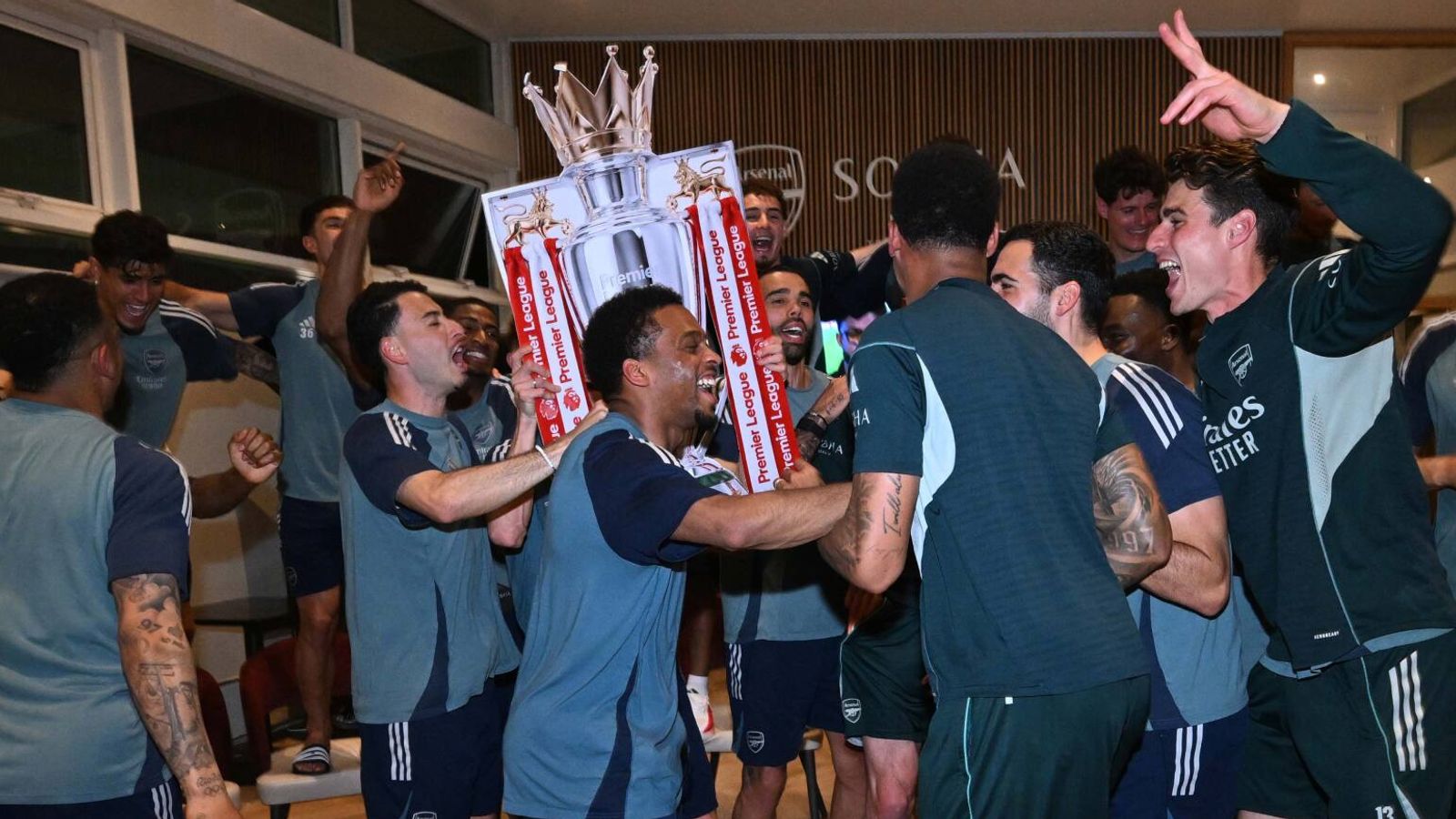
According to a fascinating report from BBC Sport, Arteta couldn't bring himself to watch the decisive fixture that ultimately handed Arsenal the Premier League title. Instead of enduring the agony of a match he couldn't influence—a match where his tactical acumen was entirely useless—he stepped away. The news didn't come from a final whistle on a screen or a roar from a stadium crowd. It was delivered by his crying son.
The Architecture of Domination
To understand why that distinctly domestic image is so striking, you have to examine what Arsenal have become on the pitch this season. They have been the antithesis of a casual Sunday afternoon.
Out of possession, they suffocated opponents. Arsenal’s defensive structure transformed into a terrifyingly rigid 4-4-2 mid-block. Martin Ødegaard and Kai Havertz acted as the first line of engagement, expertly cutting off passing lanes to opposition pivots and forcing long, low-percentage clearances.
Arteta eliminated the chaos that defined late-era Arsène Wenger. He stripped away the unpredictable transitions and replaced them with sterile, absolute domination.
When William Saliba steps up to condense the space near the halfway line, he isn't reacting to the game; he is executing a pre-loaded script. The automation is relentless. Arsenal routinely pinned teams into their own defensive thirds, cycling the ball through Bukayo Saka and Ødegaard until a numerical advantage appeared in the right half-space.
The introduction of Jurrien Timber on the left side fundamentally altered their buildup. Instead of the chaotic, midfield-crashing runs of Oleksandr Zinchenko, Timber tucked in alongside Saliba and Gabriel. This formed an impenetrable back three that allowed Declan Rice to push higher and suffocate counter-attacks at their source.
The Flaws in the Machine
But that unrelenting pursuit of perfection wasn't without its glaring detractors. At times, the rigidity felt genuinely stifling, bordering on dogmatic.
When the scripted offensive patterns failed, Arsenal occasionally looked devoid of organic solutions. Their Champions League campaign highlighted this fatal flaw. Against elite European midfields who refused to be bullied by Arsenal's pressing traps, Arteta's side often looked paralyzed in possession. When Plan A hit a brick wall, the lack of spontaneous, individual brilliance was painfully obvious. Everything was methodical; nothing was off the cuff.
They dropped vital points domestically when mid-table teams sat in a deep, entrenched 5-4-1 block and simply refused to engage. Arsenal would rack up staggering possession numbers and endless touches in the final third, but the ball speed would drop to a crawl.
The obsession with not losing the ball occasionally superseded the desire to risk a line-breaking pass. You could see Arteta on the touchline, micro-managing every throw-in, his own anxiety transmitting directly to the pitch. With Martinelli frequently facing double-teams, Arsenal lacked a runner willing to abandon the tactical structure just to cause havoc behind a defense.
The Tactical Pivot
Yet, they evolved just enough to cross the line. The introduction of a more dynamic midfield rotation in the spring changed the equation entirely.
Declan Rice was unshackled from a pure holding role. He began driving violently into the left half-space, dragging central markers away and creating isolation scenarios for Leandro Trossard. This asymmetrical shape threw opposition defensive blocks completely off balance. Instead of always attacking down the right through Saka and Ben White, Arsenal became incredibly potent down the left channel.
Arsenal stopped trying to pass the ball into the net perfectly. They started winning second balls higher up the pitch. The counter-press became their most lethal playmaker. They forced turnovers in the opposition's defensive third and finished chances before the defensive shape could reset.
They mastered the dark arts of the set-piece, utilizing Nicolas Jover's routines to break deadlocks when open play failed. Corners became a weapon of mass destruction, with Gabriel bullying markers at the back post while White deliberately obstructed the goalkeeper. It wasn't beautiful, but it was brutally effective.
The Final Test Against Dyche's Block
Their final assignment of the season brings Sean Dyche's Everton to North London. Even with the title already draped in red and white ribbons, this match presents a specific tactical puzzle that Arsenal must solve to cap off their campaign.
Dyche will not offer a guard of honor on the pitch. Everton will deploy their customary narrow 4-4-2, designed specifically to frustrate the exact half-space overloads Arsenal rely upon.
Everton's central midfield pairing will sit incredibly deep, barely five yards ahead of their center-backs, denying Ødegaard the pockets of space he usually exploits. The objective for the visitors is simple. Force Arsenal wide, allow the crosses, and back James Tarkowski and Jarrad Branthwaite to clear the penalty area.
This is exactly the type of fixture that haunted Arsenal's title charges in previous seasons. The sterile domination trap looms large. If Arsenal circulate the ball too slowly in a U-shape around the Everton penalty area, they risk playing directly into Dyche's hands.
The tactical battle will happen on the flanks. Bukayo Saka will face a relentless double-team from Vitaliy Mykolenko and Dwight McNeil. To break the deadlock, Ben White's overlapping runs must be perfectly timed. Arsenal cannot rely on early crosses; they must utilize cut-backs from the byline to bypass the massive Everton center-backs.
Watch for Declan Rice making late, un-tracked runs to the edge of the penalty area to collect defensive clearances. If Arsenal can hit the target from 18 yards out, the Everton block will be forced to step up, instantly creating the space Martinelli needs to operate.
The Climax and The Coronation
Which brings us back to the garden grill.
For a manager who has spent years trying to mathematically solve football, the realization of his ultimate goal came completely stripped of tactics. There were no whiteboards. There was no tactical periodization.
"Arsenal manager Mike Arteta says he could not watch the game that secured the Premier League title, opting to have a barbecue in his garden instead."
It is a remarkably vulnerable admission from a man who projects constant, almost robotic authority. He couldn't handle the lack of control. The tension of watching another team dictate Arsenal's fate was too much for his micromanaging brain to process.
When his son approached him in tears to deliver the news, the sterile machine Arteta built collided with raw, unfiltered emotion. The thousands of hours of analyzing footage, the relentless training ground drills, the uncompromising tactical dogma—it all evaporated into a simple, overwhelming human moment.
Now, Arsenal prepare for their final fixture at the Emirates. The pressure is entirely gone. The title is secured. But anyone expecting a relaxed, celebratory exhibition fundamentally misunderstands Mikel Arteta.
Expect the starting XI to be full strength. Expect the pressing triggers to remain intensely active. He will still demand absolute perfection in the build-up phase against a low-block opponent hoping to escape the stadium with their dignity intact. The 4-3-3 will be deployed with the same ruthless intent as a cup final.
He might have celebrated like a normal father in his backyard on Sunday afternoon, but on the pitch, the machine never stops running. Arsenal have reached the summit through unrelenting discipline. The barbecue was a brief, necessary reprieve from the obsession.
The tactical warfare resumes at kickoff. Expect them to dismantle Everton not with loose joy, but with the cold, rehearsed efficiency of worthy champions. My prediction is a clinical 3-0 victory, featuring two set-piece goals and over 70% possession, proving that the system never sleeps.