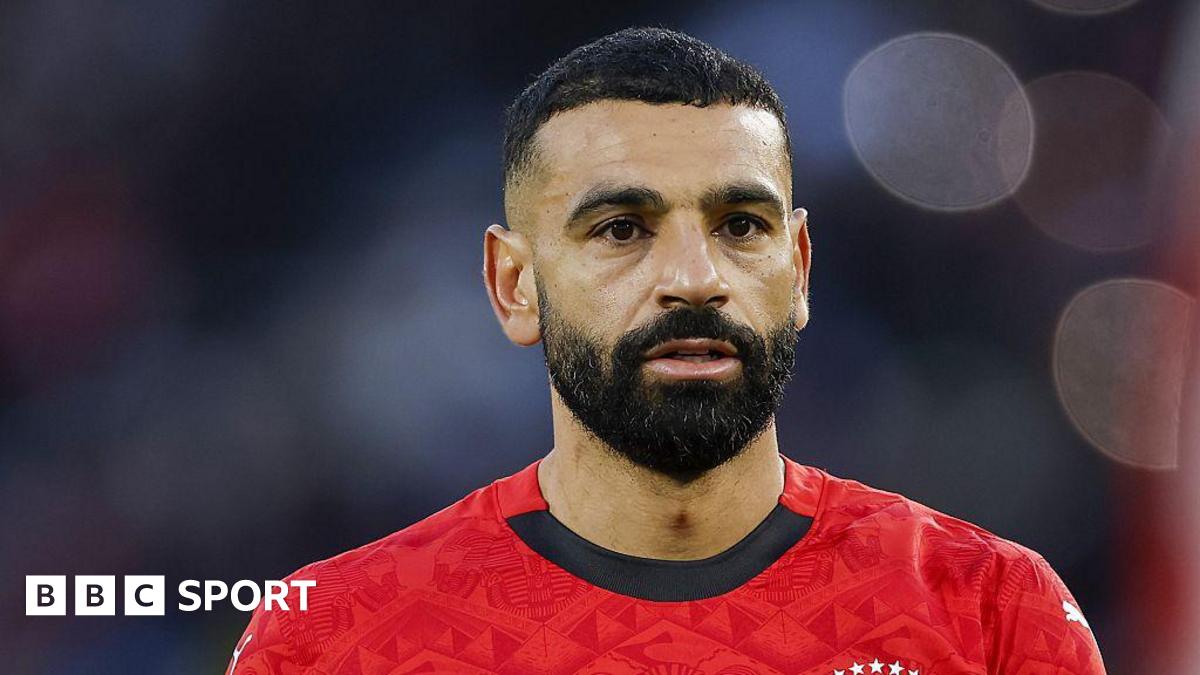
The Verdict is In: Fully Fit
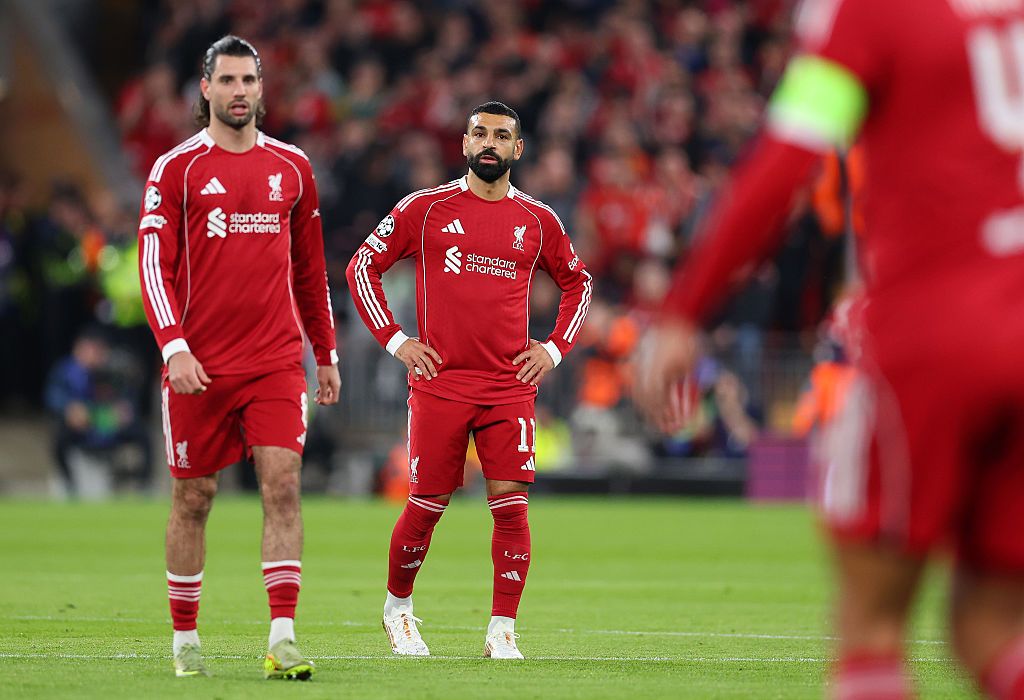
Mohamed Salah has officially been named in Egypt’s preliminary World Cup squad. The BBC confirmed the Liverpool forward will not just participate, but is set to captain his nation when the tournament kicks off in North America in just 21 days. The squad will be trimmed by one player later this month, but Salah’s place is absolute. From a medical and fitness perspective, this announcement represents a massive victory for a player whose relationship with major international tournaments has been defined by the treatment table.
We aren't looking at a race against time. There are no hyperbaric chambers, no desperate ultrasound sessions on a strained hamstring, and no questions about his pain tolerance. For the first time in recent memory, Salah is entering a major summer tournament with a completely clean bill of health. He is 33 years old, yet his physical metrics remain among the elite in European football.
Exorcising the Ghosts of 2018 and 2024
To understand the significance of a healthy Salah arriving in North America, we have to look at the medical trauma of his past international campaigns. The 2018 World Cup in Russia was hijacked by Sergio Ramos. That infamous judo-throw in the Champions League final resulted in a severe acromioclavicular joint sprain in Salah’s left shoulder. He arrived in Russia compromised, missing the opening game against Uruguay and playing clearly hampered in the subsequent group matches.
The biomechanics of a shoulder injury for a winger are often misunderstood. It isn't just about arm movement. Sprinting requires violent, reciprocal arm drive to generate horizontal force. When the AC joint is inflamed, every explosive acceleration triggers a pain response, limiting top speed. Salah in 2018 was running at a severely reduced capacity, unable to use his upper body to shield the ball or hold off physical defenders.
More recently, the 2024 Africa Cup of Nations presented a different physiological failure. A grade two myotendinous junction tear in his left hamstring forced him out of the tournament and led to a prolonged, messy rehabilitation period back at Liverpool. Hamstring injuries in players over 30 are notoriously tricky. The collagen network within the muscle becomes slightly stiffer with age, increasing the risk of micro-tears during high-velocity deceleration—the exact movement Salah relies on when cutting inside from the right wing.
The Science of Survival at 33
So how did he survive the gruelling 2025-2026 Premier League campaign without a breakdown? The answer lies in elite load management and a shift in his athletic profile. Liverpool's sports science department has practically wrapped him in cotton wool between fixtures. We are looking at optimized acute-to-chronic workload ratios.
When you analyze his movement heatmaps and GPS data over the last ten months, you see a player who has stopped making unnecessary 40-yard recovery sprints. He is preserving his fast-twitch muscle fibers for high-value actions in the final third. His sprint distance per 90 minutes has slightly decreased, but his peak velocity remains largely unchanged. He isn't running less; he is running smarter.
Furthermore, his prehabilitation routine has clearly evolved. Players in their mid-30s require extensive soft tissue work, targeted eccentric strength training for the hamstrings, and rigorous mobility protocols for the hips and lower back to prevent kinetic chain dysfunctions. Whatever his medical team has programmed, it has worked flawlessly. He avoided the muscle fatigue accumulation that usually peaks around April and May.
The North American Challenge
Egypt will need every ounce of that preserved energy. The 2026 World Cup presents unique physiological demands. The expanded 48-team format and the sprawling geography of the host nations—the USA, Canada, and Mexico—mean significant travel loads and varying climates. Teams could be playing in the humid heat of Miami one week and the altitude of Mexico City the next.
Travel fatigue is a recognized medical risk factor for soft tissue injuries. Prolonged flights cause fluid pooling in the lower extremities and disrupt circadian rhythms, impacting sleep architecture. Reduced REM and deep sleep impair the release of human growth hormone, delaying muscle recovery. For a veteran forward, these environmental stressors are just as dangerous as a reckless tackle.
Egypt’s medical staff will have to implement aggressive recovery protocols. This means immediate post-match cryotherapy, compression garments during flights, and meticulously controlled nutrition to replenish glycogen stores. Salah’s fitness will dictate Egypt’s tactical setup. A fully fit Salah allows them to play a higher line and transition quickly. A fatigued or carrying-a-knock Salah forces them into a low block, relying on isolated counter-attacks.
The Final Cut and Squad Dynamics
The BBC report notes that Egypt's preliminary squad will be trimmed by one player this month. While Salah's spot is untouchable, the identity of that final cut will likely depend heavily on the medical assessments of the rest of the squad. Coaches often bring injured players into preliminary camps just to monitor their rehab, waiting until the absolute final deadline to make a decision.
If another forward or a key midfielder is showing signs of chronic tendinopathy or unresolved muscle tightness, they will be the one sent home. International tournaments are unforgiving. A roster cannot carry dead weight. The intense schedule of group stage games leaves zero margin for error. You either arrive fit, or you break down by the second match.
Strategic Implications for Liverpool
Back on Merseyside, Liverpool's front office and medical department will be watching through their fingers. Releasing a star player for a summer tournament is always a calculated risk. While they will be thrilled that Salah has avoided a late-season injury, they know the World Cup will completely disrupt his off-season rest period.
Normally, a veteran player needs at least four to five weeks of complete physical off-loading to heal micro-traumas, followed by a graduated six-week pre-season to build base aerobic capacity. A deep run by Egypt in June and July obliterates that schedule. Salah will likely miss the start of Liverpool's pre-season and will require a bespoke, delayed conditioning program when he eventually returns to the club.
The Reality of the Modern Calendar
Salah's clean bill of health is the exception, not the rule, in modern football. We are seeing a horrific trend of elite players succumbing to ACL tears, severe hamstring ruptures, and chronic pelvic pain due to an oversaturated match calendar. FIFPro has repeatedly warned about the physical breaking point, yet the fixtures keep multiplying.
That Salah has navigated this minefield and arrived at May 21, just three weeks out from the World Cup kickoff on June 11, without a red flag on his medical chart is a phenomenal achievement. It speaks to his obsessive professionalism, his dietary discipline, and his genetic durability.
But the real test hasn't even begun. The World Cup is a meat grinder. It tests the absolute limits of human endurance. For now, the news is entirely positive. Egypt has their captain. Liverpool has a healthy asset. And Salah has his shot at redemption on the global stage, completely free of the medical baggage that ruined his previous attempts. The question isn't whether he is fit right now. The question is whether his body can withstand the brutal reality of tournament football one last time.
Read Next
- Mohamed Salah's Liverpool departure looks like a messy divorce
- Salah's messy Liverpool exit is tearing the fanbase apart
- Liverpool fans are melting down over the messy Mo Salah exit
- Lionel Messi is fighting time, fans and history one last time
- 🏆 World Cup 2026 — Full Coverage Hub
- 🇪🇬 Egypt World Cup 2026 — Salah's Last Dance