The Rockliffe Park Shockwave and Wembley's Bizarre Reality
No one in football history has ever prepared for a ninety-million-pound game by booking flights to Ibiza, only to be dragged back to the training pitch four days later. Yet that is the exact reality for Kim Hellberg and Middlesbrough. After their 2-1 aggregate defeat to Southampton on May 11, their season was dead and buried.
Players were mentally on the beach, and fans were resigned to another year of Championship rebuilding. Then came the May 19 ruling from the Independent Disciplinary Commission. Southampton's admission of a systematic espionage operation—sparked by their analysis intern getting caught red-handed at Boro's Rockliffe Park complex on May 7—blew the playoffs apart.
The Saints were expelled, their appeal was swiftly rejected, and Middlesbrough were handed the most improbable ticket to Wembley in modern times. They face a Hull City side that took a far more conventional path to the capital. Under Sergej Jakirović, Hull handled their semi-final against Millwall with professional efficiency.
After a tense 0-0 draw at the MKM Stadium, they silenced The Den on May 11 with a 2-0 victory, sealed by Mohamed Belloumi's opener in the 64th minute and Joe Gelhardt's smart finish in the 79th. But while Hull have had twelve days to prepare, Middlesbrough have the momentum of a team that feels entirely touched by fate. The drama is captured perfectly as Sky Sports reported during their live coverage of the play-off build-up.
The Tactical Contrast: Hellberg's Control vs Jakirović's Chaos
Hellberg's Positional Structure
This final is a fascinating stylistic battle between two managers in their debut seasons in English football. Kim Hellberg has built a highly structured, possession-oriented machine at Middlesbrough that thrives on positional play and territorial dominance. They want to dictate the tempo, choke opponents in their own half, and generate high-volume shooting opportunities.
Boro averaged 16.4 shots per match during the regular season, a metric that reflects their relentless offensive focus. They rely on sustained passing patterns to break down deep blocks, dragging opponents side to side until space opens up in the half-spaces. It is a patient, methodical approach designed to minimize transition opportunities for the opposition.
Jakirović's Direct Counter-Attack
Hull City under Sergej Jakirović are the polar opposite. Hull are happy to cede possession, drop into a mid-block, and wait for the exact moment to trigger a vertical counter-attack. They do not need high shot volume because they are incredibly clinical in transition.
Led by the physical presence of Oli McBurnie, who bagged 17 league goals this season, Hull play a direct, high-octane game that can slice teams open in seconds. When they win the ball, they look to feed the wingers immediately, bypass the midfield, and flood the box. It is a high-risk approach, but their clinical finishing has consistently bailed them out.
Mohamed Belloumi and Joe Gelhardt are the twin pistons of this counter-attacking system. Belloumi provides the raw pace on the right, stretching defenses to create central lanes for Gelhardt to exploit. Their telepathic combination play during the semi-final win over Millwall showed exactly how lethal Hull can be when allowed to run into open space.
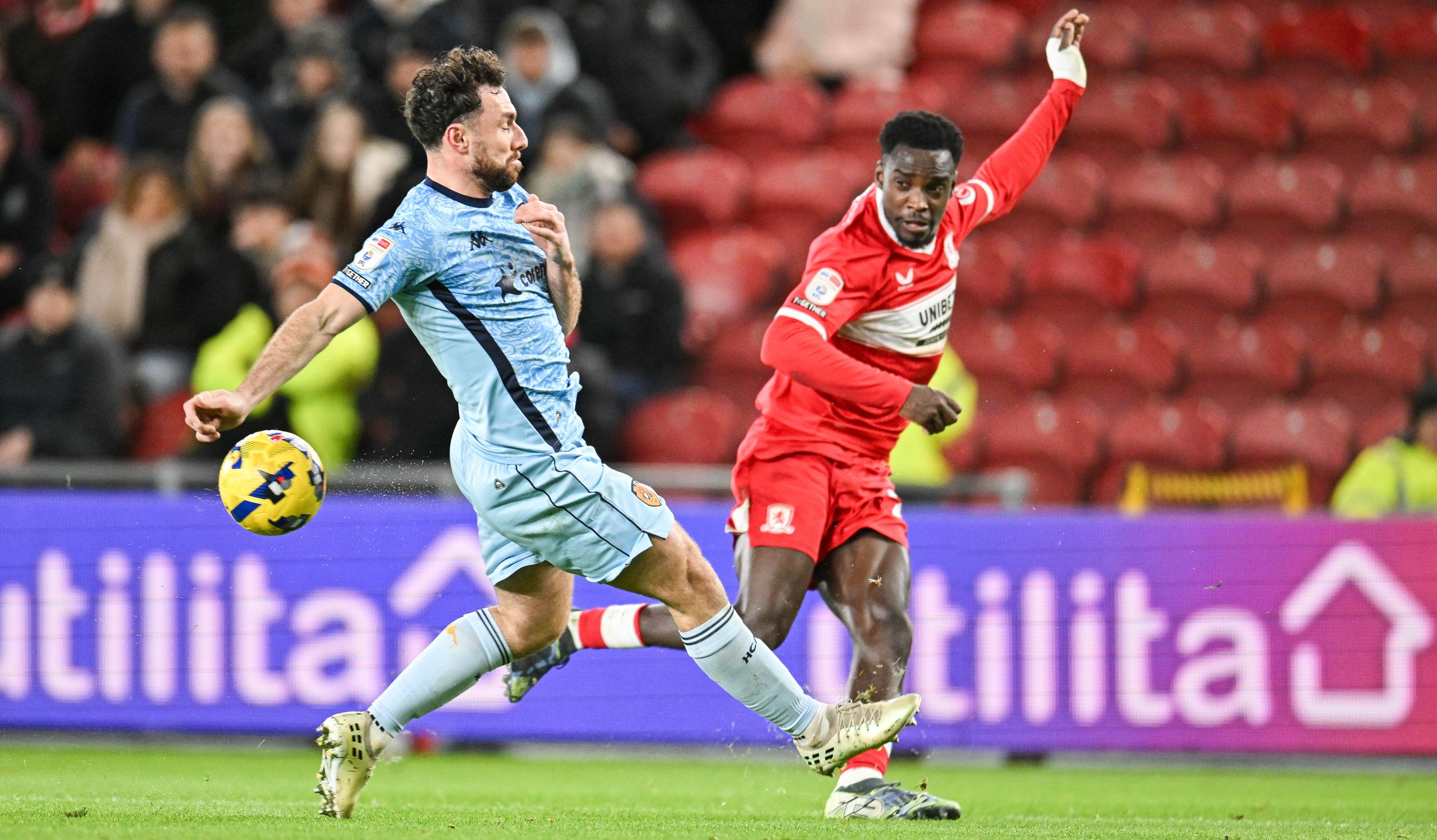
The regular season meetings highlight this tactical friction. On December 5, 2025, Middlesbrough went to the MKM Stadium and systematically dismantled Hull 4-1. Yet just over three weeks later on December 29, Jakirović's side executed a perfect defensive rearguard at the Riverside, winning 1-0 via a clinical counter-attack.
The final will be decided by which manager can impose their preferred game state on Wembley's massive pitch. Hull's speed on the counter will test Boro's rest defense, while Middlesbrough's spatial occupation will test Hull's concentration over ninety minutes.
The Return of the Championship's Best Midfielder
The Progressive Engine
Middlesbrough's chances of winning this match skyrocketed with the announcement that Hayden Hackney is fit to start. The Boro captain and Championship Player of the Season has been sidelined since suffering a calf injury against Bristol City in mid-March. Without Hackney, Middlesbrough lacked a progressive engine in their double pivot, which contributed to their eventual struggles against Southampton's press.
Hackney's return completely transforms how Middlesbrough build from the back. The academy graduate is a master at receiving the ball under pressure and turning away from oncoming defenders. His presence in the double pivot provides three main tactical advantages for Kim Hellberg's side:
- Press-resistance under aggressive high-pressing triggers.
- Rapid ball progression through vertical passing lanes.
- Creating spatial overloads in the half-spaces for wide players.
If Hull try to press Hackney with two players, it will inevitably free up Morgan Whittaker on the right wing. Whittaker, who recorded 14 goals and 7 assists this season, is Boro's most lethal weapon. He loves to drag opposing left-backs out of position before cutting inside onto his favored left foot.
If Hackney can bypass Hull's initial press, Whittaker will find himself in isolated one-on-one situations against Hull's vulnerable left flank. Boro's success hinges on Hackney's ability to feed Whittaker in stride. If they establish this connection early, Hull's defensive game plan will collapse.
Hull's Defensive Red Flags and the McBurnie Reliance
The Left-Back Vulnerability
For all of Hull's attacking efficiency, their underlying defensive metrics are deeply concerning. Jakirović's side conceded an expected goals against (xGA) of 61.2 over the course of the campaign. They frequently survive matches due to heroic shot-stopping and opposition wastefulness, rather than solid defensive structure.
Their left-back position is a major area of concern that Hellberg will certainly target. When Hull's fullbacks push high to support the attack, they leave massive pockets of space in the channels. In Boro's 4-1 victory in December, Whittaker exploited these exact gaps repeatedly.
Isolating the Target Man
Furthermore, Hull are overly dependent on Oli McBurnie to bail them out. McBurnie is excellent at holding up long balls and drawing fouls to relieve pressure, but if Middlesbrough can isolate him, Hull's entire attacking structure falls apart. Boro's center-back pairing must play a physical, front-foot game to deny McBurnie clean service.
If they can prevent him from turning and bringing Gelhardt into the game, Hull will struggle to threaten. Hull's midfielders must support McBurnie quickly, or he will be left stranded against Boro's backline. This physical battle in the air will dictate Hull's attacking rhythm.
The Verdict: Boro Secure the Golden Ticket
Ultimately, Middlesbrough are simply the superior football team when both squads are fully fit. The return of Hayden Hackney gives them a level of midfield control that Hull cannot match. Hull will have their moments in transition, but their chaotic defensive structure will eventually betray them on the big Wembley pitch.
Expect Middlesbrough to dominate possession, isolate Hull's fullbacks, and exploit the spaces in wide areas. Whittaker is primed for a massive afternoon, and his battle against Hull's left-back will be the defining matchup of the game. Middlesbrough will take control early and weather a brief Hull resurgence in the second half.
The most dramatic playoff campaign in history will end with the team that was once dead and buried celebrating promotion. Fans can follow all the action on the Sky Sports live blog as the teams take to the Wembley pitch. The miracle of Middlesbrough's reinstatement is about to be completed on the grass.
Read Next
- Why Michael Carrick has Middlesbrough primed to break Hull's hearts
- Top 10: Top Moments
- Hull vs Middlesbrough is a Wembley final born from pure Championship madness
- Why Dean Windass's heartbreaking battle casts a shadow over Wembley
- 🏟 EFL Championship 2025-26 — Promotion Race & Play-Off Final Hub
- 🏆 FA Cup Final 2026 — May 16, Wembley