The EFL's Kick-off Mess
The EFL has done it again. In a move that surprised absolutely no one but angered thousands, the Championship play-off final kick-off time was moved at the eleventh hour. As Mirror Football reported, this late adjustment has thrown travel arrangements into chaos for fans making the long trip down to Wembley.
Trains from Hull Paragon and Middlesbrough station are already notoriously unreliable on bank holiday weekends. Now, supporters are left scrambling to rewrite their itineraries, booking expensive coach replacements or planning exhausting pre-dawn drives down the M1. It is a frustrating, tone-deaf decision that treats match-going fans as an afterthought in the television broadcast schedule.
But once the referee blows the whistle, the logistical headache will fade into the background. The stakes at Wembley remain the most terrifying in global sport. A place in the Premier League is worth a minimum of £140 million in projected TV revenue and parachute payments.
That is not just a promotion; it is a transformative event that alters a club's trajectory for a decade. Hull City want to reclaim the top-flight status they lost in 2017. Middlesbrough are desperate to return to the big time after a nine-year absence.
Wembley does not care about your domestic form over the last nine months. The Championship is a brutal marathon of forty-six games, yet it all boils down to a single afternoon under the arch. One mistake, one slipped boot on the lush Wembley turf, and the entire season is ruined.
Hull finished fourth, while Middlesbrough surged into fifth place during a frantic final month. Now, they are separated by nothing but ninety minutes and a late kick-off slot.
The Madness of Walterball
Tim Walter has spent the last nine months turning East Yorkshire into a laboratory for tactical experiments. Hull City do not play football; they play a high-risk, possession-heavy style that fans have dubbed Walterball. If you look at the system architecture, it is essentially a distributed network with zero fail-safe redundancy.
Center-backs do not simply stand and defend; they are encouraged to carry the ball into the opponent's half, often swapping positions with central midfielders. Alfie Jones and Sean McLoughlin frequently find themselves operating as auxiliary playmakers in the final third, leaving vast expanses of open grass behind them.
This approach is spectacular when it works. When Hull click, they pass opponents to death, using third-man runs and quick combinations to unlock low blocks. Abdülkadir Ömür is the creative hub, drifting between the lines to find Mohamed Belloumi on the right flank.
Belloumi has been one of the division's breakout stars, completing 78 successful dribbles this season and cutting inside onto his left foot with devastating effect. Hull's ability to overload the midfield makes them incredibly difficult to press.
However, this tactical architecture has a massive vulnerability under pressure. Hull's build-up play is so high-risk that a single misplaced pass triggers an immediate system failure. Hull's defensive transition metrics are a disaster; when they lose possession in the middle third, they allow an average of 4.2 progressive passes per 90 minutes directly into their penalty area.
Throughout the campaign, they have conceded cheap goals from simple counter-attacks. Walter refuses to compromise on his philosophy, even when facing teams designed to exploit space. Against a side as disciplined as Middlesbrough, this refusal to adapt could be a fatal mistake.
Carrick's Chess Match
While Walter relies on chaos, Michael Carrick favors control. The Middlesbrough manager has built a team that reflects his own playing days at Manchester United: calm, structured, and tactically intelligent. Boro do not chase the game with frenetic energy.
Instead, they lure opponents forward, waiting for the precise moment to strike. Carrick's 4-2-3-1 system is a masterclass in positional discipline, with every player understanding their defensive cues and transition duties.
The key to Boro's success lies in their double pivot. Hayden Hackney and Dan Barlaser form the most balanced midfield pairing in the Championship. Let's look at Hackney's telemetry: he is averaging 7.8 progressive passes per 90 minutes, with a pass completion rate of 88.5% in the opponent's half.
He is the player who will be tasked with exploiting the massive gaps Hull leave in transition. Alongside him, Barlaser acts as the anchor, breaking up play and recycling possession quickly to launch Boro's forwards.
Up front, Middlesbrough possess the ultimate weapon for a game like this. Emmanuel Latte Lath is in the form of his life, having scored nine goals in his last ten league appearances. His raw speed and sharp movement off the shoulder of the last defender will keep Alfie Jones awake tonight.
If Hull's center-backs wander too far up the pitch, Latte Lath will punish them. Supporting him is Finn Azaz, whose subtle movements in the pockets of space will test Hull's defensive midfielder Regan Slater.
Where the Wembley Battle is Won and Lost
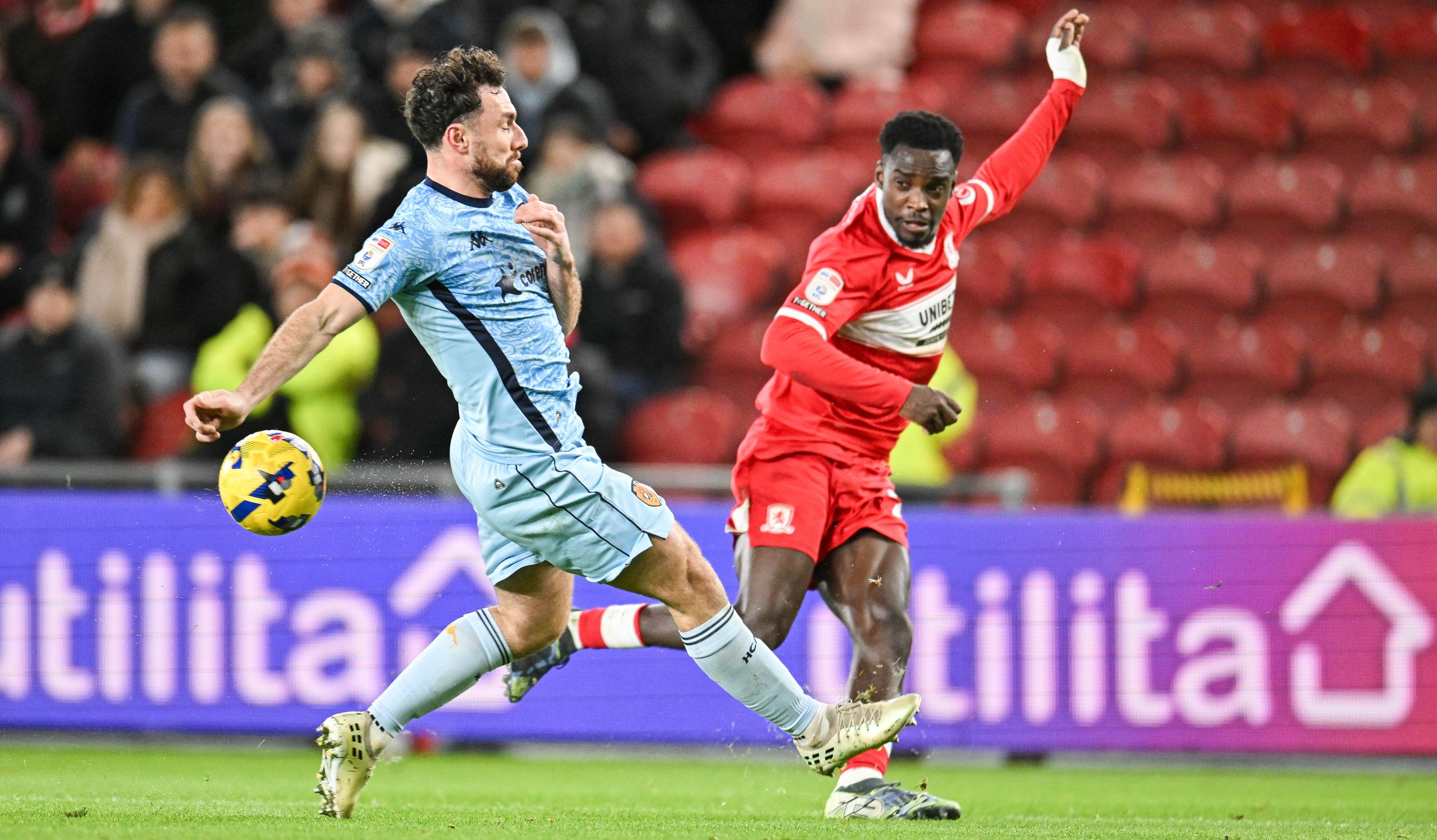
This final will be decided in the transitional moments. If Middlesbrough choose to sit in a compact mid-block, they can invite Hull's defenders forward before springing the trap. Boro's wingers, particularly Isaiah Jones on the right, have the recovery speed to track back but are lethal when running into space.
If Hull lose possession with their full-backs high up the pitch, Jones and Latte Lath will have a direct run at Hull's goalkeeper, Ivor Pandur.
Hull must find a way to control the tempo without exposing themselves. Walter might be tempted to instruct Lewie Coyle to play a more conservative role, tucking inside as an inverted full-back to offer defensive stability. But asking a Walter team to play conservatively is like asking a lion to eat grass.
It is not in their DNA, and attempting to change their style for Wembley could lead to confusion. Hull's best defense is their offense; they must keep the ball, exhaust Boro's midfield, and ensure Belloumi gets isolated against Neto Borges.
Another critical factor is the physical toll of the Championship season. Walter's system has an incredibly high energy cost. Hull's high-intensity running numbers are the highest in the league, but their performance decay in the final fifteen minutes of games is striking, conceding 35% of their goals after the 75th minute.
Hull's bench looks slightly deeper, with Liam Millar able to inject fresh pace late in the game. Carrick, on the other hand, has a more settled starting eleven but fewer game-changing options on his bench. If the match goes to extra time, Hull's squad depth could tip the scales.
The Final Verdict
Wembley finals are rarely high-scoring spectacles, but these two tactical philosophies guarantee goals. Hull will dominate possession, taking risks that will have their supporters watching through their fingers. Middlesbrough will defend with discipline, waiting for Hull to overcommit before launching lethal counter-attacks.
It is a classic clash of styles: Walter's chaotic freedom against Carrick's calculated control.
In a match this tight, the team with the more reliable goalscorer usually prevails. Emmanuel Latte Lath is that man. His ability to turn a half-chance into a goal will be the difference-maker.
Expect Hull to start brightly, perhaps even taking an early lead through Belloumi. But Carrick's Boro will stay calm, exploit Hull's inevitable defensive errors in the second half, and secure their return to the Premier League.
Our prediction is a thrilling 2-1 victory for Middlesbrough after extra time. Carrick will celebrate on the Wembley touchline, while Hull will be left to lament another afternoon where their tactical ambition was their undoing.
Read Next
- Hull vs Middlesbrough is a Wembley final born from pure Championship madness
- The Final That Shouldn't Exist: Boro's Wildcard Shot In Spygate's Shadow
- Why Dean Windass's heartbreaking battle casts a shadow over Wembley
- Hull City's Wembley return is shadowed by a devastating family tragedy
- 🏟 EFL Championship 2025-26 — Promotion Race & Play-Off Final Hub