The Physiology of Losing Your Fire
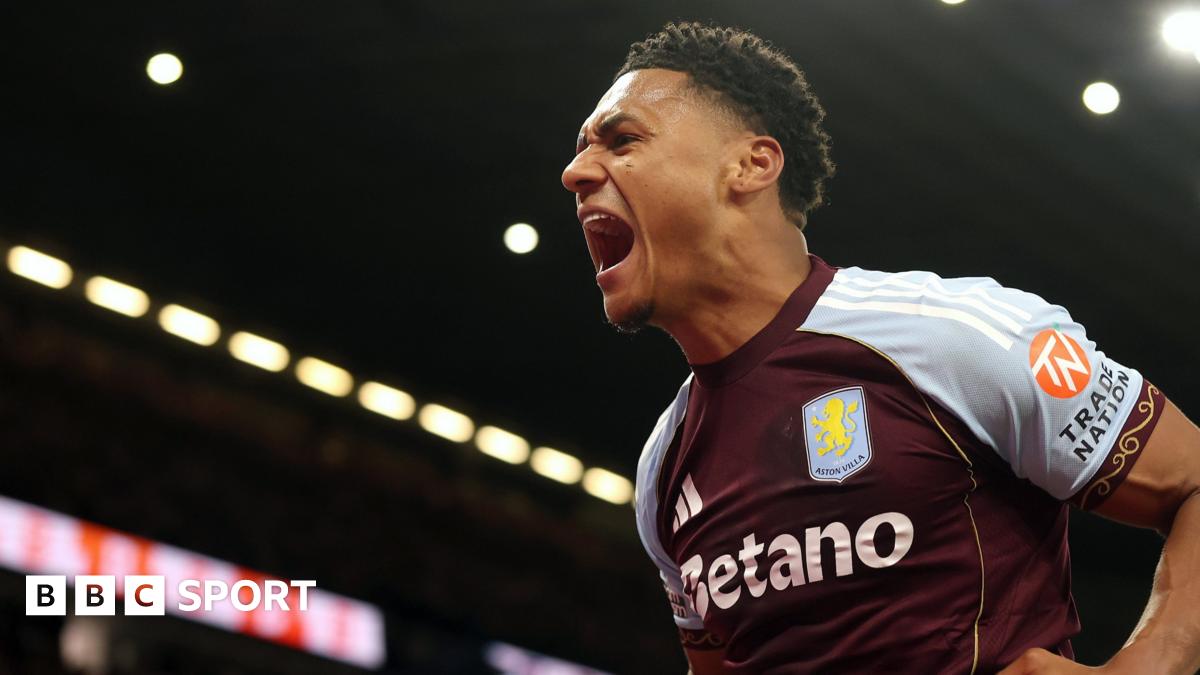
Ollie Watkins is running out of time. With 43 days remaining until the 2026 FIFA World Cup kicks off across North America, the Aston Villa striker's admission about finally regaining his 'fire' is not merely a motivational soundbite. It is a distinct medical reality. Talk to any high-level sports scientist, and they will tell you that losing your fire is a physical condition. It represents a state of central nervous system fatigue.
When a player like Watkins logs excess minutes across domestic and European campaigns, the body stops recovering efficiently. The neuromuscular pathways governing explosive acceleration begin to lag. The delay is microscopic, often measured in milliseconds. Yet, it is enough to turn a clean breakaway into a blocked shot. He has played 48 matches this season. That volume destroys fast-twitch muscle fibers.
Watkins relies on rapid deceleration and immediate burst. This requires extreme force absorption by the patellar tendon and the hamstrings. When systemic fatigue sets in, the brain restricts power output to protect those structures from catastrophic failure. The player feels heavy. The body's own protective mechanisms extinguish the speed.
Thomas Tuchel knows this. The new England manager's recent discussions with Watkins clearly touched on this exact physical deficit. Tuchel demands a relentless, high-intensity pressing game from his forwards. A striker operating at reduced capacity breaks the system.
The Tactical Tax of the Tuchel Press
The transition from Gareth Southgate to Thomas Tuchel represents a violent shift in physical expectations. Southgate preferred a controlled, low-block defensive structure against top nations. That approach conserved energy. Tuchel wants the ball won back in the attacking third.
This tactical shift places an enormous metabolic load on the center forward. Pressing is an anaerobic activity. It requires repeated sprints with very little recovery time. If Watkins cannot clear the blood lactate fast enough between sprints, his pressing becomes a jog. A jogging striker is worse than a static one.
This brings us to a glaring flaw in Watkins' recent performances. When his legs are heavy, his tactical discipline vanishes entirely. He starts pressing alone, abandoning the team shape and leaving vast spaces behind him. He did this against Chelsea recently, and it tore Villa's midfield open. It is a negative feedback loop. He runs more to compensate for feeling slow, which only deepens his physical deficit.
To function in Tuchel's system, Watkins needs peak aerobic base capacity combined with explosive anaerobic power. Tracking data dictates he must hit a top speed of 34.5 km/h multiple times per half. Right now, his numbers show a sharp drop-off in high-speed running after the 60th minute.
The Rehabilitation Phase
Getting the fire back means repairing the central nervous system. This is not about lifting weights or running endless laps around a pitch. It requires highly specific periodization.
The medical staff at Aston Villa and the England national team will coordinate a delicate taper. The goal is to reduce overall training volume while maintaining high intensity. Short, sharp, maximum-effort sprints followed by extended recovery periods.
Cryotherapy, hyperbaric oxygen chambers, and advanced sleep tracking become non-negotiable. The body needs to repair the micro-tears in muscle fibers and replenish glycogen stores. More importantly, the brain needs to reset its protective limits. It needs to trust the muscles to fire at maximum capacity without tearing.
We have seen this exact scenario play out before, often with disastrous results. Consider Wayne Rooney ahead of the 2006 tournament in Germany. He rushed back from a metatarsal fracture. While the bone healed, the neuromuscular sharpness never returned. He looked sluggish against Portugal and ultimately lashed out. Harry Kane faced a similar struggle in the lead-up to Euro 2024. He played through a lingering ankle issue and lacked the mobility required to press the Spanish center-backs in the final.
The 43-Day Timeline
The countdown to June 11 is unforgiving. Watkins has exactly six weeks to peak.
Week one of this phase involves active off-loading. You remove the player from contact drills. You stop the heavy eccentric weight lifting. The focus remains purely on tissue recovery and mobility work.
Weeks two and three reintroduce speed endurance. Watkins will run repeated 30-meter sprints with strict heart rate monitoring. The moment his recovery time drops below the required threshold, the session terminates immediately.
By week four, Tuchel will need Watkins fully integrated into tactical pressing drills. This is the danger zone. The risk of soft tissue injury spikes when a player returns to full uncontrolled movement patterns. A sudden change of direction to chase a loose ball can easily snap a weakened hamstring.
If Watkins feels a twinge during this phase, his tournament is over. The medical staff must balance the desperate need for match sharpness against the terrifying reality of a grade-two muscle tear.
Evaluating the Forward Line
England's striking options offer little room for sentimentality. Harry Kane remains the undisputed starter, but his own physical durability is a constant concern.
Tuchel needs a reliable alternative ready to deploy at a moment's notice. Ivan Toney offers excellent hold-up play and penalty expertise, but he lacks Watkins' raw pace. Toney cannot execute a high press with the same ferocity against elite center-backs.
Dominic Solanke provides a more similar profile to Watkins. He presses hard and runs the channels relentlessly for Tottenham. However, Solanke lacks deep international tournament experience. Throwing him into a World Cup knockout match is a massive gamble.
This explains why Tuchel is spending personal capital talking directly to Watkins. He needs the Aston Villa man completely ready. A fully fit Watkins gives England a tactical dimension nobody else on the roster can replicate. He stretches opposition defenses and creates space for Jude Bellingham and Phil Foden to exploit between the lines.
The Zero Margin for Error
The margin for error in elite tournament football does not exist. A player is either fit, or they are a tactical liability.
Watkins must prove his physical metrics in the upcoming pre-tournament friendlies. It will be obvious within the first ten minutes. Watch his first step. Watch how quickly he closes down the opposition goalkeeper. Look for hesitation.
If he hesitates, the fire is still out. If he flies into the press with violent intent, Tuchel will have his weapon. The talks have clearly worked on a psychological level to restore his confidence. Now, the physiology must follow suit.
The medical team will monitor his creatine kinase levels daily. They will track his sleep quality down to the minute. Every single data point will be analyzed to ensure his physical peak aligns perfectly with the opening group stage match.
The modern international game leaves no place to hide a passenger. If an attacker cannot maintain their high-intensity running metrics, the midfield double pivot is forced to step up. This creates structural gaps. The entire tactical foundation crumbles because one player could not clear their lactic acid efficiently. Watkins understands this. His conversations with Tuchel reflect an awareness of the physical baseline required to merely step onto the pitch. The tactical discussions are entirely secondary to the biomechanical reality.
Watkins has the talent. He has the manager's backing. He simply needs his body to survive the most intense 43 days of his professional career. The countdown is running. The physical demands of the World Cup do not care about a player's desire.