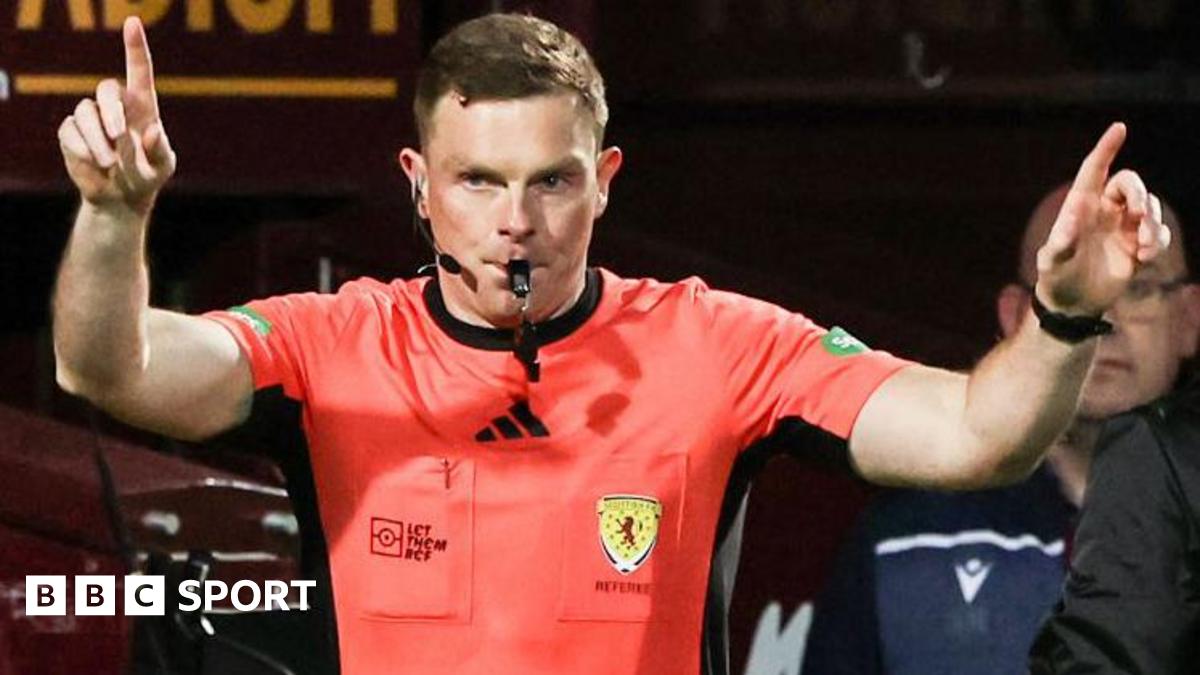
The shadow over the season finale
Scottish football has always possessed a unique ability to cannibalize its own product. We are currently seeing that play out in the most visceral, ugly fashion possible. The news that referee John Beaton and his family were placed under police surveillance following a penalty controversy isn't just a headline; it is a indictment of the environment we have built.
As the BBC reported, the SFA confirmed the surveillance after a man was arrested in connection with a data leak. This is the backdrop for the final matches of the 2025/26 campaign. It’s hard to focus on tactical nuances when the people tasked with enforcing the laws are looking over their shoulders.
The toxicity isn't an accident. It is the result of a feedback loop between club statements, social media outrage, and a fundamental misunderstanding of the laws of the game. When a data leak leads to a referee's home life being compromised, the tactical integrity of the league is the first casualty. Officials are human; they cannot remain entirely insulated from this level of external pressure.
Tactical paralysis and the referee's burden
On the pitch, we are seeing a strange tactical shift in the Premiership. Managers are increasingly moving toward a low-block, counter-attacking system when facing the top two, hoping to exploit the inevitable frustration of the favorites. This creates a high volume of penalty area incidents, which in turn increases the load on VAR and the man in the middle.
In the recent matches that triggered this latest Beaton controversy, we saw a recurring pattern. A team defending with a back five, narrow and deep, invites pressure. When the breakthrough doesn't come via open play, every brush of a shirt or mistimed sliding challenge becomes a potential flashpoint. We are officiating games based on freeze-frames rather than the flow of movement.
The death of the mid-block
We’ve seen the traditional mid-block disappear in Scotland this season. Teams either press high and risk being bypassed by a long diagonal, or they retreat into their own eighteen-yard box. This binary approach makes the referee's job nearly impossible. Every set-piece is a wrestling match, and every counter-attack is a professional foul waiting to happen.
Look at the numbers from the last few weeks. The average ball-in-play time in the SPFL has dropped to under 52 minutes in high-stakes fixtures. That is a dismal statistic. It’s the result of cynical tactical fouls designed to break transitions, followed by lengthy VAR reviews that only serve to inflame the crowds further.
The upcoming tactical battle
Heading into the final weekend, the stakes couldn't be higher. For the teams at the top, the directive is clear: sustain the press and force the error. But for the referees, the directive is survival. The Beaton incident has cast a long shadow over the appointment process for the upcoming Cup Final and the final league deciders.
Tactically, I expect to see the top sides utilize more inverted full-backs to control the central zones. This is an attempt to mitigate the threat of the long-ball counter that has become so prevalent. By keeping three players back in the defensive transition, they hope to avoid the kind of 1v1 situations that lead to desperate tackles and controversial penalty calls.
However, the psychological element cannot be ignored. If a referee is aware that a decision could lead to police at his door, does he subconsciously lean toward the 'safer' call? Does he ignore the marginal handball to avoid the storm? This is where the competitive balance of the league starts to erode. It is impossible to have a fair tactical contest when the arbiter is under duress.
The failure of institutional protection
The SFA’s handling of these situations is consistently underwhelming. They wait until an arrest is made before speaking out, rather than proactively defending the process. The lack of transparency regarding VAR decisions remains a primary driver of the conspiracy theories that lead to data leaks and harassment.
There is a persistent refusal to mic-up officials or provide real-time explanations for subjective calls. In a league where the gap between success and failure is measured in millions of pounds of European revenue, that silence is deafening. It allows the noise of the disgruntled to become the dominant narrative, drowning out any actual analysis of the football.
Why the noise is winning
We are watching a league where the post-match press conference is more influential than the pre-match tactical board. Managers have realized that questioning the integrity of the officiating is an effective way to deflect from their own tactical shortcomings. If you lose a game because your striker missed three sitters, it’s much easier to talk about a 'missed' penalty in the 74th minute.
This culture of deflection has created a monster. The fans take their cues from the dugout. When a manager suggests a bias, the fans take it as a mandate to investigate the referee’s personal life. The result is the Beaton situation: police surveillance, arrests, and a game that feels increasingly rotten at the core.
My critical observation here is simple: the clubs are as much to blame as the fans. By releasing 'requests for clarification' and fueling the fire of refereeing conspiracies, they are directly responsible for the hostile environment. You cannot complain about the quality of officiating while simultaneously making the job too dangerous for anyone to want to do it.
Final tactical outlook and prediction
The final round of fixtures will likely be cagey, dictated by the fear of making the first mistake. Expect a lot of lateral passing and a refusal to commit numbers forward in the first half. The tactical trend of the 'rest defense'—where teams keep five players behind the ball at all times—will be the defining feature of the weekend.
The technical quality will probably be buried under the weight of the occasion. We will see teams like Hearts and Aberdeen try to frustrate the Glasgow giants with disciplined 4-4-1-1 shapes, looking to squeeze the space between the lines. It won't be pretty, and it will almost certainly involve a controversial whistle.
The prediction is a 1-0 victory for the favorites in both major fixtures. These games won't be decided by a tactical masterstroke or a brilliant overlap; they will be decided by a nervous error from a defender or a moment of VAR-induced chaos. Until the league gets a handle on its culture of harassment, the football will remain a secondary concern.
Own the reality: Scottish football is currently more interested in the police blotter than the tactical sheet. We are heading into a summer where the discussion won't be about xG or transition speeds, but about witness protection and data security. That is the true tragedy of the 2026 season.