The Antidote to Pragmatism
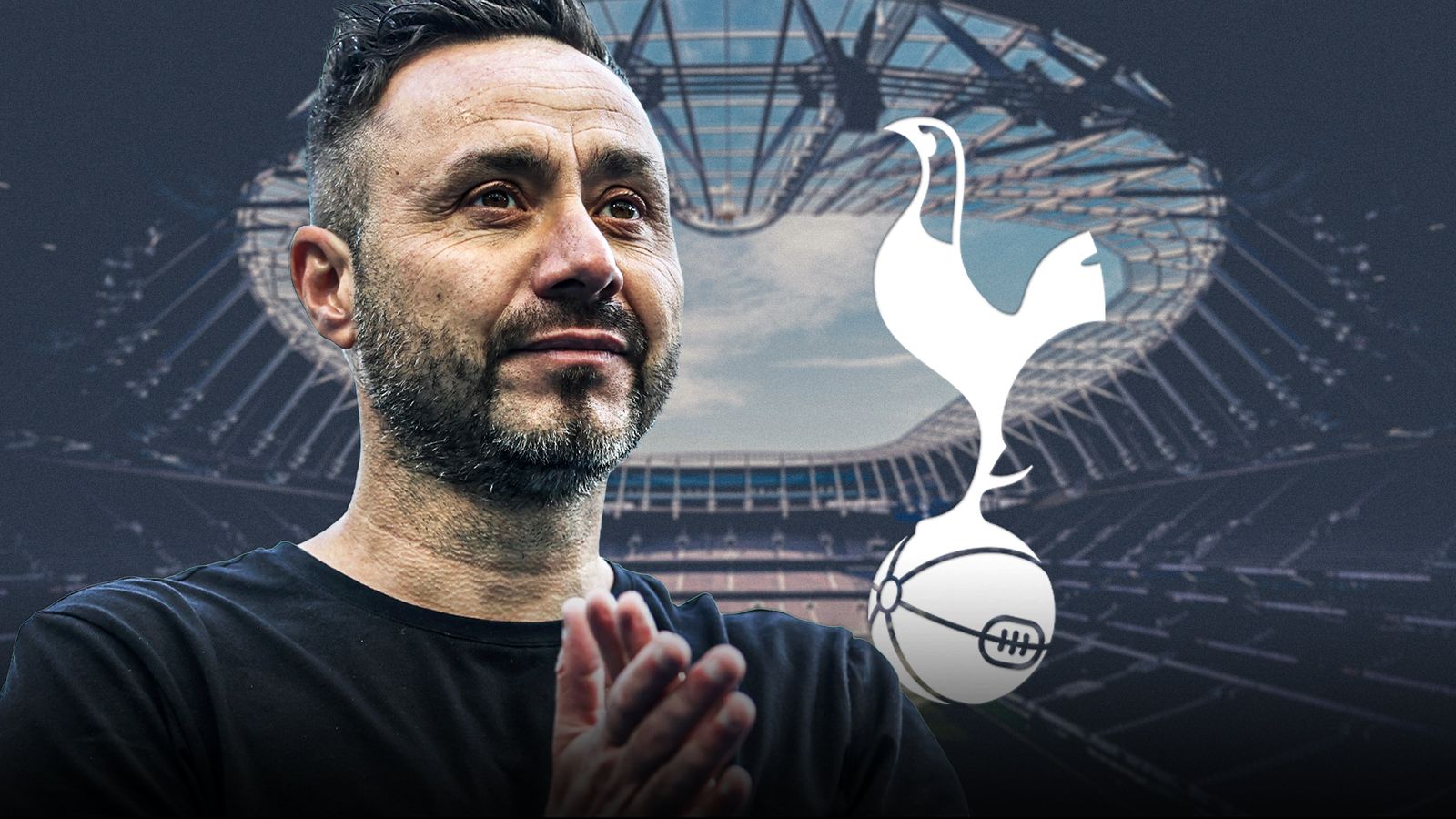
Today, Roberto De Zerbi sits down in front of the microphones at Hotspur Way for the very first time. As Sky Sports reported, this marks the official beginning of the latest tactical revolution in North London. Tottenham Hotspur do not do transitions quietly. They pivot wildly from the defensive suffering of Antonio Conte to the chaotic high-wire act of Ange Postecoglou, and now to the fiery Italian architect of bait-and-switch possession football.
If you were looking for a manager to stabilize a leaking defense and grind out hard-fought away victories at Molineux or Goodison Park, you do not hire De Zerbi. You hire him because you want to provoke the opposition. You want to invite the opposition press right to the edge of your own six-yard box, daring them to step forward, before slicing through them with vertical passing sequences that look less like football and more like choreographed geometry.
It is a genuinely thrilling appointment for a fanbase starved of consistent, cohesive attacking identity. It is also, given the current state of the Tottenham squad and the historical tendencies of the boardroom, a highly combustible mix.
The Tactical Blueprint: Provocation as a Weapon
De Zerbi’s football is fundamentally about manipulation. During his tenure at Brighton and his subsequent spells, his teams didn't just hold the ball for the sake of dominating possession stats. They held it to goad the opponent out of their defensive shape. The center-backs put their foot on the ball, stop completely, and wait.
It requires immense technical bravery and a borderline sociopathic disregard for the traditional concepts of defensive safety. The entire premise is built on the idea that if you invite pressure deep in your own half, you create artificial transitions and massive expanses of space in the attacking half.
Look carefully at the personnel he inherits today. Cristian Romero and Micky van de Ven are arguably the most athletically gifted center-back pairing in the Premier League. Previously, their recovery pace was utilized to operate a suicidal high line. De Zerbi will use them differently. He will ask them to be the primary playmakers under severe, localized pressure.
Romero, with his aggressive temperament and South American flair, might actually thrive in this specific role. He has the passing range to punch the ball through the lines. The bigger, more structural question lies slightly further forward in the midfield pivot. Yves Bissouma played the absolute best football of his career under Graham Potter at Brighton, but De Zerbi's demands for the double pivot are hyper-specific and incredibly taxing mentally.
The two central midfielders must constantly adjust their body angles, scan their shoulders, and provide perfectly weighted passing lanes, creating the famous box midfield that allows the wingers to stay wide and isolate the opposing full-backs. Can Pape Matar Sarr or Rodrigo Bentancur execute this flawlessly for an entire campaign? The margin for error is effectively nonexistent. When De Zerbi's buildup fails, it doesn't result in a misplaced pass at the halfway line; it results in conceding high-quality transitions just eighteen yards from your own goal.
The Out-of-Possession Gamble
While his possession structure draws all the analytical praise, De Zerbi’s out-of-possession framework is equally extreme. He does not believe in sitting in a mid-block and absorbing pressure. When Tottenham lose the ball under his instruction, the counter-press will be ferocious and strictly man-to-man.
He will ask his attackers to press the opposition center-backs relentlessly, while the midfield pivot jumps aggressively onto the opposition's deep midfielders. This leaves the defensive line in numerical equality—often 3-v-3 or even 2-v-2—against the opposing forwards with fifty yards of green grass behind them.
This is where the physical profile of Van de Ven becomes the most vital asset in the squad. His recovery pace is the only safety net in a system that inherently operates without one. If an opposing team breaks the initial line of pressure with a single vertical pass, Tottenham will be completely exposed. We saw this repeatedly during his final months on the south coast, where opponents figured out that going long and bypassing the press entirely yielded massive dividends.
Premier League managers like Sean Dyche and Unai Emery will already be drafting game plans to exploit this exact vulnerability. They will bypass the midfield entirely, dropping balls into the channels for willing runners to chase. De Zerbi’s stubborn refusal to alter this high-risk pressing scheme when leading games is a flaw that will cost Spurs points in tight fixtures.
The Fullback Problem
Then there is the question of the wide defenders. We have seen Pedro Porro and Destiny Udogie utilized as inverted eights, crashing the penalty area and operating centrally. De Zerbi’s use of full-backs is more varied, but often more rigidly tied to the first phase of build-up.
He often requires his full-backs to stay deep and wide initially, flattening out the opposition's first line of pressure. Porro possesses the technical quality to play crisp passes inside, but does he possess the tactical discipline to hold his position, invite a winger to press him aggressively, and only release the ball at the very last microsecond? It goes against every attacking instinct Porro has demonstrated since arriving in England.
Similarly, Udogie thrives on chaotic, driving runs forward. Forcing him to act as a static bait mechanism in the defensive third feels like a misuse of his physical profile. De Zerbi will either have to adapt his rigid structure to accommodate these flying full-backs, or we are going to see some very awkward growing pains in the early weeks of his tenure.
The Boardroom Collision Course
This brings us to the most glaring red flag in this entire operation, and it is a significant one. We have to talk about the transfer market dynamics. De Zerbi is famously demanding, bordering on abrasive, with his superiors. He wants specific player profiles, he wants them integrated early in the summer window, and he absolutely does not hide his frustration in press conferences when the recruitment team fails to deliver on his targets.
He is stepping into an environment heavily influenced by Daniel Levy. Levy’s approach to squad building has historically been opportunistic rather than strictly systematic. If a financially favorable deal presents itself late in August, Spurs will often take it, regardless of whether it perfectly fits the manager's tactical vision. That methodology is the exact opposite of what De Zerbi requires to construct his intricate, interconnected passing circuits.
There will undoubtedly be a honeymoon period. The football, when it clicks into gear, will be breathtaking to watch. We will see Heung-Min Son and Dejan Kulusevski isolated in 1-v-1 situations against terrified full-backs, fed by rapid, precise vertical passes. But the moment an injury crisis hits, or the moment the board hesitates over a £45 million valuation for a press-resistant deep-lying playmaker, the press conferences will become distinctly prickly.
De Zerbi does not do corporate diplomacy. When he feels undermined by a lack of investment, he speaks out. At a club like Tottenham, where PR is heavily managed, that level of friction rarely ends well.
What Needs Fixing Immediately
Before any of the grand tactical visions can take shape, De Zerbi has to address the set-piece vulnerabilities. Spurs have been notoriously soft on dead balls for well over a year now. While the Italian manager is rightly praised for his attacking patterns, his defensive structure—particularly on corners and wide free-kicks—has often been treated as a secondary concern.
He simply cannot afford to ignore it in North London. You can orchestrate the most beautiful build-up play in Europe, drawing applause from purists across the continent, but if you concede a back-post header to a physical center-half every other weekend because of zonal marking confusion, the structural gains are completely nullified.
Furthermore, he needs to figure out the James Maddison conundrum. Maddison is a traditional, expressive number ten who thrives on freedom, roaming into pockets of space, and taking risks in the final third. De Zerbi’s attacking patterns, contrary to their fluid, aesthetic appearance, are actually highly rigid. Players have strict, uncompromising instructions on exactly where to stand and when to trigger their movements.
Integrating a maverick talent like Maddison into a heavily prescribed, automated attacking framework will be his biggest pure coaching challenge. If he restricts Maddison too much, he loses his chief creator. If he gives him too much freedom, the entire pressing trap structure breaks down.
What to Expect from the Media Unveiling
When he sits down to face the cameras today, expect a lot of intense rhetoric about courage. De Zerbi loves that specific word. He will demand that his players show the bravery to play out from the back, even when they are a goal down in hostile away environments.
He will likely offer the standard praise for the world-class stadium, the elite training ground facilities, and the grand history of the football club. But analysts should listen very closely to exactly how he talks about the current squad.
He rarely deals in false flattery or empty platitudes. If he feels the squad currently lacks a vital profile—most likely a tempo-dictating number six or a specific type of ball-playing goalkeeper—he won't name names, but he will make the requirement painfully obvious to anyone listening. It is his subtle, calculated way of putting immediate public pressure on the recruitment department from day one.
The Verdict
This is not a long-term marriage of convenience. This is a high-stakes, all-in gamble by a club absolutely desperate to reclaim its identity as the great entertainers of English football. When it works, and it will work in spells, Spurs will demolish teams with a brand of football that makes the rest of the league look tactically outdated.
But the floor is shockingly low. The absolute lack of a pragmatic plan B, the heavy reliance on perfect technical execution in the defensive third, and the inevitable, creeping friction with the board mean this project has a definitive shelf life.
My prediction for this grand experiment? Tottenham will look completely unplayable by October. They will secure some massive, statement victories on the back of sheer tactical novelty and offensive overwhelming. But by the end of next season, the cracks in the squad depth will be too wide to ignore, the defensive errors will mount, and a mutual termination statement will be quietly drafted. Enjoy the spectacular fireworks while they last, because they are guaranteed to burn out.