
Scotland are playing with fire against Haiti
Tactical stagnation in the final third
John McGinn’s miss in the 38th minute against Haiti represents a recurring theme for Scotland. When a midfielder of his quality finds himself with the ball at his feet, ten yards out, and no goalkeeper to beat, the expectation is a cool, clinical finish. Instead, he scuffed it wide, leaving the traveling fans in disbelief and the coaching staff questioning their offensive efficiency.
This is not merely a case of poor finishing. It is symptomatic of a setup that relies too heavily on singular moments to bail out an otherwise disjointed attack. Throughout the first half of this friendly match, movement in the box was sluggish. While the defense held its shape, the creative burden fell entirely on the transition phase, which collapsed whenever Haiti dropped into a low block.
The cost of wasted opportunities
Steve Clarke has spent months drilling the importance of ball retention, yet watching this performance suggests the message hasn't translated to the pitch. The live feed from the match highlights a persistent inability to punish weaker opposition early. If you fail to convert when you’re physically and technically superior, you eventually give the opponent a lifeline they don't deserve.
The sheer volume of possession Scotland burned through without testing the keeper is a red flag. We saw this lack of killer instinct during the recent qualifiers, where games that should have been sealed by the hour mark dragged into nervous final minutes. The statistical dominance, holding over 62% possession at the break, means nothing if the shot accuracy remains below 30%.
Defensive fragility under pressure
Every time Haiti pushed on the counter, the gaps between the holding midfielders and the back three became glaring. Haiti’s pace exploited these corridors repeatedly, forcing desperate tackles that invite fouls in dangerous territory. It is a gamble that works against under-resourced attackers, but it will be thoroughly punished by higher-tier European nations.
Clarke needs to adjust the pivot point before the competitive fixtures resume in autumn. The current rotation isn't providing enough cover, and the result is a goalkeeper routinely left to clean up messes caused by midfield turnovers. That McGinn chance might just be the 1st mistake in a sequence of events that exposes how brittle this team is when the pressure mounts.
Where the plan falls apart
Reliance on set pieces is a strategy born of necessity, but it cannot be the only weapon in the arsenal. The buildup play is currently too predictable, defaulting to diagonal balls that Haiti read easily. You can watch the full breakdown of these defensive lapses on Sky Sports coverage, where the pundits rightly spent the interval questioning the lack of central penetration.
If the plan is to qualify for the next tournament, the coaching staff must inject more verticality. Stagnation in the final third isn't a badge of honor; it is a tactical death sentence if you cannot reliably force a save. Unless the technical staff addresses the disconnect between the lines, Scotland will repeat these frustrating performances against sides that are far more clinical than Haiti.
Read Next
- Haiti and Scotland deliver a masterclass in tactical frustration
- Scotland's reliance on McGinn is a structural vulnerability
- Scotland’s experimental XI gets a reality check in Port-au-Prince
- Scotland’s path to the knockout stages begins with a tactical puzzle in Haiti
- 🏴 Scotland World Cup 2026 — Tartan Army Hub
- 🇧🇷 WC 2026 Group C — Brazil, Morocco, Scotland, Haiti
adidas Adult Tiro Club Shin Guards
Classic, low-profile protection for Sunday league warriors.
Frequently Asked Questions
What caused Scotland's tactical failure against Haiti?
Why is Steve Clarke concerned about the team's possession?
How did Haiti expose Scotland's defensive weaknesses?
What tactical adjustments does the team need for future fixtures?
What is the concern regarding Scotland's current offensive strategy?
More Coverage

Manchester United are repeating their same old transfer mistakes
an hour ago
Haiti and Scotland deliver a masterclass in tactical frustration
an hour ago
Scotland World Cup momentum halted by technical and physical failures
2 hours ago
Brazil's reliance on Vinicius Jr is becoming a tactical liability
2 hours ago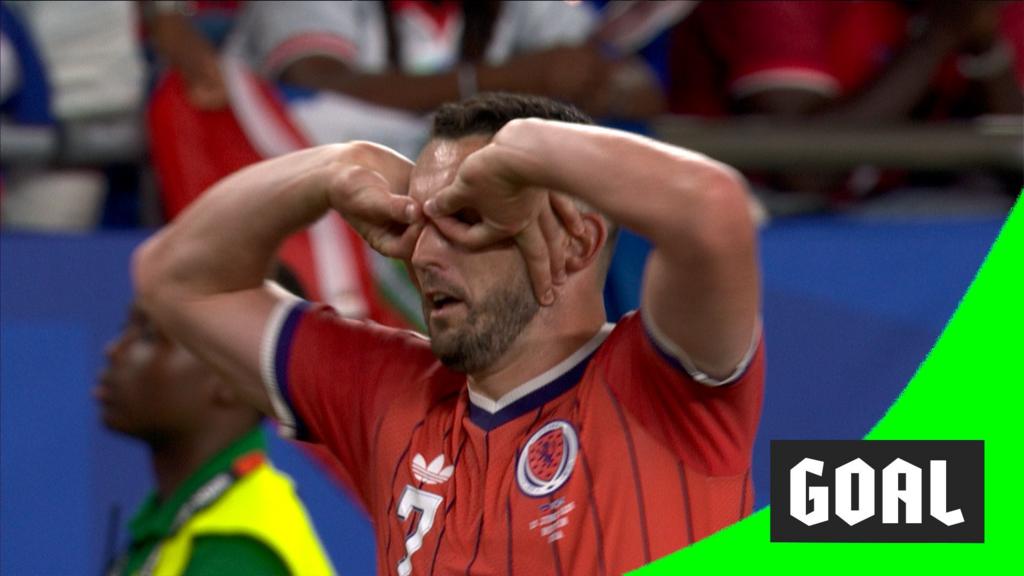
Scotland's reliance on McGinn is a structural vulnerability
2 hours ago
Brazil's shaky start shows they are vulnerable against Morocco
2 hours agoMore Analysis
Manchester United are repeating their same old transfer mistakes
an hour ago
Haiti and Scotland deliver a masterclass in tactical frustration
an hour ago
Scotland World Cup momentum halted by technical and physical failures
2 hours ago
VAR failure overshadows World Cup drama in Qatar-Switzerland draw
2 hours ago
Brazil's reliance on Vinicius Jr is becoming a tactical liability
2 hours ago