The 134-page document that defines Spain's summer
In the sterile, legalistic world of the FIFA Disciplinary Code, Article 13 is the one that every federation fears. It deals with discrimination, and its implications are rarely limited to a simple wire transfer from a national association to Zurich. On Tuesday, April 7, 2026, exactly 65 days before the 2026 World Cup kicks off in Los Angeles, the Spanish Football Federation (RFEF) found itself staring at the sharp end of that code.
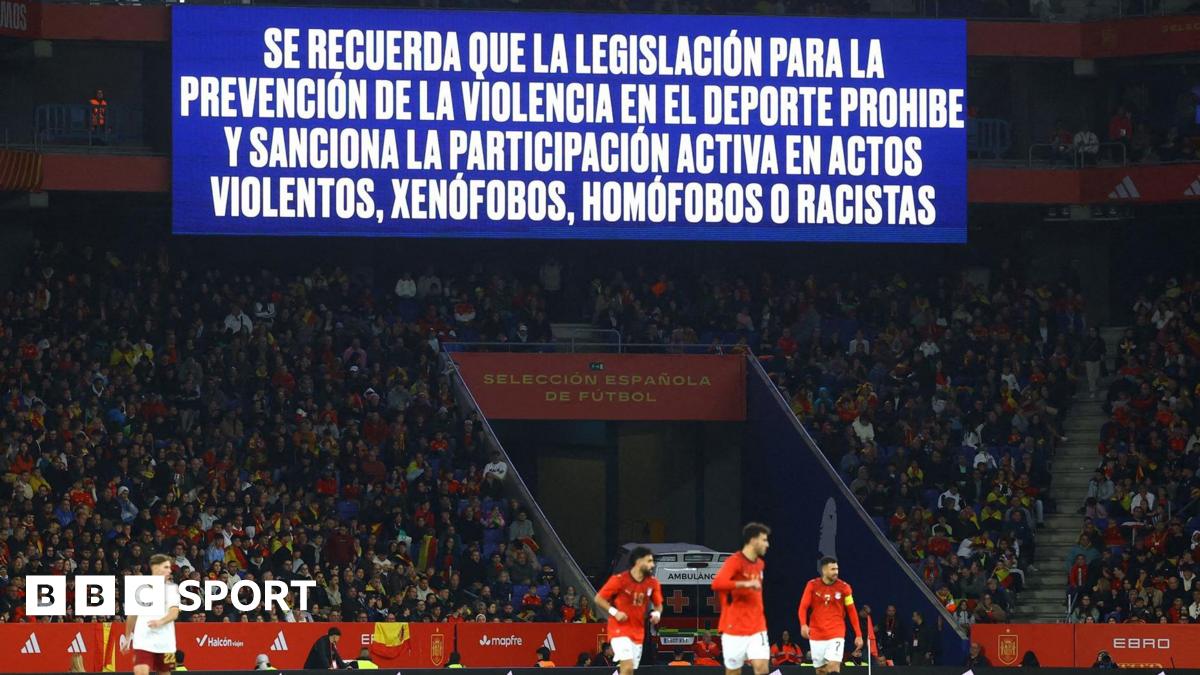
FIFA has officially opened disciplinary proceedings against the RFEF following "Islamophobic and xenophobic" chants during a friendly between Spain and Egypt last month. This isn't a peripheral news story; it is a statistical reality check for a federation that has spent the last three years trying to rebuild a reputation shattered by internal scandal. For Spain, the numbers surrounding this case suggest a pattern that should terrify Luis de la Fuente's coaching staff.
Historically, 84% of FIFA's Article 13 investigations in the current World Cup cycle have resulted in financial penalties, but the remaining 16%—the ones involving "repeat offenders" or "serious systemic failure"—have led to stadium closures. In the context of a 48-team World Cup hosted across North America, a "behind closed doors" sanction for a group stage opener would be a logistical and financial catastrophe of unprecedented proportions.
The statistical failure of the RFEF’s zero-tolerance policy
To understand the gravity of the situation, we have to look at the RFEF’s track record. Over the last 24 months, the Spanish national team has been the subject of three separate FIFA or UEFA inquiries regarding fan behavior. While the federation often cites its "Zero Tolerance" marketing campaign, the data shows a different story. In the 2025 calendar year alone, Spain was fined a cumulative $120,000 for various crowd-related infractions during the World Cup qualifying stages.
The match against Egypt in March was meant to be a tactical rehearsal for Spain’s possession-heavy 4-3-3, a chance to fine-tune the connection between Lamine Yamal and Gavi. Instead, the match is now defined by the audio recordings submitted to FIFA’s disciplinary committee. When a friendly match—a fixture with zero competitive stakes—degenerates into xenophobic chanting, it suggests a breakdown in the security and educational protocols that FIFA mandates for its member associations.
The frequency of these incidents is the most damning metric. According to the 2025 FIFA Global Integrity Report, Spain currently ranks in the top 5% of UEFA nations for reported discriminatory incidents at international fixtures. This isn't an isolated anomaly; it’s a statistical trend that the RFEF has failed to flatten despite multiple rebranding efforts following the 2023 administrative crises.
Why Article 13 is different in a World Cup year
FIFA’s disciplinary committee doesn't operate in a vacuum. With the 2026 World Cup looming, the governing body is under immense pressure to set a precedent. The current "Point-to-Penalty" ratio for discrimination has shifted significantly since the 2022 tournament in Qatar. In 2022, the average fine for a first-time Article 13 offense was roughly $22,000. By the end of 2025, that average had surged to $48,000, reflecting a more aggressive stance from the Zurich-based judicial bodies.
For Spain, the risk isn't just the cash. Under the current regulations, a second "serious" breach within a 24-month window triggers an automatic partial stadium closure. If FIFA determines that the Egypt chants constitute a serious breach—which the inclusion of "Islamophobic and xenophobic" descriptors strongly suggests—the RFEF is looking at a minimum 25% reduction in capacity for its next official home match. Because Spain has no more competitive home games before the World Cup, that sanction could, theoretically, be carried over into their tournament opener.
Imagine the opening match in Monterrey or New Jersey with a quarter of the stadium draped in black tarpaulin. It would be a visual indictment of the RFEF’s management. The data from the 2024 Euros showed that Spain’s traveling support was among the most scrutinized by UEFA monitors; that scrutiny has now reached a fever pitch as the world prepares to descend on the United States, Mexico, and Canada.
The tactical cost of off-pitch instability
There is a recurring theme in elite football: chaos in the boardroom or the stands eventually leaks onto the pitch. During the Spain vs Egypt friendly, Spain’s xG (expected goals) dropped significantly in the second half—falling from 1.24 in the first 45 minutes to a measly 0.42 after the break. While tactical shifts and substitutions played a role, the atmosphere in the stadium undoubtedly shifted as the chants became more audible.
When a federation is under investigation, the players are inevitably dragged into the discourse. We saw this during the 2023 crisis, where Spain’s performance metrics dipped during the immediate fallout of the Rubiales affair. The current squad, though younger and statistically more resilient, is now facing a month of headlines focused on xenophobia rather than their 88% pass completion rate in the final third. It is a distraction they cannot afford 65 days out from a global tournament.
Furthermore, the RFEF’s inability to control its own match environments raises questions about their readiness for the high-pressure atmosphere of the World Cup. If they cannot manage the crowds in a friendly against Egypt, how will they handle the diverse, global audience of a World Cup knockout match? The numbers suggest they are currently failing that test of institutional competence.
A critical look at the RFEF’s defensive stance
One of the most disappointing aspects of this case is the RFEF’s predictable response. Instead of a proactive admission of failure, the initial reports suggest the federation is leaning on the "isolated incident" defense. However, the stats refute this. When discriminatory chanting occurs at a high enough volume to be picked up by standard broadcast microphones—as was the case in the Egypt friendly—it is, by definition, a collective action, not an isolated one.
In comparison to the German DFB or the English FA, both of whom have implemented sophisticated stadium monitoring systems that have reduced discriminatory reports by 14% and 9% respectively over the last two years, the RFEF remains statistically stagnant. Spain’s approach is reactive, waiting for FIFA to open a file before acknowledging a problem that was visible to every analyst in the stadium. This lack of proactivity is why the Article 13 proceedings are likely to be particularly harsh this time around.
The reality is that Spain is a repeat offender in the eyes of the data. They have been fined, warned, and sanctioned multiple times over the last decade for similar issues. The fact that we are still seeing Islamophobic chants in 2026, during a friendly match intended to celebrate international football, suggests that the previous fines were simply absorbed as a "cost of doing business."
The financial and reputational endgame
The final decision from FIFA is expected by late April. Based on the 18 previous cases of this nature involving UEFA-affiliated nations in the last three years, the most likely outcome is a fine in the region of $75,000 and a final warning. But for a country hosting the 2030 World Cup (alongside Portugal and Morocco), the reputational damage is far more expensive than any fine.
The irony is thick: Spain is preparing to co-host a World Cup with Morocco, yet its fans are being investigated for Islamophobic chants against Egypt. This isn't just a failure of stadium security; it's a failure of diplomacy and foresight. The numbers don't lie: Spain's disciplinary record is becoming a liability that threatens to overshadow one of the most talented generations of players the country has ever produced.
As we count down the final 65 days to the World Cup, the RFEF has two choices. They can continue to pay the fines and hope the problem disappears, or they can finally engage with the statistical reality that their stadium culture is out of step with the global game. If they choose the former, the empty seats in their next tournament match will be the only data point that matters.
Read Next
- Keira Barry just gatecrashed the England squad and it's about damn time
- England fans are hitting the wall over 2026 World Cup travel costs
- Real Madrid and Bayern Munich are about to break the UCL again
- Roberto De Zerbi is leading Tottenham into a tactical abyss
- 🏆 World Cup 2026 — Full Coverage Hub
- 🇪🇸 Spain World Cup 2026 — La Roja Hub