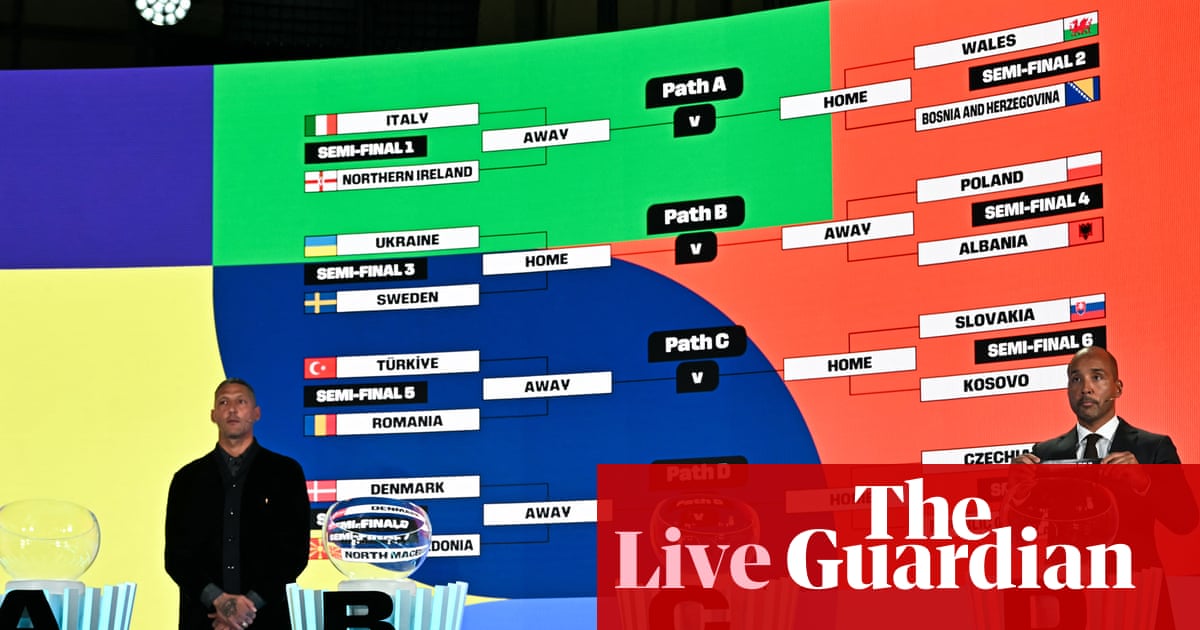
The anatomy of a play-off tie
Football at this level is rarely decided by passion alone. The emotion of a Cardiff crowd on a play-off night is intoxicating. But the reality of qualification is entirely mathematical. When Wales step onto the pitch against Bosnia-Herzegovina, the margins will not be dictated by roaring anthems. They will be decided by transition speeds, passing networks, and expected goals.
The expanded 2026 World Cup in North America offers 48 spots. This shifts the global qualification structure. Yet for UEFA teams, the bottleneck remains fierce. Wales find themselves in the familiar, agonizing position of a sudden-death bracket.
Historically, home advantage in these single-leg European play-offs yields a progression rate of roughly 62 percent. That number offers comfort. Tactical reality, however, does not always respect historical averages.
Craig Bellamy has fundamentally altered the physical profile of this Wales side. Since taking charge, the shift from a reactive, counter-attacking unit to a proactive pressing machine has been stark. We are not looking at the low-block-and-pray approach of previous decades. This is a team that wants the ball. But wanting the ball and doing something effective with it against a disciplined defensive shell are two entirely different propositions.
The pressing triggers and the space behind
Under Bellamy, the defensive intensity is measurable. The team's Passes Per Defensive Action (PPDA) has dropped significantly. It hovers around an aggressive 9.4 mark during the latter stages of the group phase. They do not let opponents breathe in the middle third. The objective is clear. Win the ball high, compress the pitch, and strike before the opposition can reset their defensive shape.
But aggressive pressing leaves space. Bosnia-Herzegovina are well-equipped to bypass a disjointed press. If the first line of the Welsh defense is breached, the backline is often left exposed to direct vertical passes. This is where the structural integrity of Bellamy's system will be severely tested.
The data shows Wales have conceded a worrying 1.2 expected goals (xG) per 90 minutes from fast breaks alone when facing mid-tier European opposition. It is a glaring vulnerability. High defensive lines require elite recovery pace. When the midfield loses the initial duel, the resulting transitions have repeatedly carved them open.
The centre-backs are frequently forced into desperate, retreating footraces. Bosnia will absolutely look to exploit these isolated moments. They will wait for the Welsh midfield to overcommit before launching rapid, vertical counters.
Breaking the block
Bosnia will not come to Cardiff to play expansive football. They will likely deploy a mid-to-low block. They will compress the space between their defensive and midfield lines. Against this specific shape, Wales have historically struggled.
The ball circulation often becomes sterile. In recent matches where Wales held over 60 percent possession, their final-third pass completion rate hovered at a frustrating 71 percent. They move the ball side-to-side efficiently. But penetrative, line-breaking passes are desperately rare.
The reliance on wide crosses into a crowded penalty area is mathematically inefficient. Crossing the ball against a team fielding three dominant centre-backs is a low-percentage game. The conversion rate on non-set-piece crosses in these fixtures sits below 3 percent.
If Wales resort to spamming crosses from the touchline out of sheer frustration, they are playing directly into Bosnia's hands. The Bosnian centre-backs will happily head away predictable deliveries for 90 minutes. Bellamy needs his creative players operating in the half-spaces. They must combine quickly to disrupt the defensive structure rather than constantly funneling the ball wide.
The midfield pivot problem
Much of the burden falls on the central midfield pivot. The pivot must dictate the tempo. They must know when to accelerate the play and when to recycle possession. Over the past year, the distribution from deep areas has been inconsistent.
When faced with a disciplined defensive shape, the Welsh midfield has shown a tendency to take the safe option. This results in inflated possession stats that mask a lack of genuine attacking threat. To break down Bosnia, the central midfielders must take calculated risks.
They need to play the ball through the lines, bypassing the first wave of pressure. If they settle for safe, lateral passes, the Bosnian defense will never be pulled out of position. The underlying metrics suggest that when Wales manage to execute three or more consecutive passes inside the final third, their xG per possession spikes dramatically. The issue is that they simply do not manage to do it frequently enough.
The ghost of 2022
We can compare the current metrics to the 2022 qualification run. During the run to Qatar, Wales heavily relied on individual brilliance to overperform their xG. Their non-penalty xG difference in the 2022 qualifiers was actually slightly negative against top-50 ranked opposition. Yet they advanced because they converted low-probability shots.
Under Bellamy, the system is designed to generate better quality chances. This reduces the reliance on long-range strikes. The average distance of a Welsh shot has decreased from 19.4 yards in 2022 to 16.2 yards in the current campaign.
This is a massive structural improvement. Getting closer to the goal before shooting drastically increases the mathematical probability of scoring. However, against Bosnia's packed penalty area, finding the space to take those closer shots will be the ultimate challenge.
The physical toll of the calendar
We also cannot ignore the harsh reality of the current calendar. We are sitting in late March. The domestic season has ground players down. With the Champions League quarter-finals looming in less than two weeks, the physical load on elite players is reaching a dangerous breaking point.
High-intensity pressing requires supreme physical conditioning. Ask a squad to maintain a PPDA of under 10 for a full 90 minutes at this stage of the season, and you risk a catastrophic drop-off in the final quarter of the match.
The analytics suggest that pressing efficiency drops by nearly 18 percent after the 70th minute in these late-season international windows. If the match is level going into the final 20 minutes, the tactical advantage swings firmly toward the team willing to sit deep and absorb pressure.
Bosnia know this. Their entire game plan will be predicated on surviving the initial Welsh onslaught. They want to frustrate the home crowd and capitalize on tired legs late in the second half. The later the game goes without a Welsh goal, the higher the probability of a Bosnian smash-and-grab victory.
Tactical fouling and transition defense
When the press is broken, how does a team survive? The answer usually lies in tactical fouling. The best pressing teams in the world commit fouls high up the pitch to stop transitions before they start. Wales, surprisingly, rank in the bottom third of UEFA teams for fouls committed in the attacking third.
They are too honest. When they lose the ball, they attempt to run back and defend conventionally. This allows opponents to build momentum. Bosnia average 2.4 fast breaks per game.
If Wales do not start breaking up play intelligently when they lose possession, they will be carved open. A well-timed foul on the halfway line is infinitely better than facing a 3-on-2 counter-attack. The data is clear. Teams that employ cynical, high-up-the-pitch fouling concede 0.4 fewer xG per game on the counter. It is an ugly metric, but an absolutely vital one in knockout football.
The set-piece equalizer
This brings us to the most vital metric of the entire tie. International football, especially in high-stakes knockout environments, is disproportionately decided by dead-ball situations. The margins in open play are often too tight to rely upon entirely.
Over the past two qualifying campaigns, nearly 30 percent of all goals scored in European play-off ties originated from a set-piece. Wales must maximize these marginal gains. The delivery needs to be precise. The near-post runs must be coordinated flawlessly.
There is a counterintuitive element to this approach. While Bellamy clearly wants total control of the ball, the optimal strategy here might actually involve drawing fouls in the final third rather than forcing low-probability passes through the middle.
If they can isolate defenders, invite mistimed tackles, and win dead-ball opportunities, the resulting free-kicks and corners become their highest-value attacking sequences. A perfectly executed set-piece routine bypasses a low block entirely.
The final verdict
Wales undoubtedly possess the technical superiority on paper. They have the hostile, partisan home crowd behind them. But the numbers suggest a deeply uncomfortable evening awaits.
Bellamy must temper his attacking idealism with cold, calculated pragmatism. The high press cannot be a blunt instrument used indiscriminately for 90 minutes. It must be applied in targeted, coordinated bursts to preserve energy.
If they fail to manage their physical reserves, they will leave themselves fatally exposed in the closing stages. The World Cup in North America is precisely 77 days away.
The difference between boarding a flight to the United States and watching the tournament from the sofa will come down to a handful of tactical decisions. The margin for error is essentially zero. Wales must be perfect, or their World Cup dream ends tonight in Cardiff.
Read Next
- Liverpool are about to lose a goal or assist every 93 minutes
- The ghost of George Raynor haunts England's World Cup prep
- Ambition is cheap when the schedule bites back
- Why Mohamed Salah leaving Liverpool changes everything for the Premier League
- 🏆 World Cup 2026 — Full Coverage Hub
- 🏴 Wales at the 2026 World Cup — Full Coverage Hub
- 🇧🇦 Bosnia & Herzegovina at the 2026 World Cup — Full Coverage Hub