The Ghost in the Dugout
The expanded FIFA World Cup kicks off in exactly 78 days. As the tournament looms, the noise around England's preparation is already reaching a deafening pitch.
We dissect every minor injury, every squad omission, and every formation tweak. But the fundamental tactical issue remains exactly the same as it was seven decades ago.
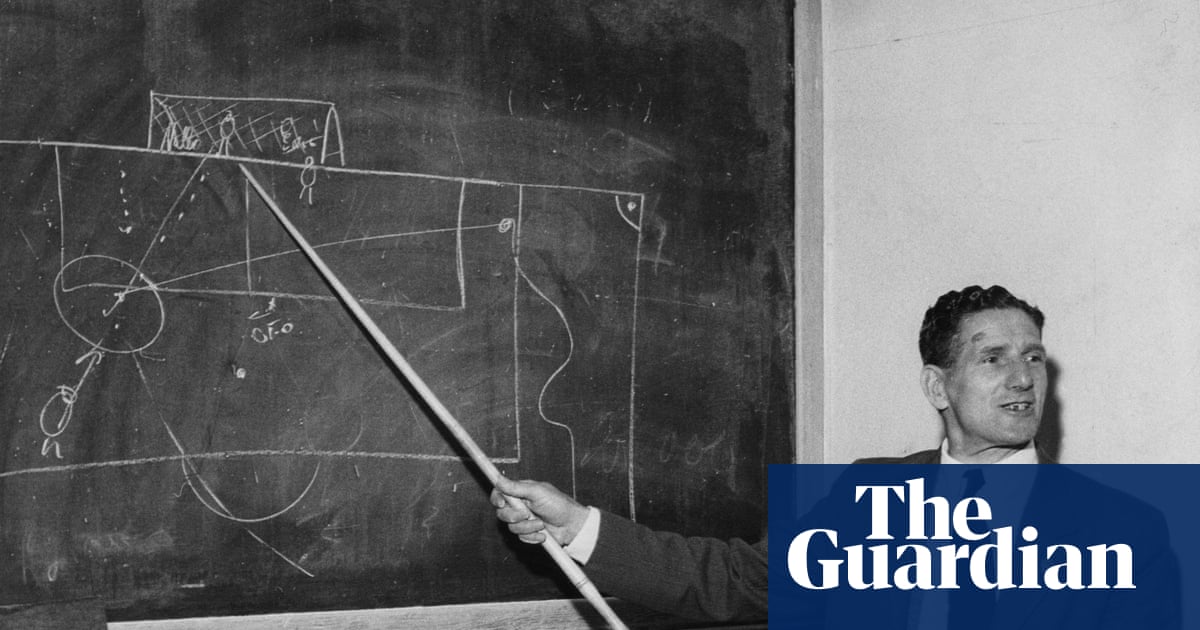
As highlighted in The Guardian's retrospective today, the English football establishment has a terrifying habit of ignoring tactical innovation. They completely sidelined George Raynor, the only Englishman to ever master the tournament format.
Raynor was an ambitious coach bursting with fresh concepts. He took Sweden to a World Cup final while the FA threw his job applications in the bin.
He recognized that international knockout football required extreme flexibility. The current England setup is staring down the exact same ideological trap.
Team News and Form Guide
Heading into the final stretch of the club season, England's core group is running dangerously close to the red line. The form guide is a mixed bag of elite production and severe physical exhaustion.
Jude Bellingham has carried a massive creative burden in Madrid all season. He looks sharp, and his late runs into the penalty area remain devastating.
But the sheer volume of high-intensity minutes he has played is alarming. By the time June rolls around, his legs will be heavy.
Declan Rice remains the undisputed anchor in midfield. His form for Arsenal has been exceptional, particularly in how he breaks up transitions and immediately launches counter-attacks.
However, Rice cannot cover the entire width of the pitch by himself. The identity of his midfield partner remains the biggest unresolved tactical issue in the squad.
Up top, Harry Kane is still dropping deep to link play. His passing range is world-class, but his lack of top-end pace means England absolutely must surround him with willing, aggressive runners.
Bukayo Saka and Phil Foden provide that thrust out wide. Both are enjoying stellar domestic campaigns, yet replicating that form within a rigid national team structure is a completely different challenge.
The defensive unit remains a patchwork of compromises. There are massive questions over who starts at left-back, a weakness that elite opposition will relentlessly target.
The Tactical Preview
To understand why Raynor's historical exile is so intensely relevant right now, you have to look at England's ongoing structural rigidity. The FA's historical distrust of tactical intellectuals is still quietly suffocating the national team.
In a long domestic league format, your tactical system has time to absorb bad performances. You can survive a tactical misstep because the math balances out over nine months.
Tournament football offers absolutely no such luxury. It is a rapid series of isolated, high-stakes puzzles.
England’s default shape is entirely too predictable. They rely heavily on a double-pivot to protect a vulnerable backline, which often isolates the attacking quartet and leaves Kane entirely disconnected.
Raynor succeeded in Sweden because he recognized the need for fluidity. He introduced structured pressing triggers and dynamic passing networks.
He didn't overload his players with complex theories, but he gave them clear, overlapping zones of responsibility. They moved as a single, breathing organism.
Currently, when England face an organized low block, their ball movement becomes painfully sluggish. They lack the rapid, interchanging positional sequences that define the top European and South American sides.
They recycle possession sideways. They wait for a moment of individual brilliance from Saka or Bellingham rather than systematically unpicking the lock.
Key Match-ups to Watch
With 48 teams locked into this summer's tournament, the expanded group stages will feature massive disparities in talent. England should easily dispatch weaker nations.
But the knockout rounds will be an unforgiving tactical knife-fight.
The defining match-up for England won't be a specific winger running at a full-back. It will be the English midfield structure against fluid, possession-heavy opponents.
If England run into a side utilizing a modern box midfield, Rice and his partner will be numerically overwhelmed.
They will be forced to chase shadows, dragging the entire defensive line out of shape to cover the overloads.
This is exactly what Raynor warned the FA about back in the 1950s. He tried to tell them that strict man-marking and rigid formations were completely obsolete against interchanging attackers.
If England’s wide players do not aggressively track back into central areas to compress the space, the middle of the pitch will be ripped wide open.
Furthermore, look at the transition battles. If England commit their full-backs forward to create width, they leave massive avenues for counter-attacks.
Elite opposition will bypass the initial counter-press and attack those spaces ruthlessly. England must have a functional plan to slow down transitions, or they will be brutally exposed.
The Margin of Error in North America
You cannot win a major tournament in 2026 by simply throwing your eleven most famous players on the pitch and hoping for spontaneous chemistry. The margin of error is absolute zero.
The physical demands of this specific World Cup will be unprecedented. The massive travel distances across the United States, Mexico, and Canada will enforce heavy squad rotation.
Teams will be flying thousands of miles between group games, crossing multiple time zones and dealing with extreme shifts in climate and humidity.
We will see managers forced into utilizing every single player on their rosters. The ability to swap out personnel without collapsing the core tactical structure will be the defining trait of the eventual champions.
This requires a manager who prioritizes systemic function over individual reputation. It requires a coach who views the squad as a toolset, not a popularity contest.
Raynor proved that this approach works. He dragged a Swedish side past highly-rated opponents because they were simply better prepared and better coached.
England undeniably has the talent pool. They have some of the most technically gifted attackers on the planet. But do they have the structural adaptability to survive when Plan A inevitably fails?
The Historical Warning
The tragedy of George Raynor wasn't just that he was personally ignored. It is that English football genuinely believed it didn't need him.
They looked at a man who had conquered the tactical rigors of international knockout football and decided his methods were unnecessary.
Club chairmen wanted compliance. The FA wanted yes-men. They trusted what they knew, and they punished anyone who suggested the rest of the world was moving faster.
We like to think the modern game has entirely moved on from this arrogant mindset. We tell ourselves that international football is now a pure meritocracy.
But the demand for conformity is still lingering in the background of the English game. Managers who try to implement complex, possession-based systems are often heavily criticized the very moment they drop points.
The media and the fans still instinctively clamor for raw passion and simple, direct football the moment a tactical plan breaks down.
The Prediction
History has a brutal, unrelenting way of repeating itself. The English establishment would rather lose comfortably with familiar methods than take a massive tactical risk to win.
My prediction for this summer is harsh, but the tactical evidence points in only one direction. England will cruise through the early stages of the tournament, generating immense hype and a false sense of security.
The goals will flow against weaker opposition in the group stage, masking the underlying structural flaws.
Then, deep in the knockout rounds, they will face a technically disciplined side managed by a modern-day George Raynor.
It will be a team that knows exactly how to manipulate space. They will drag England's midfield out of position and ruthlessly exploit the gaps.
England will get bogged down. They will fail to adapt mid-game, and they will be systematically picked apart. The sheer talent on the pitch will not be enough to save them from a superior tactical plan.
The ghost of George Raynor is still watching from the stands. And he is still waiting for English football to finally learn its lesson.
Read Next
- Top 10: The Most Bizarre Moments in Football History
- Top 10 Football Moments of the 2025/26 Season So Far
- Top 10 Moments Shaping the 2025/26 Football Season
- Braga vs Betis is the ultimate chaotic football matchup and I cannot wait
- 🏆 World Cup 2026 — Full Coverage Hub
- 🏴 England World Cup 2026 — Three Lions Hub