The Springfield Fortress Awaits
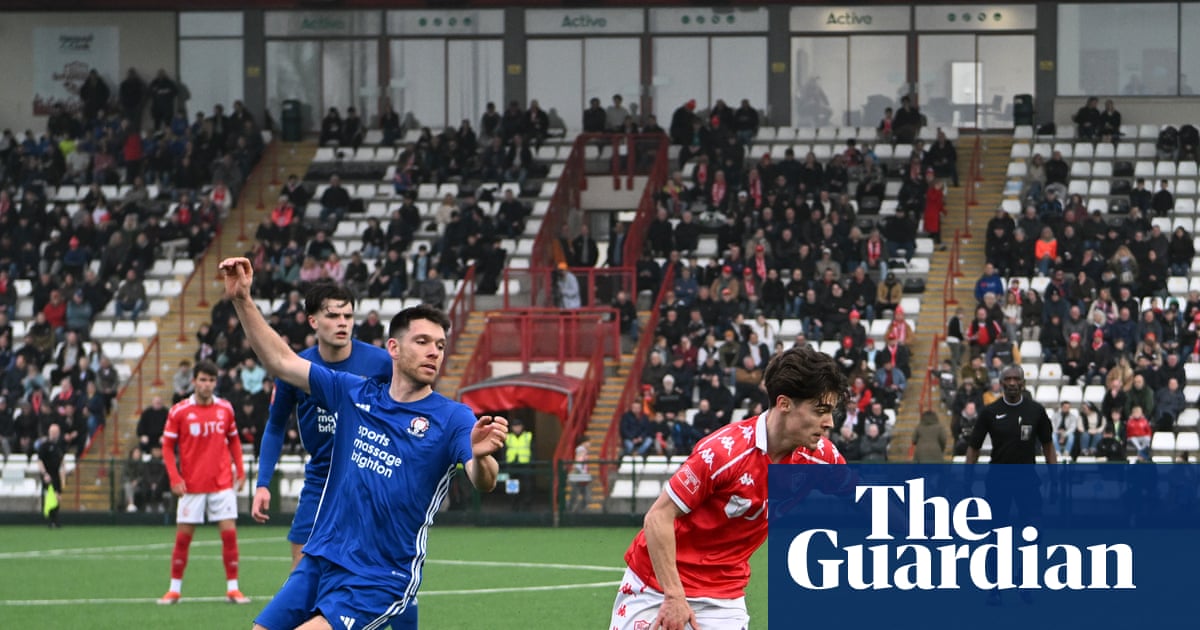
Andy Lane is beating a drum on the touchline at Springfield Stadium. He is draped head-to-toe in Jersey Bulls gear.
This isn't just a local club for him or the hundreds in attendance. It operates functionally as a national team.
Today is March 28. The clocks go forward tomorrow. We are deep into the run-in.
As we barrel toward the final weeks of the 2025/26 season, the novelty of the island clubs has completely worn off. Competing in the English non-league pyramid from a rock in the English Channel or the Irish Sea is an exercise in suffering.
Jersey Bulls, Guernsey FC, and FC Isle of Man are attempting something fundamentally irrational. They are trying to climb a domestic ladder while operating under international logistics.
The True Cost of the Run-In
Look at the fixture list for a typical mainland side chasing promotion. A bad away trip is a two-hour coach ride on a Tuesday night.
You get back at midnight. You go to work on Wednesday.
For the island sides, a standard away game involves airport security. It involves strict baggage allowances for medical kit.
It means praying the fog rolling into the airport doesn't ground the morning flight. Tactically, this destroys match preparation.
Managers at this level build their systems around repetition and shape work on Thursday nights. When your squad is constantly battling travel fatigue before a ball is even kicked, high-intensity pressing systems become a massive liability.
You cannot demand a 90-minute counter-press from a squad that has spent five hours navigating Gatwick departures. This forces a structural compromise.
Watch the island teams play away from home during this brutal stretch. They sit deeper. They conserve energy.
It is survival football out of sheer physiological necessity.
The Depth Crisis
Here is the fatal flaw in the crown dependency model as we hit April. They are closed talent pools.
If a mainland club suffers an injury crisis in central midfield, the manager puts in a seven-day approach for a player from the league below. They sign a dual-registration kid from a local academy.
The gap is plugged by Saturday. These clubs cannot do that.
Their talent pool is strictly limited to who currently lives on their respective islands. If your starting striker shreds his hamstring, you cannot easily draft in a replacement from London or Manchester.
You have to promote from within the local amateur leagues, which represents a severe drop in technical quality. This lack of lateral movement makes sustained promotion pushes incredibly fragile.
A squad might be good enough to win early-season games. But the moment they hit the physical demands of a congested spring schedule, the cracks always appear.
Guernsey FC hit this wall years ago. They surged up the leagues initially, backed by huge home crowds and the lethal finishing of Ross Allen.
But the Isthmian League is physically unforgiving. When you go away to Raynes Park Vale or Farnham Town, you cannot out-muscle established mainland clubs when your recruitment is capped by geography.
The Financial Drain of Home Advantage
The crowds are undeniably impressive. These teams pull in attendances that embarrass clubs three divisions higher.
The local backing is fierce and loud. But the financial reality of paying for mainland teams to fly over is a staggering drain on resources.
It is a completely unsustainable model for long-term sporting growth. They are effectively subsidizing their own opposition.
Every ticket sold, every pint poured in the clubhouse, is instantly eaten up by easyJet fares and hotel bookings. There is no war chest being built for squad investment.
They are running on a treadmill just to stay in their respective divisions.
Tactical Ceilings and Lactic Acid
Let's talk about the football itself. The tactical meta in the lower leagues has shifted dramatically over the last five years.
We are seeing sophisticated build-up play, inverted fullbacks, and complex pressing traps. Implementing these systems requires constant, high-quality coaching time.
It requires a settled, rested squad. The island teams simply do not have this luxury.
Training sessions are compromised by players working shifts, amplified by the sheer exhaustion of their weekend travel schedules. When you watch them try to defend a narrow lead away from home, the shape often collapses into a desperate low block.
It isn't by design. It is lactic acid.
It is the reality of asking a plumber who woke up at 5 AM for a flight to track a runner in the 88th minute. The commitment is staggering, but effort does not equate to tactical execution.
The Birth of the Gamble
Before we dissect the current struggles, we have to remember how we got here. For decades, the best players in the Channel Islands and the Isle of Man had nowhere to go.
They dominated their local weekend leagues, playing the same defenders on the same muddy pitches year after year. Guernsey FC broke the mold in 2011.
The idea was audacious. Enter the English pyramid, start at the very bottom, and fund the travel of every single team that comes over.
It was a massive gamble. At first, it looked like a stroke of genius.
They obliterated the lower tiers. They were fitter, more cohesive, and backed by thousands.
They were a professional operation in an amateur league. But gravity always wins in football.
The Isle of Man Transition
FC Isle of Man watched the Guernsey experiment and replicated it in the turbulent waters of the North West Counties. Their promotion out of Division One South was built on relentless attacking transitions and the physical presence of Sean Doyle up front.
They didn't bother trying to dominate the ball in tricky away fixtures at Chadderton or West Didsbury & Chorlton. They absorbed pressure and hit teams with terrifying pace.
It was pragmatic, ugly at times, but deeply effective. Yet, the higher divisions have figured them out.
Opposing managers are smart. They don't overcommit against the Ravens anymore.
They sit in a mid-block, force the center-backs to step out with the ball, and wait for the inevitable misplaced pass. The islanders are being asked to dictate play, and they often lack the deep-lying playmaker required to pick the lock.
The Jersey Bulls Paradox
Jersey Bulls might be the most technically gifted of the three setups. If you watch them at Springfield, the pitch is wide and fast.
They like to play through the thirds. Players like Luke Campbell have historically provided the defensive spine, allowing their wingers to stay high and wide, stretching the opposition back four.
The focal point has often been Lorne Bickley, a striker who thrives on early service and precise cut-backs. It is beautiful to watch when it works.
But it requires immaculate pitch conditions and a referee willing to protect technical players. Take them to a heavy, waterlogged pitch at Camberley Town or Knaphill in deep winter, and that system disintegrates.
The ball gets stuck under feet. The intricate passing triangles break down.
Mainland teams know exactly how to play them. Make it a physical brawl.
Put tackles in early. Disrupt the rhythm.
When Jersey cannot play on their own terms, they lack a clear Plan B. There is no traditional target man to hit, no sheer physicality to fall back on when the football stops being pretty.
The Reality of Restricted Squads
This brings us back to the structural flaw of the weekend run-in. How do you fix a tactical gap when your island simply doesn't produce that specific profile of player?
If you desperately need a dominant, nasty defensive midfielder who can break up play and win ugly aerial duels, you can't just scout the league below. If the local clubs don't have one, the island team doesn't have one.
They are entirely reliant on the cyclical nature of local youth development. You end up playing players out of position.
You see technical number eights being dragged deeper to play as a single pivot. They try to replicate the role, but they lack the instinct.
They get caught on the wrong side of their man, and suddenly the center-backs are exposed.
The Unforgiving Math
We cannot ignore the spreadsheets when previewing these fixtures. The football is the product, but the logistics dictate the ceiling.
Paying for 20-plus mainland teams to fly over every single season is an astronomical burden. While mainland clubs are spending their gate receipts on higher wages to attract better players, the island clubs are handing their money directly to airlines.
The playing field is permanently tilted. The island teams have to generate three times the revenue of their mainland rivals just to maintain the exact same sporting budget.
It is a mathematical disadvantage that grows exponentially as you move up the pyramid.
Prediction: The Glass Ceiling Holds
So, where does this leave Andy Lane and his drum as we enter the business end of the season? As The Guardian reported this morning, the ambition remains high despite the mounting challenges.
But it leaves them all in a beautiful, agonizing holding pattern. The island teams are a magnificent addition to the English pyramid.
They provide the most unique away days in the calendar. They give local players a taste of high-stakes, competitive football.
But they are not going to reach the top tiers of non-league. The tactical limitations born from restricted squads, combined with the crushing financial reality of air travel, create an impenetrable glass ceiling.
Expect them to drop massive points away from home this weekend. They will fight, and they will produce moments of magic under their own floodlights.
But the pyramid is a meat grinder, and geography is the one opponent they simply cannot out-tactic. My prediction? Mid-table consolidation for all three, with away form continuing to be their ultimate undoing.