Why Leicester's historic collapse makes Charlton the smart play-off bet
The Valley and the New Math of WSL Expansion
The Valley is cold, loud, and unforgiving today. As the clock ticks toward the 12:30 BST kickoff, the tension in the south London air is heavy. This is not just another match. This is the first-ever Women's Super League promotion and relegation play-off, a direct consequence of the top flight expanding to 14 teams for the upcoming 2026/27 campaign. Under the new league math, automatic promotion went to Championship winners Birmingham City and runners-up Crystal Palace. Now, the final slot belongs to the winner of this one-off battle between Charlton Athletic, who finished third in the second tier, and Leicester City, who bottomed out in the WSL.
These two clubs are moving in completely opposite directions. Charlton, under the steady stewardship of Karen Hills since March 2021, have spent years methodically building a cohesive, defensively resilient identity. They are organized, disciplined, and play with a collective grit that has made them a constant threat. Leicester, by contrast, represent the cost of structural instability and boardroom panic. The decision to sack Amandine Miquel just ten days before the start of the season set a disastrous tone. Rick Passmoor took over as interim manager on September 4, 2025, before getting the permanent nod on October 10. The result has been a slow, painful slide into tactical incoherence.
The contrast between these two clubs is stark. Charlton represent patient planning and tactical clarity. Leicester are a prime example of systemic drift. This play-off is the ultimate test of their respective paths.
The Attacking Void: Leicester's Systemic Sterility
Leicester's survival bid is built on tactical foundations that have repeatedly crumbled. The statistical profile of their campaign is historically bad. Throughout the entire WSL season, Leicester managed to score just 11 goals. Winning only two matches all year is bad enough. Ending the regular season with 11 consecutive defeats is a total collapse. Their confidence is shot, and their attacking patterns have become entirely predictable. Passmoor has consistently struggled to find a system that balances defensive stability with progressive ball movement.
Tactically, Passmoor has oscillated between a defensive 5-4-1 and a highly flawed 4-2-3-1. In both setups, the fundamental issue has been the spacing between the defensive line and the midfield. Leicester often try to use a high defensive line to win the ball back quickly. But they lack the recovery pace in central defense to make this work. When opponents bypass their initial press, Julie Thibaud and Sophie Kees are left completely exposed. The distance between their midfield double-pivot of Charlotte Tierney and Rantala and the backline is often too wide, leaving massive half-spaces for opponents to exploit.
This structural gap has made their build-up play incredibly slow. Without a reliable passing outlet in the middle third, Leicester's possession is empty and stagnant. They rely almost exclusively on Shannon O'Brien to spark their attack. O'Brien is a talented winger, but she has been forced to carry an impossible burden. She scored approximately 45% of Leicester's league goals this season. When opponents double-team her, Leicester simply have no other ways to score. Their wing-backs, Mayling and Ale, are forced to play so deep that they rarely provide overlapping support, leaving O'Brien isolated on the right flank.
The Newsham Conundrum and Charlton's Pragmatic Pivot
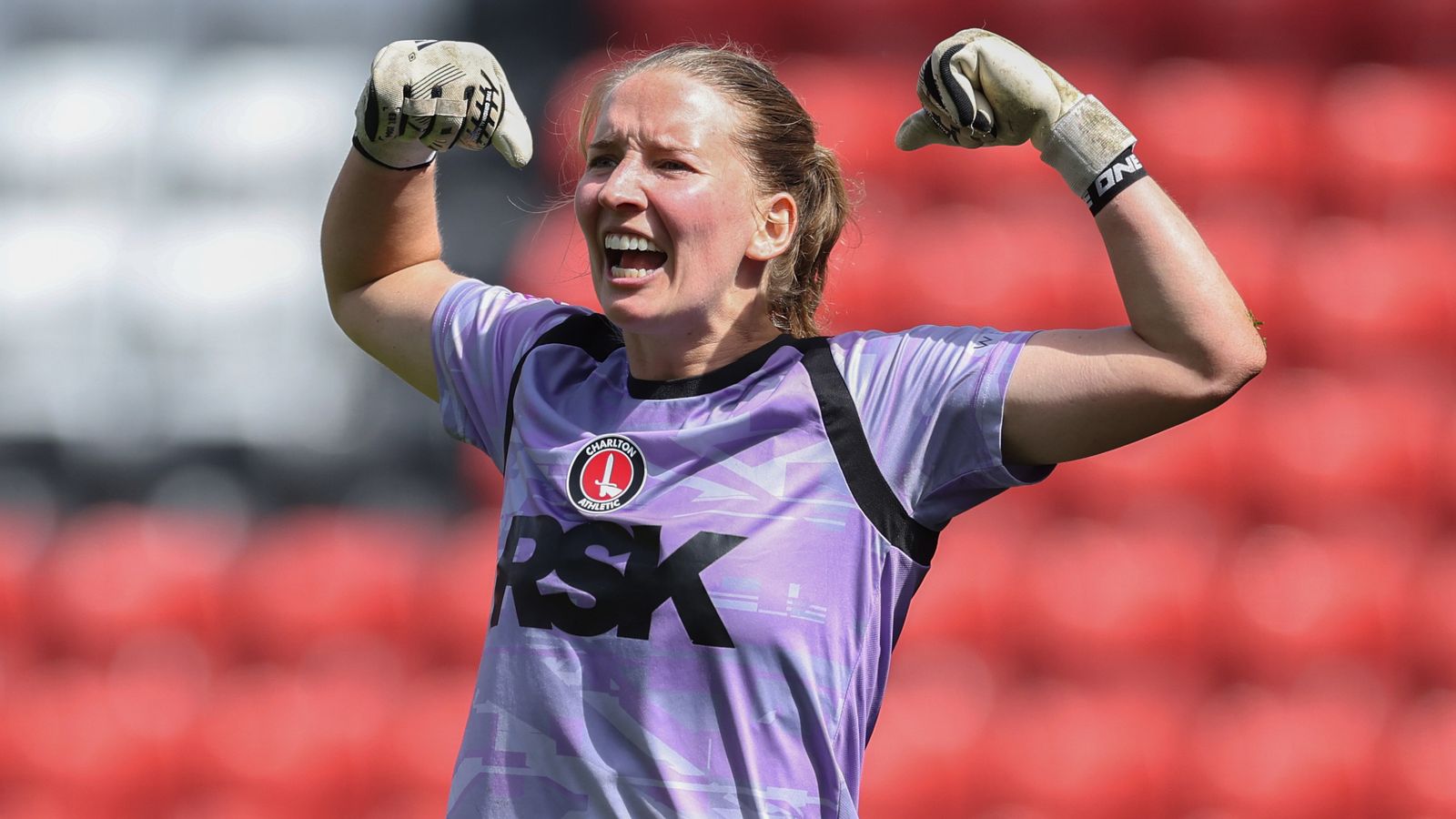
While Leicester are in freefall, Charlton Athletic have spent the season demonstrating the value of defensive discipline. Karen Hills does not care about pleasing the neutrals. Her philosophy is built on a solid defensive platform. Charlton defend as a unit, starting from the front with Bissell and Fitzgerald. They are compact, difficult to break down, and highly effective on the counter-attack. However, Charlton's promotion dream suffered a devastating blow just weeks before this crucial clash.
Standout left-back Charlotte Newsham was ruled out of the play-off with a catastrophic knee injury. A ruptured ACL, combined with damage to her LCL, hamstring, and posterolateral corner, is a massive loss. Newsham was Charlton's primary progressive outlet, leading the team in both assists and overall performance metrics. Her absence leaves a massive void on the left side of Charlton's defense. It forces Hills to make a significant tactical adjustment to protect that flank from O'Brien's pace.
Hills has responded by shifting McAteer into the left-back role, supported by Skeels and Lobato in a more conservative defensive shape. This pivot changes how Charlton build their attacks. Without Newsham's overlapping runs, Charlton's left flank will be far more defensive. But this caution is a deliberate, pragmatic choice. By keeping McAteer deep, Hills aims to deny O'Brien the space she needs to transition. Charlton will rely on Kenney and Bradley to anchor the midfield, shielding the makeshift left-back and forcing Leicester to play through the congested center of the pitch.
The Blueprint for a Second-Tier Takeover
As Sky Sports reported, this winner-takes-all match is the ultimate test of survival. The opening phases of the match show exactly how this tactical battle will play out. Leicester are deployed in a 5-3-2 out of possession, attempting to deny Charlton space between the lines. But their spacing is poor, and their coordination is lacking. Passmoor's high defensive line is simply not supported by a compact, energetic midfield. The gap between the lines is huge, and Charlton's midfield duo of Bradley and Hutton are starting to dictate the tempo of the game.
At the 14-minute mark, a clear pattern emerged. Fitzgerald dropped off the front line, dragging Kees out of position. This movement created a massive space behind the Leicester defense. Kenney intercepted a weak pass from McLoughlin and immediately played a first-time vertical ball into that exact space. Bissell made a diagonal run from the right, exposing Ale's lack of awareness. It was a simple, direct sequence that completely bypassed Leicester's press. Only a sharp block from Jansson prevented a clear shot on goal, but the warning signs for Leicester are incredibly clear.
Charlton's pressing triggers are highly specific and well-drilled. Whenever Kees or Thibaud receive the ball under pressure, Charlton's forwards press the inside shoulders, forcing the ball wide into tight areas. Muya and Hutton then step up to trap the Leicester wing-backs against the touchline. In the 28th minute, this trigger worked perfectly. Thibaud was forced into a hurried, pressured clearance that Bradley intercepted easily. She quickly fed Fitzgerald, whose shot went just wide of the post. Leicester are struggling to cope with this coordinated pressure.
Leicester's defensive organization is fragile and relies too much on individual physical battles rather than smart collective positioning. They look like a team that has forgotten how to win. Their confidence is low, and their reaction times are slow. If Charlton can continue to exploit the spaces behind Mayling and Ale, the Leicester backline will eventually disintegrate. Hills has set up a tactical trap, and Passmoor seems to have no answers.
Critical Flaws in the Tactical Designs
Despite Charlton's organization, their own tactical tendencies are not without risk. Hills has a habit of instructing her team to drop into an extremely deep low block once they take a lead. This conservative approach cost them automatic promotion in the final weeks of the Championship season. By inviting pressure and surrendering the initiative to mid-table opponents, they dropped crucial points that allowed Birmingham City and Crystal Palace to slip past them. If they score early today and repeat this mistake, they will hand Leicester a lifeline they do not deserve.
Leicester's recruitment and tactical planning also deserve severe criticism. Operating on the lowest budget in the WSL is a challenge, but the complete lack of a secondary goal threat is an administrative failure. Relying on O'Brien to carry 45% of the goal-scoring load is simply not sustainable at this level. When she is neutralized, the entire team looks completely lost. Passmoor's inability to adjust his high-line defensive system, despite conceding goals in transition all season, suggests a rigid tactical approach that is ill-suited to a high-stakes survival battle.
Ultimately, this play-off will be decided by structural organization and tactical discipline. Charlton have spent the last five years developing a clear identity under Hills. Leicester have spent the last nine months scrambling to cover up their administrative and tactical cracks. At The Valley today, those cracks are about to be fully exposed. The Championship side looks primed to take their place in the top flight, leaving a broken Leicester City to rebuild in the second tier.
adidas FIFA World Cup 2026 Trionda Club Ball
Start the World Cup hype early with the official ball for the 2026 tournament.
Frequently Asked Questions
Why is there a WSL promotion play-off match?
Who secured automatic promotion to the WSL?
Who manages Charlton Athletic women's team?
When was Rick Passmoor appointed permanent manager of Leicester?
How did Leicester City perform in the regular season?
More Coverage

Manchester United are chasing ghosts with the Leao pursuit
an hour ago
Why England must fear Panama's disciplined low block
2 hours ago
Arsenal vs PSG: Why tactical rigidity will determine the European champion
3 hours agoLincoln City just entered the weirdest experiment in League One history
5 hours ago
Ella Toone is the most realistic window into the modern footballer's life
6 hours ago
Arsenal’s title win has changed the math for London football
8 hours agoMore Analysis
Leicester's survival rests on breaking the second tier's meanest defense
6 days, 4 hours ago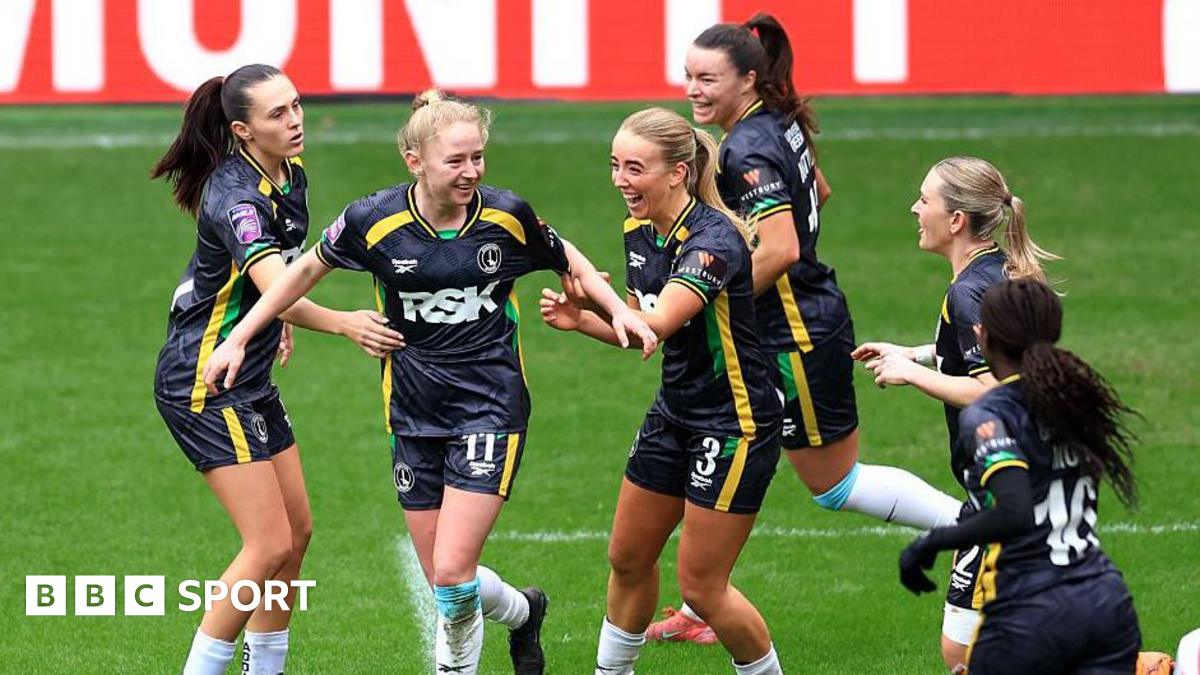
Charlton Athletic are the most efficient team in English football
1 month, 3 weeks ago
How a stolen water bottle sent Charlton to the WSL and Leicester to hell
5 days, 21 hours ago