
Why Scotland tickets are breaking the World Cup resale market

The Resale Market Anomaly
The secondary ticket market is usually a predictable beast. You expect the host nation to command a premium. You expect the defending champions to draw a crowd. You certainly expect the final to break the bank.
As we approach the June kickoff for the 2026 World Cup across North America, the final is, predictably, the most expensive ticket available. That tracks with historical data and basic economics. The match that will crown the champion always attracts the corporate money and the desperate, deep-pocketed superfans.
But the data coming out of the resale platforms this week tells a completely different, utterly bizarre story regarding the rest of the tournament. The second most expensive ticket currently circulating on the secondary market is not for a heavyweight clash. It does not feature Brazil, France, or Spain. Instead, it is a group stage fixture between two nations who have never reached a World Cup final.
One of those nations is Scotland. And according to the current numbers, they are out-drawing England, Argentina, and the United States in the scramble for entry.
On paper, this looks like a glitch in the algorithm. Scotland are not a global commercial juggernaut. They do not boast a roster of galacticos. Yet, a deeper look at the demographics, the history, and the mechanics of football fandom explains exactly why the Tartan Army is inadvertently breaking the bank.
The 28-Year Wait
To understand the sheer ferocity of the demand for Scotland tickets, you have to look at the calendar. Before this summer, the last time Scotland qualified for a men's World Cup was 1998 in France. That is a 28-year gap. An entire generation of Scottish fans has grown up, had children, and paid off mortgages without ever seeing their national team on the biggest global stage.
Yes, they reached the European Championships recently, taking over Munich and Stuttgart with impressive numbers. But a European trip is a budget airline flight and a long weekend. A North American World Cup is a generational event.
The pent-up demand is staggering. Fans who missed out in 1998, or who were too young to remember Colin Hendry and Craig Brown, have been saving for this exact scenario for decades. They are not travelling in the hundreds; they are mobilising in the tens of thousands.
When a fanbase has been starved of the ultimate spectacle for nearly three decades, price elasticity snaps. The normal rules of what a ticket "should" cost no longer apply. Fans are viewing this not as a sporting event, but as a once-in-a-lifetime pilgrimage. Scalpers, unfortunately, possess the data to exploit that exact sentiment.
Geography and the Diaspora
The 2026 World Cup's expanded 48-team format means more games, but it also creates unique geographical pockets of demand. The United States and Canada boast massive populations of people with Scottish heritage. The diaspora effect is real, and it is driving up prices locally.
If a team like Scotland is drawn to play in a city with a heavy expatriate or ancestral connection—think Toronto, Boston, or New York—the local demand instantly doubles the travelling demand. You have fans flying from Glasgow competing for seats against locals from Ontario or Massachusetts who view this as a rare chance to connect with their roots.
Furthermore, the physical size of the stadiums plays a crucial role. While venues like AT&T Stadium in Dallas hold upwards of 80,000, other selected venues have slightly tighter capacities. If a highly demanded team lands in one of the relatively smaller arenas, the supply crunch is immediate.
The combination of travelling fanatics, local heritage supporters, and limited seating creates a perfect storm. It is a storm that currently has group stage tickets trading hands for sums that would usually secure a VIP package for the semi-finals.
Why England and Argentina Lag Behind
The immediate question is why the traditional powerhouses are seeing lower resale values for their opening matches. Why is a ticket to see Lionel Messi's successors, or an England squad packed with Premier League talent, cheaper than a ticket to watch John McGinn?
The answer lies in expectation management. For Argentina and England, the group stage is viewed by their respective fanbases as a formality. It is an obstacle to be cleared, not the main event.
England fans, scarred by decades of high expectations and familiar with regular tournament appearances, are keeping their powder dry. They know that blowing their budget on a group game against lower-tier opposition makes no sense when the real tests will come in the knockout rounds. They are saving their money, and their annual leave, for late June and July.
Similarly, Argentina fans, while always passionate, have just experienced the ultimate high of 2022. The desperation is gone. They will travel, and they will be loud, but they are not going to remortgage their houses for a Tuesday afternoon group game. The novelty factor simply does not exist for the perennial contenders.
As for the host nation, the United States suffers from the sheer scale of its own infrastructure. USMNT games will be played in the largest stadiums available. When you drop 85,000 tickets into the market for a single match, the sheer volume of supply prevents the resale prices from reaching the stratosphere. Plus, domestic fans have multiple opportunities to see their team across different cities, diluting the localized desperation.
The Complete Failure of the Ticketing Infrastructure
While the cultural and demographic reasons for Scotland's ticket surge are fascinating, the underlying reality is incredibly grim. The fact that group stage tickets are reaching these astronomical figures is a damning indictment of the ticketing platforms and FIFA's distribution model.
The system is fundamentally broken. The primary sale phases were, yet again, completely overrun by automated bot networks and professional scalping syndicates. These entities do not care about football; they care about algorithmic profit.
They identified the anomalous demand for nations like Scotland early on. They hoovered up the inventory in milliseconds, knowing that a desperate fanbase would eventually capitulate and pay the ransom. Real, match-going fans who followed their teams through miserable qualifying campaigns in freezing conditions were pushed out of the primary market before the loading screen even refreshed.
We are watching the total financialization of football fandom. The governing bodies spout endless rhetoric about inclusivity and the global family of football, yet they consistently partner with ticketing platforms that refuse to implement basic, effective anti-bot measures.
There is absolutely no sporting justification for a group stage ticket to cost what it currently does on the secondary market. It is artificial scarcity created by middle-men who add zero value to the event. The governing bodies have entirely surrendered control of their own product to digital touts.
The Pitch Awaits
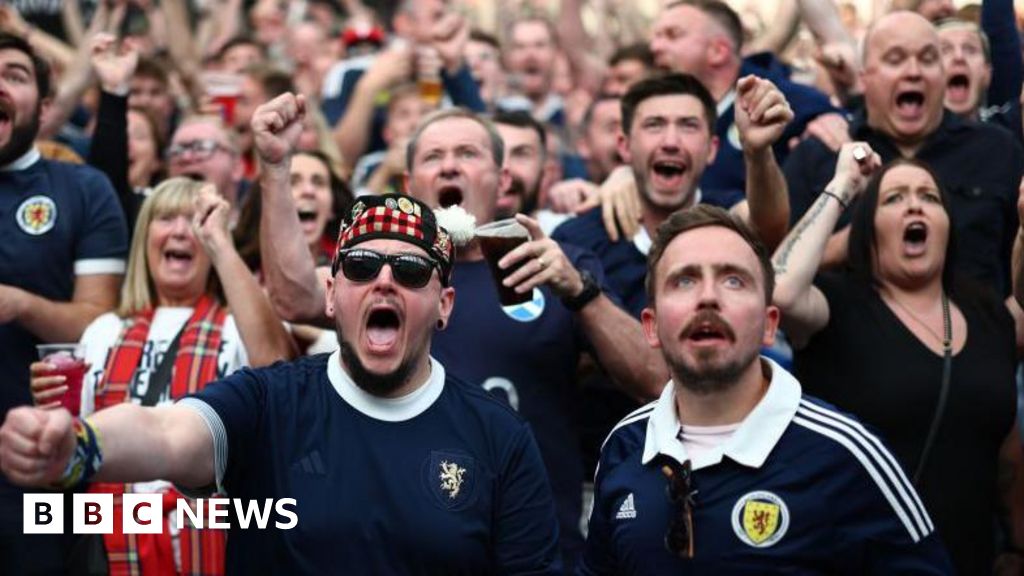
Despite the extortionate entry fees, the atmosphere generated by these massive, desperate travelling contingents will undoubtedly be incredible. The sheer noise of the Tartan Army inside a North American mega-stadium will be one of the defining spectacles of the opening weeks.
But the tactical reality on the pitch will quickly overshadow the financial drama in the stands. Scotland will have to justify this immense outlay. The pressure on the squad will be immense. They are not just carrying the hopes of a nation; they are carrying the weight of fans who have made significant financial sacrifices just to be in the building.
Every pass, every defensive block, and every set-piece routine will be scrutinised by a crowd that has waited 28 years for this moment. The manager knows it, the players know it, and the opposition will undoubtedly feel it.
If they can translate that frantic energy in the stands into a cohesive, aggressive press on the pitch, they might just validate the absurd ticket prices. If they freeze under the weight of the occasion, it will be a very expensive, very painful trip home. The secondary market has spoken, and it has declared Scotland the unexpected main attraction of the group stages. Now, the football actually has to deliver.
Read Next
- Why the 104-game World Cup will break squads before it even begins
- Forget the group stages, the World Cup knockouts will be a tactical bloodbath
- Why the USMNT group stage run is going to be an absolute bloodbath
- Mexico's World Cup opener at the Azteca is a disaster waiting to happen
- 🏆 World Cup 2026 — Full Coverage Hub
- 🏴 Scotland World Cup 2026 — Tartan Army Hub
- 🇧🇷 WC 2026 Group C — Brazil, Morocco, Scotland, Haiti
Inverting The Pyramid: The History of Soccer Tactics by Jonathan Wilson
The definitive bible on how football is really played.
More Coverage
The World Cup knockout stage isn't for the faint of heart
1 day, 5 hours agoThe World Cup knockout stage is already a logistical nightmare
1 day, 5 hours agoThe World Cup knockout stage is a tactical disaster waiting to happen
1 day, 5 hours ago
A tightening financial leash on Premier League clubs
1 day, 5 hours agoThe USMNT isn't ready for the absolute circus of the 2026 World Cup
1 day, 6 hours agoStade Azteca or bust: Why the 2026 World Cup opener is already a mess
1 day, 6 hours agoMore Analysis
The Tartan Army's ticket rebellion is a brilliant, highly dangerous gamble
1 month ago
Infantino’s ticket pricing math ignores the fan reality
3 weeks, 1 day ago
Gianni Infantino is trying to sell us £1.5m World Cup tickets
3 weeks, 1 day ago
World Cup 2026 is shaping up to be a logistical nightmare for fans
1 month, 3 weeks ago
Scotland's World Cup school holiday debate is peak football
1 month ago