The Snap Heard Across the Pitch
Ask any professional physiotherapist which word they dread hearing most during a pitch-side assessment, and they will tell you it is not 'break' or 'tear.' It is 'Achilles.' This morning, as the UEL and UECL quarter-finals reach their boiling point, the specter of the Achilles tendon rupture looms larger than ever. With the 2026 World Cup kickoff just 56 days away, a single misstep on a heavy spring pitch is no longer just a season-ender; it is a career-altering catastrophe.
The mechanism is almost always the same. A player attempts a routine explosive movement—a sprint start or a sudden change of direction—and feels a sharp, violent sensation in the back of the lower leg. Players frequently describe it as being kicked or even shot. There is no opponent nearby. The tendon, which connects the calf muscles to the heel bone, simply gives way under the load. It is the thickest and strongest tendon in the human body, capable of withstanding forces 10 times a person's body weight during a sprint.
The Watershed Zone
Why is this specific injury so much worse than an ACL tear or a broken leg? The answer lies in the biology of the 'watershed zone.' This is a section of the tendon approximately 2 to 6 centimeters above the heel where the blood supply is notoriously poor. While bones and muscles have rich vascular networks to facilitate rapid healing, the Achilles effectively starves itself. When a rupture occurs in this zone, the body struggles to bridge the gap naturally, often requiring surgical intervention to bring the shredded ends back together.
"The Achilles injury is the ultimate equalizer in professional sports. You can have the best conditioning in the world, but if that fibrous tissue reaches its fatigue limit, physics wins every time."
For the elite athlete, the timeline is brutal. Modern surgical techniques involving 'internal bracing' have tried to shave weeks off the recovery, but the biological reality remains stubborn. We are looking at a minimum of 6 to 9 months before a player can even consider a return to competitive match fitness. In the context of today’s date, April 16, any player suffering a full rupture tonight is effectively ruled out until the winter of 2027. The World Cup dream dies the moment the tendon snaps.
Historical Scars and the 2010 Ghost
History is littered with the wreckage of Achilles injuries. The most famous example in the modern era remains David Beckham in 2010. While playing for AC Milan on loan, Beckham felt that signature 'pop' during a match against Chievo. It was March, just three months before the World Cup in South Africa. Despite flying to Finland for immediate specialist surgery, his tournament was over before it began. It remains the definitive cautionary tale for the 48-team expansion we are about to witness this summer.
We have seen similar trajectories in other high-intensity sports that mirror the explosive demands of football. Kevin Durant and Kobe Bryant both suffered the same fate. While Durant managed a high-level return, it took nearly 18 months to regain the lateral quickness that defined his peak. Bryant was never the same player. In football, the loss of that first-step acceleration is often the difference between a top-tier winger and a squad rotation player. The injury doesn't just take your season; it takes your 'twitch'—that vital fraction of a second that allows a striker to beat a defender to a near-post cross.
The Strategic Fallout
The industry impact of an Achilles rupture ripples far beyond the individual. From a scouting and recruitment perspective, a player with a history of Achilles issues sees their market value plummet by an estimated 30 to 40 percent immediately. Clubs are increasingly wary of offering long-term contracts to players over the age of 28 who have suffered a full rupture, as the risk of a compensatory injury in the opposite leg remains high. The load must go somewhere, and often the healthy leg takes the brunt of the recovery period.
Competitors also adjust. If a primary playmaker goes down in mid-April, rivals smell blood. We are seeing it now in the Premier League and across Europe; squad depth is no longer a luxury, it is a survival mechanism. The pressure on medical departments to use 'pre-habilitation' techniques is immense. This involves monitoring the stiffness of the tendon using ultrasound tissue characterization (UTC) to spot the micro-tears before they become a full-blown rupture. If the UTC scan shows 'red' zones, the player is pulled, regardless of how important the match is.
The Critical Failure of the Modern Calendar
There is a cynical reality we must address: the current football calendar is designed for broadcast revenue, not human tendons. The transition from heavy winter pitches to the harder, faster surfaces of the spring is a prime danger zone. As BBC Sport reported, the Achilles is fundamental to how we move, yet we treat it like an infinite resource. We are currently seeing players clocking over 4,000 minutes of competitive football before they even reach the international summer window.
The lack of mandatory 'off-load' periods is a failure of leadership at the highest levels of the game. We are essentially running a high-performance engine at the red line for 10 months and then wondering why the belts are snapping. The Achilles is the belt. When it goes, it isn't just bad luck; it is a predictable outcome of accumulated mechanical fatigue. The 2026 World Cup will be a test of which nations have managed their stars' workloads, not just who has the most talent.
- Initial phase: 2 weeks in a non-weight-bearing cast to allow skin healing.
- Transition phase: 4-8 weeks in a walking boot with heel wedges to keep the tendon shortened.
- Strengthening phase: Months 3-5 focusing on eccentric calf raises and isometric holds.
- Functional phase: Months 6+ involving straight-line running and eventually plyometric drills.
The psychological toll is the final, often ignored hurdle. A player who has felt their leg 'explode' under no contact often develops a subconscious hesitation. They stop trusting their body. In a game defined by split-second decisions, that hesitation is fatal. As we watch the results roll in from tonight's European fixtures, keep an eye on the players who pull up limp. It might look like a simple calf strain, but if they are reaching for that spot just above the heel, the landscape of the 2026 World Cup just shifted significantly.
Read Next
- Newcastle are about to sell Anthony Gordon to Bayern Munich
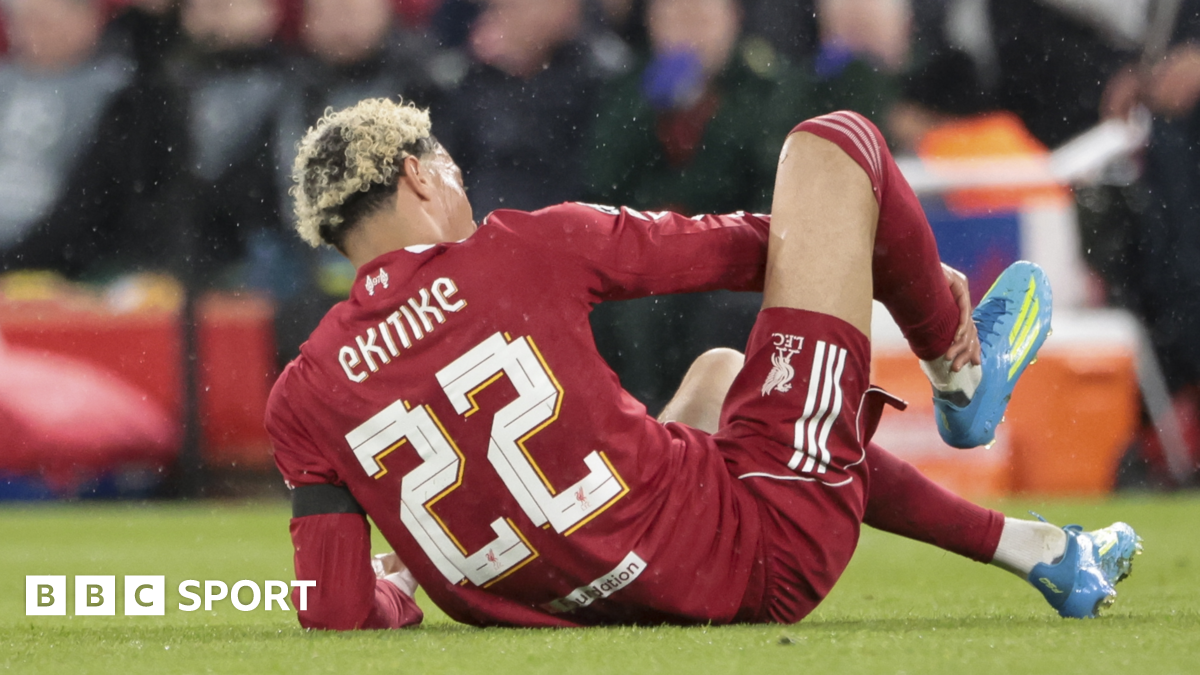
- Hugo Ekitike's injury just wrecked Liverpool's season and France's World Cup plans
- Why the Achilles rupture is still the most feared sound in football
- Bournemouth flirtation with Frank Lampard feels like a tactical regression
- 🏆 World Cup 2026 — Full Coverage Hub