
Why the Champions League run-in destroys beautiful football
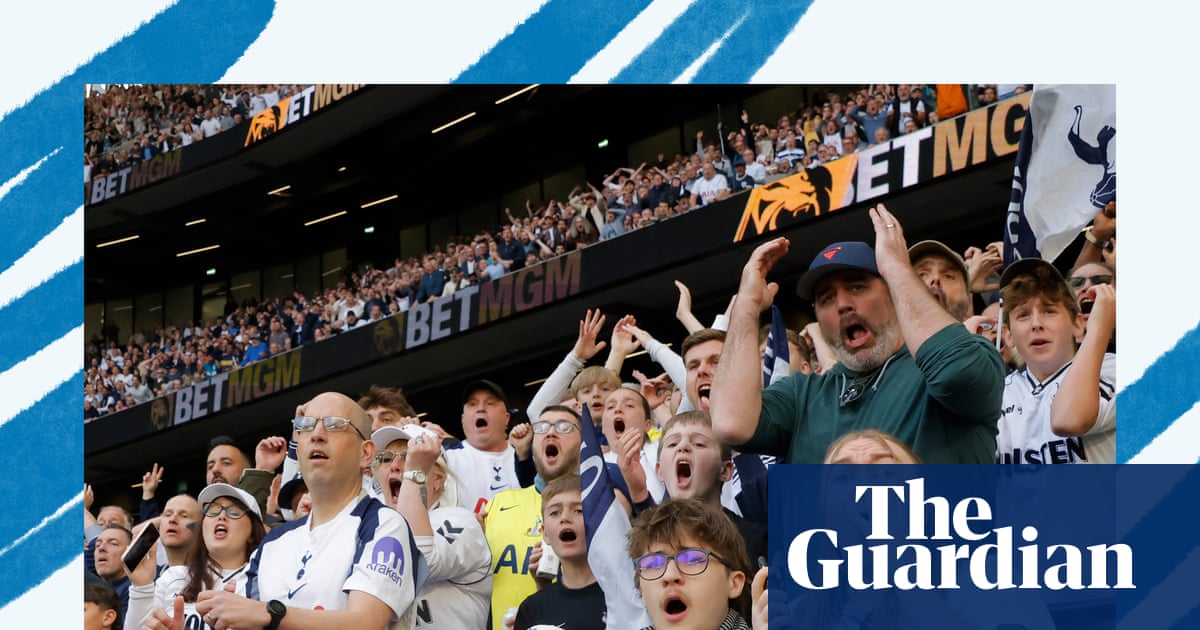
The death of aesthetic football
May arrives, and the grand illusions die. You spend nine months building a philosophy. You drill inverted fullbacks until they see passing triangles in their sleep. You push your defensive line to the halfway line.
You demand that your goalkeeper operates as a sweeper. And then May 1st hits. The air gets heavy. Legs turn to lead. The tactical idealism that won you plaudits in October is suddenly a massive liability.
Suddenly, none of that matters. As The Guardian reminded us this morning, "football drama awaits" this weekend across all major leagues. But that drama rarely comes from free-flowing, attacking masterclasses. It comes from desperation. It comes from elite athletes running on empty, making split-second errors in judgement.
Watch any top-tier side right now. The high press, that relentless trigger-happy closing down, has vanished. Managers aren't stupid. They see the GPS data. They know their central midfielders are running on fumes. So, the tactical instructions change.
The block drops ten yards deeper. The pressing triggers become highly selective. You don't chase the centre-back in possession; you wait for the pass to the pivot, and then you spring the trap.
This shift is not a sign of weakness. It is a sign of survival. The teams that fail to recognize this physical reality are the ones who throw away title leads. They stubbornly stick to their high-energy systems and end up being torn apart in transition. You cannot play heavy-metal football for ten months straight. The human body simply will not allow it.
The fatigue tax on pressing systems
Let's talk about PPDA, the metric that measures passes allowed per defensive action. If you chart the PPDA of the league's top pressing sides from August to May, the graph always curves upwards in the spring. Teams allow more passes before engaging. The intensity drops.
This changes the entire geometry of the pitch. When you press less aggressively, the opposition has more time to pick their passes. Therefore, your defensive line must drop to protect the space in behind. If your defensive line drops, your midfield must drop to prevent enormous gaps opening up between the lines.
Suddenly, a team that spent the winter suffocating opponents in their own final third is playing a mid-block. This is where the tactical breakdowns occur. A mid-block requires incredible discipline.
If one midfielder jumps out of the line to press, and the rest of the unit stays put, a gaping hole appears. In early May, fatigue causes these lapses in concentration. Players make the wrong read. They gamble on interceptions because their legs are too heavy to run back into position.
We are seeing a generation of managers who are so wedded to their specific tactical models that they refuse to adapt. They demand a high-octane press even when the underlying numbers show their team cannot sustain it past the hour mark.
There is a stubbornness at the elite level. A refusal to embrace the low block. We have stigmatised defending deep to the point where managers would rather lose playing a high line than win by sitting deep and countering. It is tactical arrogance, and it costs teams trophies.
The Champions League survival guide
This is especially true with the Champions League semi-final second legs looming on May 5th. A four-day turnaround is brutal. It forces a distinct shift in European tactical setups. The away goals rule is long gone, yet teams still play the first legs like they are terrified of their own shadows.
The second legs are where the actual football happens, but it is a fragmented, broken version of the game. Consider the role of the defensive midfielder in these defining fixtures. In autumn, their job is orchestration. In spring, it is pure destruction.
They are tasked with breaking up transitions, taking tactical fouls, and slowing the game down. You see it in the tackle success rates, which invariably plummet in May. The game becomes stretched. Distances between the lines grow.
Elite sides survive early May by compressing the pitch out of possession and expanding it instantaneously when the ball turns over. They don't try to dominate the ball for 90 minutes. They look for 15-minute windows of dominance. They score their goal, and then they retreat into a heavily fortified shape.
It is pragmatic, cynical, and incredibly effective. Look at the transition stats from late April. The top teams are giving up more high-quality chances per game now than they did in November. The xG against is creeping up.
They are forcing tired players to execute physically demanding systems against opponents who are fighting against relegation. It is a recipe for chaos. The smartest coaches are the ones who pull the handbrake up. They accept that winning ugly is still winning.
The death of the attacking winger
In November, your wide players are instructed to stay high and wide. They pin back the opposition fullbacks and create isolation scenarios. By the time we reach early May, those same players are spending 60 percent of the match tracking back to the edge of their own penalty area.
The 4-3-3 shape you see on the television graphics morphs into a rigid 4-5-1 out of possession. This defensive responsibility destroys their attacking output. When a winger is forced to make repeated 40-yard recovery sprints to cover a marauding fullback, they simply do not have the explosive energy left to counter-attack when the ball is won.
Their legs are dead by the time they cross the halfway line. This is why we see so many top-tier matches in May descend into stagnant possession phases. The defending team drops into a 4-5-1.
The attacking team cycles the ball in a U-shape around the penalty area because their wingers lack the burst of pace to beat a man one-on-one. The game becomes a waiting match. You are waiting for someone to slip, or for a defender to lose focus and give away a cheap free-kick.
The shadow of the expanded World Cup
This year, there is a massive complication hanging over every sprint, every tackle, and every recovery run. June 11th. The kickoff of the expanded 48-team FIFA World Cup in North America. It is impossible to ignore the physical preservation occurring on the pitch right now.
Players will never admit it. Managers will furiously deny it. But watch the tape. Watch the wide forwards deciding not to make that overlapping run in the 82nd minute.
Watch the central defenders opting to shepherd the ball out of play rather than engaging in a 50-50 challenge on the touchline. The subconscious self-preservation is glaring. When a player knows they are six weeks away from the biggest tournament of their life, their decision-making subtly shifts.
They protect their hamstrings. They pull out of tackles. This creates isolated moments of tactical breakdown for their clubs. A manager's pressing trap requires absolute commitment from all eleven players. If one winger holds back by a fraction of a second to save his legs, the entire system collapses.
The opposition plays through the lines, and suddenly the centre-backs are exposed. This dynamic is actively hurting the domestic product. We are seeing disjointed pressing structures because half the team is willing to die for the shirt, and the other half is terrified of missing a flight to the United States.
You cannot coach your way out of human nature. The fear of injury is a powerful tactical disruptor. It creates uneven pressing traps and hesitant defensive actions. The attackers know this. The smart ones are targeting the international stars, running at them late in games, knowing they won't risk a cynical challenge that could result in a rolled ankle.
The psychological toll and the referee's whistle
We must also address the psychological aspect of these May fixtures. The mental fatigue is arguably worse than the physical drain. Players have been analyzing video, listening to tactical lectures, and dealing with media scrutiny since July. By the time May rolls around, their cognitive processing speed drops.
This manifests in poor decision-making in the final third. You see wingers cutting inside and shooting from impossible angles instead of sliding a simple pass to an overlapping fullback. You see centre-backs diving into tackles they should stay on their feet for. The brain is tired, so it defaults to instinctive, often selfish, actions rather than executing the collective game plan.
This mental fatigue also impacts how teams interact with match officials. The dissent we see in May is not just petulance. It is the boiling over of months of accumulated stress. Every throw-in feels like a life-or-death decision. Every marginal VAR call is treated as a grand conspiracy.
Teams lose their emotional control, and when you lose your emotional control, you lose your tactical discipline. Referees are not immune to this pressure either. They feel the weight of the occasion. There is a subconscious tendency to swallow the whistle in big games, to let the game flow.
This often translates to allowing more physical, disruptive tackles. This plays perfectly into the hands of the pragmatic teams. If you know the referee is reluctant to issue a second yellow card in a Champions League semi-final, your defensive midfielders will push the boundaries of the rules. They will commit those cynical fouls higher up the pitch to stop transitions before they start. The flow of the game is destroyed, but the defensive structure remains intact.
Set pieces as the ultimate cheat code
When open play breaks down, when the legs are heavy and the passing patterns fail, you need a cheat code. In May, that cheat code is the set piece. The percentage of goals scored from corners and wide free-kicks skyrockets in the final month of the season.
This isn't an accident. It is a deliberate tactical shift. Teams spend less time on the training pitch running high-intensity drills in May. Instead, they spend hours walking through set-piece routines. They work on blocking runs, near-post flicks, and overloading the back post.
When you cannot break down a low block with intricate passing, you win a corner and bypass the defensive structure entirely. The delivery has to be perfect. The timing of the runs has to be immaculate. We are seeing set-piece coaches becoming the most important members of the backroom staff during the run-in.
A well-designed corner routine is worth its weight in gold when you are drawing 0-0 in the 87th minute and your strikers are too exhausted to make a run in behind. The defensive side of set pieces also becomes vital. Zonal marking systems are put under immense strain.
Attackers use the dark arts — shirt pulls, subtle shoves, stepping on toes — to gain a yard of space. Referees are often reluctant to award penalties for grappling in the box during high-stakes matches, so the penalty area becomes a war zone. The teams that master this chaotic environment are the ones who drag themselves over the finish line.
The ugly path to glory
The teams that lift trophies in late May are rarely the ones playing the best football. They are the ones who master game management. They understand the value of the tactical foul. They know how to win a cheap free-kick to break the opponent's momentum.
They are comfortable suffering without the ball for long stretches of the game. We saw this last season, and we will see it again in the coming weeks. The defining moments of this season's climax will not be a 30-pass move ending in a tap-in.
It will be a second ball won on the edge of the box. A set-piece routine practiced to perfection. A goalkeeper making a massive 1v1 save because his defensive line misjudged an offside trap. As we head into the defining fixtures of the season, including the FA Cup Final on May 16th and the Champions League Final on May 28th, expect the football to be tense.
Expect it to be jagged. Expect mistakes. The pressure is immense, the legs are gone, and the stakes have never been higher. The managers who can navigate this chaos, who can convince their exhausted squads to suffer together for just a few more weeks, will be the ones celebrating.
They will abandon the aesthetic ideals they preached in August. They will embrace the ugly, fragmented reality of spring football. The purists might hate it, and the columnists might complain about the lack of entertainment, but the trophy cabinets do not care how the points were won. This is what winning looks like in May. It is a war of attrition, and only the most pragmatic survive.
Read Next
Frequently Asked Questions
Why do football teams drop their high press in May?
What is PPDA and how does it change during the spring?
How does fatigue affect a team's defensive structure late in the season?
Why do some teams lose their title leads at the end of the season?
What causes tactical breakdowns when teams switch to a mid-block?
More Coverage
Arsenal’s Champions League final quest hinges on defensive discipline
12 hours ago
Top 10: The Defining Moments of the 2025/26 English Football Season
1 day, 4 hours ago
Crystal Palace's unlikely European title exposes the modern speed gap
1 day, 13 hours agoThe World Cup knockout bracket is a total minefield
2 days, 6 hours agoThe World Cup bracket is a house of cards waiting to collapse
2 days, 6 hours agoThe World Cup knockout stage is a tactical disaster waiting to happen
2 days, 6 hours agoMore Analysis

The Champions League final is Europe’s last stand before chaos
5 days, 10 hours ago
Why the Premier League run-in destroys every tactical masterplan
2 weeks, 1 day ago
Why late April midweek fixtures destroy tactical plans
1 month, 1 week agoThe Champions League semi-finals are here and everyone is running on empty
1 month, 1 week ago
The brutal numbers that prove May football is built entirely on fear
2 weeks, 2 days ago