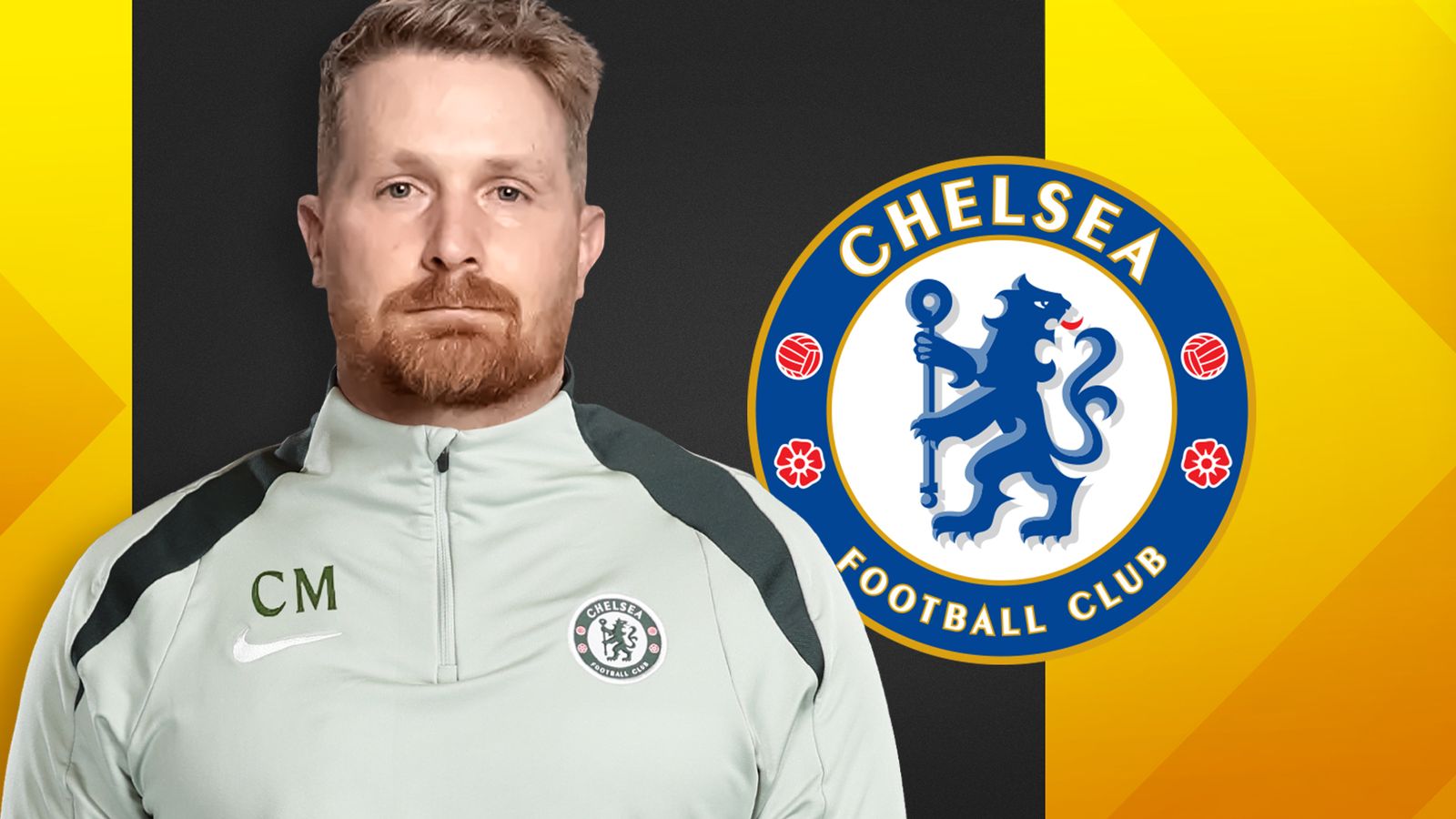
Xabi Alonso at Chelsea is the tactical shift Todd Boehly desperately needed

Order Arrives in West London
Chelsea’s relentless managerial carousel has stopped spinning, at least for a moment. The announcement that Xabi Alonso will take over at Stamford Bridge this summer is a massive statement of intent. It is also a fascinating collision of two entirely different footballing philosophies.
On one side, you have Todd Boehly and Clearlake Capital’s frantic, volume-based approach to squad building. On the other, you have a manager obsessed with structural rigidity, precise passing networks, and deliberate control. Something has to give.
Alonso arrives as a former Real Madrid boss. That stint at the Bernabéu tested his pragmatic flexibility. He learned how to manage colossal egos, navigate intense media scrutiny, and tweak his fundamental tactical principles to accommodate global superstars.
But Chelsea is a different beast entirely. It is a squad of expensive potential, completely lacking a functional spine. The transition from chaotic youth project to a machine capable of dominating possession will be the most difficult coaching challenge of his career.
"Former Real Madrid boss and ex-Liverpool midfielder Xabi Alonso has been appointed Chelsea's new permanent manager and will start work in the summer ahead of the 2026-27 campaign," as The Mirror reported today.
The 3-4-2-1 Blueprint and Midfield Friction
We already know the Alonso blueprint. It relies on a fluid 3-4-2-1 formation that morphs into a 3-2-5 in sustained possession. The wing-backs hold the maximum width on the touchlines, allowing the twin attacking midfielders to operate exclusively in the half-spaces.
Chelsea fans have seen variations of three-at-the-back systems before under Thomas Tuchel and Antonio Conte. But Alonso’s interpretation is less about rapid, direct transitions and more about suffocating ball retention. The central axis is everything.
He demands a double pivot capable of receiving the ball under extreme physical pressure, dictating the tempo, and executing progressive passes through the pressing lines. He needs absolute technical security in the middle of the pitch. This brings us to the immediate tactical friction awaiting him.
Enzo Fernández and Moisés Caicedo were purchased for astronomical fees to be the undisputed future of Chelsea’s midfield. The club spent £105m on Fernández and a staggering £115m on Caicedo. On paper, they might look like they fit the Alonso pivot.
But paper does not play football. Fernández has frequently looked defensively vulnerable when isolated in transition. Caicedo’s passing accuracy can drop drastically under a coordinated high press from top-tier opposition.
Alonso demands strict positional discipline that neither player has consistently shown over the last two years. He does not want a box-to-box runner vacating the center of the pitch. He wants reliable metronomes. If Fernández cannot learn to hold his position and dictate from deep, Alonso will simply bench him.
The Wing-Back Dilemma
Alonso’s system lives and dies by its wing-backs. They are the primary source of attacking width and are expected to contribute heavily in the final third. At Leverkusen, his wing-backs combined for over 35 goal contributions in a single season.
Look at Chelsea’s current defensive roster. Reece James, when fully fit, is arguably the most complete right wing-back in world football. He has the physical power to overlap aggressively and the technical delivery to punish retreating defenses.
The massive caveat, as always, is his injury record. If James can string together 30 league games, he will thrive under the new manager. If he breaks down again, Malo Gusto is a capable deputy, though slightly less dynamic inside the penalty area.
The left flank is far more problematic. Marc Cucurella has defensive bite but lacks elite crossing delivery. Ben Chilwell has been marginalized and looks completely unsuited to playing high-intensity touchline-to-touchline football in a modern possession system.
Chelsea's recruitment team has stockpiled inverted wingers over the last three transfer windows. Mykhailo Mudryk, Noni Madueke, and Pedro Neto crowd the squad. Yet, Alonso rarely uses traditional touchline wingers. He prefers dual number tens playing narrow behind the striker.
Congestion in the Half-Spaces
This is where the squad planning meets managerial reality. Alonso needs two attacking midfielders operating in the tight pockets behind a central striker. Cole Palmer is a guaranteed starter in one of those roles.
Palmer's spatial awareness, ability to receive on the half-turn, and final ball are exactly what the Spaniard demands from his playmakers. He will be the offensive hub. But what happens to the rest of the attacking rotation?
Christopher Nkunku could theoretically operate as the second ten, but his injury history remains a persistent shadow. That leaves a glut of pure wingers without an obvious tactical fit in the starting eleven.
Mudryk thrives on open space and touchline-hugging isolation. Alonso’s system naturally clogs the wide areas with wing-backs, forcing the attacking midfielders inside into congested zones. Mudryk simply does not have the close control in tight spaces to play as an interior ten.
Are Chelsea going to sell off their expensive wide men at a massive financial loss? Or will Alonso be forced into a tactical compromise? His recent time at Real Madrid showed he is willing to adapt to his best players, but only to a certain point.
The Real Madrid Education
We cannot ignore the specific lessons Alonso learned during his time in the Spanish capital. Managing at the Bernabéu is the ultimate education in pressure. You are expected to win every single week, and you are expected to do it with an attacking swagger.
Alonso managed a dressing room filled with generational talents and massive egos. He implemented a highly structured possession game but recognized when to let individual brilliance solve complex problems in the final third. He allowed his forwards tactical freedom while demanding strict defensive output.
That delicate balance will be vital in West London. Chelsea’s squad is significantly younger and far less experienced than Madrid’s. They will require more direct instruction and structural hand-holding during the initial phases of buildup play.
Yet, they still possess game-changers who need the creative freedom to operate on instinct rather than strict tactical programming. Finding out which players can process his rigid buildup patterns while maintaining their creative spark will be his first major test.
The Number Nine Void
Then there is the persistent, agonizing issue of the central striker. Nicolas Jackson produces moments of brilliant link-up play and tireless pressing from the front, but his finishing remains wildly erratic. In a possession-dominant system, the opponent will inevitably drop into a compact low block.
Alonso requires a striker who can drop deep, drag center-backs out of position, facilitate combinations with the dual tens, and ruthlessly dispatch the limited clear chances the system creates. Jackson currently lacks the cold-blooded efficiency required for the role.
If Chelsea are genuinely serious about backing their new manager, the remaining transfer budget must be directed toward a clinical focal point. The midfield shape and defensive line can be coached into Alonso’s required structure over time.
A lack of ruthlessness inside the 18-yard box cannot be fixed with a whiteboard session. Alonso had elite finishers at Madrid who could mask an off-day with a moment of brilliance. At Chelsea, the margins will be significantly tighter.
Pressing Triggers and Defensive Vulnerability
When opponents attempt to build from the back, Alonso instructs his front three to cut off central passing lanes, forcing the ball wide. Once the ball reaches the opposition full-back, the trap is sprung.
The wing-back jumps aggressively, the near-side ten blocks the inside channel, and the central midfielder steps up to deny the pivot. This requires immense physical conditioning and absolute tactical synchronization from all eleven players.
Chelsea’s current pressing numbers are middle-of-the-pack. Under previous regimes, they pressed in broken waves. One player would sprint wildly while the rest of the midfield jogged behind. Alonso will not tolerate disjointed pressing.
If one player is a second late, the entire structure collapses, exposing the high defensive line. Opponents in the Premier League are brilliant at exploiting high lines. If Chelsea's midfield pivot fails to win the second ball, teams will bypass the press entirely with a single long diagonal.
Levi Colwill and Wesley Fofana will be left defending massive tracts of open space. The physical demands on the center-backs in this system are staggering. They must be comfortable defending isolated on the halfway line with 40 yards of grass behind them.
The Boardroom Disconnect
The biggest obstacle to Alonso’s success at Stamford Bridge will not be on the pitch. It will be inside the boardroom. Signing the contract is the easy part. Operating under this ownership group is a deeply flawed challenge.
Alonso is a meticulous, detail-oriented planner. He requires specific physical and technical profiles to execute his game model. The Chelsea ownership group has historically operated like a venture capital firm buying up global market share.
This is the primary failure point waiting to happen. If sporting directors Paul Winstanley and Laurence Stewart continue to recruit players based purely on data-driven potential rather than systemic requirement, Alonso will fail.
You cannot hand a Michelin-star chef a random assortment of expensive ingredients and expect a coherent tasting menu. There absolutely has to be a complete alignment between the manager’s tactical vision and the sporting directors’ recruitment strategy.
Given Chelsea’s chaotic track record over the last four years, heavy skepticism is entirely warranted. They have burned through managers with alarming speed. Why should this time be any different?
The Transition to Summer
Chelsea still have the remainder of this current season to navigate before Alonso arrives. The current setup is essentially keeping the seat warm. The immense danger is that the squad checks out early.
Players who know they do not fit a possession-heavy 3-4-2-1 might simply stop competing. Alonso will be watching from afar, assessing every minute detail of their performances over the coming weeks.
He will be noting who drops their head when a simple pass goes astray. He will watch who fails to track back during negative transitions. The evaluation period has already begun, even if the manager is not yet in the building.
Appointing Xabi Alonso is the most logical, forward-thinking decision the Chelsea ownership has made since they purchased the club. It clearly signals a desperate shift away from reactive, short-term managerial appointments.
But raw logic does not guarantee points in the Premier League. The tactical shift required to turn this bloated, unbalanced collection of individuals into a cohesive unit is monumental.
It will require ruthless decisions in the summer transfer market and uncharacteristic patience from a historically trigger-happy board. The clock is ticking toward the summer, and the hardest job in European football is waiting for him.
Read Next
- Xabi Alonso is taking the most dangerous job in football at the worst time
- Alonso to Chelsea: Expect the tactical masterclass, eventually
- Xabi Alonso to Chelsea is the ultimate 'I can fix her' move
- Xabi Alonso to Chelsea is the ultimate high-stakes gamble for Todd Boehly
- ⚽ Bundesliga 2025-26 — Title Race Hub
Fire TV Stick 4K with Alexa Voice Remote
Your go-to hub for streaming every Premier League match.
Frequently Asked Questions
When will Xabi Alonso start as the new Chelsea manager?
What tactical formation is Xabi Alonso expected to use at Chelsea?
Where did Xabi Alonso manage before joining Chelsea?
How might Enzo Fernández and Moisés Caicedo fit into Alonso's system?
Why does Alonso's strategy clash with Chelsea's recent squad building?
More Coverage

Top 10: The Definitive Arsenal Moments of the 2025/26 Season
an hour agoLincoln City just entered the weirdest experiment in League One history
2 hours ago
Newcastle are burning the furniture to keep the house warm
2 hours ago
Manchester City's business model is frankly terrifying
2 hours ago
Brentford midfield hit by late-season injury setback
2 hours ago
Arsenal’s Champions League final run is pure Arteta obsession
3 hours agoMore Analysis
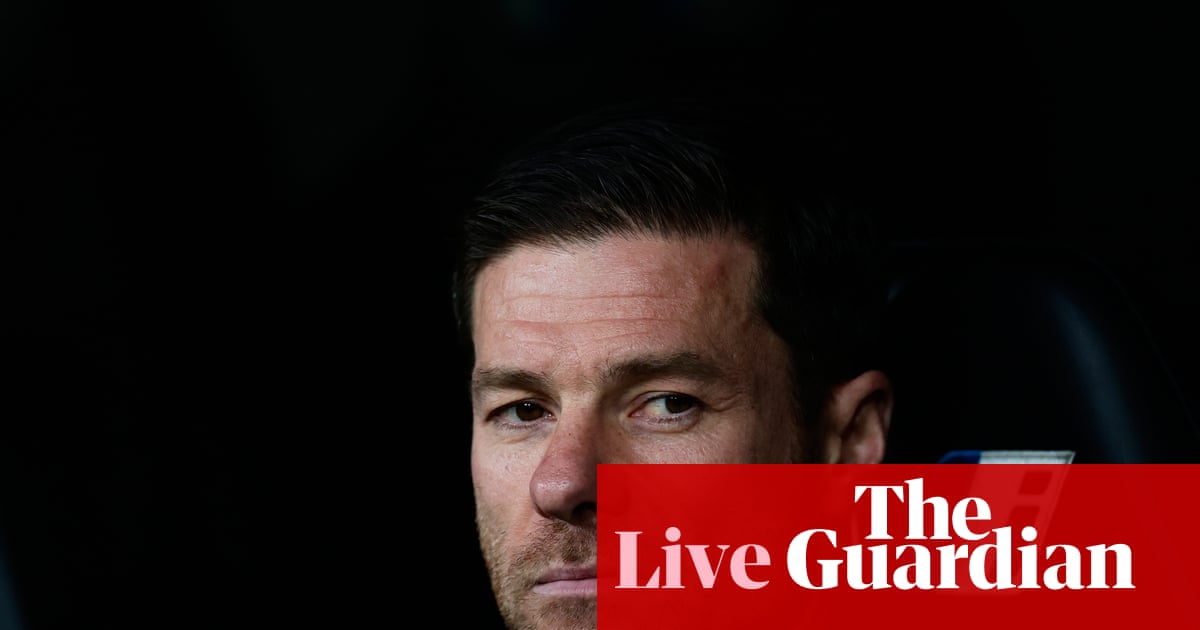
Xabi Alonso is Chelsea's new manager, but his rigid tactics might break them
1 week, 5 days ago
Chelsea gave Xabi Alonso total control. Now comes the hard part
1 week, 2 days ago
Xabi Alonso to Chelsea is the ultimate high-stakes gamble for Todd Boehly
1 week, 5 days ago
Chelsea are gambling their future on the Xabi Alonso project
2 weeks, 1 day ago
Xabi Alonso is the only man who can fix the mess at Stamford Bridge
2 weeks, 1 day ago