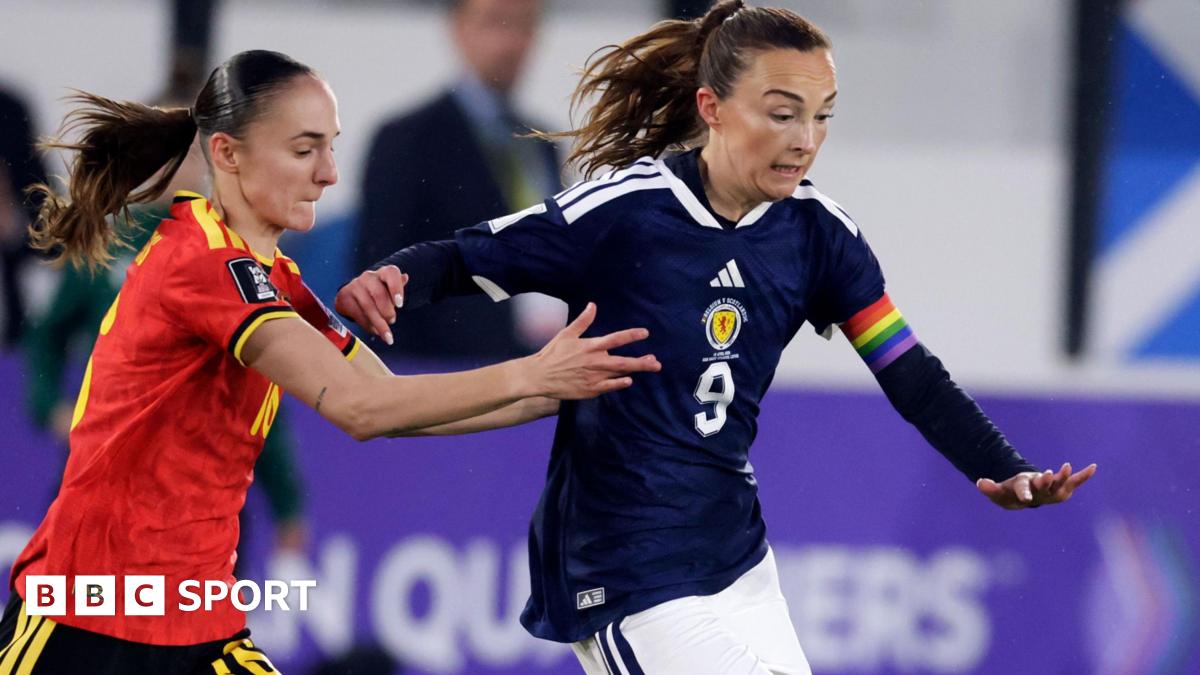
The return of a focal point
International football is often a game of searching for the missing piece. For Pedro Martinez Losa and Scotland, that piece has frequently been a consistent goal-scoring presence who can actually pin back elite European center-halves. The recall of Eilidh Adams for the upcoming World Cup qualifying double-header against Belgium suggests a shift in thinking.
Adams has been in blistering form for Hibernian, providing a physical profile that Scotland's attack has lacked since the squad began its tactical transition toward a more possession-oriented style. It is easy to play pretty football in the middle third, but without a striker capable of making the 'ugly' runs into the six-yard box, that possession is often sterile.
Scotland's previous outings have seen them struggle to convert territorial dominance into high-quality chances. They often finish matches with sixty percent possession but an xG that barely scratches 0.8. Adams changes that math by forcing the opposition's defensive line to drop five yards deeper, creating the space that Scotland’s creative players thrive in.
The Weir and Cuthbert dynamic
Caroline Weir and Erin Cuthbert remain the undisputed engine room of this team. When they are on the pitch together, Scotland’s ceiling rises exponentially. Weir’s ability to operate in the right half-space is well-documented, but her effectiveness relies on the movement ahead of her.
In recent matches, Scotland have drifted into a pattern where the wide players, Claire Emslie and Martha Thomas, both want to come short. This congests the central lanes and makes it far too easy for a disciplined side like Belgium to stay compact. If Adams starts, she provides the verticality needed to stretch the pitch.
Cuthbert’s role will be equally vital. Her pressing triggers often dictate when Scotland moves from a mid-block into a high-intensity hunt. Against a Belgium side that likes to build from the back through Justine Vanhaevermaet, Cuthbert’s timing in the 22nd minute or the 70th minute will determine whether Scotland can win the ball in dangerous areas or get bypassed entirely.
The Belgian transition threat
Belgium are not a side that cares much for the aesthetics of the game. They are functional, organized, and devastatingly quick on the counter. In Tessa Wullaert, they possess a player who can decide a match in a single transition moment. Wullaert doesn't just score; she manipulates the defensive line, often drifting wide to pull center-backs out of position.
Scotland’s full-backs, likely Nicola Docherty and Kirsty Smith, face a grueling evening. Belgium’s tactical blueprint involves absorbing pressure for ten-minute spells before launching direct balls into the channels. If Scotland’s rest defense is not perfectly aligned, they will find themselves exposed 1v1 against Wullaert or Janice Cayman.
The Belgian midfield is anchored by Tine De Caigny, who is masters at disrupting the rhythm of the opposition. She doesn't just tackle; she commits the 'smart' fouls that prevent quick breaks. Scotland will need to be patient. If they try to force the pass through the middle, De Caigny will intercept and trigger the Belgian break within seconds.
The defensive fragility
Here is the reality that many Scotland fans don't want to hear: this defense is prone to catastrophic lapses in concentration. We have seen it repeatedly in high-pressure qualifiers. One misplaced pass from the back or a failure to track a runners' blind-side movement can undo eighty minutes of hard work.
Sophie Howard and Rachel Corsie have a wealth of experience, but they are occasionally vulnerable to raw pace. Belgium knows this. They will target the space behind the Scottish center-backs with diagonal balls. Scotland's high line is a gamble—it allows them to dominate the ball, but it leaves them one sprint away from disaster.
Against a team with Belgium's clinical edge, you cannot afford to give away cheap set-pieces. Scotland’s aerial defense has improved, but they still look nervous when defending deep-inswinging corners. The communication between the goalkeeper and the back four must be flawless from the first whistle to the last.
Tactical prediction and final call
The first leg in Brussels will set the tone for the entire week. Scotland need to avoid the temptation to go blow-for-blow with Belgium in a transition game. They must control the tempo, use the width provided by Emslie, and look for Adams to disrupt the Belgian center-backs early on.
If Scotland can survive the first 20 minutes without conceding, their confidence will grow. The key will be whether they can find a way to service Adams without sacrificing the defensive stability that the Weir-Cuthbert partnership provides. It’s a delicate balance that Martinez Losa has struggled to find in the past.
The margin for error in these double-headers is non-existent. You don't get a second chance to fix a tactical mistake in April when the points are this valuable.
I expect a cagey affair. Scotland have the technical quality to dominate large spells of the game, but Belgium have the street-smarts to punish them for any arrogance. A draw away from home would be a fantastic result, setting up a winner-takes-all clash at Hampden Park.
My prediction: Scotland will manage a gritty 1-1 draw in the first leg, with Adams marking her return with a header from a set-piece. However, the defensive concerns won't go away, and they will likely concede a late equalizer after a lapse in the 84th minute. It won't be pretty, but it keeps the dream of 2027 alive for another few days.
Winning this double-header is about more than just points. It’s about proving that this Scotland side has the mental fortitude to compete with the top tier of European nations. They have the talent; now they need the discipline. If they fail to take at least four points from these two games, their path to the World Cup becomes a statistical mountain that they are unlikely to climb.
Read Next
- Chelsea are furious, but anger won't overturn Arsenal's 3-1 lead
- Ipswich Town's Farage fiasco is a masterclass in PR suicide
- Arsenal survive early Chelsea blitz to take control of WCL quarter-final
- The ghost of George Raynor haunts England's World Cup prep
- 🏴 Scotland World Cup 2026 — Tartan Army Hub
- 🇧🇷 WC 2026 Group C — Brazil, Morocco, Scotland, Haiti