The evolution of Deschamps' frontline
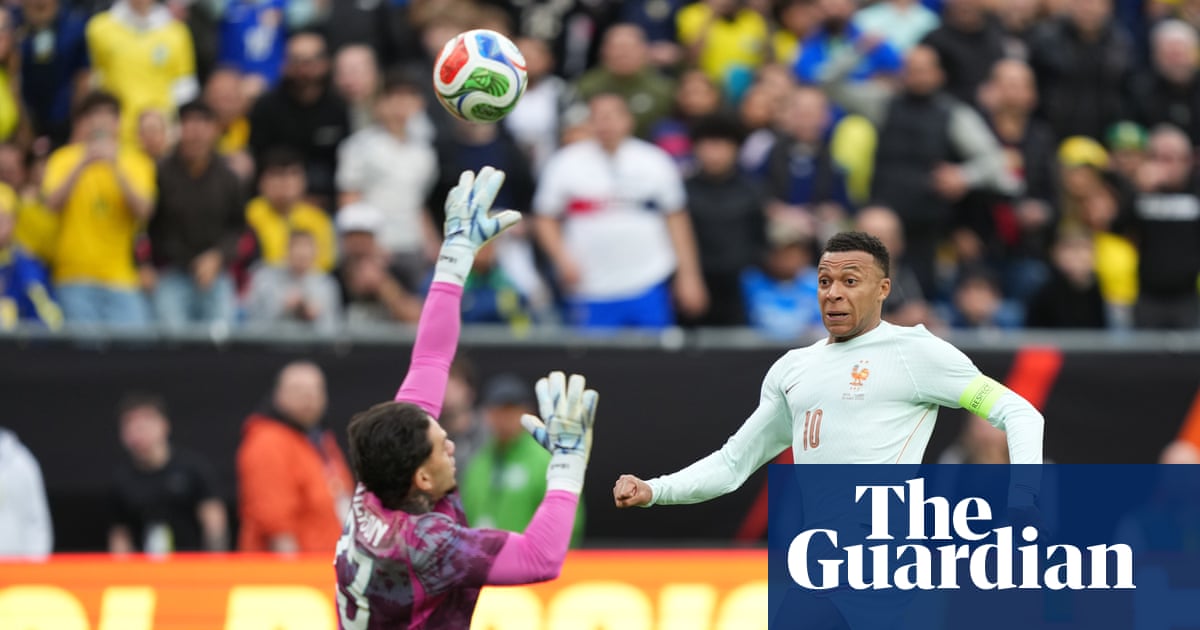
Didier Deschamps has spent years managing pragmatism, but the recent friendly wins against Brazil and Colombia suggest a tactical pivot. The inclusion of Michael Olise and Rayan Cherki alongside Kylian Mbappé adds a creative layer that was previously absent during the last cycle. Watching the transition play at home, you could see the shift from static possession to vertical, high-speed destruction.
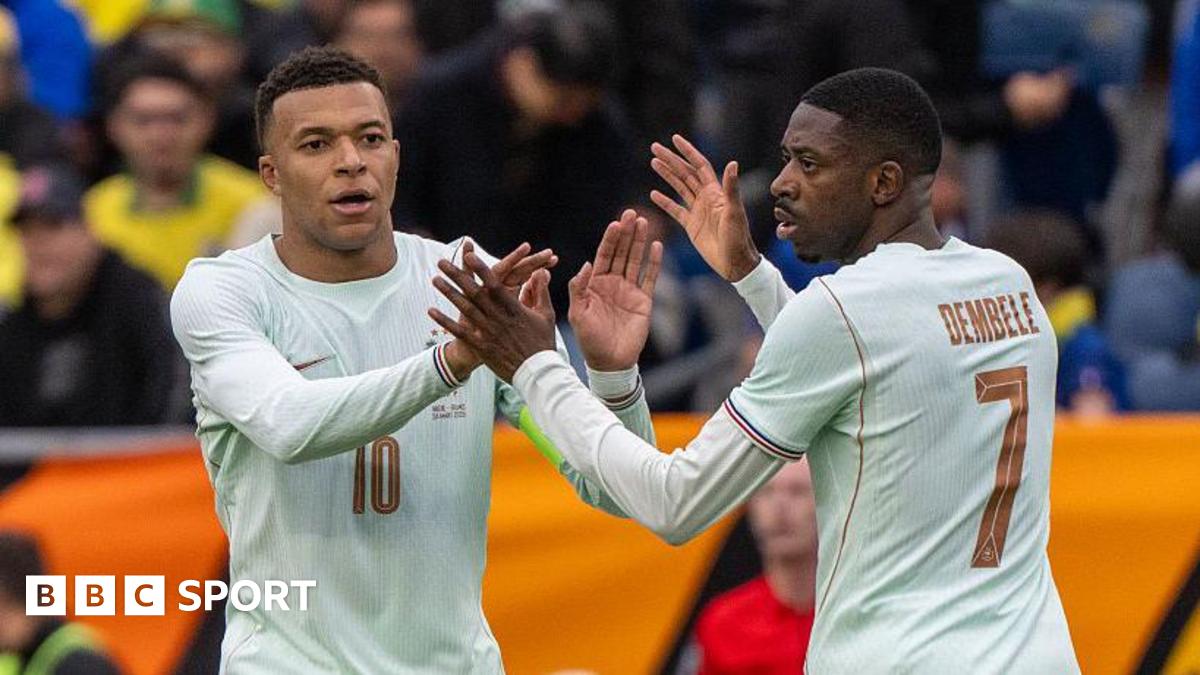
Ousmane Dembélé remains the constant engine on the wing, but the emergence of Désiré Doué offers a different flavor of chaos. Deschamps usually prefers defensive stability, yet this sequence of games proved he is willing to unleash a front four that defies standard structural discipline. It shows he is no longer terrified of leaving his midfield exposed if the alternative is overwhelming the opposing back line.
The youth movement is no longer experimental
Hugo Ekitike and Marcus Thuram are now fighting for the central nine role with real intensity. Ekitike’s movement inside the box against Brazil proved he has solved some of his previous positioning errors, allowing Mbappé to drift into those half-spaces where he is most dangerous. It is rare to see a national team transition this effectively in such a short window.
Kylian Mbappé noted the changing dynamics of the dressing room this week. He acknowledged the odd reality of his role, stating, "It feels strange to be speaking as though I’m one of the old guys, even though I’m not." He is carrying the emotional weight of this squad, but the younger cohort is taking the pressure off his shoulders by sharing the scoring burden.
Tactical flaws that linger
Despite the fireworks, there is a clear vulnerability hidden in this setup. The distance between the holding midfielders and the creative quartet creates a massive hole during turnovers. Brazil almost exploited this repeatedly in the 2nd half, finding lanes that shouldn't exist if the system remained compact. If France doesn't tighten those lanes before the World Cup kicks off in June, they will get picked apart by disciplined counters.
The defensive pivot points must be sharper. Relying on transition speed to bail out a leaky defensive transition is not a strategy that succeeds in deep knockout tournaments like the UCL matches coming in April. Teams with disciplined low blocks will look at these recent tapes and design traps precisely 15 meters behind the opposing forward line.
Final assessment
France has the highest offensive ceiling in the world right now, bar none. They have enough technical variety to break down any defense, assuming the ball reaches the final third. I expect they will favor this high-octane approach regardless of the risks, as they have the individual quality to outscore their mistakes.
Prediction: France will reach the semi-finals of the 2026 World Cup at minimum. Their firepower outweighs their organizational lapses by a significant margin. If they fix the defensive tracking of their number ten, they are the functional favorites to win the tournament in July.
Read Next