Luka Modric is turning the World Cup into his personal farewell tour
The infinite engine of Luka Modric
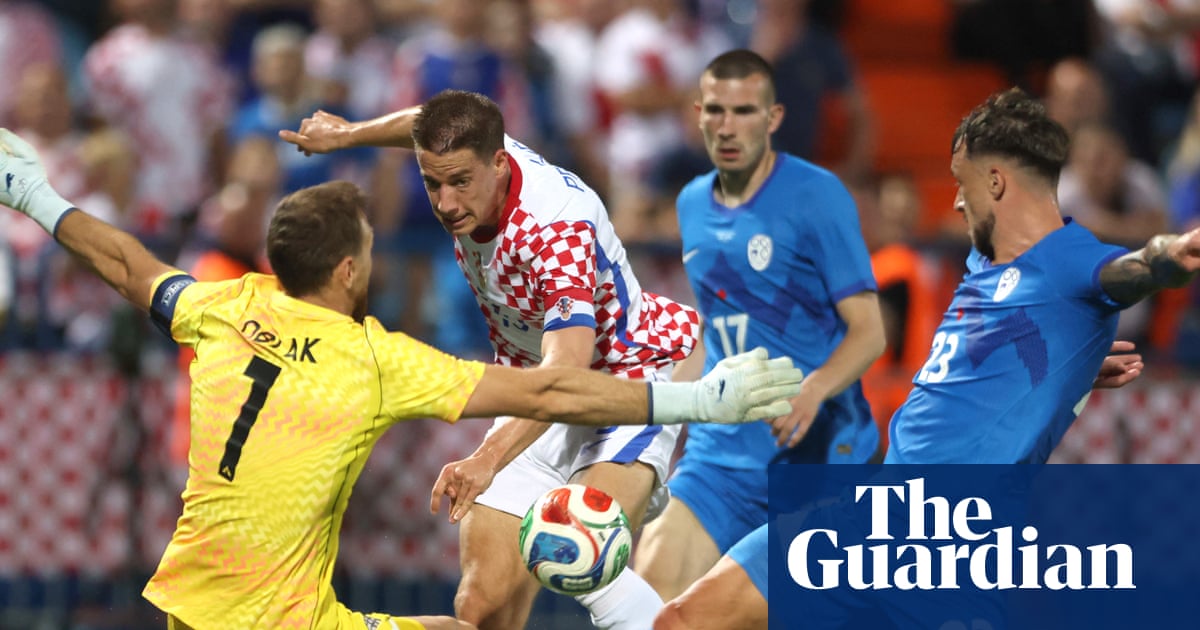
Watching Luka Modric dictate tempo against Slovenia on June 7, 2026, feels like observing a master carpenter who refuses to put down his tools. At 40, he is a physical anomaly, covering the same ground that saw him carry Real Madrid through an era of domestic and continental dominance. As reported by The Guardian, his performance in the 2-1 victory was not merely sentimental; it was clinical.
He discarded his protective mask and accepted the accolades of a home crowd that realizes something special is leaving the pitch. The numbers confirm what the eyes see: he remains the primary outlet for Zlatko Dalic. Even when he isn't pulling the strings for a decisive assist, his positioning forces defensive blocks into awkward, unforced retreats.
The shadow of the England fixture
Croatia enters the 2026 World Cup with a peculiar momentum. Defeating Slovenia in their final home warm-up serves the purpose of building confidence, but the real test looms four days from now. The squad looks balanced, yet the over-reliance on a veteran core creates a tactical bottleneck. Relying on a player approach his fifth decade to carry the burden of creative play is a risky gambit for the group stages.
Critics point to the lack of a clear successor in the central midfield engine room. While Mateo Kovacic remains a high-level operator, the distinct connection between the holding pivot and the final third often dissipates the moment Modric sits for a substitution. If Zlatko Dalic cannot find a way to preserve his star for the deeper knockout rounds, the team faces an early exit against higher-intensity rosters.
Luka Modric discarded his protective mask, accepted Zlatko Dalic’s congratulations and half-waved bashfully to a vigorously appreciative crowd. Had this really, finally, been his last official appearance on Croatian soil?
Managing the final act
The 2-1 result against Slovenia was a necessary tonic before the chaos of the tournament begins on June 11. However, one match does not solve the underlying issue of squad fatigue. Modric is not just playing for a trophy; he is playing to maintain a competitive standard that most players abandoned five years ago.
His tactical discipline is the only thing keeping the current iteration of this team from drifting into mediocrity. Should he suffer a knock, the drop-off in vision and composure is immediate. The irony of his late-career excellence is that it hides the gaps in the next generation of Croatian talent. He is a genius covering for a lack of depth, and eventually, the bill for that discrepancy will come due.
If Croatia expects to advance beyond the opening rounds, the coaching staff must identify a transition phase during the group stage. Running the captain into the ground against mid-tier opposition is poor resource allocation, regardless of the emotional theater of his potential retirement. We are watching a farewell tour, but the team's success depends on it being treated as a campaign rather than a coronation.
Read Next
- Denmark's World Cup prep turns to tragedy and uncertainty
- Portugal's World Cup prep descends into chaos after Leao red card
- Thomas Tuchel's England gamble is missing a defensive identity
- Diplomatic friction is already looming over the 2026 World Cup
- 🏆 World Cup 2026 — Full Coverage Hub
- 🇭🇷 Croatia World Cup 2026 — Modrić's Farewell
The Mixer: The Story of Premier League Tactics, from Cantona to Guardiola
A must-read tactical deep dive into the history of modern English football.
Frequently Asked Questions
How old is Luka Modric during the 2026 World Cup?
What is the primary tactical risk for Croatia in the 2026 World Cup?
Why is Croatia’s reliance on Modric considered problematic?
Which player is mentioned as a high-level operator alongside Modric?
What must Croatia's coaching staff do to succeed in the tournament?
More Coverage

World Cup broadcasting has reached a crossroads
8 hours ago
Thomas Tuchel's England are a terrifying machine right now
14 hours ago
World Cup 2026 is already showing its ugly side
16 hours ago
Manchester United are chasing the wrong defensive priorities
17 hours ago
Hosting the 2026 World Cup is a logistical gamble for FIFA
18 hours ago
Beth Mead's move to City is a bet on tactical continuity
19 hours agoMore Analysis

Luka Modric's next step: Why his future remains a locked door
2 months, 1 week ago
Thomas Tuchel's England gamble is missing a defensive identity
5 days, 20 hours ago
England are sleepwalking into a tactical nightmare in 2026
2 days, 11 hours ago
Milan’s pursuit of Luka Modric reveals Allegri’s deepening fear of youth
2 months, 1 week agoArgentina's World Cup defense is heading straight for a nightmare
3 weeks ago