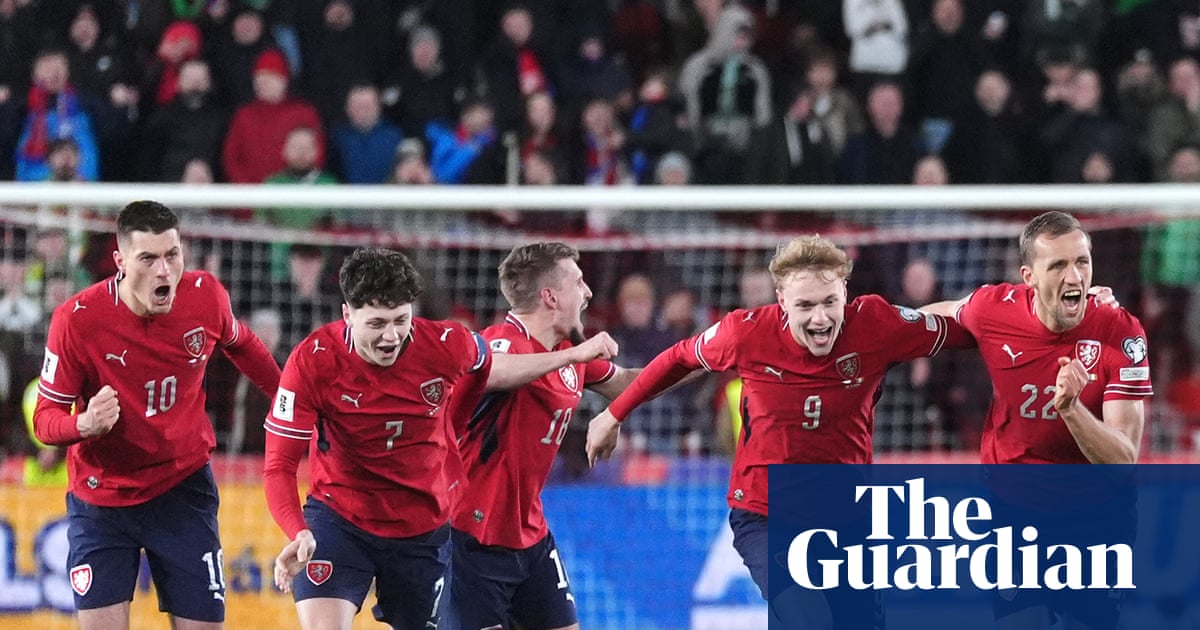
Martin Odegaard finally gets his World Cup moment with Norway
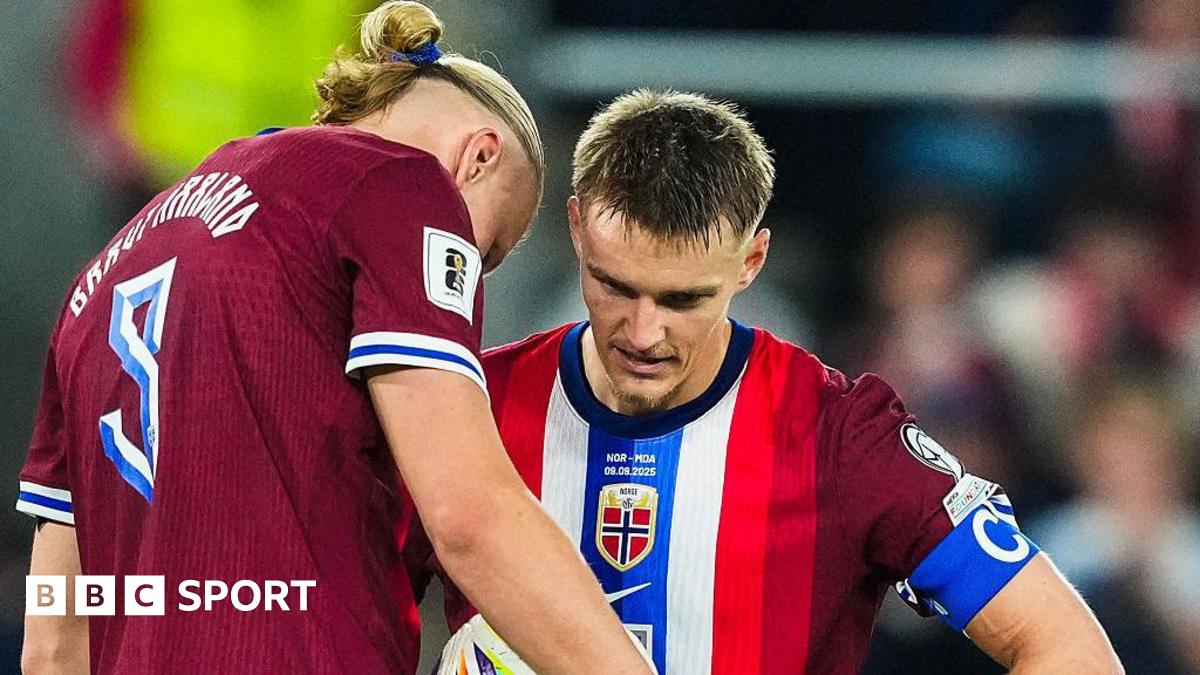
The Royal Seal of Approval
The announcement came with more than the usual social media fanfare. On Thursday, May 21, 2026, the King of Norway personally confirmed the 26-man squad heading to the United States, Mexico, and Canada. At the top of that list, wearing the armband and carrying the expectations of a nation that has waited since 1998, is Martin Odegaard. This isn't just another tournament call-up for a talented playmaker. It is the culmination of a decade-long journey from teenage prodigy to the tactical engine of one of the world's most demanding club sides.
Norway has spent nearly three decades in the international wilderness. Since the days of Tore Andre Flo and Kjetil Rekdal, the Norwegian national team has been a case study in underachievement. They missed out on the 32-team format repeatedly, often falling at the final hurdle of qualification. But as the tournament expands to 48 teams for this 2026 edition, the door has finally swung open. For Odegaard, the timing is perfect. At 27, he is in the absolute physical and mental prime of his career, coming off a grueling domestic campaign where he played over 3,400 minutes for Arsenal.
The squad list itself holds few surprises, but the inclusion of 26 names provides Ståle Solbakken with the depth required for a North American summer. The travel schedules alone are a logistical nightmare, and the heat in venues like Dallas or Monterrey will test the aerobic capacity of every midfielder. Odegaard’s role will be twofold: he is the primary creative outlet, but he is also the lead presser. In Solbakken’s preferred 4-3-3, Odegaard occupies the right-sided number eight position, a role that requires him to cover massive amounts of ground while maintaining the technical precision to find Erling Haaland with vertical passes.
The Evolution of the Playmaker
To understand why this World Cup matters so much for Odegaard, you have to look at his data profile from the 2025/26 season. He has moved away from being a luxury creator who stays in the final third. Instead, he has become a high-volume progressor. He averaged 8.4 per 90 progressive passes this season, placing him in the top percentile of European midfielders. He doesn't just wait for the ball; he dictates where the ball goes by dropping into the first phase of build-up to bypass the opposition's initial press.
This tactical maturity is exactly what Norway lacked in previous qualifying cycles. Too often, the team would become static, waiting for Haaland to produce a moment of individual brilliance from a direct long ball. Odegaard has changed that dynamic. He facilitates shorter passing sequences that draw defenders out of position. By the time the ball reaches the final third, the defensive shape is already compromised. It’s a sophisticated style of football that mirrors what Mikel Arteta has built in London, and it’s the only way Norway can hope to compete against the heavyweights in the knockout rounds.
However, the physical toll cannot be ignored. Today is May 21. The World Cup officially kicks off on June 11. That gives Odegaard and his teammates exactly three weeks to acclimatize and recover. Unlike the winter break for Qatar, this is a traditional summer tournament following a full European season. The risk of burnout is real. Solbakken has named a balanced squad, but if Odegaard’s legs go in the second half of a group game, Norway doesn't have a replacement who can replicate his tactical discipline or his vision. The drop-off from the starting XI to the bench remains the biggest concern for this group.
The Haaland Dependency and the Defensive Void
While Odegaard is the brain of this team, Erling Haaland remains its blunt-force instrument. The synergy between the two is the most documented partnership in Scandinavian sports history, but it is also a potential point of failure. Opposing managers aren't stupid. They know that if you cut the supply line from Odegaard, you starve Haaland. During the latter stages of qualification, we saw teams employ a man-marking system specifically designed to follow Odegaard into the half-spaces, effectively forcing Norway to play through their less creative defenders.
This leads to the uncomfortable reality that Solbakken has to face: Norway’s defense is still prone to catastrophic lapses. Even with Kristoffer Ajer’s experience, the back four lacks the top-tier recovery pace needed to play the high line that Odegaard’s pressing demands. If the midfield press is broken, the center-backs are often left 1-on-1 against elite strikers. We saw this in the friendly matches earlier this year, where quick transitions caught the Norwegian full-backs too high up the pitch. It is a fundamental flaw in the system that hasn't been fully addressed despite the squad’s overall improvement.
The inclusion of younger talents like Oscar Nusa and Antonio Nusa (if we look at the rising winger class) provides some relief, but the defensive burden falls heavily on the midfield trio. Sander Berge or Patrick Berg will likely sit as the deepest midfielder, but their primary job will be covering the spaces that Odegaard leaves behind when he wanders forward. It is a precarious balance. One missed tackle in transition, and the entire structure collapses. For a team aiming to make a deep run, relying on a 3-2 victory every time is a dangerous game to play.
Navigating the 48-Team Minefield
The expansion to 48 teams has changed the math of the group stage. With 12 groups of four, the path to the knockout rounds is wider, but the potential for an early upset against a non-European power is higher. Norway’s 26-man roster includes players from across the top five leagues, giving them a level of experience they haven't had in decades. Julian Ryerson’s rise at Borussia Dortmund and Alexander Sorloth’s consistent scoring in Spain provide the squad with more than just two superstars. This is a functional, modern team that understands its roles.
But the pressure of the moment is a different beast. Odegaard has played in Champions League quarter-finals, but he has never stood on the pitch for a World Cup anthem. The psychological weight of the 28-year drought is something the King’s announcement only emphasized. Every Norwegian fan remembers the win over Brazil in 1998; they have spent nearly three decades chasing that high. This squad is the first one that actually has the tools to match that legacy, which makes the possibility of failure even more daunting.
Tactically, Solbakken will likely stick to his guns. Expect to see a lot of rotation in the wide areas to keep the legs fresh for Haaland and Odegaard. The 26-man limit is generous, but the drop-off in quality in the defensive rotation is where Norway might get exposed. If Ajer or Hanche-Olsen picks up a knock or a suspension early in the tournament, the defensive system will be stretched to its breaking point. There is no veteran presence on the bench who can step in and organize a backline under World Cup pressure.
The Weight of 1998
History is a heavy thing in Norwegian football. The Drillo era was defined by a specific, almost mechanical approach to the game. It wasn't always pretty, but it was incredibly effective. This modern iteration under Odegaard is the polar opposite. It’s a team built on technical proficiency, short passing, and high-intensity pressing. It’s more attractive to watch, but it hasn't yet proven it can grind out results in the way the 90s generation did. The World Cup will be the ultimate test of whether this aesthetic shift can translate into tournament points.
Odegaard’s captaincy has been defined by his quiet authority. He isn't a shouter in the mold of Roy Keane, but his work rate is infectious. When your best technical player is also the one sprinting 60 yards to recover a lost ball, it sets a standard that the rest of the squad has to follow. That internal culture is Norway’s greatest strength heading into June. They are a cohesive unit that has grown up together through the youth ranks. Many of these players were part of the U21 sides that started this resurgence, and that shared history matters in a tournament environment.
The critical question remains: can they defend? In the 2025/26 qualifiers, Norway kept only three clean sheets in ten games. That isn't a championship-winning defensive record. It suggests that while they can outscore mid-tier opponents, they will struggle against the clinical finishing of the world's elite. If Norway finds themselves in a knockout game against a France or an Argentina, the margin for error for Odegaard and Haaland becomes non-existent. They will have to be perfect, because the defense likely won't be.
As we look toward the June 11 kickoff, the excitement in Oslo is reaching a fever pitch. The King’s involvement in the squad announcement wasn't just a gimmick; it was a signal that this is a national event of the highest order. For Martin Odegaard, the boy who was once the youngest player in the history of the Norwegian top flight, the circle is finally closing. He has conquered the Premier League, he has captained his club to the brink of glory, and now he has the chance to define his legacy on the biggest stage in sports. The wait is over. Now, the work begins.
Read Next
- Tuchel just ended the Harry Maguire era and the numbers explain why
- Congo's World Cup dream is unravelling before a ball is even kicked
- Tuchel's 16 guarantees and the massive tactical headache facing England
- Emi Martinez's broken finger will ruin Argentina's World Cup
- 🏆 World Cup 2026 — Full Coverage Hub
- 🇳🇴 Norway World Cup 2026 — Can Haaland Lead the Vikings?
Franklin Sports Blackhawk Backyard Soccer Goal
Lightweight pop-up net for instant backyard matches.
More Coverage

Why Liverpool must be wary of the Yan Diomande Bundesliga trap
2 hours ago
Premier League summer transfer window 2026: Everything you need to know
3 hours ago
Manchester United are chasing ghosts with the Leao pursuit
6 hours ago
Why England must fear Panama's disciplined low block
8 hours ago
Arsenal vs PSG: Why tactical rigidity will determine the European champion
9 hours agoLincoln City just entered the weirdest experiment in League One history
11 hours agoMore Analysis
Martin Odegaard is carrying the weight of a nation into the World Cup
1 week, 1 day ago
Martin Odegaard takes Norway armband as 2026 World Cup approaches
1 week, 1 day ago
Italy’s Bergamo blueprint is the ultimate warning for Haaland’s Norway
2 months ago
Steve Clarke's tactical masterclass that dragged Scotland to the World Cup
2 months ago
World Cup 2026 squad reveals: 1,248 players and zero margin for error
1 week, 4 days ago