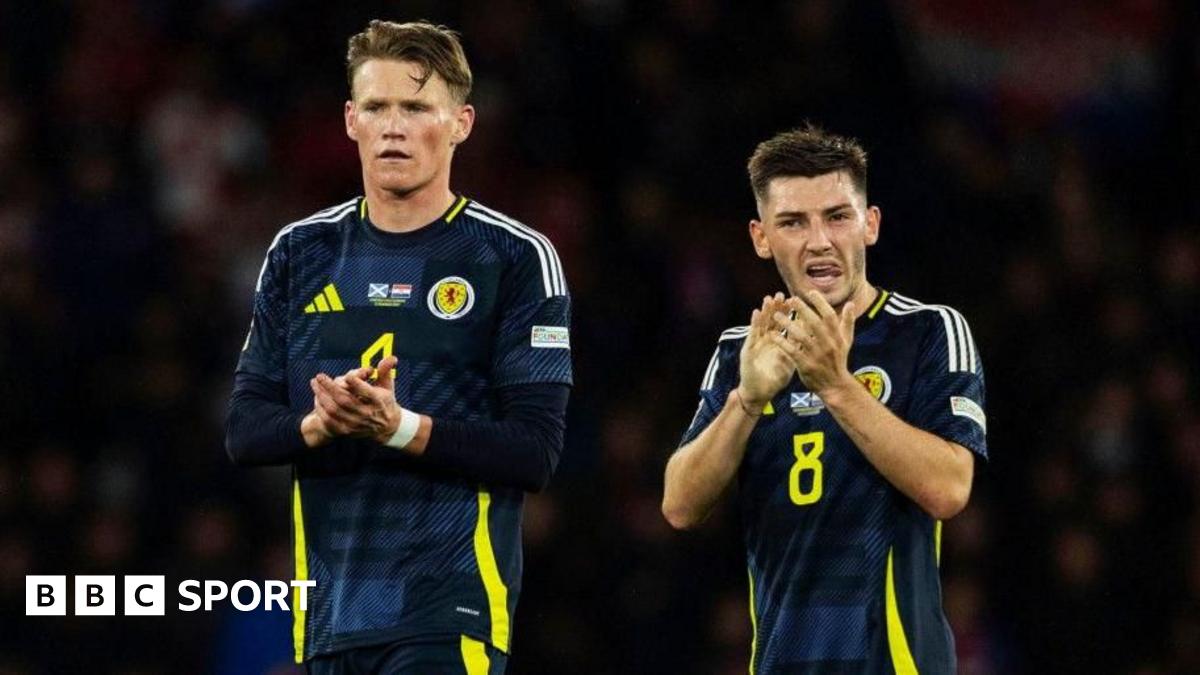
The Calcio education of McTominay and Gilmour
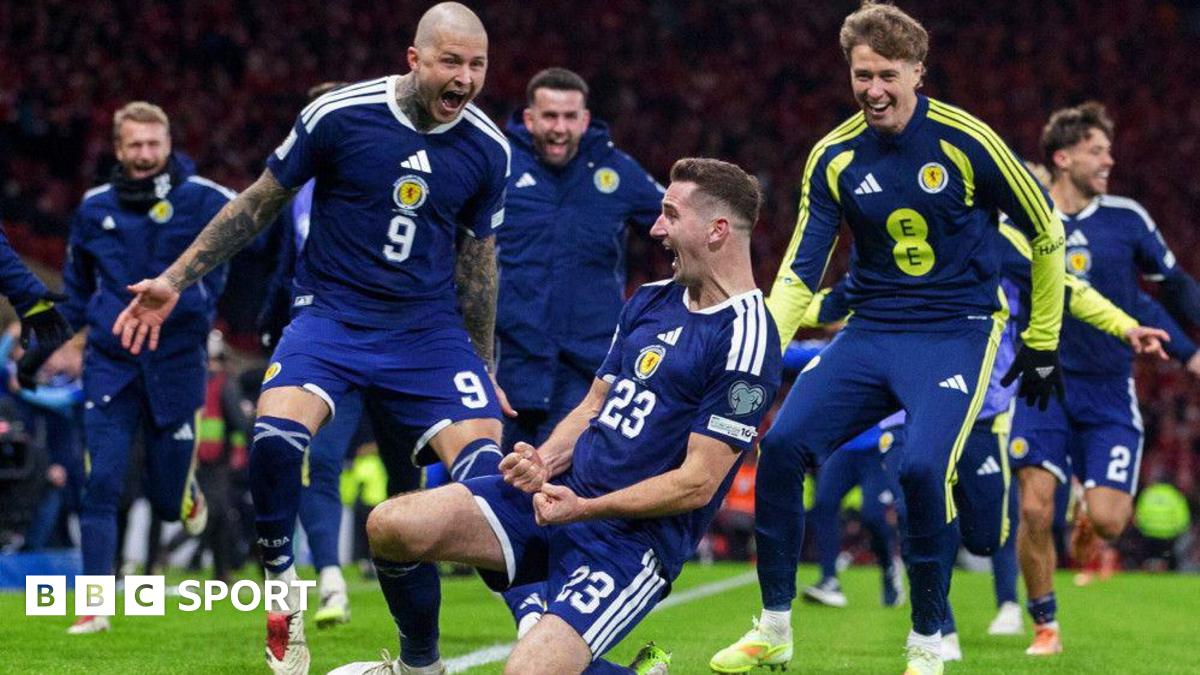
Imagine telling a Scotland fan five years ago that the national team's heartbeat would be forged in the shadow of Mount Vesuvius. We are currently 50 days away from the 2026 World Cup kickoff, and the narrative around Steve Clarke’s squad has shifted from desperate hope to tactical curiosity. The transformation of Scott McTominay and Billy Gilmour in Naples isn't just a fun trivia fact; it is the single most important development in Scottish football since they stopped playing with a leather medicine ball.
Scott McTominay used to be the guy Manchester United fans blamed for global warming and high interest rates. Now, he is the undisputed engine room of a Napoli side that has taught him the dark arts of Italian midfield play. He isn't just a physical presence anymore. He has developed a sense of timing in his late box entries that makes him a nightmare for defenders who are used to static Scottish strikers. According to a report from the BBC, both McTominay and Gilmour are now fixated on achieving something that has eluded every generation of Scottish players before them.
Then you have Billy Gilmour, the man who plays like he has a 360-degree radar strapped to his forehead. In the Premier League, Gilmour was often criticized for being too lightweight, a luxury player who couldn't survive a rainy Tuesday in Stoke. In Serie A, he has found a rhythm that suits his metronomic passing. He’s press-resistant in a way that feels illegal for someone of his stature. Watching him recycle possession under pressure is like watching a master chef handle a lunch rush—everything is calm, even when the pots are boiling over.
The weight of 11 failed attempts
Let’s talk about the elephant in the room, and no, it’s not the giant inflatable mascots we’ll see in June. Scotland has qualified for 11 tournaments in their history and exited at the group stage every single time. It is a record of failure so consistent it borders on impressive. From the heartbreak of 1974 to the misery of 1998, the script usually involves a heroic draw against a giant followed by a catastrophic loss to a team that hasn't won a game in three years.
McTominay and Gilmour aren't interested in being part of another "gallant exit" montage set to a sad bagpipe cover. They are targeting a "first"—the knockout rounds. This isn't just typical pre-tournament bluster. There is a different steel to this midfield. They’ve spent a season playing in an environment where a draw feels like a funeral. That winning mentality is supposed to be the secret sauce that finally breaks the Scottish curse.
The expansion to 48 teams for this World Cup actually helps. With more teams qualifying for the round of 32, Scotland doesn't need a miracle; they just need competence. But competence has historically been the one thing Scotland can't find when the lights are brightest. If they can't get out of a group in this bloated format, they might as well pack it in and focus on becoming a world power in curling.
The glaring hole in the Scottish plan
Now, for the reality check, because I wouldn't be doing my job if I didn't point out the flaws in this plan. You can have a world-class midfield duo playing like Pirlo and Gattuso, but if you don't have anyone to put the ball in the net, you're just playing expensive keep-away. Scotland’s striking options are still the weakest link. Che Adams and Lyndon Dykes are serviceable, but they aren't exactly striking fear into the hearts of elite international center-backs.
There is a massive reliance on McTominay to provide the goals from deep. If an opposing manager decides to man-mark him out of the game, Scotland’s attacking plan effectively becomes "cross it and pray." It’s a primitive strategy that rarely works at the highest level. The Napoli duo might be the best in their positions, but they can't be everywhere at once. If McTominay has to drop deep to help Gilmour because the defense is panicking, the goal threat vanishes instantly.
We also have to consider the physical toll of a long Italian season. Serie A is a grind, and both players have been central to Napoli's campaign. By the time they land in North America, they might be running on fumes. Scotland doesn't have the squad depth to replace them with anything resembling equal quality. If one of these two pulls a hamstring in the opening match, the dream of a "first" knockout appearance will evaporate before the first halftime whistle.
A tactical shift that actually makes sense
Steve Clarke has often been criticized for playing a brand of football that is about as exciting as watching paint dry on a damp Sunday. However, the emergence of the Napoli connection gives him a reason to loosen the tactical handcuffs. With Gilmour sitting deep and McTominay given license to roam, Scotland can finally transition from defense to attack without looking like they’re trying to move a piano uphill. It’s a more modern approach that relies on technical ability rather than just physical endurance.
Gilmour’s ability to find McTominay between the lines is going to be the key. We saw glimpses of it in the qualifiers, but the version of these players we are seeing now is more refined. They are making better decisions. They aren't forcing the pass when it isn't there. This maturity is exactly what you need in the high-pressure cooker of a World Cup group stage where one mistake can send you home.
The Scottish fans will descend on the host cities with their usual mix of optimism and dread. But this time, there is a tangible reason to believe. It’s not just about the kilt-wearing madness in the stands. It’s about two guys who have gone to Italy, learned how to win, and brought that knowledge back to a team that desperately needs it. They aren't just there to make up the numbers or trade jerseys with superstars. They are there to do something that Kenny Dalglish, Graeme Souness, and Archie Gemmill couldn't do.
The final countdown to June
With less than two months to go, the focus is entirely on fitness. The Scottish medical staff probably has McTominay and Gilmour wrapped in bubble wrap every time they aren't on the pitch. The expectations are higher than they’ve been in decades, and that brings its own kind of pressure. In the past, Scotland played better as underdogs with nothing to lose. Now, they are expected to progress, and that’s a very different psychological battle.
If they fail, the post-mortem will be brutal. People will ask why the best midfield in a generation couldn't overcome the weight of history. But if they succeed, they will become immortals. Making the round of 32 might sound like a small feat for Brazil or France, but for Scotland, it would be the equivalent of landing on the moon. The Napoli duo have the tools; now they just have to use them when it matters most.
The clock is ticking. Scotland has 50 days to figure out how to keep this momentum going. The world is watching to see if the Italian education of two Scottish lads is enough to rewrite the history books. For once, the conversation isn't about how much beer the fans will drink, but how many games the team will actually win. That alone is progress.
Read Next
- Buffon's brutal honesty exposes exactly why Italy are doomed this summer
- Mo Touré is the breakout star nobody saw coming
- Jarrad Branthwaite out for the season as World Cup window slams shut
- Top 10: The Moments Defining the 2026 Football Run-In
- 🏆 World Cup 2026 — Full Coverage Hub
- 🏴 Scotland World Cup 2026 — Tartan Army Hub
- 🇧🇷 WC 2026 Group C — Brazil, Morocco, Scotland, Haiti
- ⚽ Serie A 2025-26 — Title Race Hub (Inter, Napoli, Juve, Milan)