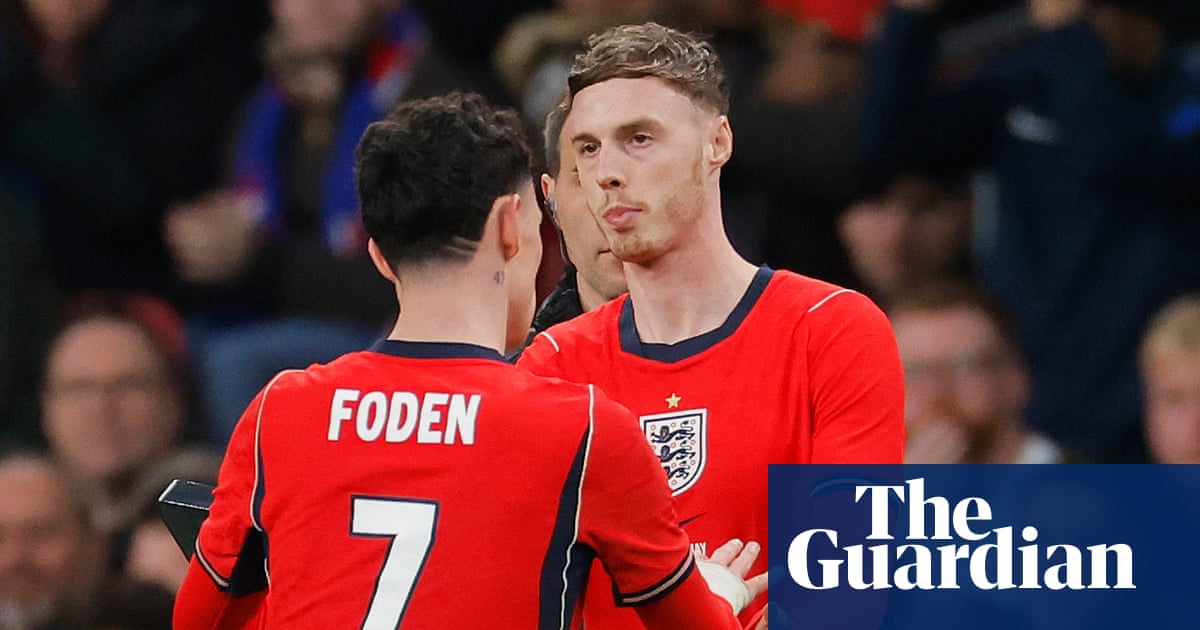
The end of the popularity contest
For eight years, following the England national team felt like attending a family reunion. The guest list was predictable, the conversations were scripted, and Gareth Southgate made sure everyone got a slice of cake.
If you performed well in a tournament three years ago, your seat at the table was guaranteed, regardless of your current club form or tactical utility. It was comfortable, it was respectable, and it ultimately fell short of ending England's 60 years of hurt since 1966.
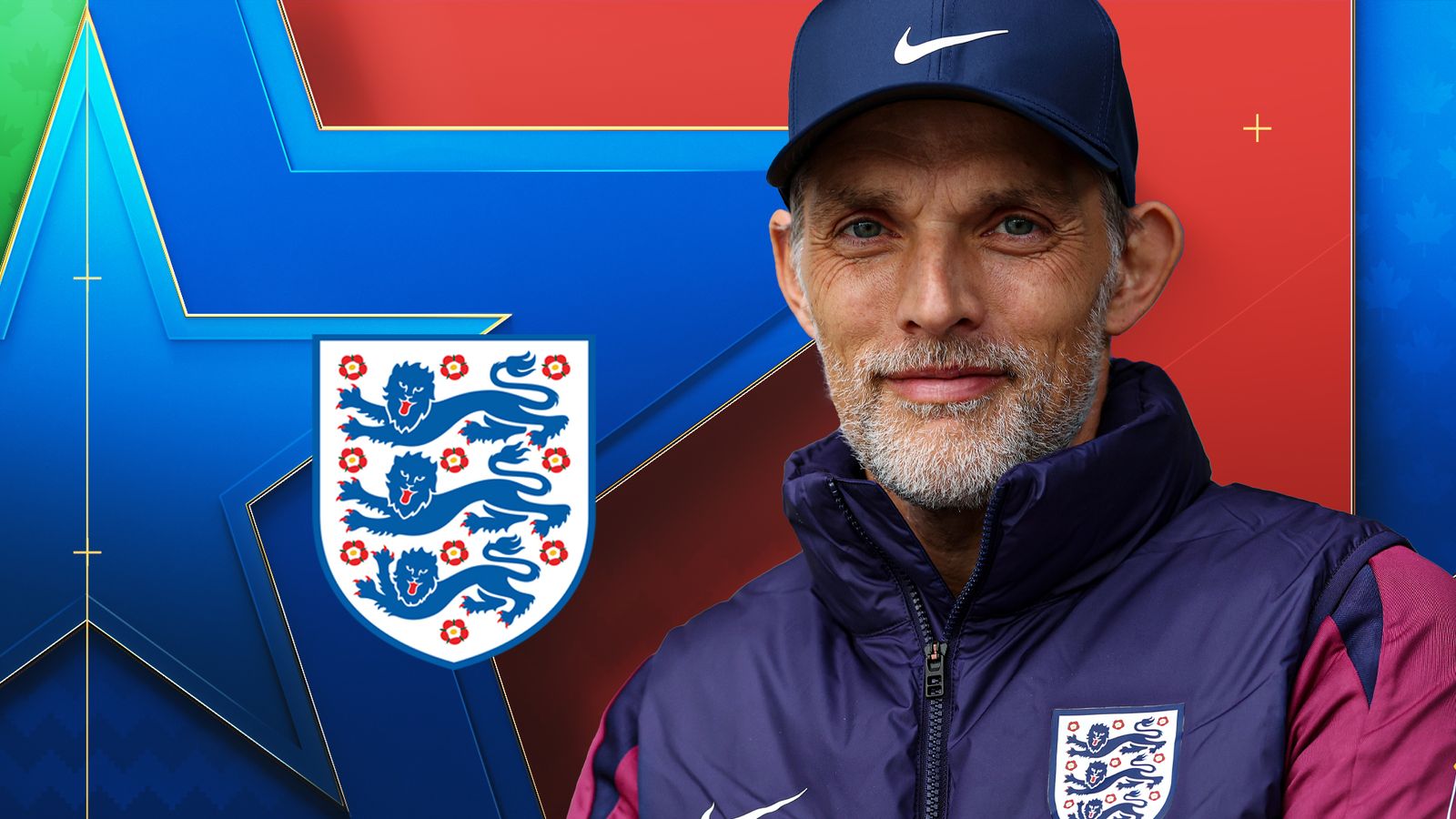
Enter Thomas Tuchel. The German tactician has spent his first months in the job quietly observing, measuring, and plotting.
Yesterday, he shattered the comfortable consensus of English football by announcing his squad for the upcoming summer showcase. The shockwaves are still vibrating through every pub and phone-in show in the country.
As the Mirror reported in their analysis of the squad announcement:
The omissions of Harry Maguire, Cole Palmer and Phil Foden will leave many supporters baffled. Yet Tuchel has never been interested in popularity contests or picking players on reputation alone
This is not a minor tweak to a successful formula. This is a complete demolition of the established order, a high-stakes gamble that will either make Tuchel a genius or lead to his swift execution by the British press.
Let us look at what this means for England's upcoming friendly against Germany at Wembley. These brutal cuts are the exact tonic this underachieving team required.
The casualties of the revolution
Let us begin with Phil Foden. The Manchester City midfielder is widely regarded as one of the most technically gifted players of his generation. He has a cabinet full of Premier League medals and individual accolades that most players can only dream of.
Yet, for England, he has spent years looking like a lost tourist, drifting across the pitch in search of the spaces Pep Guardiola meticulously designs for him. Under Southgate, England bent their entire shape to accommodate Foden, often forcing Bukayo Saka or Jude Bellingham out of their natural zones.
Tuchel looked at the tape, saw a player who struggles without a highly structured possession system, and decided he did not have the time to build one.
Then there is Cole Palmer. The Chelsea playmaker has been a statistics machine, racking up goals and assists in a chaotic Chelsea side that relies heavily on his individual brilliance.
But Palmer is a high-volume, high-risk player who thrives when he is the absolute focal point of the attack. In a short international tournament, where defensive transitions must be flawless, a player who turns the ball over trying audacious passes is a luxury Tuchel cannot afford.
Tuchel demands control, and Palmer's freelancing style represents a variable he refuses to accommodate.
And finally, Harry Maguire. For years, Maguire was Southgate’s loyal lieutenant, a defensive pillar who rose to the occasion in major tournaments despite his club struggles.
But football moves fast, and Tuchel's tactical blueprint requires a defensive line that can squeeze the pitch and play on the front foot. Maguire’s lack of recovery pace is an absolute dealbreaker for a manager who wants to play a high press.
Leaving him out is a mercy killing for a player who would have been exposed in Tuchel's aggressive defensive system.
The blueprint for a vertical England
So, what does a Thomas Tuchel side actually look like? If you watched his Champions League-winning Chelsea side, or his dominant Paris Saint-Germain team, you know the answer is speed, structural discipline, and verticality.
Tuchel does not want his teams passing the ball sideways for ninety minutes. He wants to lure the opponent press, exploit the space behind them, and strike like a cobra.
Without Foden and Palmer slowing down the tempo, England's attack will suddenly look incredibly direct. Bukayo Saka and Anthony Gordon will likely occupy the wide channels, providing raw pace and direct dribbling.
In the center, Jude Bellingham will be freed from the defensive shackles that bound him during the Euros. He will operate as a true box-to-box powerhouse, arriving late in the penalty area to support Harry Kane.
The midfield pivot will be the heartbeat of this new-look team. Declan Rice will be partnered by Adam Wharton, a player whose quick, forward-thinking passing is perfectly suited to Tuchel's transitional style.
Declan Rice has often struggled when asked to carry the sole burden of ball progression for England. At Arsenal, he thrives when partnered with a deeper playmaker who can dictate the tempo of the game. Wharton is exactly that player, possessing an uncanny ability to find vertical passing lanes under pressure.
This partnership will allow Rice to play as a destructive force, hunting down balls in the midfield and immediately feeding Wharton. It is a modern, high-energy midfield pairing that can compete with the best in Europe.
The shape at the back
Defensively, we can expect Tuchel to deploy his signature 3-4-2-1 system. John Stones will act as the ball-playing sweeper in the middle of the back three, flanked by the athletic Marc Guéhi and Levi Colwill.
This backline has the mobility to cover wide areas, allowing the wingbacks to push high up the pitch and join the attack.
Trent Alexander-Arnold will finally get the role he was born to play. As a right wingback, his defensive liabilities will be shielded by a three-man backline, while his extraordinary passing range will be weaponized in the final third.
On the left, Luke Shaw, if fit, or Kieran Trippier will provide the necessary balance. This is a system designed to maximize strengths and hide individual weaknesses.
The evolution of Harry Kane
Under Southgate, Harry Kane spent half his time dropping so deep he was practically playing in his own half. This was partly out of necessity to link play, but it left the penalty area completely vacant. Tuchel's system will prohibit this self-sabotaging behavior, keeping the captain pinned as a true focal point.
With direct wingers stretching the opposition defense, Kane will have the space to do what he does best: finish. He will no longer be required to act as the primary playmaker, a role that will now fall entirely to Bellingham and Alexander-Arnold.
The flaws in the German masterplan
But let us not pretend this is a risk-free masterclass. Tuchel’s history is littered with brilliant tactical ideas that eventually alienated his dressing rooms.
By dropping three of the most popular players in the squad, he has immediately put a target on his back. The margin for error is now razor-thin.
If England struggles to break down a low block in their warm-up games, the ghost of Cole Palmer will haunt every post-match press conference. If the defensive line gets caught out by a simple ball over the top, journalists will immediately ask why Harry Maguire’s experience was discarded.
Tuchel has stripped away the emotional safety blanket that Southgate spent years constructing.
Furthermore, this squad is dangerously thin on creative depth now. If Bellingham or Saka suffers an injury, England lacks a genuine game-changer on the bench.
Eberechi Eze and James Maddison are talented, but they do not possess the elite, match-winning pedigree of Phil Foden. Tuchel has put all his chips on his starting eleven functioning perfectly. If it does not, he has no plan B.
The battle at Wembley
Next week's clash against Germany is no ordinary friendly. It is the ultimate litmus test for this tactical revolution.
The Germans under Julian Nagelsmann are playing a highly fluid, aggressive brand of football that will test England’s new defensive structure to its absolute limit.
Julian Nagelsmann's Germany will provide the perfect mirror image for this tactical experiment. They possess a midfield of unparalleled technical quality, with Toni Kroos playing in his final international cycle. The battle for the center of the park will be won or lost in the split-second transitions.
If Rice and Wharton can disrupt Kroos's rhythm, Germany's entire attacking machinery will stall. But if they afford him time and space, Musiala and Wirtz will run riot between England's lines.
But this is precisely the kind of match where Tuchel thrives. He loves nothing more than neutralizing an opponent's strengths and exposing their defensive transitions.
Expect Wembley to be tense, loud, and entirely fascinated by this new, ruthless iteration of the Three Lions.
Prediction
Germany will dominate possession early on, but England’s back three will hold firm. The breakthrough will come in the second half, with Alexander-Arnold delivering a trademark cross for Harry Kane to head home at the back post.
Germany will equalize through a brilliant Wirtz solo effort, but England’s superior speed on the counter-attack will settle it.
Gordon will break free in the eighty-second minute, squaring the ball for Bellingham to slide it into an empty net. England will win 2-1, and the Tuchel era will begin with a statement of intent.
Read Next
- Thomas Tuchel's England squad selection is a massive medical gamble
- Top 10: Shock Decisions in Thomas Tuchel's England Overhaul
- Tuchel's England overhaul: Why the biggest names are watching from home
- Thomas Tuchel is already putting England's egos in check
- 🏆 World Cup 2026 — Full Coverage Hub
- 🏴 England World Cup 2026 — Three Lions Hub