The Premier League mid-table is currently experiencing a collective existential crisis masked as optimism. We are looking at a scenario where finishing tenth might secure European football.
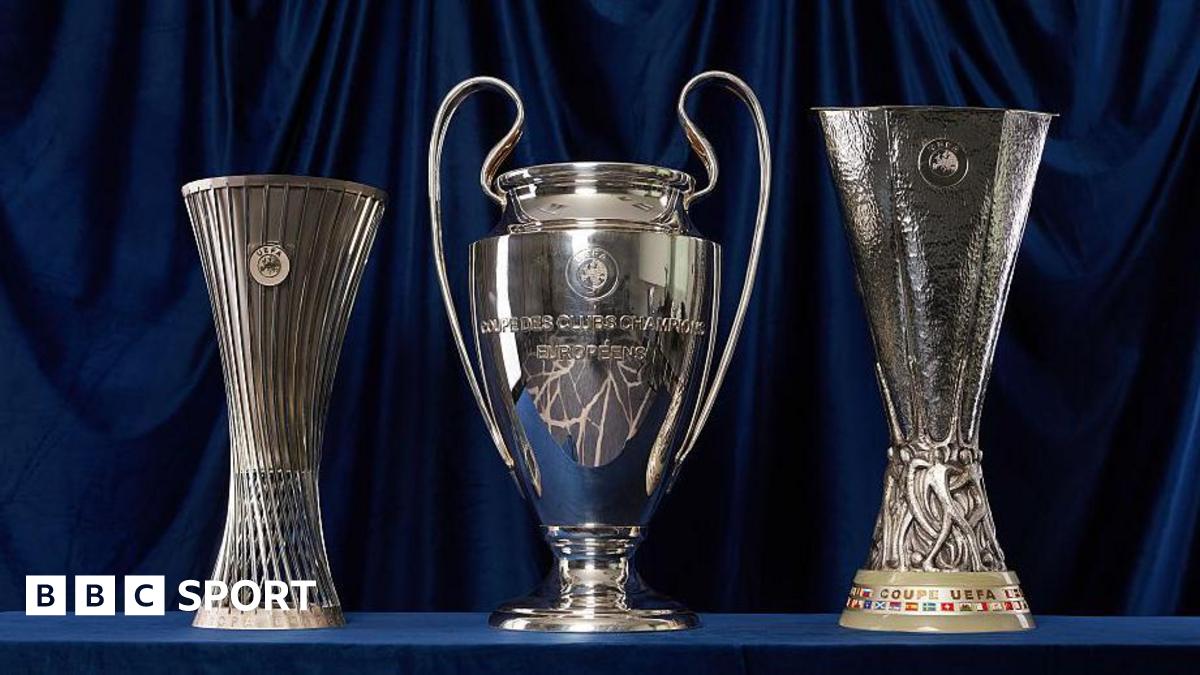
As Sky Sports detailed this week, Aston Villa's march through the Europa League is warping the standard allocation rules. If Unai Emery's side lift the trophy while finishing outside the top five, the Premier League gets six Champions League spots. The downstream effect pushes Europa League and Conference League qualification all the way down into the bottom half of the top ten.
Bournemouth, Brentford, and Brighton are suddenly massive Aston Villa fans. It is a bizarre alliance born entirely out of UEFA's bloated coefficient mathematics. But before we map out away days to Kazakhstan for Brentford supporters, we need to look at what actually happened on May 7.
Thursday night gave us two very different European semi-final second legs. Crystal Palace hosted Shakhtar Donetsk in the Europa Conference League, defending a 3-1 aggregate lead. Across the Midlands, Villa squared off against Nottingham Forest in a weirdly domestic Europa League tie.
Palace under Oliver Glasner have transformed into a pressing machine. Their aggressive shape out of possession essentially chokes the life out of technically inferior opponents. Selhurst Park was built for nights like this. The transition from Roy Hodgson's passive low block to Glasner's high-octane pressing traps has been nothing short of remarkable.
The Guardian's live feed rightfully pointed out the historical weight of the evening. Back in April 1962, Palace inaugurated their floodlights against Real Madrid.
"Alfredo Di Stéfano graced the pitch with 'effortless ease at walking pace'..."
Shakhtar, unfortunately for them, had no Di Stéfano. Palace bypassed their midfield entirely, using direct switches of play to isolate their wing-backs. It was functional, ruthless, and exactly how you defend a multi-goal lead. Jean-Philippe Mateta operated less as a traditional striker and more as a battering ram, occupying two central defenders constantly to create space for runners.
The tactical mismatch at Villa Park
Aston Villa's tie against Nottingham Forest was vastly more chaotic. Forest arrived with a game plan that felt aggressively naive.
You do not play a high defensive line against an Unai Emery team in a European knockout game. It is tactical suicide. Forest's midfield failed to apply pressure on the ball, allowing John McGinn the time to pick out runners in behind. Ollie Watkins essentially treated the left channel like an open highway, exposing the lack of recovery pace in the Forest backline.
Forest's defensive spacing was appalling. The gaps between their center-backs and full-backs were consistently around fifteen yards, giving Villa's inverted wingers entirely too much room to operate.
This is the central flaw in Forest's recent run. They rely too heavily on individual transitions to bail out systemic structural weakness. Against mid-table domestic opposition, you can survive on counter-attacks and individual brilliance. Against a team managed by a man who treats the Europa League like his personal property, you get exposed.
Emery adjusted his double pivot at halftime, dropping them five yards deeper to invite the Forest press. Once Forest took the bait, Villa played through the first line of engagement with simple vertical passes. It was a coaching mismatch. Emery recognized that Forest wanted to play on the break, so he simply removed the space behind his defense and forced Forest to break down a set block.
The math problem facing UEFA
We now have to confront the reality of ten English clubs playing in Europe next season. It sounds like a triumph for the Premier League, but it highlights a significant flaw in the qualification system.
When the eighth, ninth, or tenth-placed team qualifies for continental competition, it dilutes the prestige of the tournament. Brighton, Brentford, and Bournemouth are functionally battling for an administrative technicality rather than earning a spot through sustained excellence. The expanded formats were designed to create more elite matchups, but they have inadvertently turned the Premier League's mid-table sludge into a qualification battleground.
Brighton's underlying numbers suggest they are the most equipped to handle a European schedule. Their xG difference over the last ten matches sits firmly in the top six. They control possession, rotate their squad effectively, and maintain a high technical floor regardless of injuries. They can easily adapt to the tactical variance you see in the Conference League group stages.
Bournemouth are a different story. Their pressing intensity drops off a cliff after the 65th minute. Asking this current squad to play Thursday-Sunday on limited rest is a recipe for a domestic relegation battle next season. They simply do not have the depth at center-back or central midfield to survive the Thursday night grinder. Their aggressive man-to-man marking system requires a physical toll that a thin squad cannot sustain over a fifty-game season.
Brentford sit somewhere in the middle. Thomas Frank has built a highly adaptable squad that can shift between a low block and a high press depending on the game state. But their reliance on set-piece variance makes them vulnerable in two-legged knockout ties where referees often swallow their whistles. You cannot constantly rely on corners and long throw-ins to bail you out when you are playing away in Greece or Turkey on a heavy pitch.
Predicting the final hardware
So, where does this leave us as we look toward the finals? We are seventeen days away from the end of the European club calendar, and the picture is crystallizing. The tactical indicators are flashing bright red for one English club and bright green for the other.
Crystal Palace will advance to the Conference League final, but they will not lift the trophy. Glasner's system requires absolute physical commitment, and by late May, the cumulative fatigue will show. In a one-off final against a possession-dominant side, their pressing triggers will lose that split-second sharpness required to win the ball in dangerous areas. The distances between their midfield and forward line will stretch just a fraction too far. A frustrating, narrow defeat is the most likely outcome.
Aston Villa are a completely different proposition. Emery has optimized this squad for knockout football. He understands the dark arts of game management better than anyone currently working in England. He knows exactly when to foul, when to slow down the restart, and when to accelerate the tempo.
Villa will win the Europa League final. They will sit deep, absorb pressure, and score twice on rapid transitions. The game will be ugly, methodical, and entirely effective. Watkins will get in behind an overcommitted defense in the 78th minute, and that will be the ballgame.
This means the Premier League will officially trigger the ten-team European allocation. Villa will take their Champions League spot, and the mid-table will be thrown into absolute chaos as the remaining places filter down the standings.
Brighton will sneak into the final Conference League spot on the last day of the season. Bournemouth will miss out, which is honestly the best possible outcome for their long-term stability. And the Premier League will enter the summer transfer window knowing that half the division needs to bulk up their squads for a European campaign.
The reality is that Emery's tactical dominance in this competition has warped the domestic table. We are going to see teams qualifying for Europe with fewer than fifty points. It is mathematically fascinating, but it fundamentally breaks the concept of European exclusivity.