We are staring down the barrel of a mathematical anomaly. As we reach late March 2026, the Premier League is facing a scenario that feels closer to a scheduling glitch than a functioning sporting meritocracy. 11 different clubs could qualify for European football next season. That is exactly 55 percent of the entire division.
As the Mirror reported, this record-breaking scenario is technically possible. But what does it actually mean for the quality of the football we are watching?
The prevailing narrative, pushed by broadcasters, is that this is the most competitive season in memory. The Daily Mail recently highlighted the tight table, noting:
In one of the most open competitions for years, it is still all to play for. Key to that has been a number of surprise performances from summer signings.
They point to a title-winning captain, a seamlessly integrated Manchester United forward, and a rejuvenated England striker as evidence of smart recruitment leveling the playing field. But a flatter league table does not automatically equal a better league. In fact, we might be witnessing a strange tactical regression.
The homogenization of the top half
There is a creeping sense of stagnation. As FourFourTwo recently asked, are we actually living through the footballing Dark Ages? The argument is compelling. The product is now so highly processed, so meticulously coached, that it has become sterile.
The tactical evolution of the Premier League has hit a bizarre plateau. Five years ago, the transition to heavily scripted positional play felt like a revolution. Now, it feels like a straitjacket. Every coach has read the same manuals. They all want to dominate possession, build out from the back, and deploy inverted fullbacks.
But when mid-table teams attempt to replicate the exact patterns of the elite without the £80 million technicians required to execute them flawlessly, the game bogs down. Consider the concept of the pressing trigger. A few seasons ago, a well-timed press was a devastating weapon. Teams would bait the opposition into playing a specific pass to a holding midfielder, and then instantly collapse upon him. It resulted in high-turnover, chaotic, thrilling football.
Today, every holding midfielder is coached to recognize the bait. If they receive the ball with their back to play, they simply bounce it back to the center-half, who recycles it to the goalkeeper, who lofts it to the opposite flank. The press is neutralized not by superior skill, but by programmed risk-aversion.
Pass completion rates among center-backs have never been higher, routinely hovering above 92 percent. But forward progression metrics have flatlined. Teams are completing 500 passes a game without generating more than 1.2 expected goals. It is sterile possession. The ball is moving in a U-shape around the penalty area, probing against low blocks that are drilled to perfection.
When everyone presses in a 4-4-2, builds up in a 3-2-5, and defends transitions with the exact same tactical fouls, the margins between winning and losing shrink drastically. The reason 11 teams are clustered together in European contention is not because 11 teams are playing brilliant football. It is because risk aversion has become the default setting.
Managers are terrified. You only have to look at the managerial sack race to understand why. Four Premier League managers currently remain under serious threat of dismissal, including high-profile names like Mikel Arteta, Ruben Amorim, and Nuno Espirito Santo. Igor Tudor does not even qualify for the main list yet, but the pressure is already mounting.
Why? Because boardrooms lack patience, and the statistical margins do not forgive a bad month. If your striker underperforms his xG by two goals over a four-game stretch, you do not drop from 3rd to 4th. In this congested table, you drop from 4th to 9th. The panic sets in immediately.
Take Nuno Espirito Santo, for example. He was brought in to stabilize a sinking ship, to apply a rigid defensive structure. But when 14 other teams in the league are applying the exact same rigid defensive structure, his unique selling point vanishes. The board looks at the results, sees a lack of progression, and pulls the trigger. It is a vicious cycle of short-term thinking fueled by a terrifyingly dense league table.
The struggle to replace legends
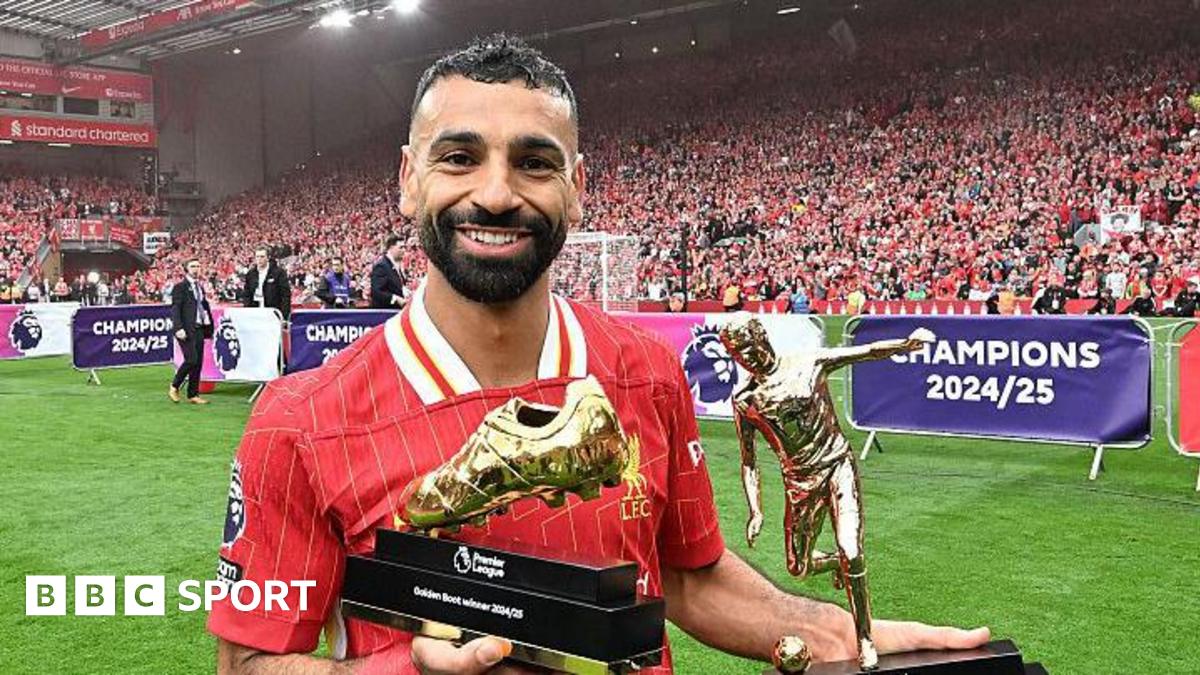
We are watching the end of an era for the elite Premier League forward. Liverpool are currently staring at the terrifying prospect of replacing Mohamed Salah. It is a nearly impossible task. We are talking about a player who has won three Premier League Golden Boots and completely redefined the role of the wide forward in England.
Replacing that kind of output is not just expensive. It is structurally daunting. Football365 recently attempted to rank the successors to the 25 best forwards in Premier League history, and the results are grim. The hit rate for replacing truly generational attackers is staggeringly low. Clubs are terrified of making the wrong move.
Instead of finding the next Salah, clubs are scrambling in the bargain bin or fighting over the same tier of flawed attackers. Chelsea are reportedly making contact to sign a forward for £30m ahead of their rivals. At that price point in 2026, you are not buying a finished product. You are buying a gamble.
The desperation is so acute that Manchester United have even received an approach from a Premier League rival for Marcus Rashford, according to Metro. The fact that a direct domestic rival believes they can pry Rashford away from Old Trafford speaks volumes. It suggests a complete lack of untouchable status among the league's elite forwards. Everyone is available for the right price, because nobody knows what the right attacking system is anymore.
The officiating collapse
If the tactics are homogenized and the star power is waning, what is actually deciding these tight matches? Increasingly, the answer is refereeing incompetence.
This is not fan paranoia. It is a statistical reality. A recent BBC Sport report confirmed the worst-kept secret in the league:
Refereeing mistakes on the field and through the video assistant referee have risen across most categories in this season's Premier League.
Think about that. We have more cameras, higher framerates, and dedicated officials sitting in a bunker with multiple angles. Yet, the error rate is climbing. The technology was supposed to remove the ambiguity from the game. Instead, it has simply outsourced the incompetence from the grass to the monitor.
When the points gap between Champions League qualification and mid-table obscurity is practically non-existent, these errors are not just frustrating weekend talking points. They are millions of pounds in lost revenue. A subjective foul in the 87th minute, reviewed for four minutes and ultimately upheld by a nervous official, can dictate the entire financial trajectory of a club. It is an unacceptable variable in a multi-billion pound industry.
A product eating itself
The Premier League has marketed itself as the ultimate entertainment product for three decades. But the current iteration is starting to feel incredibly hollow.
The threat of the World Athletics Championships being derailed by West Ham over stadium disputes, as Olympic champion Keely Hodgkinson pointed out with a cheeky jibe, is almost a perfect metaphor. The football apparatus is so massive, so unyielding, that it threatens everything around it, even as its own internal structures start to creak.
We have 11 teams chasing Europe, but very few of them are playing inspiring football. We have a golden generation of forwards aging out, with unconvincing replacements waiting in the wings. We have high-profile managers like Arteta and Amorim walking a tightrope. And overseeing it all is an officiating body that is making more errors than ever before.
The numbers do not lie. A decade ago, the gap between 4th and 8th was regularly north of 15 points. There was a clear elite and a muddy middle. Now, the middle has swallowed the top. Parity is not the same thing as quality. The 2026 season is proving that you can absolutely have too much of a good thing, especially when the foundational elements are starting to crack.