
Why Florentino Perez is gambling on Jose Mourinho again
The bombshell timing
The timing of the leak is classic Florentino Perez. With the Champions League semi-final first legs kicking off today, dropping a massive managerial bombshell changes the entire media narrative.
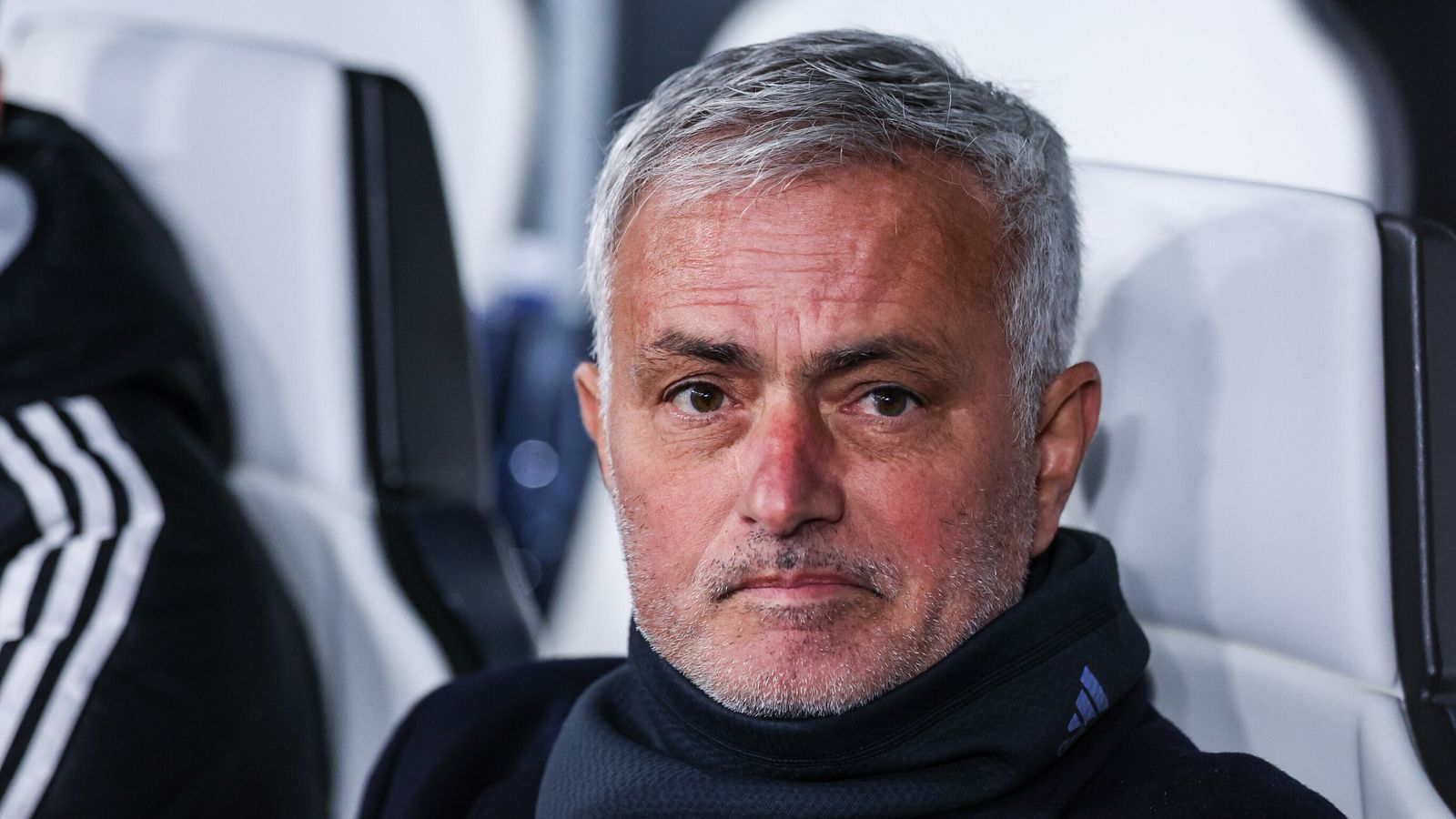
According to the live transfer updates Sky Sports reported, Jose Mourinho has suddenly emerged as the top choice to take over the Real Madrid job. It sounds like a retrograde step, a nostalgia play from a president who usually looks forward. But tactically, you can see the cold, calculating logic behind the move.
Carlo Ancelotti’s second reign has been a triumph of man-management and fluid attacking dynamics. Yet the underlying numbers have been flashing warning signs for 18 months. Real Madrid’s defensive shape without the ball has become increasingly passive.
They allow too many entries into the final third. Against elite positional play systems, their midfield diamond gets stretched, leaving Aurelien Tchouameni isolated against overloads.
Perez isn't blind to this. He sees a squad dripping with generational attacking talent that lacks a rigid out-of-possession structure. Enter Mourinho.
The end of vibes management
To understand the Mourinho appeal, you have to dissect Madrid's current structural flaws. Under Ancelotti, Madrid defends in a loose 4-4-2 block. The forwards are given minimal defensive responsibility.
This forces Jude Bellingham and Federico Valverde to cover absurd amounts of ground. It works when games become chaotic, end-to-end shootouts. It fails spectacularly when opponents hold onto the ball and systematically dismantle the midfield line.
Look at their expected goals against metrics over the last calendar year. Madrid consistently concede high-quality chances in transition. When the initial counter-press fails, the spaces between the defensive line and the midfield pivot are massive.
Opposing number tens frequently find pockets of space right in front of Eder Militao and Antonio Rudiger. This is the exact zone Mourinho historically suffocates. His entire defensive philosophy is built on denying space centrally.
Ancelotti allows players to solve problems on the pitch. Mourinho imposes rigid solutions from the touchline. This squad has spent three years freewheeling, relying on individual brilliance to escape tactical traps. Now, Perez seemingly wants to install a disciplinarian to force them into a structured unit.
The 4-2-3-1 blueprint
Mourinho’s first order of business would be establishing a strict mid-block. He doesn't believe in the aggressive, high-risk pressing of the Jurgen Klopp school. He prefers his teams to drop into a compact shape, engaging only when the ball crosses the middle third.
For this current Madrid squad, that shift would be jarring. We know exactly what formation he will use. The 4-2-3-1 has been Mourinho's default weapon for two decades.
It provides the double pivot he craves for central stability. It also creates a distinct separation between the defensive block and the attacking quartet. Tchouameni and Eduardo Camavinga would almost certainly form that double pivot.
Mourinho demands absolute discipline from these two roles. Think back to his use of Xabi Alonso and Sami Khedira. Camavinga, with his tendency to break lines by dribbling out of pressure, would need to be immediately reprogrammed.
Mourinho hates unnecessary risks in the defensive third. He wants the ball moved vertically and efficiently. Camavinga would be instructed to win the ball and instantly look for the transition trigger.
The Bellingham question
This brings us to Jude Bellingham. Under Ancelotti, Bellingham has operated almost as a shadow striker, arriving late in the box and scoring heavily. Mourinho would likely drop him deeper.
He would turn Bellingham into a classic number 10 tasked with launching the counter-attacks. Bellingham’s role would mirror Wesley Sneijder’s at Inter Milan or Mesut Ozil’s during Mourinho’s first Madrid stint.
He would be the focal point of transition. When the pivot wins the ball, the first pass must go to Bellingham. His job isn't to hold it up; his job is to turn and find the runners in behind the opposition fullbacks.
It is a demanding role. It requires exceptional vision and the physical capacity to carry the ball 40 yards up the pitch. Bellingham can do it, but it heavily limits his goalscoring output.
Mourinho wouldn't want Bellingham arriving late in the penalty area. He would want him orchestrating the break from the centre circle.
The attacking dilemma
The biggest tactical challenge for any incoming Madrid manager is fitting Kylian Mbappe and Vinicius Junior into a cohesive system. Both want to operate in the left half-spaces. Both prefer the ball into feet rather than chasing lost causes.
Mourinho’s solution would be brutally simple, and likely highly unpopular. In his ideal system, wingers must track opposing fullbacks to the edge of their own penalty area. Think of Samuel Eto'o at Inter or Angel Di Maria at Madrid.
Valverde is a Mourinho dream player. He is a relentless engine capable of locking down the right flank while offering a massive threat in transition. The left flank is the tactical problem.
Vinicius is arguably the best attacking player in the world, but his defensive work rate is sporadic. If Mourinho forces him to drop into a deep left-midfield position out of possession, it blunts his attacking threat.
Mourinho has never tolerated passengers without the ball. He will demand Vinicius tracks his man. If the Brazilian refuses, we will see the classic Mourinho public freezing-out.
Then there is Mbappe. The Frenchman would likely be deployed as the central striker, but not in a conventional sense. Mourinho would use him as a pure transition weapon.
Instead of dropping deep to link play, Mbappe would be instructed to hang on the shoulder of the last defender. When Madrid win the ball deep in their own half, the trigger is a quick vertical pass to Bellingham, who immediately slides it into the channel for Mbappe to chase.
The modern coaching flaws
This is where we must be highly critical of Perez’s reported choice. The idea of Mourinho fixing Madrid’s defensive structure is based on a version of Mourinho that might not exist anymore.
His recent stints exposed a manager whose attacking playbook has not evolved. While his defensive organisation remains competent, his teams often look clueless when tasked with breaking down a low block.
At Roma, there were countless matches where they possessed the ball but lacked any automated attacking patterns. They relied entirely on set-pieces or individual brilliance from Paulo Dybala.
Real Madrid face deep blocks in roughly 80 percent of their domestic fixtures. You cannot win La Liga purely by counter-attacking. You need sophisticated positional play to dismantle stubborn defensive lines.
You need automated third-man runs. You need overlapping centre-backs. Mourinho has never demonstrated an ability to coach those intricate, modern attacking rotations.
He expects his forwards to improvise the final third. When you play against a rigid 5-4-1 block from Getafe or Mallorca, improvisation isn't enough. You need structure. Mourinho provides structure in defence, but he leaves the attack to figure it out themselves.
The physical demands
Mourinho’s tactical setup also demands a specific physical profile that Madrid might struggle to maintain across a 60-game season. Playing in a low block and attacking via 70-yard sprints requires immense anaerobic fitness.
When Madrid won the league under Mourinho with a staggering 100 points in 2012, they were arguably the greatest counter-attacking team in football history. But that team was built differently.
Cristiano Ronaldo, Karim Benzema, and Gonzalo Higuain were ruthless in front of goal. The current iteration of Madrid is more wasteful. They need more chances to score.
If Mourinho’s system reduces their total chance creation, their conversion rate has to be perfect. We also have to question how the defenders will adapt to sitting so deep.
Militao is an aggressive, front-foot defender who loves to step into midfield to intercept passes. Mourinho hates defenders breaking the defensive line. He wants them seated deep, reacting rather than anticipating.
Militao will have to curb his natural instincts. Rudiger, on the other hand, might thrive. He loves the dark arts, the physical confrontation in the penalty area. Rudiger in a Mourinho low block is a terrifying prospect for opposing strikers.
The Champions League pragmatism
So why is Mourinho the top choice? It comes down to control and Champions League pragmatism. Perez knows the European Cup is often won by the team that makes the fewest mistakes, not the team that plays the most beautiful football.
Madrid’s recent exits or scares in Europe have come from periods of chaotic defending. Perez watches Manchester City and Arsenal suffocating opponents with structure. He realises Ancelotti’s approach has a ceiling against ultra-systematic teams.
He views Mourinho as a rapid-deployment structural fix. A manager who can walk in, tighten the defensive line, optimize the counter-attack, and navigate knockout football.
Perez is willing to ignore the historical baggage. He is gambling that Mourinho’s sheer force of personality can whip the defensive unit into shape before the inevitable third-season meltdown occurs. It is a high-stakes bet.
The inevitable verdict
If this appointment happens, the football will be far less expansive. The days of Madrid committing seven men forward in a chaotic, glorious assault will be over. Instead, we will see a rigid, uncompromising 4-2-3-1.
We will see Valverde sprinting 12 kilometres a match covering the right side. We will see Bellingham restricted to central transitional duties. And we will see Mbappe isolated up front, waiting for the one perfect through-ball.
It might win them a Champions League. A defensive block consisting of Militao, Rudiger, Tchouameni, and Camavinga, protected by Mourinho’s tactical rigidity, would be incredibly difficult to break down.
But the collateral damage could be severe. The football will be grim. The press conferences will be toxic. The tension between the manager and his star forwards will be a daily soap opera.
Florentino Perez is reportedly ready to embrace the chaos. Mourinho returning to the Bernabeu in 2026 isn't a long-term project. It’s a tactical smash-and-grab. A desperate attempt to impose order on a squad that is veering too far into attacking indulgence.
The Soccer 100: The Story of the Greatest Players in History
The ultimate GOAT debate settler from The Athletic.
Frequently Asked Questions
Who is rumored to be the next Real Madrid manager?
Why does Florentino Perez want to replace Carlo Ancelotti?
How does Carlo Ancelotti's tactical approach fall short?
What formation will Jose Mourinho use at Real Madrid?
How will Jose Mourinho change Real Madrid's defensive strategy?
More Coverage
Manchester United are chasing ghosts with the Leao pursuit
an hour ago
Why England must fear Panama's disciplined low block
2 hours ago
Arsenal vs PSG: Why tactical rigidity will determine the European champion
3 hours agoLincoln City just entered the weirdest experiment in League One history
5 hours ago
Arsenal’s title win has changed the math for London football
7 hours ago
Mourinho at Real Madrid is nostalgia devoid of a strategy
7 hours agoMore Analysis
Why Jose Mourinho's tactical rebuild is bad news for Kylian Mbappe
5 days, 11 hours ago
Mourinho at Real Madrid is nostalgia devoid of a strategy
7 hours ago
Real Madrid's massive gamble on José Mourinho will end in trophies or tears
2 weeks ago
Jose Mourinho is already tearing up the Real Madrid playbook
6 days, 9 hours ago
Jose Mourinho back at Real Madrid is a chaotic masterpiece
1 week, 6 days ago