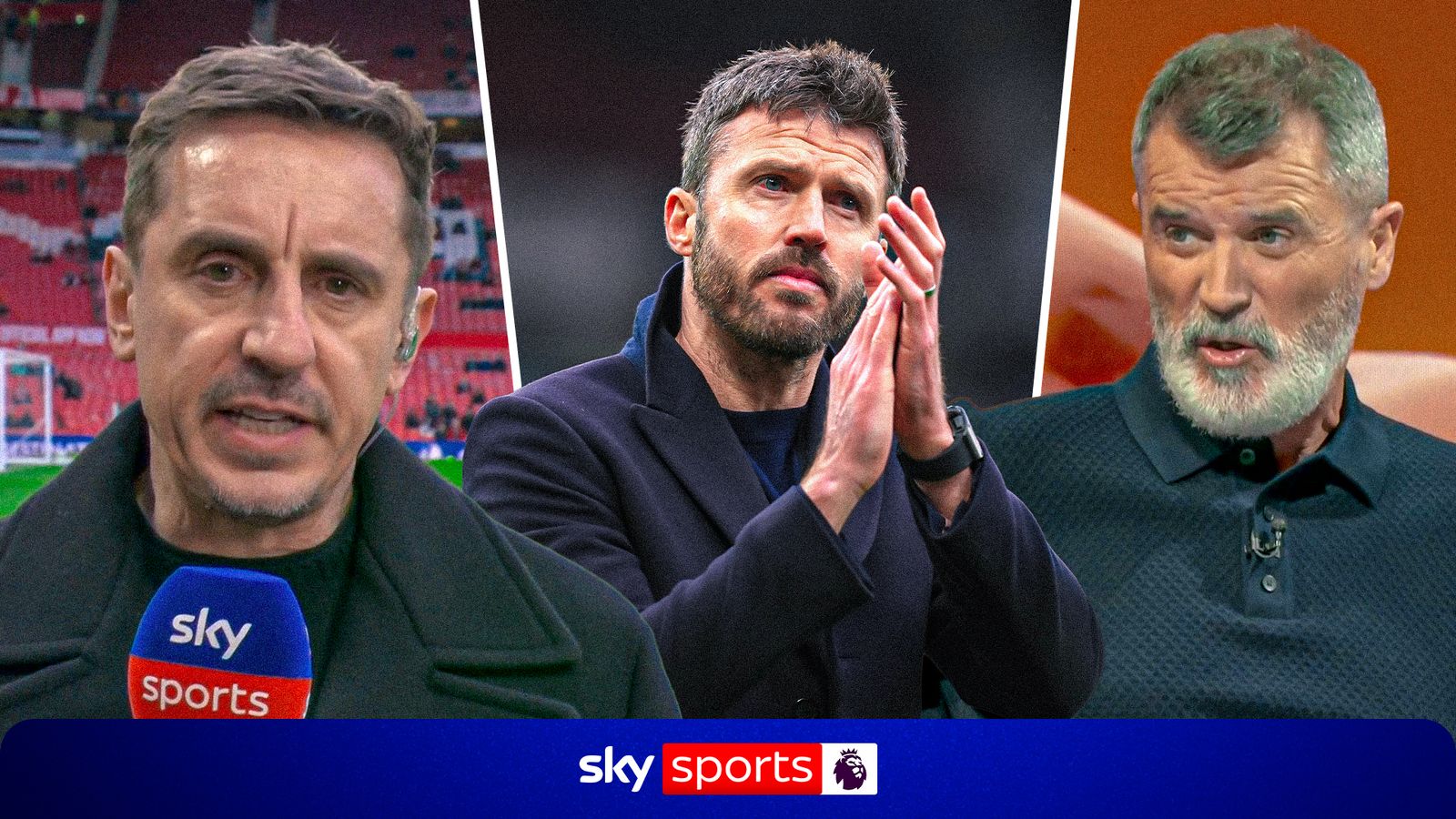
Why keeping Steve Holland is Michael Carrick's smartest Man Utd move
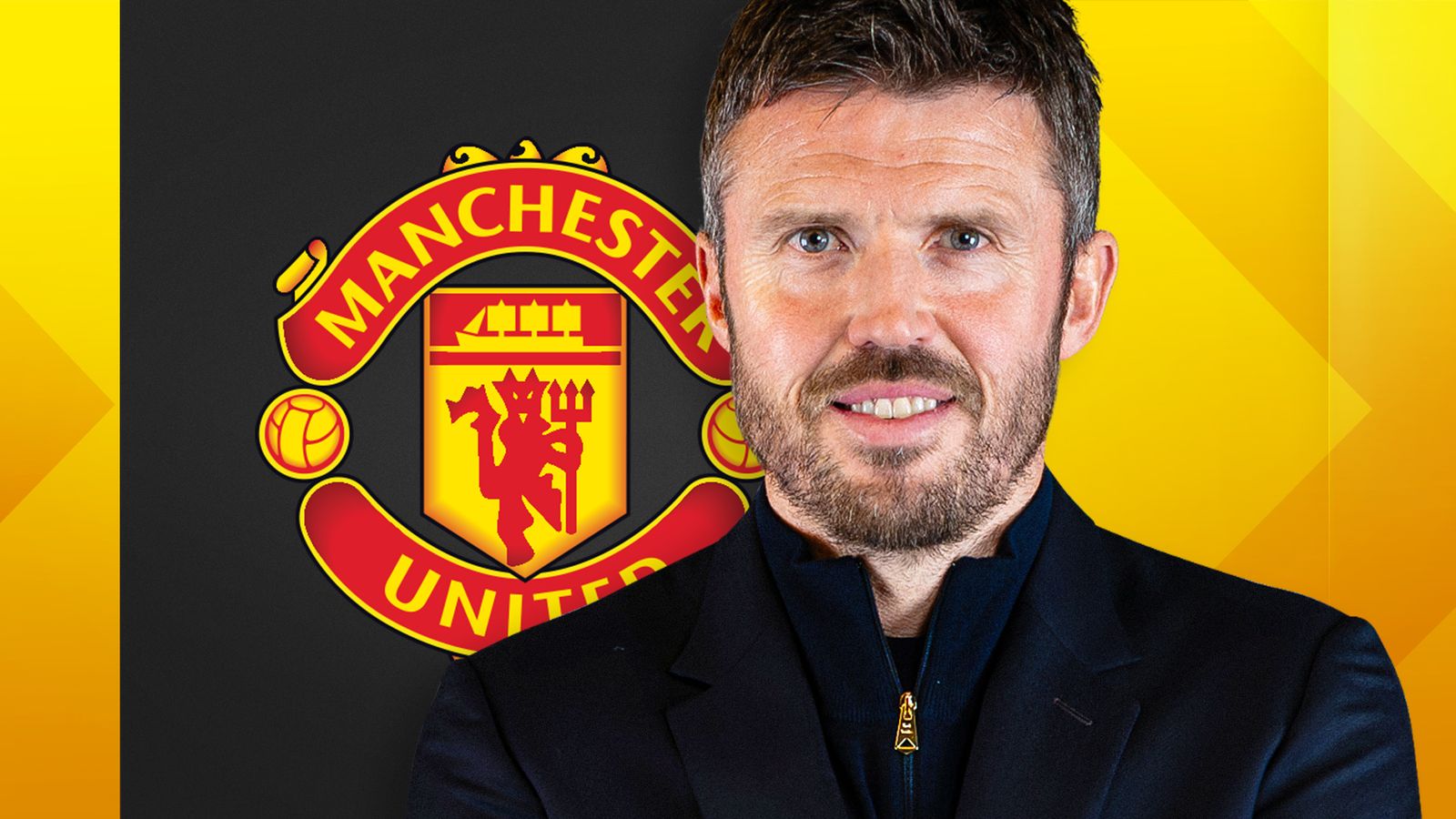
The Quiet Importance of the Number Two
The news that Steve Holland is set to stay on as Michael Carrick’s assistant at Manchester United will not sell shirts. It will not generate viral social media clips, nor will it dominate the phone-in shows. But in the ruthless, hyper-analyzed environment of Old Trafford, it might be the most significant decision of the early Carrick era.
When a new manager arrives, the instinct is almost always to clear house. Bring in the loyal lieutenants. Surround yourself with familiar faces who nod when you speak. Carrick has actively resisted that urge.
By keeping Holland—a man with a resume that includes a Champions League title, Premier League titles, and deep international tournament runs—Carrick is making a calculated bet on tactical rigor over comfortable familiarity.
Holland is not just a cone-layer. He is a defensive architect. During his time under Antonio Conte at Chelsea, he was instrumental in drilling the mechanics of that infamous title-winning 3-4-3.
Under Gareth Southgate with England, he was the primary organizer of a defensive shape that consistently navigated knockout football. Carrick knows exactly what he is getting. He is securing a coordinator who understands the immense pressure of elite institutions.
The Survivor of Stamford Bridge
To truly understand Holland’s value, you have to look at his history. He arrived at Chelsea in 2009 to manage the reserves, and by 2011 he was the assistant manager. He survived Andre Villas-Boas.
He survived Roberto Di Matteo. He survived Rafa Benitez, Jose Mourinho, Guus Hiddink, and Antonio Conte. You do not survive that Roman Abramovich-era meat grinder unless you are supremely, undeniably competent.
Managers at Chelsea kept him around because he took the training sessions that others found tedious. He is famous for his exhaustive, meticulous defensive drills. Players have spoken about his video sessions, where he will pause the footage to point out that a midfielder is half a yard out of position.
United’s defense has looked lost for years. They have relied heavily on individual interventions—a brilliant sliding tackle from Lisandro Martínez or a sweeping clearance from a desperate center-back—rather than a cohesive, drilled unit.
Holland brings the cure to that structural chaos. He does not rely on vibes or individual brilliance. He relies on geometry and repetition.
Before his time at Chelsea, Holland earned his stripes at Crewe Alexandra under Dario Gradi. That is a club famous for producing technically gifted young players. He spent years understanding the developmental arc of academy graduates.
This makes his presence at Old Trafford even more potent. United have a proud tradition of promoting youth, and Holland knows exactly how to transition a teenager from under-21 football into the physical demands of the Premier League.
Contrasting Styles, Shared Intent
To understand why this specific pairing works, you have to examine how Carrick wants to play. His tenure at Middlesbrough was defined by a dogmatic commitment to possession. It was nominally a 4-2-3-1, but in possession, it rapidly shifted into a 3-2-5.
Carrick relied heavily on an overlapping right-back and a left-back who tucked inside to form a back three. It was expansive, entertaining, and frequently left them horribly exposed in transition.
When Carrick took over at Middlesbrough, they were languishing near the relegation zone. He immediately implemented a clear offensive structure. He turned Chuba Akpom into the Championship's top scorer by playing him as a false ten, operating behind the main striker and finding pockets of space.
He empowered Hayden Hackney to dictate the tempo from deep. It was a masterclass in maximizing the tools at his disposal.
But the jump from the Championship to the top half of the Premier League is unforgiving. Opposing managers are ruthless at identifying and exploiting structural flaws.
If your full-backs push too high, teams like Arsenal will hit the vacant channels with Bukayo Saka and Gabriel Martinelli before your center-backs have time to shift across. In the Premier League, against the counter-attacking speed of teams like Newcastle or Aston Villa, that fragility gets punished brutally.
This is where Holland earns his wage. Holland’s entire coaching philosophy is built on structural integrity. He builds from the back.
He obsesses over distances. If Carrick wants to push Diogo Dalot high and commit five bodies to the final third, Holland is the man figuring out the rest-defense.
He is the one drilling the defensive transitions on the training pitches at Carrington. It is a necessary friction. You have the idealist in Carrick pushing the team forward, and the pragmatist in Holland ensuring the back door remains bolted.
Fixing the Midfield Chasm
The defining tactical failure of the Erik ten Hag era was the massive, unplayable void in the middle of the pitch. The front line would initiate a high press, while the defensive line—terrified of being beaten for pace—would drop deep.
The result was a fifty-yard chasm that opposition midfielders jogged through with embarrassing ease. Holland will not tolerate that. His first priority will be compressing the space.
If the team presses, they press as a block. If they drop, they drop as a block. Holland’s teams are characterized by their vertical compactness.
We are going to see a heavy emphasis on the 3-2 rest-defense structure. When United have the ball on the edge of the opposition box, Holland will demand that the two holding midfielders and the three remaining defenders are positioned perfectly to intercept the first clearance.
This stops counter-attacks before they start. It is a principle mastered by Manchester City and Arsenal, and one that United have failed to grasp for half a decade.
We saw his tactical flexibility during Euro 2020. Ahead of the last-sixteen tie against Germany, it was Holland who reportedly pushed hardest for the shift to a back three.
It was a move designed specifically to neutralize Robin Gosens and Joshua Kimmich. The switch worked perfectly, suffocating the German wing-backs and securing a famous 2-0 victory. That level of bespoke, opponent-specific game planning is something United have desperately lacked.
The Set-Piece Battleground
There is another massive area where Holland will make an immediate impact: set-pieces. Modern football matches are increasingly decided by dead-ball situations.
Arsenal built their recent title challenges on the back of an elite set-piece routine masterminded by Nicolas Jover. United, conversely, have been painfully mediocre in this department for years.
During his time with the national team, Holland and Southgate revolutionized England’s approach to corners and free-kicks. They studied NFL blocking schemes and NBA pick-and-roll movements, adapting them to the football pitch.
The result was a barrage of goals from Harry Maguire and John Stones during the 2018 World Cup and Euro 2020.
Carrick will likely delegate the defensive and offensive set-piece organization entirely to Holland. With targets like Harry Maguire or Matthijs de Ligt in the box, United have the physical profiles to be dangerous.
They just need the intricate routines to isolate those players against favorable mismatches. Holland provides that blueprint. He maps out the blocking assignments and the decoy runs with obsessive precision.
The Kobbie Mainoo Project
The player who stands to benefit the most from this coaching dynamic is Kobbie Mainoo. Mainoo possesses elite technical ability and press resistance, but his defensive positioning and scanning are still developing.
He is a diamond that requires precise cutting. Carrick is the perfect mentor for Mainoo’s offensive game. Carrick can teach him the angles of receiving, the weight of a progressive pass, and how to dictate the tempo of a chaotic Premier League match.
But Holland is the perfect mentor for Mainoo’s defensive game. Holland will drill Mainoo on spatial awareness. He will teach him how to screen the strikers, when to step out to press, and when to drop into the backline.
Look at how Holland worked with N'Golo Kante and Nemanja Matic at Chelsea, or Declan Rice for England. He turns talented midfielders into impenetrable shields. If Mainoo absorbs Holland’s defensive instructions while maintaining Carrick’s offensive freedom, United will possess one of the most complete midfielders in Europe.
The Risk of Conservatism
However, it would be naive to pretend this is a guaranteed success. Theoretical tactical compatibility does not always survive contact with reality. The pressure at Manchester United is unique.
It devours managers and coaches with terrifying speed. Carrick’s expansive ideals could easily clash with Holland’s inherent conservatism when the results turn bad.
If United lose two consecutive games, does Carrick double down on his attacking principles, or does Holland convince him to drop into a low block and grind out an ugly win?
Furthermore, Holland's association with the latter days of the Southgate era will not give him a free pass with the Old Trafford faithful. Despite the deep tournament runs, that England side was heavily criticized for being overly cautious and reactive.
If United are struggling to break down a stubborn mid-table side and the football looks slow, the groans will be immediate. The blame will inevitably be laid at the feet of the pragmatic assistant.
There is also the question of authority. Holland is vastly experienced. He has won the biggest prizes in club football.
Carrick is still, relatively speaking, a young manager finding his voice. Navigating that power dynamic behind closed doors will require massive emotional intelligence from both men.
Holland must accept his role as the subordinate, and Carrick must be strong enough to overrule his highly decorated assistant when necessary.
The Final Assessment
Despite the inherent risks, keeping Steve Holland is a deeply logical move. Football at the highest level is decided by the finest of margins. It is about minimizing weaknesses while maximizing strengths.
Michael Carrick knows what he wants his Manchester United team to look like with the ball. Steve Holland knows exactly how to protect them without it. It is a partnership born of necessity rather than romance.
And frankly, a massive dose of cold, hard pragmatism is exactly what this football club has needed. The real test begins in August. The pre-season tour will offer the first glimpses of this hybrid system.
But right now, in the quiet maneuvering of the off-season, United have secured one of the sharpest tactical minds in the country to back up their new manager. It is an unglamorous victory, but it might just be the foundation they desperately need.
Nike Pitch Training Soccer Ball
A highly visible, durable training ball that won't empty your wallet.
More Coverage

Anthony Gordon to Barcelona marks a high-stakes gamble
51 minutes ago
Arsenal's 104 million gamble on Julian Alvarez is pure chaos
51 minutes ago
Top 10: The Definitive Arsenal Moments of the 2025/26 Season
2 hours ago
Michael Skubala takes the hot seat at Ashton Gate
2 hours ago
Newcastle are burning the furniture to keep the house warm
2 hours ago
Manchester City's business model is frankly terrifying
2 hours agoMore Analysis
Michael Carrick is doubling down on Steve Holland’s technical safety net
1 week, 4 days ago
Michael Carrick is fixing the tactical mess at Manchester United
3 weeks, 1 day ago
Why Michael Carrick is the tactical fix Manchester United finally agreed on
2 weeks, 2 days ago
Michael Carrick is the only adult in the room at Old Trafford
1 month, 2 weeks ago
Tactics over talk: Why Michael Carrick must get the Man United job
2 months ago