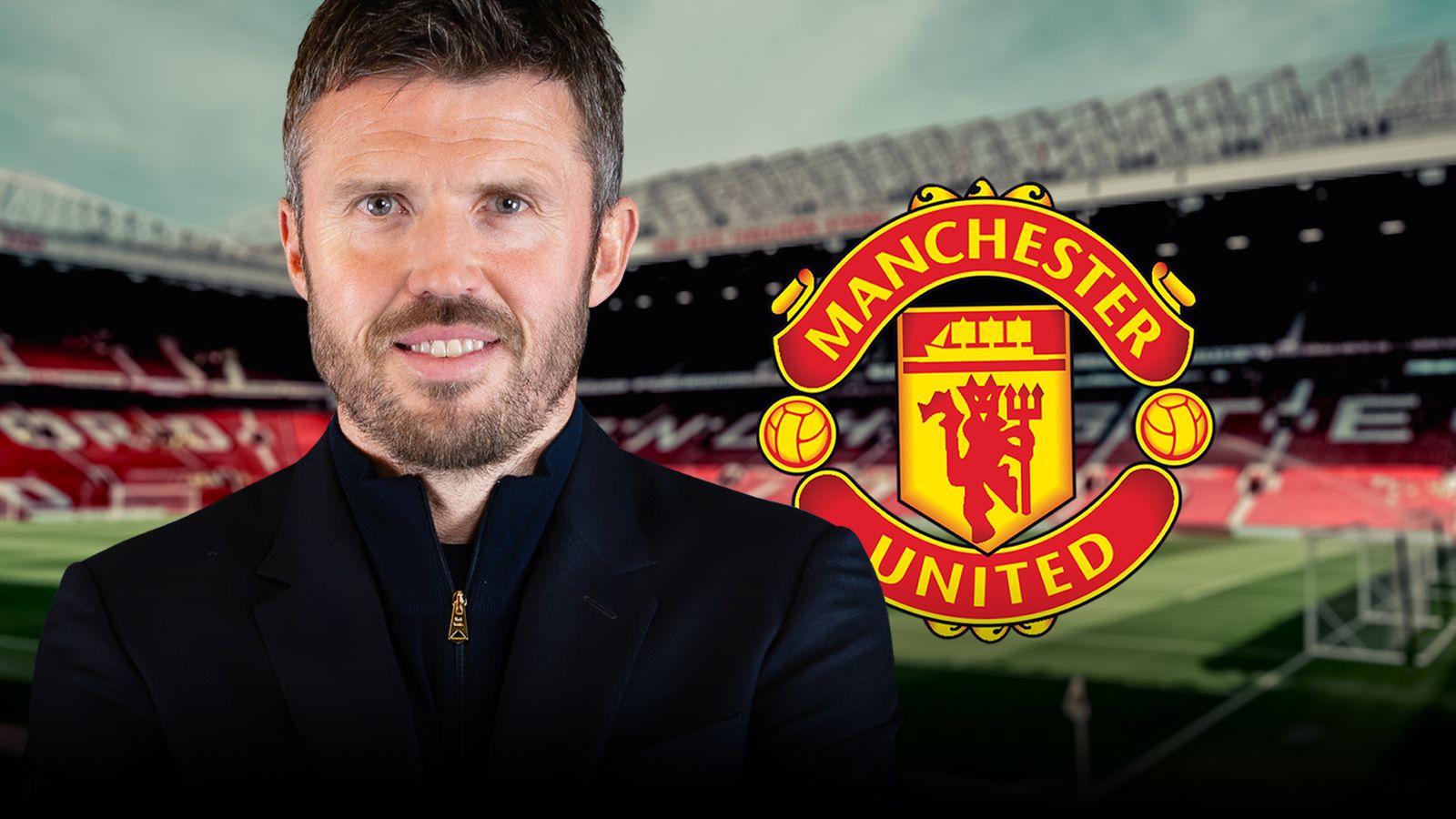
Michael Carrick is doubling down on Steve Holland’s technical safety net
The cost of stability at Old Trafford
The decision for Steve Holland to remain as Michael Carrick’s primary lieutenant at Manchester United isn't just a personnel update. It is a definitive statement of intent regarding the club's tactical identity heading into the 2026/27 season. As Sky Sports recently confirmed, Holland is set to stay on, providing the veteran scaffolding for Carrick’s evolving managerial project.
United finished this campaign with a sense of unfinished business following the narrow 1-0 loss in the FA Cup final at Wembley just two days ago. That match was a microcosm of the Carrick-Holland era so far: structurally sound, technically proficient, but occasionally lacking the explosive variance required to break down elite low blocks. By keeping Holland, Carrick is choosing the continuity of the 'coaching room' over a radical summer overhaul.
Holland brings a specific kind of tournament-hardened pragmatism that United have craved since the chaotic final months of the Ten Hag era. His resume across Chelsea and the England national team under Gareth Southgate is built on defensive solidity and the meticulous drilling of set-piece routines. For a manager like Carrick, who prefers a fluid, possession-heavy 4-2-3-1, Holland acts as the necessary friction, ensuring the rest-defense isn't sacrificed for the sake of aesthetic transitions.
The Southgate shadow and tactical caution
There is an inherent risk in this partnership that many fans in the Stretford End are starting to whisper about. Holland’s influence often mirrors the caution of the late-stage Southgate years, where ball retention was prioritized over verticality. We saw this in the 74th minute of the FA Cup final, where United opted for safe lateral circulation rather than testing a tiring opposition backline with direct runs from Alejandro Garnacho.
Carrick’s United has become one of the most efficient passing sides in the Premier League, but they are bordering on predictable. The reliance on Holland’s structured approach can sometimes stifle the individual brilliance of players like Kobbie Mainoo. While Mainoo’s progressive carry stats are in the 92nd percentile, he is frequently instructed to drop into a double-pivot during the build-up phase, limiting his impact in the final third.
The criticism isn't that Holland is a poor coach—his track record in the Champions League with Chelsea proves otherwise. The concern is whether his presence reinforces Carrick’s own tendencies toward control at the expense of chaos. Elite football in 2026 has moved toward high-intensity pressing triggers and rapid transitions, yet United often look like they are playing a chess match while their rivals are playing a 100-meter dash.
Building for the World Cup cycle
With the FIFA World Cup kickoff only 24 days away, the timing of this announcement is calculated. United want their coaching staff settled before the summer vacuum begins. Holland’s experience navigating international breaks and tournament fatigue will be vital as United’s core—likely comprising 12 or 13 starters for various nations—returns from North America in late July.
The defensive metrics under Holland’s guidance have improved significantly. United conceded 15 fewer goals this season compared to the previous year, a direct result of the 'compact block' philosophy Holland implemented during the autumn. They no longer leave the massive gaps between the midfield and defensive lines that defined the previous regime. The 4-4-2 defensive shape has become a hallmark of this staff, providing a reliable platform for counter-attacks.
However, the lack of a 'wildcard' coach in the room is glaring. While Carrick and Holland share a deep mutual respect and a similar footballing language, they lack a disruptor. Most successful modern benches feature a tactical contrarian—someone to suggest the 3-box-3 transition or the aggressive man-marking scheme. At United, the staff feels almost too harmonious, leading to a collective blind spot when a plan-B is required in the heat of a title race.
The Garnacho conundrum
One of the most telling aspects of the Holland-Carrick era has been the management of Alejandro Garnacho. The winger is undoubtedly United’s most potent threat, yet his defensive responsibilities have increased tenfold under Holland. His heatmap from the second half of the season shows him deeper than ever before, often tracking back into his own defensive third to cover for inverted fullbacks.
While this makes United harder to beat, it blunts their sharpest weapon. In the recent 2-2 draw at Anfield, Garnacho was substituted in the 68th minute simply because he had exhausted his energy reserves on defensive recovery runs. This is the trade-off of the Holland system: defensive integrity is non-negotiable, even if it costs you your primary offensive outlet. It is a conservative gamble that relies on 1-0 victories rather than 4-2 spectacles.
The summer transfer window will test this coaching synergy. If United recruit another high-volume creator, will Holland allow them the freedom to drift? Or will the newcomer be forced into the same rigid structural silos that have frustrated the more expressive members of the current squad? The reported interest in Benfica’s latest midfield prodigy suggests Carrick wants more flair, but the coaching architecture remains geared toward safety.
A verdict on the status quo
Keeping Steve Holland is the safe choice for a club that has spent a decade being dangerously unstable. It ensures that the tactical gains made over the last twelve months aren't lost in a sea of new ideas. But safety doesn't win Premier League titles in an era dominated by the tactical innovations coming out of the Red Bull system or the post-Guardiola evolution at City.
United have successfully moved from 'emergency mode' to 'competence mode' under Carrick and Holland. The next step—moving to 'dominance mode'—requires a level of tactical bravery that we haven't yet seen from this duo. They have mastered the art of not losing, which is a significant achievement given where the club was two years ago. Now, they must prove they can win with the handbrake off.
The fans will likely accept this continuity for now, provided the 2026/27 season starts with more verticality and less sideways caution. If the opening month of the next campaign looks like a repeat of the stale possession seen in early May, the pressure on Holland’s 'international' style will become unbearable. For Michael Carrick, Holland is his most trusted ally, but he might also be the man who prevents him from taking the final tactical leap.
adidas Tiro 23 League Training Pants
The iconic, streamlined soccer pants upgraded for modern comfort.
Frequently Asked Questions
What is Steve Holland's role on Michael Carrick's staff?
How does Steve Holland influence Manchester United's tactics?
Why are some Manchester United fans concerned about Steve Holland?
How does Kobbie Mainoo fit into Carrick and Holland's system?
What formation does Michael Carrick use at Manchester United?
More Coverage

Anthony Gordon to Barcelona marks a high-stakes gamble
51 minutes ago
Arsenal vs PSG: Why tactical rigidity will determine the European champion
51 minutes ago
Arsenal's 104 million gamble on Julian Alvarez is pure chaos
51 minutes ago
Top 10: The Definitive Arsenal Moments of the 2025/26 Season
2 hours agoLincoln City just entered the weirdest experiment in League One history
2 hours ago
Newcastle are burning the furniture to keep the house warm
2 hours agoMore Analysis
Why keeping Steve Holland is Michael Carrick's smartest Man Utd move
1 week, 4 days ago
Michael Carrick is forcing Manchester United's hand
3 weeks, 4 days ago
Why Michael Carrick is the tactical fix Manchester United finally agreed on
2 weeks, 2 days ago
Manchester United must resist the Michael Carrick interim trap
1 month ago
Michael Carrick is the only adult in the room at Old Trafford
1 month, 2 weeks ago