
Belgium's 5-2 rout exposes massive USMNT tactical flaws before World Cup

The Illusion of Momentum
Momentum is a fragile, deceptive concept in international football. The United States men’s national team arrived at Mercedes-Benz Stadium riding a wave of it. They needed a solid performance to validate their progress.
Instead, they were handed a brutal, jarring reality check. A 5-2 defeat is bad enough in isolation. Conceding four goals in a single half is deeply alarming.
The World Cup kicks off in exactly 75 days. The margins for error have vanished entirely. What happened on Saturday afternoon in Atlanta was not just a poor result, but a systematic unravelling.
According to the match report published by The Guardian, Belgium scored four times in the second half. That is a rapid tactical collapse.
You do not concede four goals at this level without fundamental structural failures. A functional first half can often mask underlying issues in a friendly.
The starting XI executes pressing triggers with high energy early on. The distances between the defensive line and the midfield pivot remain compact. Then fatigue sets in.
The mental sharpness drops by a fraction of a percent. Against elite European transition teams, that is all it takes. The trap door opens violently.
The Anatomy of a Collapse
We must look closely at how the second half unfolded. If Belgium scored four after the break to reach five, the US was firmly in the contest at half-time.
This exposes a terrifying reality about the current US setup. They cannot sustain tactical discipline when the game state becomes chaotic.
Ludebakio netted a double. This was not a coincidence, nor was it merely a product of individual brilliance. It was a direct exploitation of structural voids.
Ludebakio thrives on isolating defenders in wide areas. He attacks the space between the center-back and the touchline with terrifying, direct speed.
When you commit bodies forward in modern international football, your rest-defence must be immaculate. The American rest-defence on Saturday was an absolute mess.
If your full-backs push high to provide attacking width, your defensive midfielders must drop into the half-spaces to cover. That rotation was either too slow or entirely absent.
Belgium simply bypassed the midfield completely. They played direct balls into the channels, forcing the US backline to run directly toward their own goal.
Midfield Voids and Transition Nightmares
Look at the spacing in the center of the pitch during those defensive transitions. It was virtually non-existent.
The US midfielders were consistently caught ahead of the ball. This is a recurring theme when playing heavyweight European opposition.
The speed of thought is fundamentally different at the elite level. A loose touch or a misplaced five-yard pass is instantly punished.
Belgium did not need to build intricate moves. As The Guardian report noted, this was a tune-up match, but the Belgians ruthlessly capitalized on turnovers.
Once the ball was turned over, their verticality was immediate. The American center-backs were left entirely exposed to the onslaught.
They were forced to backpedal in two-versus-two or three-versus-three situations. You cannot survive those numerical disadvantages for an entire half.
There was also a distinct lack of tactical fouls. Sometimes, the most effective defensive action is a cynical shirt pull on the halfway line.
The US attempted to play cleanly when the situation demanded dark arts. You have to break the rhythm of a counter-attack by any means necessary.
Pressing Traps and Midfield Isolation
To understand the sheer volume of goals in the second half, we have to look at Belgium's pressing triggers. They did not press aimlessly.
Instead, they set specific traps in the middle third of the pitch. They allowed the US center-backs to have the ball, deliberately cutting off passing lanes to the full-backs.
This forced the ball centrally into the US pivot. The moment the ball traveled toward the American defensive midfielder, the trap was sprung.
Three Belgian players would converge instantly. The US player receiving the ball had no time to turn and absolutely no passing angles available.
This resulted in high-value turnovers. When you lose the ball in the center circle with your full-backs pushed high, you are immediately facing a massive threat.
The lack of a secondary outlet pass is highly concerning. Elite teams always have a pre-planned escape route when the primary pivot is heavily marked.
The US lacked this rotational fluidity. The midfielders remained static, pointing at feet rather than moving into open space to offer an angle.
The Domino Effect
Conceding four times in 45 minutes requires a domino effect. The first goal alters the game state significantly.
The losing team pushes higher to chase the game. This expands the pitch, stretching the distances between players horizontally and vertically.
For a team like Belgium, an expanded pitch is an invitation to inflict misery. The second goal is usually a direct result of this over-expansion.
By the time the third and fourth goals arrive, tactical discipline is completely gone. It is replaced by pure panic.
The defensive line drops too deep out of fear. The midfield continues to press high out of desperation. The team snaps in half.
This disconnect is exactly what opposing analysts will highlight. Every team in the World Cup draw will watch this second-half tape.
They will see a team that loses its shape when placed under sustained transition pressure. That is a terrifying prospect with June rapidly approaching.
The Full-back Dilemma
Modern full-backs are expected to be primary playmakers. They provide width, deliver crosses, and even invert into central areas.
However, this attacking responsibility comes with immense defensive risk. If possession is lost high up the pitch, the full-back is miles out of position.
The US full-backs were consistently caught upfield in Atlanta. The defensive transition requires immediate pressure on the ball carrier to delay the counter.
This counter-pressing was entirely ineffective against Belgium. The Belgian ball carrier always had time to pick his head up and assess his options.
That is fatal. If you give a European midfielder two seconds of unpressured time, he will find the run of a forward.
Center-back Passivity
The central defenders were left exposed, but they are not entirely blameless. Their starting positions were often far too deep.
This created massive gaps between the defensive and midfield lines. When the midfield is bypassed, center-backs must make a decisive choice.
Do they drop off and protect the penalty area, or do they step up and engage the ball carrier? Against Belgium, they were far too passive.
They dropped off, allowing the attackers to build momentum and run directly at them. Passivity breeds panic in the defensive third.
This indecision is a symptom of poor communication. The defensive line must move as a single, coordinated unit to compress space.
Instead, we saw disjointed movements. Players stepped up to play offside traps while others dropped deep, completely breaking the line.
Key Structural Failures
- The rest-defence shape was fundamentally broken when committing bodies forward.
- The central midfield lacked the discipline to delay rapid counter-attacks.
- The defensive line was disjointed and passive under direct pressure.
- The team struggled severely to adapt to adverse game states.
Game Management Failures
There is an art to suffering in international football. When you are under severe pressure, you must know how to survive a 15-minute spell without conceding.
The US failed this test spectacularly. When Belgium scored their second goal to take control, the correct response was to condense the space and kill the game's rhythm.
They should have dropped the line of confrontation ten yards deeper. They should have forced Belgium to break down a set defence rather than offering them open grass.
Instead, the US naively tried to punch back immediately. They threw men forward in a disorganized press, leaving themselves completely hollow in the center.
This lack of game management is alarming for a team preparing to host a major tournament. Tournament football is largely about navigating difficult moments safely.
If you cannot stop the bleeding when an opponent gains momentum, you will not survive the knockout rounds. The 5-2 scoreline is a direct reflection of this naivety.
The Psychology of a Rout
Tactics cannot be separated from psychology. A collapse of this magnitude leaves permanent scars on a squad's confidence.
The atmosphere inside Mercedes-Benz Stadium shifted violently. It went from a cauldron of optimism to a silent witness of a rout.
You could see the body language change immediately after the second Belgian goal. The shoulders dropped. The tracking runs became a fraction of a second slower.
The belief visibly drained out of the system. This is where on-pitch leadership becomes absolutely paramount to survival.
The US team desperately lacked a commanding presence to slow the game down. They needed someone to demand the ball, win a cheap foul, and dictate the tempo.
Instead, they allowed the match to become a chaotic track meet. Against a team with Belgium's transitional speed, a track meet is tactical suicide.
The Tuesday Night Test
There is no time to dwell on this embarrassment. Portugal arrives at Mercedes-Benz Stadium on Tuesday night.
This is another massive test against elite European opposition. It is no longer just a tune-up; it is an emergency diagnostic session.
Portugal will offer a slightly different threat. They possess intricate playmakers in central areas, but they are equally lethal out wide.
If the US cannot fix their rest-defence, Tuesday could be another long, painful night. The coaching staff faces a severe tactical dilemma.
Do you abandon expansive principles and deploy a low block to restore confidence? Or do you demand better execution of the current system?
Reverting to a pure survival block sends the wrong message so close to a tournament. The team must learn to control games defensively while retaining an attacking threat.
The 75-Day Window
June 11 is approaching rapidly. The time for experimentation is officially over.
The USMNT needs to establish a definitive starting lineup and a resilient tactical identity. A 5-2 defeat shatters comforting illusions.
It forces uncomfortable conversations in the video room. Players who assumed their spots were secure suddenly look vulnerable.
The central observation is unavoidable: the US lacks the defensive midfield structure to survive elite pressing traps.
When the primary pivot is bypassed, the backline is entirely exposed. You cannot simply out-work European opposition; you must out-think them.
The defensive frailties exposed in Atlanta will be targeted. There are 75 days to find a solution. The clock is ticking relentlessly.
Read Next
- Why Scotland's tedious Japan defeat should worry Steve Clarke
- Why USMNT fans are having a complete meltdown over the Belgium friendly
- Why England fans booing Ben White is a massive problem for Thomas Tuchel
- Pochettino is running out of time to fix the USMNT
- 🏆 World Cup 2026 — Full Coverage Hub
- 🇺🇸 USMNT World Cup 2026 — Team USA Coverage Hub
- 🇧🇪 Belgium World Cup 2026 — Red Devils Hub
- ⚽ MLS 2026 Season Hub — World Cup Year Guide
Fisher-Price Little People Collector U.S. Soccer Special Edition Set For Sports Fans, 2 Figures
The cutest way to show your U.S. Soccer pride before the big kickoff.
Frequently Asked Questions
What was the final score of the USMNT vs Belgium match?
When does the World Cup start relative to the USMNT Belgium match?
Why did the USMNT concede four goals in the second half?
Who scored a double for Belgium against the USMNT?
How did Belgium exploit the USMNT's midfield spacing?
More Coverage
Nice saved their season, but 2026 demands a complete tactical reboot
an hour ago
Michael Skubala takes the hot seat at Ashton Gate
5 hours ago
Why AC Milan courting Mauricio Pochettino is a massive gamble
5 hours ago
World Sevens brings high-octane chaos before the World Cup fever hits
5 hours ago
Why Manchester United’s pursuit of Ederson makes tactical sense
14 hours ago
Pochettino moving to Milan mid-cycle is a dereliction of duty
14 hours agoMore Analysis
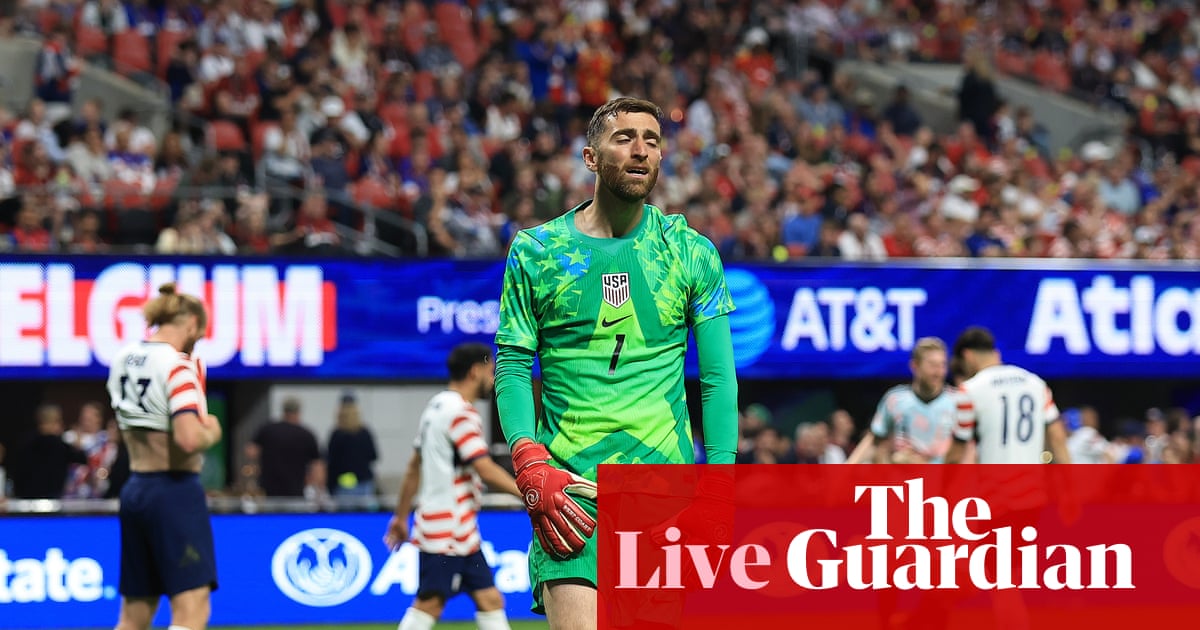
Belgium just wrote the tactical blueprint for beating the USMNT
2 months ago
USMNT defensive disasterclass against Belgium is a massive wake-up call
2 months ago
Pochettino's USMNT faces a brutal reality check against Portugal
2 months ago
USMNT face Belgium's midfield trap while Anfield chases nostalgic ghosts
2 months ago
USMNT’s tactical identity crisis is peaking at the worst possible time
1 month, 4 weeks ago